







Suggested Searches

Blogs

    NASA’s Parker Solar Probe Completes 26th Closest Approach to Sun

    NASA’s Parker Solar Probe completed its 26th close approach to the Sun on Dec. 13, again matching its record distance of 3.8 million miles (6.2 million kilometers) from the solar surface. The spacecraft checked in with flight controllers at the Johns Hopkins Applied Physics Laboratory (APL) in Laurel, Maryland — where Parker Solar Probe was […]

    Read Full Post

    2025 Open Science Recognition Prize by the American Geophysical Union

    Award: The American Geophysical Union’s 2025 Open Science Recognition Prize, awarded to a person or team for outstanding work in advancing Open Science related to Earth and space science and its impact globally. Awarded to: Dr. Chelle Gentemann, senior program executive at the International Computer Science Institute on an Intergovernmental Personnel Act assignment as the […]

    Read Full Post

    2025 Open Science Recognition Prize by the American Geophysical Union

    Award: The American Geophysical Union’s 2025 Open Science Recognition Prize, awarded to a person or team for outstanding work in advancing Open Science related to Earth and space science and its impact globally. Awarded to: The Prithvi Geospatial Foundation Model team, for their work on the open-access foundation model, trained on data from the Harmonized Landsat […]

    Read Full Post

    NASA Wallops Launch Range to Support Electron Launch 

    Rocket Lab's 59-foot Electron rocket at the company's Launch Complex-2 on NASA's Wallops Island.

    A Rocket Lab Electron rocket is scheduled to launch from NASA’s Wallops Flight Facility in Virginia during a window extending from Dec. 18-23, 12-4 a.m. EST each night. This launch supports the United States Space Force.   The rocket launch may be visible from the Chesapeake Bay region. A launch livestream will be provided by Rocket Lab on […]

    Read Full Post

    Stem Cells, Robotics, and Spacesuits Top Station Crew Day

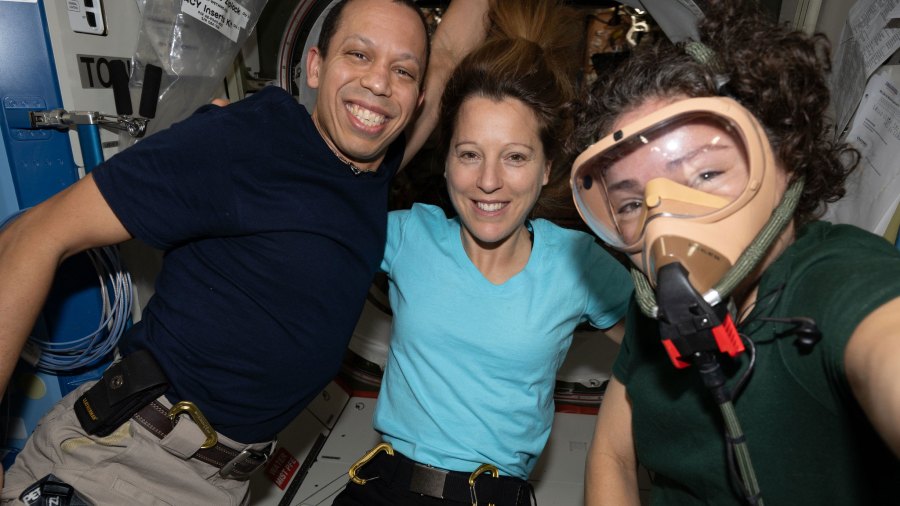
    NASA astronaut and Expedition 73 Flight Engineer Zena Cardman inspects a spacesuit helmet during maintenance activities inside the International Space Station's Quest airlock.

    Stem cell research, a student robotics challenge, and spacesuit maintenance dominated the schedule aboard the International Space Station on Tuesday. The Expedition 74 crew also rounded out its shift with Earth observations and cargo transfers throughout the day.

    Read Full Post

    First NASA Scientific Balloon Launches from Antarctica

    A man in a yellow safety vest looks at a scientific balloon in the distance. In the foreground is the GAPS payload hanging from a crane preparing for launch.

    The first scientific balloon flight of this year’s NASA Antarctica Balloon Campaign reached its float altitude after lifting off from the agency’s facility located near the U.S. National Science Foundation’s McMurdo Station on the Ross Ice Shelf at 5:30 a.m. NZST, Tuesday, Dec 16 (11:30 a.m., Monday, Dec. 15 in U.S. Eastern Time). The balloon […]

    Read Full Post

    NASA’s IMAP Mission Captures ‘First Light,’ Looks Back at Earth

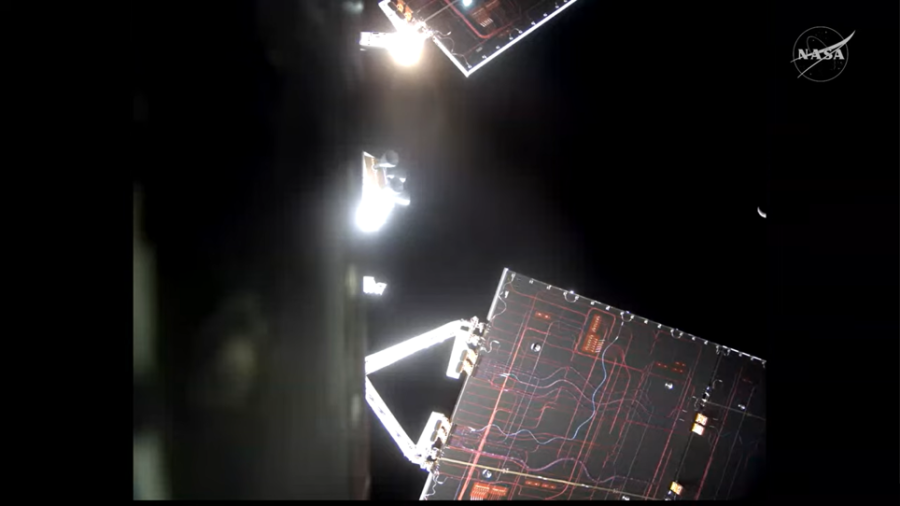
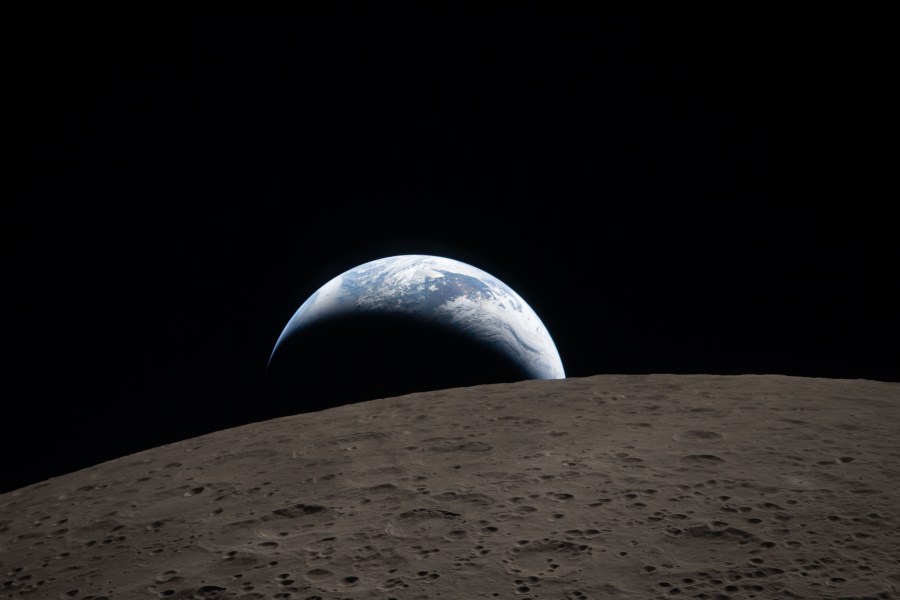
    All 10 instruments aboard NASA’s newly launched IMAP (Interstellar Mapping and Acceleration Probe) mission have successfully recorded their first measurements in space. With these “first light” observations, the spacecraft is now collecting preliminary science data as it journeys to its observational post at Lagrange point 1 (L1), about 1 million miles from Earth toward the […]

    Read Full Post

    NASA’s Carruthers Geocorona Observatory Reveals ‘First Light’ Images

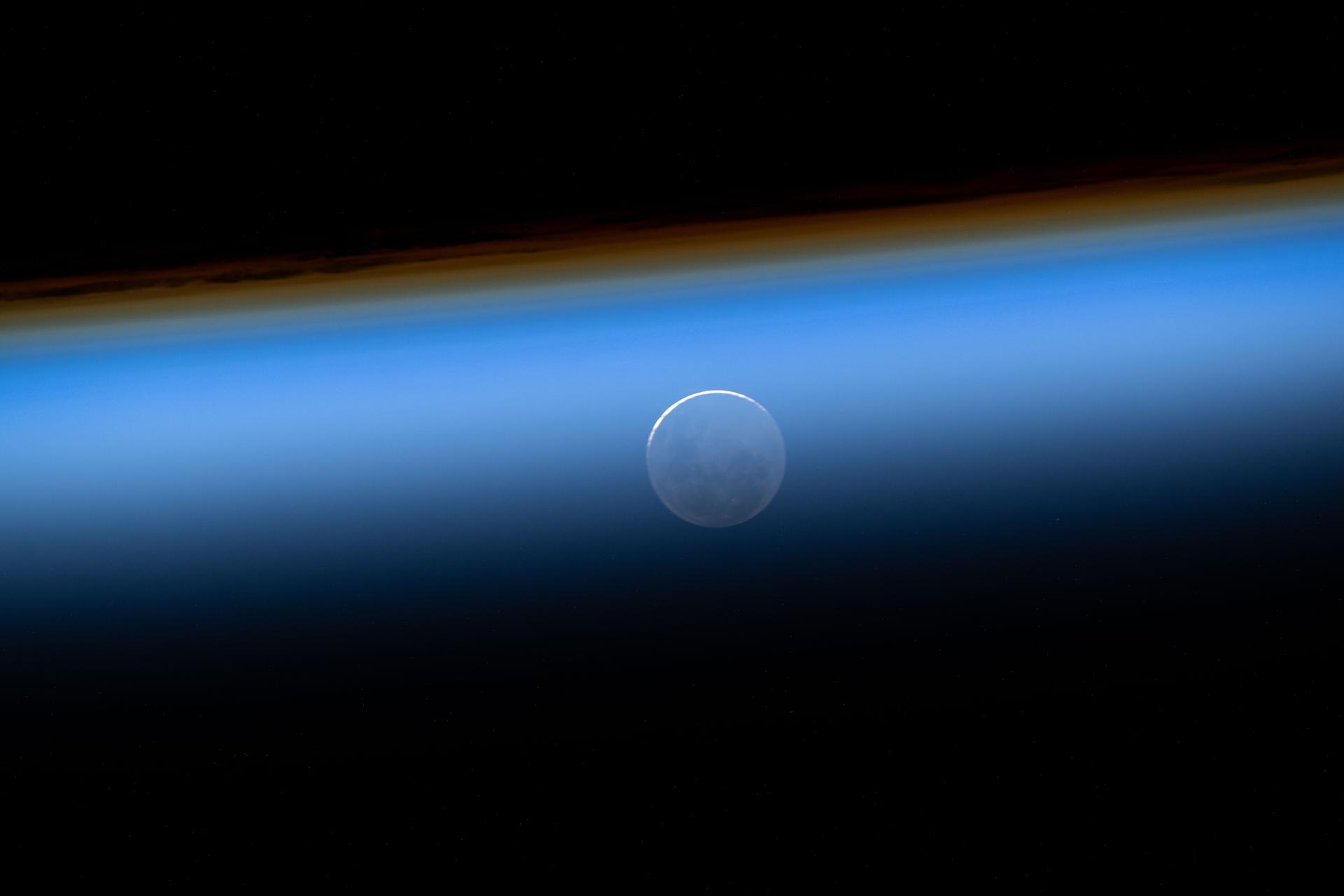
    NASA’s Carruthers Geocorona Observatory has captured its first images from space, revealing rare views of Earth and the Moon in ultraviolet light. Taken on Nov. 17 — still months before the mission’s science phase begins — these “first light” images confirm the spacecraft is healthy while hinting at the incredible views to come. The initial […]

    Read Full Post

    NASA and Partners Expand Crucial Water Tracking Program

    All 48 contiguous United States will now benefit from timely, high-resolution water data. The OpenET program, a public-private collaboration led by consortium partners NASA, the U.S. Geological Survey, California State University Monterey Bay, Environmental Defense Fund, Desert Research Institute, Google Earth Engine, and HabitatSeven, provides information on evapotranspiration. Evapotranspiration is the movement of water from […]

    Read Full Post