














Suggested Searches

Blogs

    NASA’s Parker Solar Probe Observes Interstellar Comet 3I/ATLAS

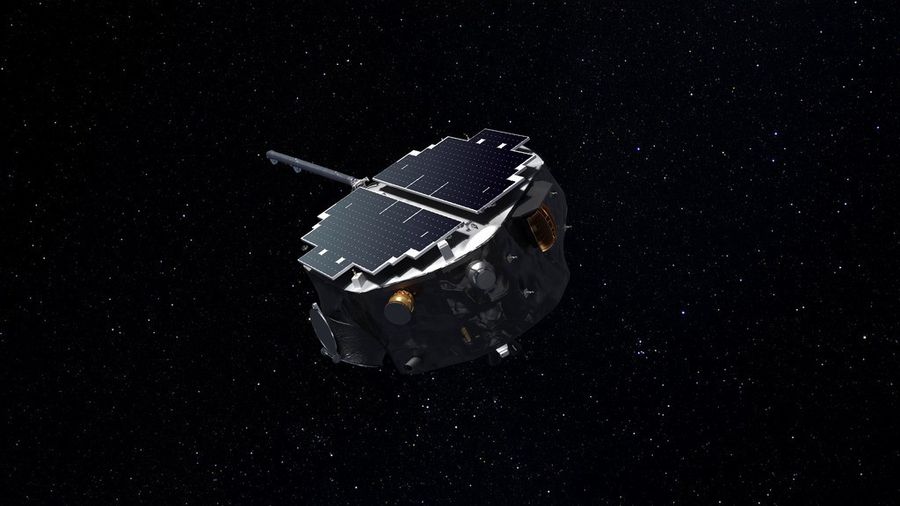
    NASA’s Parker Solar Probe observed interstellar comet 3I/ATLAS from Oct. 18 to Nov. 5, 2025, with its WISPR (Wide-Field Imager for Solar Probe) instrument. The spacecraft snapped around 10 images of the comet per day. During this period, Parker Solar Probe was speeding away from the Sun following its 25th solar flyby on Sept. 15.  […]

    Read Full Post

    Second Scientific Balloon for NASA Launches from Antarctica

    A large metal scientific instrument that is mainly white with black panels is suspended off the ground by a large crane. A white trail of material is on the ground and attaches to a partially inflated white balloon in the background on a snowy landscape.

    The second scientific balloon flight for NASA’s Antarctic scientific balloon campaign has reached its float altitude of 120,000 feet after lifting off from the agency’s facility located near the U.S. National Science Foundation’s McMurdo Station on the Ross Ice Shelf at 5:56 a.m. NZST, Saturday, Dec. 20 (11:56 a.m., Friday, Dec. 19 in U.S. Eastern […]

    Read Full Post

    Brain Research, Heart Health Wrap Up Work Week Aboard Station

    The ten International Space Station crew members representing both Expedition 73 and 74 pose for a portrait in the Kibo laboratory module after Roscosmos cosmonaut Sergey Ryzhikov (front right) handed over command of the orbital outpost to NASA astronaut Mike Fincke (front center). Directly behind the duo (from left) are NASA astronaut Chris Williams, Roscosmos cosmonaut Sergei Mikaev, NASA astronaut Zena Cardman, Roscosmos cosmonaut Sergey Kud-Sverchkov, and NASA astronaut Jonny Kim. In the back are, JAXA (Japan Aerospace Exploration Agency) astronaut Kimiya Yui and Roscosmos cosmonauts Oleg Platonov and Alexey Zubritsky.

    The Expedition 74 crew explored how living in space affects the brain and blood circulation on Friday to ensure crews stay healthy and ensure long-term mission  success. The International Space Station residents also focused on spacewalking tools and science hardware maintenance wrapping up the week.

    Read Full Post

    NASA’s PUNCH Spies Comet Lemmon

    In late 2025, as comet Lemmon (C/2025 A6) swept past the Sun and brightened in Earth’s night skies, NASA’s Earth-orbiting PUNCH (Polarimeter to Unify the Corona and Heliosphere) mission was watching the comet blaze through its field of view, providing a natural tracer of the Sun’s effects across the inner solar system. Discovered in January […]

    Read Full Post

    Expedition 74 Advancing Space Health and AI Research on Station

    NASA astronaut and Expedition 73 Flight Engineer Mike Fincke shows off the Voyager Flytrap technology demonstration that he installed inside the NanoRacks Bishop airlock. Flytrap will test an inflatable capture bag designed to capture and secure orbital debris or sample containers returning from the Moon and Mars. The technology may also support future space mining techniques on small asteroids. The demonstration will evaluate the bag’s ability to deploy, inflate, and capture space objects while maintaining an airtight seal in microgravity.

    The Expedition 74 crew’s research schedule was filled with biomedical duties and artificial intelligence on Thursday to promote crew health and spark innovation on and off the Earth. Spacesuit tailoring and advanced science hardware maintenance rounded out the day for the seven residents aboard the International Space Station.

    Read Full Post

    NASA Instrument Reveals New Ability to Gather Nighttime Light Data

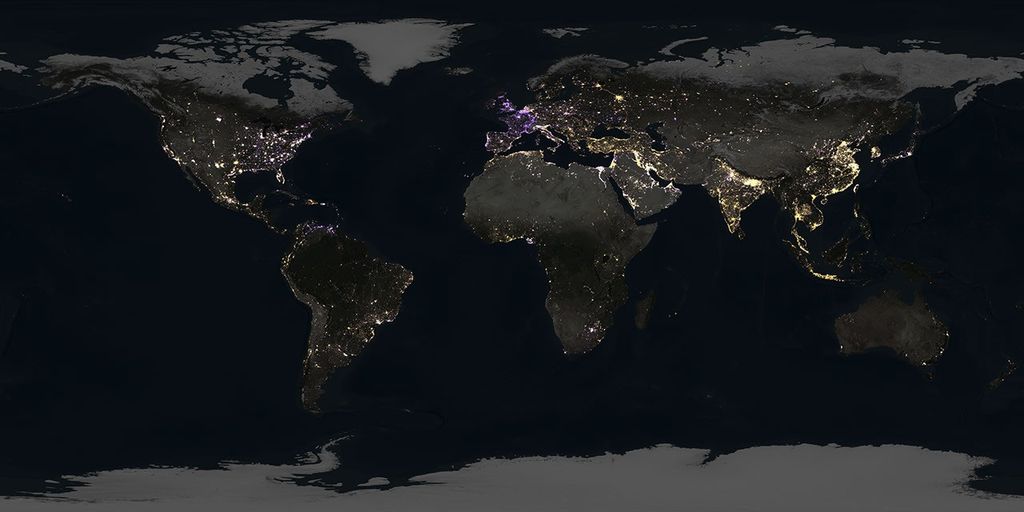
    NASA’s Tropospheric Emissions: Monitoring of Pollution instrument, or TEMPO, is known for measuring trace gases like nitrogen dioxide, ozone, and formaldehyde in the air we breathe. Now TEMPO has a new trick. It can see in the dark. Since launching in 2023, TEMPO data has set a record at the Atmospheric Science Data Center (ASDC) […]

    Read Full Post

    NASA’S PUNCH Releases Refined Images of Eruptions from the Sun

    NASA’s PUNCH (Polarimeter to Unify the Corona and Heliosphere) mission has released processed images of huge eruptions from the Sun, known as coronal mass ejections (CMEs), that occurred from Oct. 21 to Nov. 12. This release marks the first time PUNCH observations can be used to continuously trace solar eruptions from the Sun’s outer atmosphere […]

    Read Full Post

    NASA’s Europa Clipper Observes Comet 3I/ATLAS

    NASA’s Europa Clipper mission observed the interstellar comet 3I/ATLAS on Nov. 6 from a distance of about 102 million miles (164 million kilometers). Captured over a period of seven hours, the data gathered by the spacecraft’s Europa Ultraviolet Spectrograph (Europa-UVS) instrument will help scientists determine the composition and distribution of elements in the comet’s coma […]

    Read Full Post

    NASA’s Parker Solar Probe Completes 26th Closest Approach to Sun

    NASA’s Parker Solar Probe completed its 26th close approach to the Sun on Dec. 13, again matching its record distance of 3.8 million miles (6.2 million kilometers) from the solar surface. The spacecraft checked in with flight controllers at the Johns Hopkins Applied Physics Laboratory (APL) in Laurel, Maryland — where Parker Solar Probe was […]

    Read Full Post