


Suggested Searches

Blogs

  • Crews Wrap Week; Managers Provide Starliner, Spacewalk, and Cargo Updates

    Boeing's Starliner spacecraft on NASA's Crew Flight Test approaches the International Space Station while orbiting 263 miles above Quebec, Canada, on June 6.

    The Expedition 71 crew members packed a U.S. cargo craft, cleaned up the International Space Station, studied futuristic piloting techniques, and conducted eye exams on Friday. NASA’s Boeing Crew Flight Test astronauts spent the end of their workweek reconfiguring a space botany facility. Robotics controllers are scheduled to detach the Cygnus space freighter from the …

  • NASA’s Artemis II Orion Spacecraft Prepares for Vacuum Testing

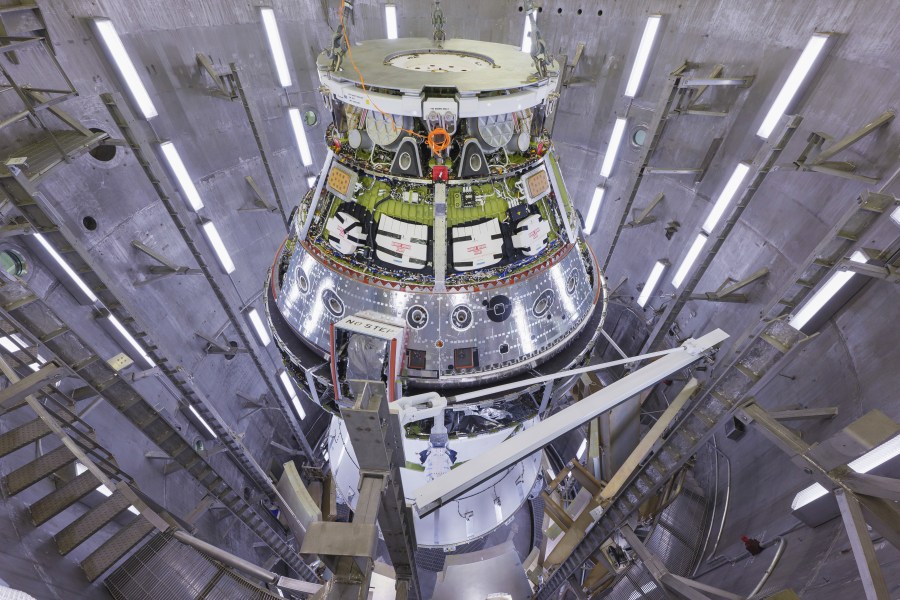
    The Artemis II Orion spacecraft is pictured surrounded by the metal walls of the altitude chamber

    NASA’s Orion spacecraft for the Artemis II mission was lifted out of the Final Assembly and System Testing cell on June 28 inside the Neil A. Armstrong Operations and Checkout building at NASA’s Kennedy Space Center in Florida. The integrated spacecraft has been undergoing final rounds of testing and assembly, including end-to-end performance verification of …

  • ISS Daily Summary Report – 6/27/2024

    Boeing CST-100 Crewed Flight Test (CFT): Today, the CFT crew spent time rebuilding the Pressure Control and Pump Assembly (PCPA) SN007 as practice before rebuilding the PCPA SN002 as a viable spare PCPA for the Urine Processor Assembly (UPA). Payloads: ExPRESS Rack-6 Laptop (ELC-6): The hard drive was swapped on ELC-6 as part of laptop …

  • Ongoing Spacewalk Preps, Science, and Plumbing Keep Crews Busy

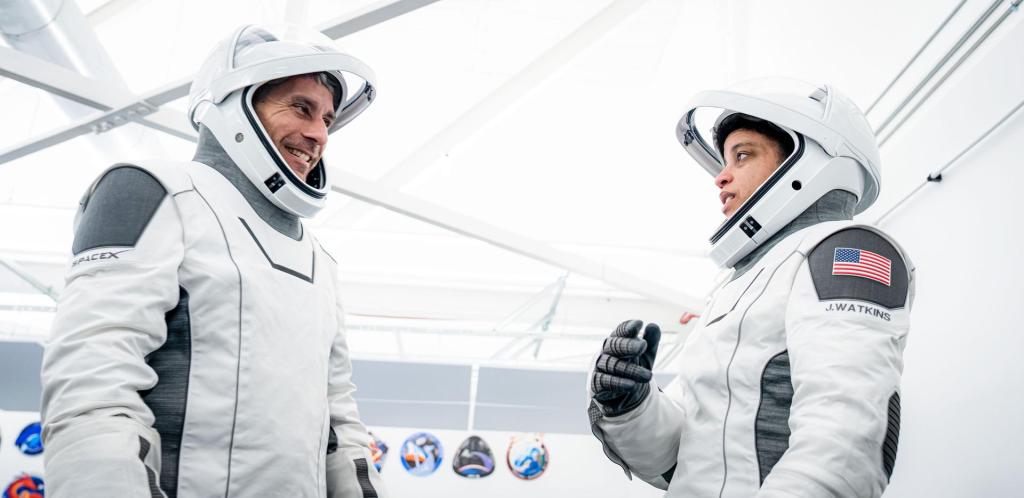
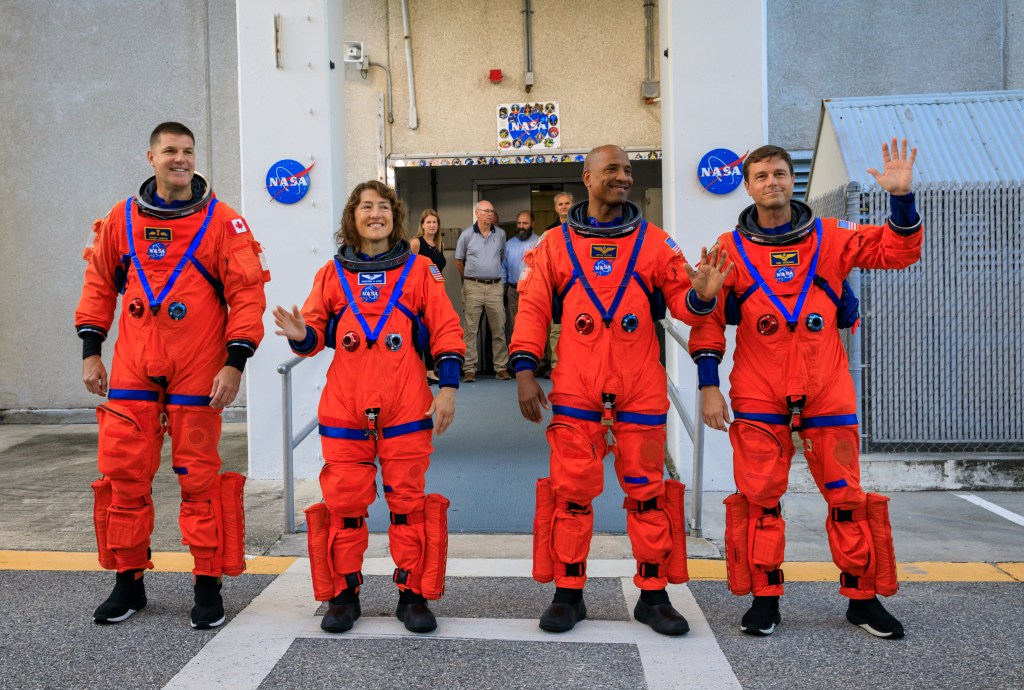
    NASA's Boeing Crew Flight Test astronauts Suni Williams and Butch Wilmore (at center) pose with Expedition 71 Flight Engineers (far left) Mike Barratt and Tracy C. Dyson (far right), both NASA astronauts, in their spacesuits.

    Preparations continue for the next spacewalk at the International Space Station planned for next week. In the meantime, the orbital residents are rebuilding advanced plumbing gear and servicing video and science hardware. Beginning around 8:45 p.m. EDT on Wednesday, June 26 NASA instructed crews aboard the space station to shelter in their respective spacecraft as …

  • ISS Daily Summary Report – 6/26/2024

    Boeing CST-100 Crewed Flight Test (CFT): The CFT crew performed various maintenance and cargo activities to assist the ISS crew. They completed an activity to help organize the PMM and an activity to remove the Urine Processor Assembly (UPA) Pressure Control and Pump Assembly (PCPA) Motor from PCPA SN002 in support of the PCPA Motor …

  • NASA Collins xEVAS Update 

    The space station is pictured from the SpaceX Crew Dragon Endeavour during its departure and flyaround on Nov. 8, 2021.

    In 2022 and 2023, NASA awarded Collins Aerospace two task orders under the agency’s xEVAS (Exploration Extravehicular Activity Services) contract. The first task order was to deliver a next generation spacesuit and spacewalking system for potential use on the International Space Station with a base value of $97.2 million. The second task order was to advance additional …

  • Cargo, Science, and Spacewalk Preps Fill Station’s Day

    The first rays of an orbital sunrise reflect off the International Space Station's roll-out solar arrays that overshadow and augment the orbital outpost's main solar arrays.

    Six NASA astronauts aboard the International Space Station had a day filled with cargo packing, orbital plumbing, and a spacewalk conference. The orbital outpost’s three cosmonauts from Roscosmos spent their day testing a 3D printer, collecting microbial air samples, and servicing life support gear. Expedition 71 Flight Engineers Tracy C. Dyson, Mike Barratt, Matthew Dominick, …

  • Signal Acquired! NOAA GOES-U Weather Satellite Begins Its Science Mission

    The NOAA (National Oceanic and Atmospheric Administration) team received telemetry from GOES-U (Geostationary Operational Environmental Satellite U), indicating the spacecraft is functioning nominally and is power positive. The NOAA GOES-U satellite has now safely deployed, and NOAA has acquired a signal. GOES-U will take about two weeks to reach geostationary orbit. Once there, the satellite …

  • NOAA’s GOES-U Weather Satellite Deployment

    The NOAA (National Oceanic and Atmospheric Administration) GOES-U (Geostationary Operational Environmental Satellite U) has separated from the SpaceX Falcon Heavy second stage rocket. The GOES-U spacecraft will now unfurl its solar arrays and work toward powering up and establishing communications with ground controllers. Follow along while the team works to acquire signal from the satellite. …

  • NOAA’s Weather Satellite Mission Completes Final Burn

    The rocket’s second stage completed its final burn before it separates from the satellite. The satellite will separate from the rocket in about eight minutes. Then, about 15 minutes later, the satellite will deploy its solar array and should achieve a power positive state about 10 minutes. Continue checking NASA’s GOES blog for additional mission …