









NASA Completes Prelaunch Instrument Testing for Hydrosat Osiris
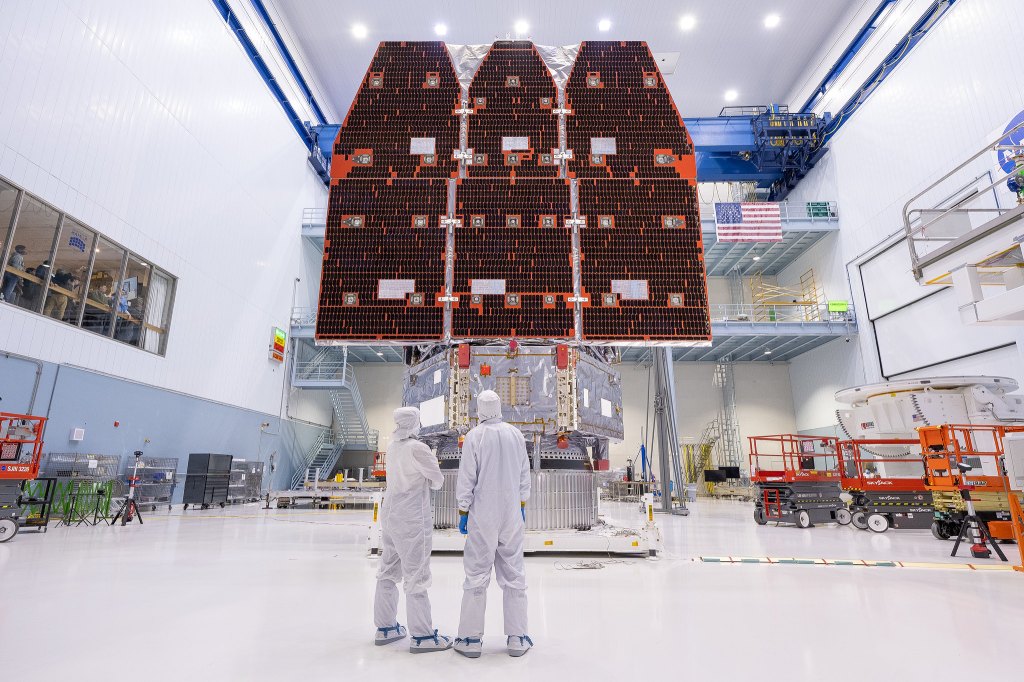
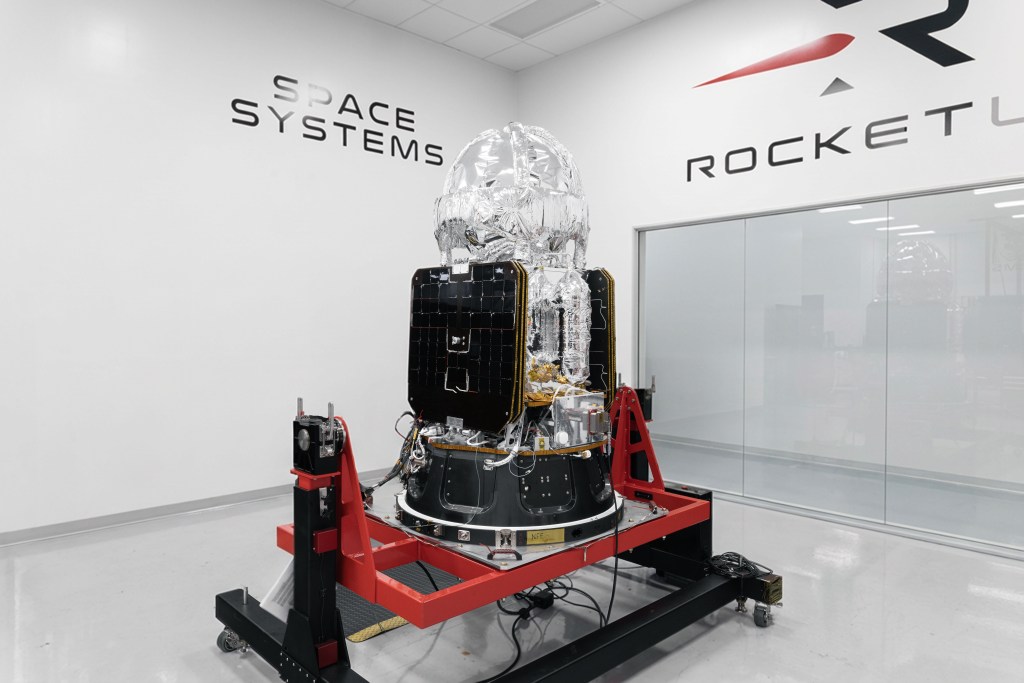
On Oct. 30, NASA completed instrument calibration for Hydrosat Osiris, a fleet of four satellites that will capture images of Earth’s surface from space. Each refrigerator-sized satellite will carry an instrument payload equipped with a suite of visible-near-infrared and long-wave-infrared sensors. These sensors will deliver data that has broad applications, from monitoring the health of crops to assessing infrastructure damage after hurricanes.
“The goal for these instruments is to capture very small changes on Earth’s surface,” said Julia Barsi, director of NASA’s Calibration Laboratories at the agency’s Goddard Space Flight Center in Greenbelt, Maryland. “Ensuring the reliability and accuracy of their data will produce more impactful science.”
Hydrosat’s visible-near-infrared cameras arrived at NASA Goddard on Oct. 16. Three days later, eight cameras were brought to the NASA Goddard Laser for Absolute Measurement of Radiance lab and positioned in front of a large chamber called an “integrating sphere.” The inside of the sphere is designed to reflect light uniformly in every direction, providing a highly controlled light source.
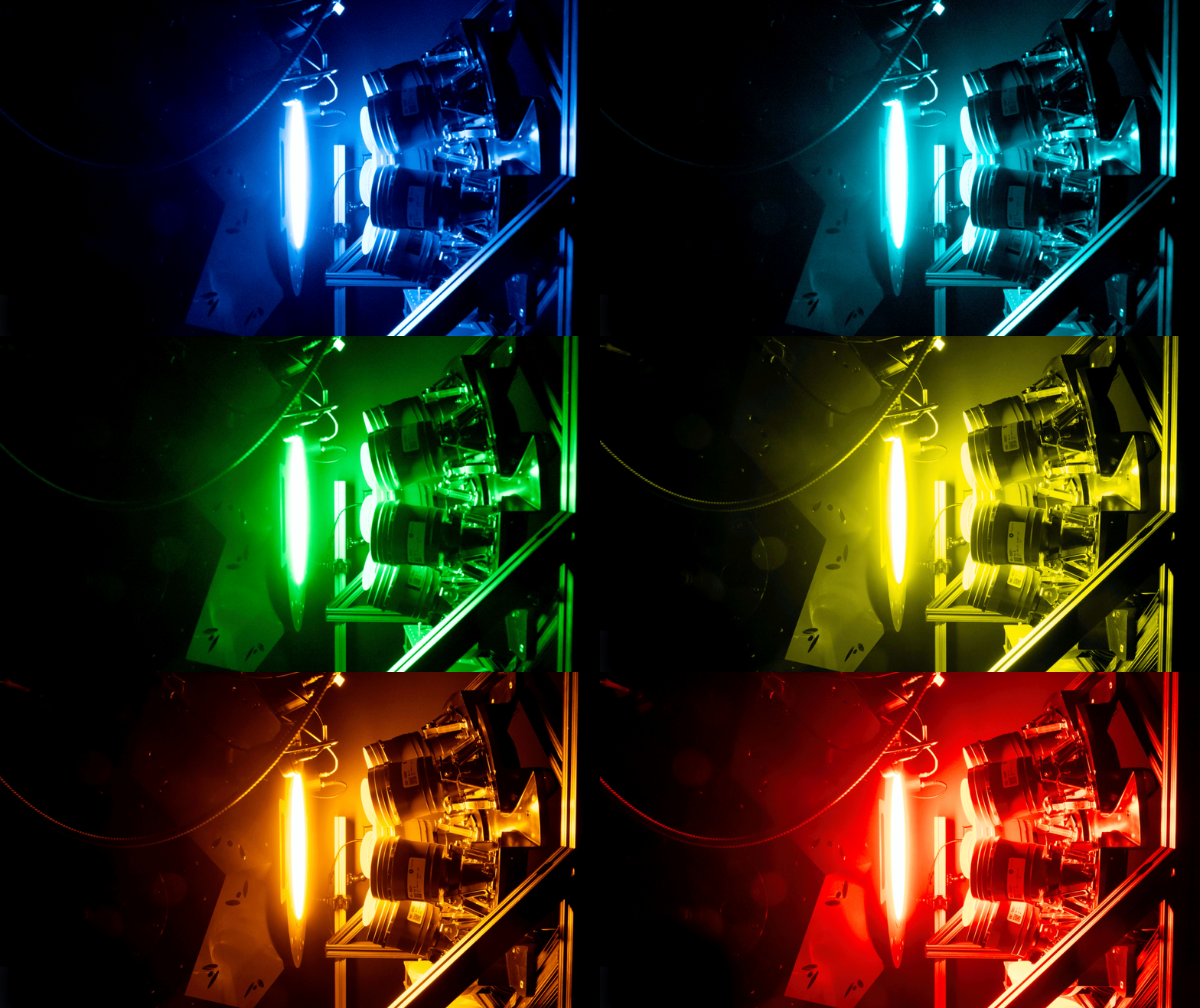
During the tests, a diffuse glow washed over the room. At regular intervals, the color of the light emanating from the integrating sphere changed — first blue, then green, yellow, orange, and finally red. Hydrosat’s team monitored the incoming data live, making sure their measurements matched the wavelength of the light generated by the lab’s laser.
The lab’s laser is unique in how it generates light accurately across the visible and near-infrared spectrum.
Because Hydrosat’s sensors can detect light that the human eye can’t see, they capture otherwise imperceptible data about Earth’s surface.
For example, stroll through a cornfield, and you might be surrounded by lush, green walls of corn. The plants appear healthy. But Hydrosat’s cameras, looking at the same field, might detect patches of corn that are starting to dry out or turn yellow. When combined with temperature data from Hydrosat’s thermal sensors, this information can help farmers irrigate more efficiently. Instead of distributing water evenly across an entire field, a farmer might water only crops that are starting to show signs of stress, which saves water, increases yield, and lowers costs.
NASA’s calibration testing, which checked Hydrosat’s ability to accurately detect these small, field-level changes, will help produce data that can be used in industries such as agriculture.
During additional tests, technicians dialed the power of their light source up and down to see how Hydrosat’s instruments respond across a range of brightness levels. Unlike an integrating sphere, Earth’s surface is highly variable. Features on Earth, such as grass, soil, water, concrete, and ice, reflect light of all colors and brightness levels. This testing helps ensure Hydrosat’s instruments can accurately measure light coming from Earth’s surface no matter how bright or energetic the light.
Hydrosat Osiris builds on the work of VanZyl-1 and VanZyl-2, two Hydrosat satellites that launched in 2024 and 2025. Like its predecessors, Osiris’ data will be accessible to authorized users through NASA’s Commercial Satellite Data Acquisition (CSDA) program, which develops commercial data for scientific research and applications. Hydrosat’s new constellation will enhance the resolution of the company’s current data products, allowing scientists to study Earth’s surface in greater detail.
As the commercial satellite industry establishes itself as a reliable provider of science-grade data, the Hydrosat calibration testing could be used as a blueprint to develop reliable measurements and accelerate scientific progress.
“Hydrosat has capabilities NASA doesn’t have. And NASA has this capability — the sheer existence of the Goddard Laser for Absolute Measurement of Radiance lab — that we don’t have,” said Aaron Freeman, Hydrosat’s director of engineering. “It’s honestly the best win-win I’ve seen in a long time.”
By Nathan Marder, nathan.marder@nasa.gov
NASA’s Goddard Space Flight Center, Greenbelt, Md.
