











Expanded Crew Works Science, Microgravity Adaptation, and Next Crew Departure
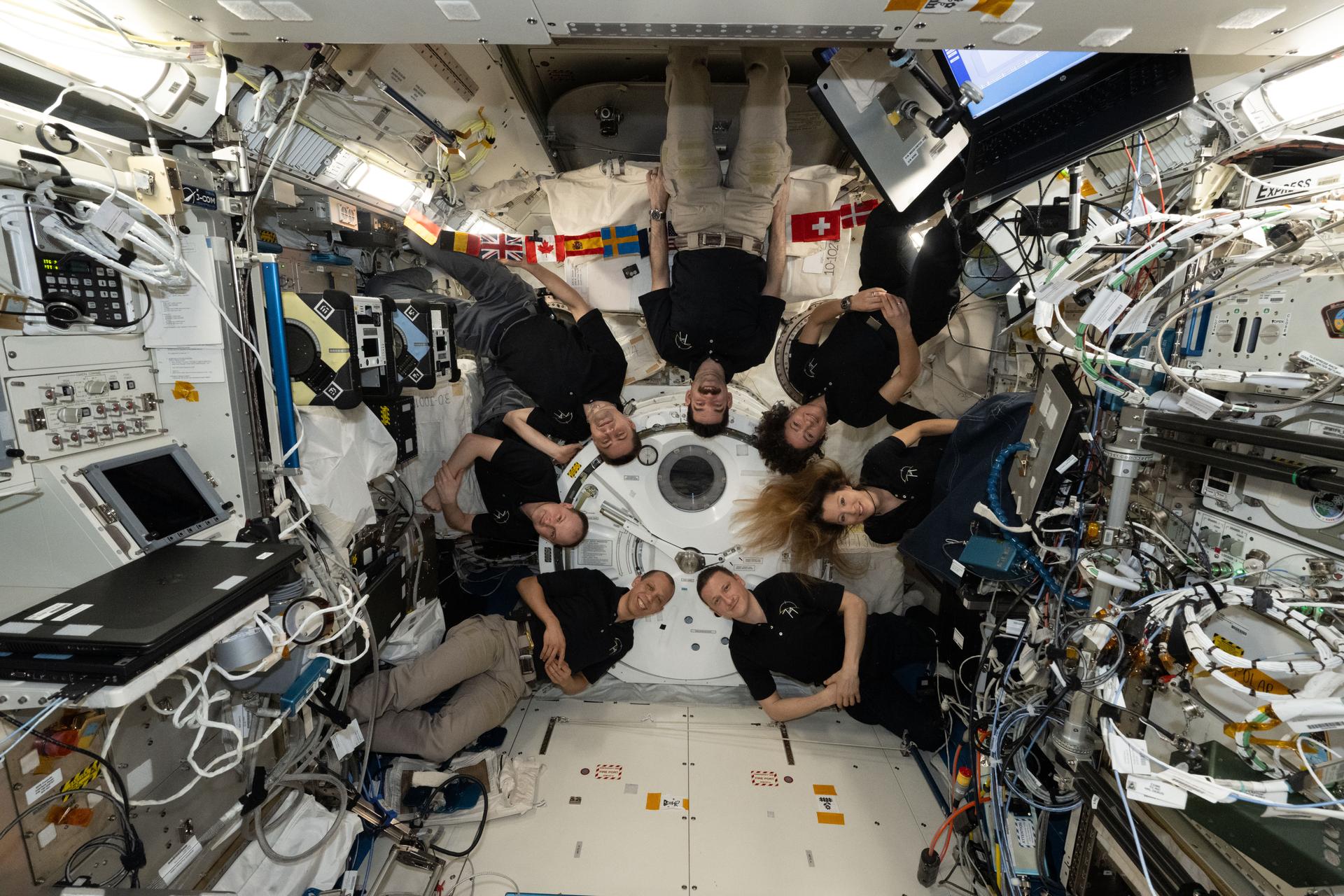
The International Space Station is a busy place hosting ten crewmates from NASA, Roscosmos, and ESA (European Space Agency) through the end of July. The expanded Expedition 74 crew is continuing its microgravity research, helping three new arrivals adjust to life in space, and preparing for the departure of another three crew members.
NASA flight engineer Anil Menon spent Thursday on station adaptation activities unpacking his personal items, familiarizing himself with lab systems, and adjusting to life in weightlessness. Menon also attached thermo-mini-sensors to his body that measure how his body temperature and sleep patterns are affected by weightlessness.
The two newly-arrived flight engineers from Roscosmos, veteran cosmonauts Pyotr Dubrov and Anna Kikina who are on their second station mission, wore virtual reality goggles and electrodes tracking their brain signals and eye movement. The Virtual experiment is testing how a crew member’s sense of balance and direction adapts to weightlessness. The pair also resumed unpacking cargo from the new Soyuz MS-29 spacecraft and getting used to station life.
NASA flight engineer Chris Williams and cosmonauts Sergey Kud-Sverchkov and Sergei Mikaev are nearing the end of their mission that began on Nov. 27, 2025. The trio performed leak checks on the Sokol suits they will wear on the ride back to Earth inside the Soyuz MS-28 spacecraft. The homebound crewmates are also reviewing their Soyuz descent and landing procedures, packing cargo and personal items for return, and preparing to hand over their responsibilities to the new arrivals.
Flight engineer Jessica Meir of NASA continued testing how to make saline solution in microgravity using the station’s water supply. Flight engineers Jack Hathaway of NASA and Sophie Adenot of ESA took turns swapping cargo in and out of the Cygnus XL spacecraft then split their day servicing life support gear, recording educational videos for students on the ground, and training the new crew to use station exercise equipment. Roscosmos flight engineer Andrey Fedyaev spent his shift photographing and nourishing microbe samples for the Aseptic biotechnology study exploring ways to keep spacecraft safe and sterile during research operations.
Learn more about station activities by following the space station blog, @space_station on X, as well as the ISS Facebook and ISS Instagram accounts.
Get the latest from NASA delivered every week. Subscribe here.
