









Office of Communications
Goddard Media Resources and Guidelines
Members of the news media interested in filming at NASA’s Goddard Space Flight Center’s main campus in Greenbelt, Maryland, or in conducting interviews with Goddard employees must contact the appropriate representative of the center’s Office of Communications. These staff members will assist with assignments and make all reasonable efforts to arrange any necessary details in accordance with deadlines.
Goddard Office of Communications Contacts
News Chief: Rob Garner
Astrophysics / Hubble Space Telescope / James Webb Space Telescope: Laura Betz
Nancy Grace Roman Space Telescope: Claire Andreoli
Earth Science: Jacob Richmond; Peter Jacobs
Heliophysics / Solar Science / Planetary: Sarah Frazier
OSIRIS-APEX: Katy Mersmann
Backup contact: Michelle Handleman
Wallops Flight Facility: Wallops Office of Communications
Backup contact: Michelle Handleman
Office of Communications main phone line: 301-286-8955
Internal Communications: Bri Horton
Goddard Freedom of Information: Nikki Gramian
Multimedia
Image Requests, Web, Social Media: Goddard Digital Team (web/social)
Video Requests: Michelle Handleman
Deputy Executive Producer: Deanna Kekesi
Tours
VIPs and Professional Organizations: Bri Horton
Student Groups, Scouts, Camps, etc.: Goddard Visitor Center
Outreach Programs
Public Engagement and Outreach Team Lead: Bri Horton
Outreach Event Requests: Erin Roberts
Goddard’s Traveling Exhibits Program: Greenbelt Visitor Center Staff
Greenbelt Visitor Center: Greenbelt Visitor Center Staff, Amy Barra
Wallops Visitor Center: Wallops Visitor Center Staff, Amy Barra
Launch Viewings (Guest Operations): Erin Roberts (Larger Goddard missions); Wallops Office of Communications (Wallops missions)
Subscribe to Press Releases
To receive press releases from NASA’s Goddard Space Flight Center, email gsfc-press-releases-join@lists.nasa.gov (no subject or text in the body is required). To unsubscribe, gsfc-press-releases-leave@lists.nasa.gov (no subject or text in the body is required).
Entertainment, Documentary and Commercial Television Productions
All filming requests for entertainment, documentary or commercial productions must be initially reviewed and approved by NASA Headquarters, Washington. Instructions may be found at: https://www.nasa.gov/collaborating-with-nasa/film-and-documentary-guidelines
Visit Procedures
Our first priority is the scientists’ and engineers’ work. Please cooperate with their limits. This includes respecting the designated areas for filming, honoring the start and end times for interviews, and abiding by the schedule.
The Office of Communications will generate the film schedule. This includes: deciding the schedule, setting up the time(s), location(s) and duration of each shoot. Phone or scouting interviews are allowed, but all schedules will be worked through our office.
To help better schedule your visit, please inform your contact of how much time it will take for the crew to set up lights and cameras, taking into account the time it will take to travel from building to building around Goddard’s campus-style facility. Please note that we may not be able to accommodate requests for extraordinarily long setup times. Visiting media and production crews should plan to drive their own vehicle(s) to and from the Goddard campus and between filming locations. We will not use personal vehicles to transport your crew and equipment around the center.
Please make an effort to streamline your setup times and equipment transport; the schedule is very busy and experts will not be available after their scheduled times. Unless otherwise scheduled, your visit can begin as early as 8 a.m. and will end no later than 4:30 p.m. Please be packed up by 5 p.m. We’ve established this schedule so that the day will move smoothly.
You will be escorted all day by a Goddard representative — not necessarily the communications rep that arranged your interview. This person can escort six people onto our facility without having an additional escort. If you must change a scheduled element, please check with the communications rep that arranged and coordinated your visit. The escort will be provided with the schedule and contact info. Please note that any last-minute schedule changes can only be made by the communications representative that arranged the schedule. No escort, other than the communications rep, will be able to change the set schedule on the day of the visit.
The entire crew must be within sight of the escort at all times.
Security Requirements
In order to clear your visit through security, we need to know the names and nationalities of each crew member. U.S. citizens can be processed in about three to five workdays. U.S. citizens must present a valid driver’s license or ID card when checking in.
Please be sure to arrive 30 minutes before your start time with your identification, in order to be checked in.
No children or other non-working family members may accompany the crew.
Additional Requirements for Foreign Nationals
Crew members who are not U.S. citizens must meet the following requirements:
In order to clear foreign nationals through our security office, each member of your production team who doesn’t hold a U.S. passport must complete the Foreign Visitor Information Sheet (below). This form, along with scanned copies of their passport AND visa or visa waiver must be submitted to your media rep at least one month prior to the visit. These documents will be added into our security database. Security clearance will require 30 days to process each request.
Non-citizens will need their passports, visas and/or resident alien cards with them.
Getting to Goddard
Please be sure to arrive 30 minutes before your scheduled start time with your identification in order to allow time to get your crew processed through security. Your escort will meet you at the security office at Goddard’s main gate at 8800 Greenbelt Rd., Greenbelt, Md., unless otherwise specified.
Location and Personal Release Forms
We will also need you to provide us with the full names of your production crew and a detailed description/treatment of the program several weeks in advance of your visit to Goddard, so we can have our legal department prepare releases.
NASA civil servant employees are not permitted to sign releases provided by outside companies. Goddard attorneys prepare specific universal language for such purposes.
If your production requires interviewees to sign personal releases, please provide your contact in the Office of Communications with the following information:
- Name of the entity making the request (person or company)
- Name of program (or at least a working title)
- General program subject matter
- Planned date(s) to be on center
- Planned site(s) at which you will be filming b-roll and/or conducting on-camera interviews
- Planned people to film and/or interview
If we have this information several days in advance of your visit we can have releases drafted and available when you arrive at Goddard.
If you have any questions about Goddard’s policies regarding media visits, please contact Michelle Handleman or Deanna Kekesi.
Additional Information
- Film and Video Locations at Goddard
- Obtaining Additional Video / Animations / Visualizations / B-Roll
Goddard’s Scientific Visualization Studio (SVS) contains all of our data visualizations, conceptual animations, produced video packages and some b-roll. All of the footage on the SVS can be downloaded directly from this site in the highest resolution we have available. Newer footage is available in HD and a variety of sizes and formats.
http://svs.gsfc.nasa.gov/ - Goddard’s Flickr Site
- NASA’s Earth Observatory
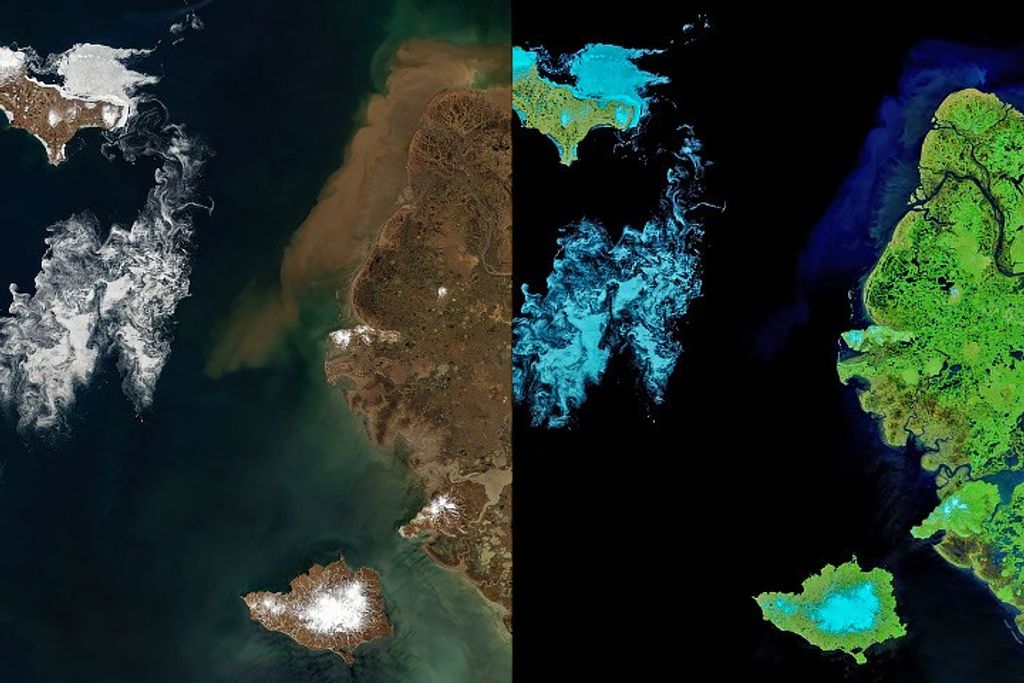
This website contains images and stories about climate and the environment that emerge from NASA research, including its satellite missions, in-the-field research, and climate models. This is a good source for satellite imagery and depictions of NASA data in pictorial form.
http://earthobservatory.nasa.gov/ - MODIS Instrument Website
The MODIS instruments on NASA’s Aqua and Terra satellites gather images of Earth’s entire surface every one to two days, which are housed on this website.
http://modis.gsfc.nasa.gov/ - NASA’s Visible Earth Website
Another source for images and animations of Earth.
http://visibleearth.nasa.gov/