

















Cryogenic Fluid Management
Cryogenic fluid management (CFM) is a term used to describe a suite of technologies that store, transfer, and measure ultra-cold fluids – such as liquid hydrogen, liquid oxygen, and liquid methane. Cryogenic fluid management is an integral part of exploration systems for Earth-to-orbit transportation, human missions to the Moon and Mars, planetary exploration, and in-situ resource utilization. The Cryogenic Fluid Management Portfolio Project is sponsored by NASA’s Technology Demonstration Missions, part of the agency’s Space Technology Mission Directorate. The Technology Demonstration Missions program office at NASA’s Marshall Space Flight Center in Huntsville, Alabama, oversees a portfolio of technology demonstration projects led by NASA centers and industry partners across the country.
Cryogenic Fluid Management News
The farther the destination, the more fuel a rocket needs. The more fuel the rocket carries, the heavier the spacecraft. The heavier the spacecraft, the more…

Written by Daniel Boyette In the vacuum of space, where temperatures can plunge to minus 455 degrees Fahrenheit, it might…
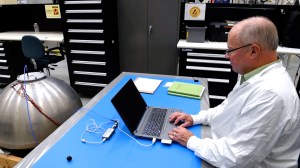
Many of the conveniences we have on Earth are still being developed to work in space. For example, we can…
What is Cryogenic Fluid Management?
CFM Fact Sheet
Cryogenic Fluid Management (CFM) is a term used to describe a suite of technologies that store, transfer, and measure ultra-cold fluids—such as liquid hydrogen, liquid oxygen, and liquid methane.
NASA explores the unknown in air and space, solving mysteries of Earth, the solar system, and beyond. For the agency to achieve its Moon to Mars goals, it needs cryogenic technology to keep hydrogen and other fluids cold for long periods of time while in deep space.
View the Fact Sheet about CFM Fact Sheet