
















Commercial Space to Leverage ADEPT (Adaptable Deployable Entry and Placement Technology) for Moon and Mars Missions
NASA’s umbrella-like ADEPT deployable entry system is being adapted to serve as the aerobrake to slow down the spacecraft for future Blue Origin lunar and Martian cargo deliveries as well as Earth-return applications. In addition, the ADEPT system has drawn interest from several other commercial space companies and other government agencies.
Testing with NASA’s Flight Opportunities program in 2018 helped pave the way for commercialization of this cutting-edge technology developed at NASA’s Ames Research Center, in California’s Silicon Valley, with support from the agency’s Game Changing Development and Small Business Innovation Research (SBIR) programs. This successful transition of NASA’s ADEPT to the commercial space industry demonstrate the far-reaching impact of early-stage and ongoing investments from NASA’s Space Technology Mission Directorate.
Unfolding Potential with New Technology
When venturing to other planets or returning to Earth, saving space and enabling safer atmospheric entries are top priorities. The ADEPT system is poised to help achieve both goals.
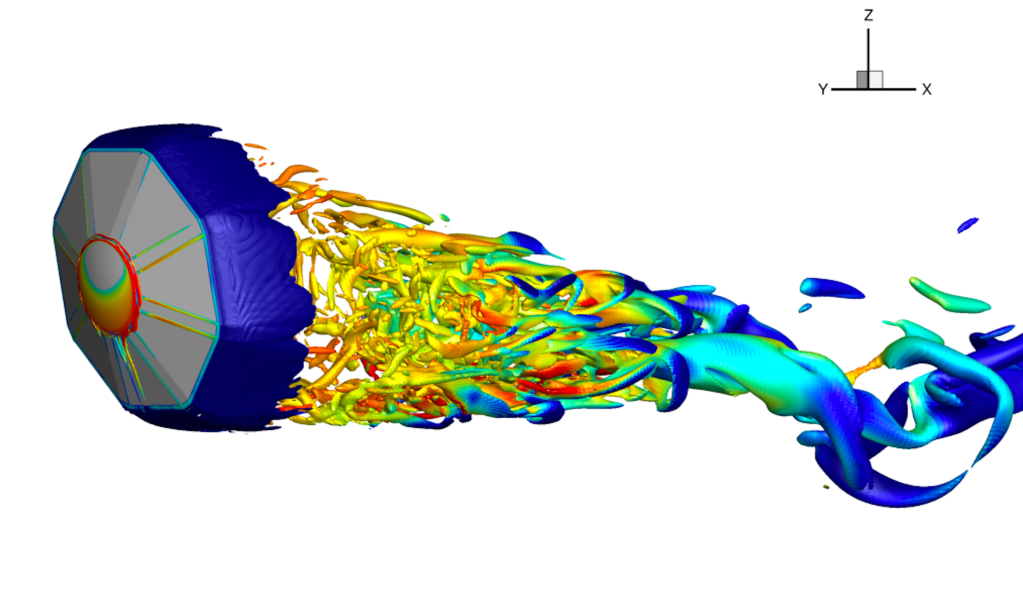
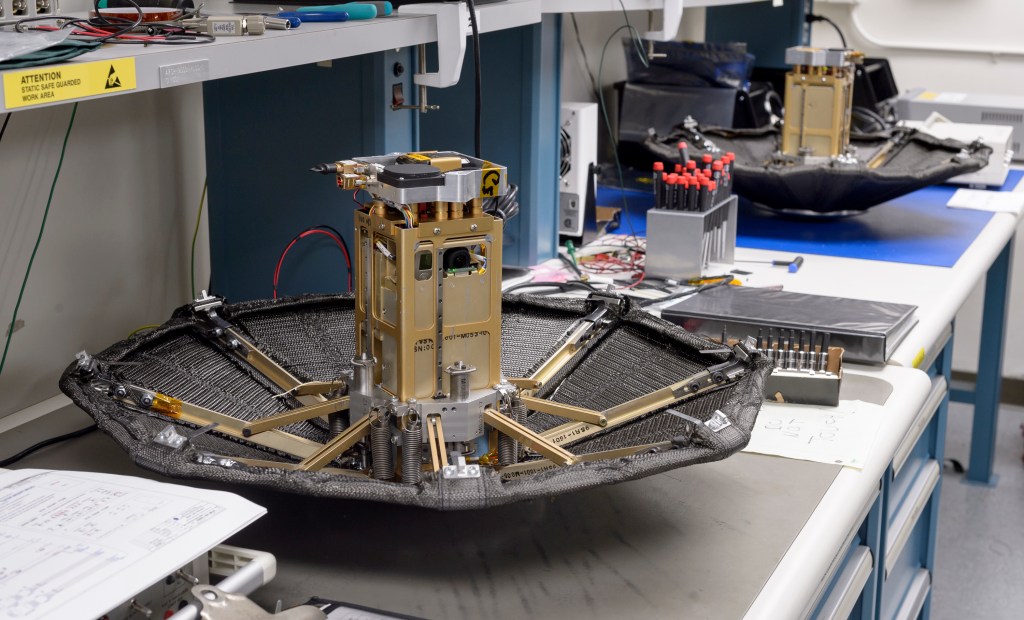
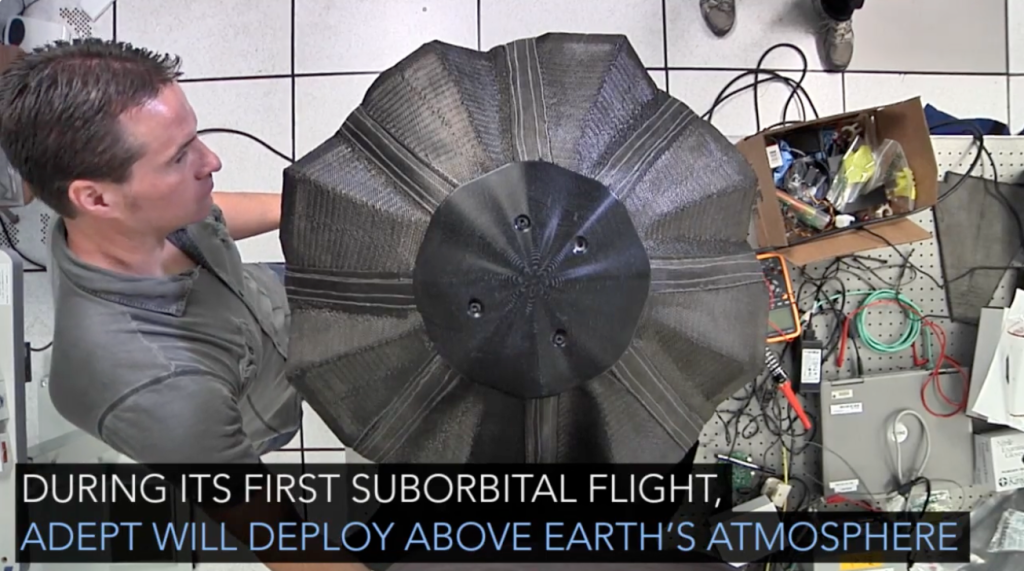
The umbrella-like ADEPT system is a semi-rigid aeroshell that opens when needed to slow down a space vehicle when returning from the Moon or landing on another planet or to perform maneuvers known as aerocapture to enter a planet’s orbit. Not only can ADEPT be stored in a compact space, but the decelerator system is also lighter than rigid aeroshells, reducing the fuel needed for launch and freeing up space for other payloads.
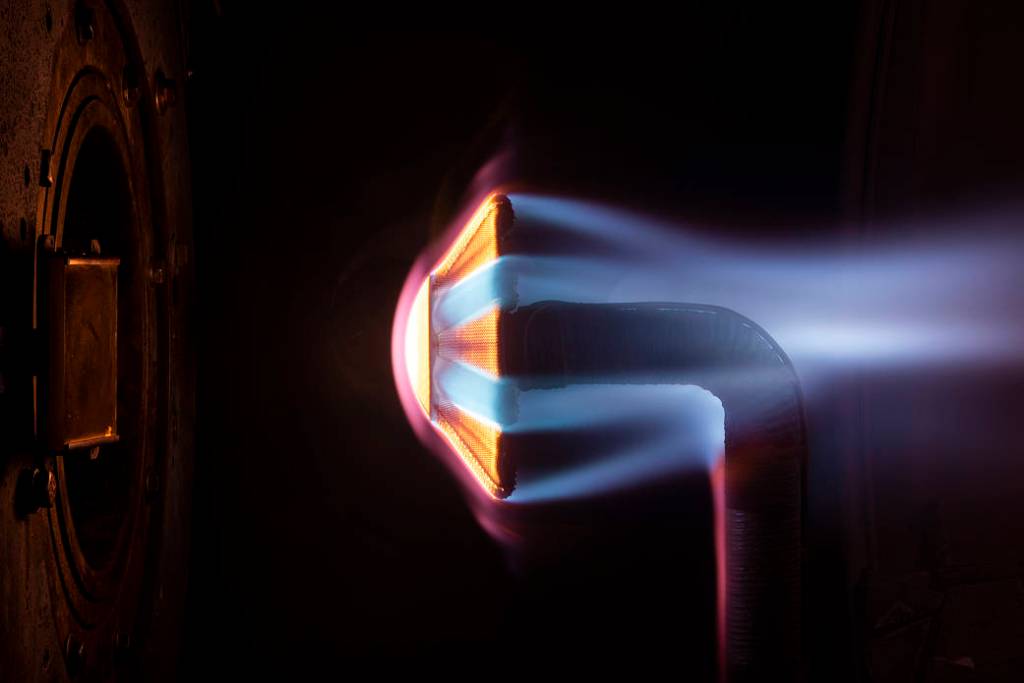
The “umbrella’s canopy” for ADEPT is a special 3D woven, flexible, carbon fabric that functions both as a heat shield and an aerodynamic surface. Developed in partnership with Pennsylvania-based Bally Ribbon Mills (BRM), this material protects the space vehicle when passing through the atmosphere during entry, where temperatures can reach up to 4,500 degrees Fahrenheit. The company went on to develop a new version of the fabric called Spiderweave that eliminated the seams between the gore sections — that is, the triangular pieces of fabric that make up the canopy. NASA supported BRM’s development and small-scale testing of the seamless Spiderweave 3D woven carbon fabric through the SBIR and Game Changing Development programs, respectively.
The ADEPT decelerator is patented and available for license via NASA’s Technology Transfer program.
Testing ADEPT on a Suborbital Rocket
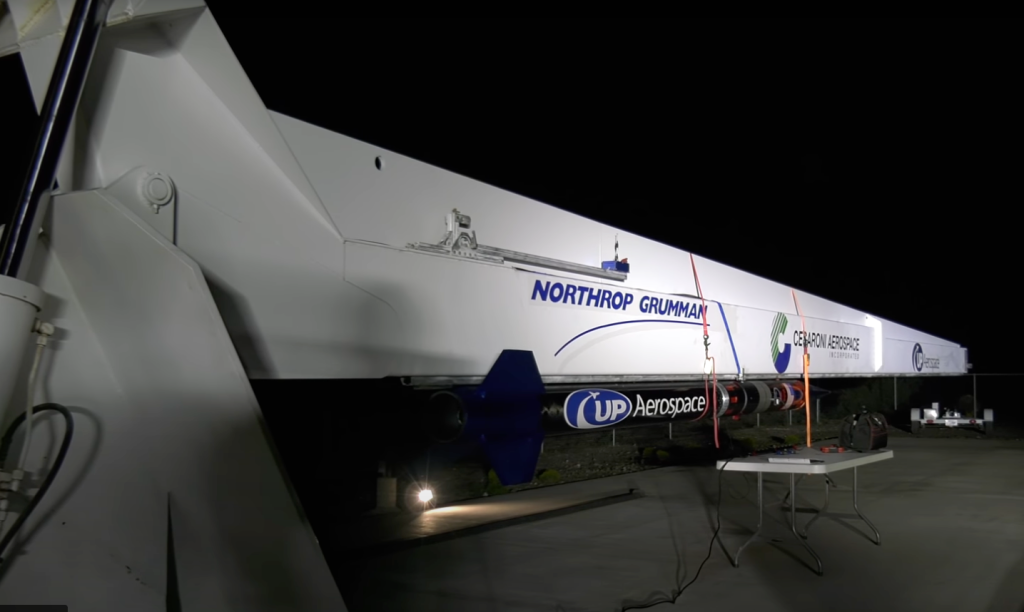
In a Sept. 12, 2018, test supported by the agency’s Flight Opportunities program, NASA demonstrated ADEPT’s deployment sequence and entry performance aboard an UP Aerospace sounding rocket launched from Spaceport America in New Mexico. During the flight test, ADEPT launched in a folded configuration and then separated from the rocket and unfolded 60 miles above Earth before returning to land. The flight test provided a low-cost means to significantly mature the 1-meter (approximately 3-foot) system, proving it could successfully unfurl from its closed-umbrella configuration and then maintain stable flight in supersonic conditions. Researchers also used flight test data to improve the design in anticipation of low Earth orbit re-entry CubeSat and other small satellite missions.
Learn more about the 2018 flight testRelated Content
NASA Tests Space Tech on UP Aerospace Rocket
Exploring the Solar System? You May Need to Pack an Umbrella
Foldable Heat Shield Could Help NASA Deliver Much Bigger Cargo to Deep Space
ADEPT’s Spiderweave Material Tested at Arc Jet Facilities