













FLIGHT OPPORTUNITIES COMMUNITY OF PRACTICE WEBINAR
TechLeap Universal Payload Interface Challenge: Spotlight on Winning Solutions
March 4, 2026
Speakers
- Eric Jordan, Project Manager, Aegis Aerospace, Inc.
- Solange Massa, M.D. Ph.D., Founder and CEO, Ecoatoms, Inc.
- Ethan Tsai, Project Manager, UCLA Electron Losses and Fields Investigation CubeSat Project
- Joe Zimo, Space Technology Analyst, NASA Headquarters
Abstract
Join us to hear about solutions developed by winners of the NASA TechLeap Prize Universal Payload Interface Challenge. With the goal of changing the pace of space, NASA’s Flight Opportunities program issued this challenge to help move technologies into flight testing and between different flight environments as quickly as possible. This challenge invited businesses, academic institutions, entrepreneurs, and other innovators to devise a flight-ready solution to enable easy integration of diverse technology payloads onto various commercial vehicles.
During this session, the three teams selected in June 2024 will share their progress in developing their solutions:
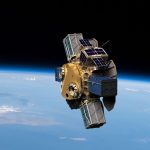
- EPIIC (Easy-to-Use Payload Interoperable Integration Carrier) from Aegis Aerospace is a modular experiment and payload adapter designed around a CubeSat construct, enabling simple, rapid, and interchangeable integration onto a variety of spaceflight vehicles. Aegis Aerospace’s design optimizes mass and volume, and it leverages spaceflight-proven hardware.
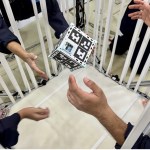
- ANIMA (Apparatus for Nominal Integration with Minimal Adaptations), developed by Ecoatoms, consists of an interchangeable adapter, a universal power and data connector, and an on-board computer that is designed to integrate payloads onto a range of flight vehicles with minimal adaptations.
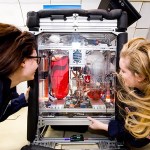
- SDPI (Software-Defined Payload Interface) is a compact yet flexible CubeSat-compatible system that allows the payload developer to define multiple digital and power interfaces via software. Developed by the ELFIN (Electron Losses and Fields Investigation) student team at the SPACE Institute of the University of California, Los Angeles, the low-cost SDPI leverages the team’s prior successful flight engineering experience.
Join the session to understand how each team leveraged prize awards to bring their proposed solution to life. Hear lessons learned and gain insight into how these solutions can help researchers rapidly develop adaptable payloads for a wide range of flight vehicles.
Speaker Bios
Eric Jordan is a seasoned project manager at Aegis Aerospace, Inc., a leading woman-owned space and technology company headquartered near NASA’s Johnson Space Center in Webster, Texas. Aegis Aerospace provides turn-key space services, spaceflight product development, engineering solutions, and advanced technical support to NASA, the Department of Defense, and commercial clients in the civil, commercial space, and defense sectors. With over 20 years of experience as a project manager, Eric has led projects involving flight hardware for space applications as well as equipment for the subsea oil and gas industry. His expertise encompasses managing complex, technically demanding initiatives that require strong coordination of engineering, integration, and operational requirements to ensure successful delivery within scope, budget, and schedule. Eric’s background in mechanical engineering provides him with a solid technical foundation in design, analysis, and systems development that underpins his project leadership in high-stakes aerospace and energy environments. His work contributes to advancing innovative space technologies and supporting critical missions that explore, protect, and expand human presence in space.
Dr. Solange Massa is the founder and chief executive officer of Ecoatoms, a venture-backed enterprise and NASA partner specializing in advanced space manufacturing and research payloads. Under Dr. Massa’s leadership, Ecoatoms has delivered innovative solutions to Global Fortune 500 corporations and government entities across the biomedical, aerospace, and defense sectors. The company has successfully executed multiple space missions, including the LETO lunar biological payload and the ARES structural chamber payload, with upcoming missions HERMES (DNA extraction payload) and ANIMA (universal onboard computer) scheduled for the forthcoming year. Ecoatoms has been honored with distinguished awards, including the AFWERX Challenge, Blue Origin’s Reef Starter Innovation Challenge, the NASA REDDI Award, and the NASA TechLeap Prize.
Prior to founding Ecoatoms, Dr. Massa held the position of lead investment fellow at Life Science Angels, where she facilitated strategic investments in cutting-edge biotechnologies. She also completed a postdoctoral fellowship at Stanford University, where her research focused on developing biomaterials for the treatment of radiation-induced diseases. During her doctoral studies at the Harvard-MIT Health Sciences and Technology program, Dr. Massa pioneered award-winning Organ-on-a-Chip platforms, earning her recognition as an MIT Innovator Under 35. Her contributions to science and technology have been prominently featured in TEDx, MIT Technology Review, BBC, Wired, and numerous peer-reviewed scientific journals.
Dr. Ethan Tsai is an aerospace engineer and space physicist in the UCLA Department of Earth, Planetary, and Space Sciences, where he manages the Experimental Space Physics Laboratory. He was the project manager of the NASA/NSF ELFIN CubeSat mission from Phase B through F and continues to play a key role in supporting ELFIN science to this day. Under Prof. Vassilis Angelopoulos, Dr. Tsai earned his Ph.D. in space physics in 2024, with a dissertation that used ELFIN observations to develop new models of whistler-mode wave-driven electron losses from the outer radiation belts. Today, he leads the development on multiple NASA and ESA heliophysics hardware efforts, such as DC/AC magnetometers, solid state telescopes, and other space plasma instruments. He also enjoys managing and mentoring a large, multidisciplinary undergraduate engineering team that supports broader projects such as the NASA TechLeap Universal Payload Interface challenge.