
















What is SSPICY?
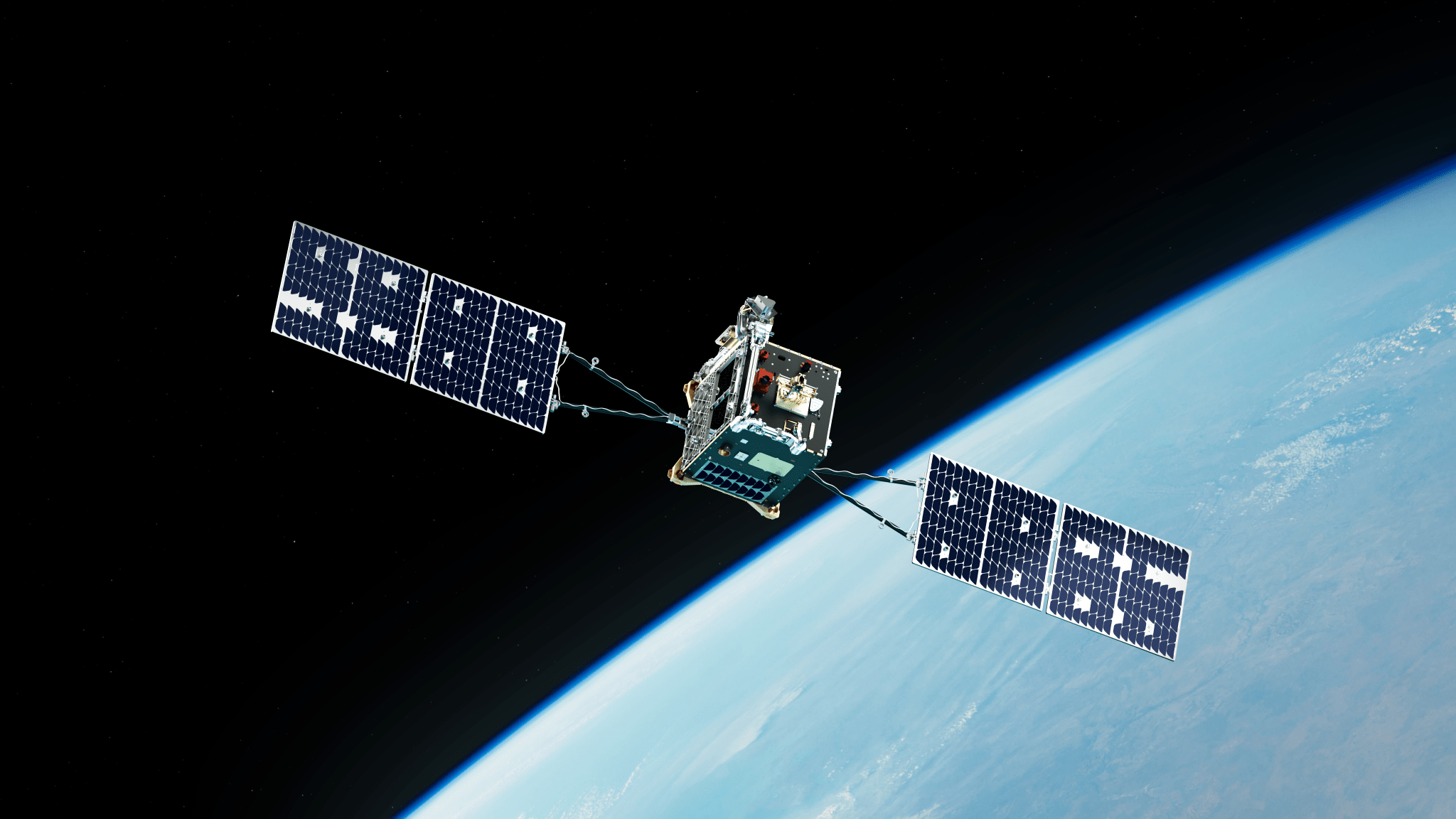
NASA’s Small Spacecraft Propulsion and Inspection Capability (SSPICY) is a public-private partnership to demonstrate technologies for in-space satellite servicing and inspection. SSPICY will demonstrate new propulsion, guidance, navigation, and control technologies and an innovative articulating robotic boom. These advancements will enable SSPICY to maneuver across different orbits to reach and inspect satellites and other space objects with precision, paving the way for future autonomous servicing and orbital debris assessment.
The Orbital Debris Challenge
Orbital debris consists of human-made, non-functional objects, such as inoperable satellites or pieces of spacecraft, that are orbiting or re-entering Earth’s atmosphere. Low Earth orbit contains the highest concentration of orbital debris, and the ability to inspect objects to assess repair or disposal opportunities is increasingly important for the long-term sustainable use of space.
Investing in technologies that enable spacecraft to serve as autonomous inspectors capable of assessing the condition of defunct satellites and other debris will help NASA and its commercial partners better understand the characteristics of inactive spacecraft over time. Such insights will advance solutions that extend the operational lifetime of active spacecraft and mature techniques for future orbital debris management.
Demonstrating Debris Inspection
The SSPICY mission will demonstrate technologies necessary for future debris removal missions as well as for future applications in the servicing and inspection of active spacecraft. This advances NASA’s in-space manufacturing and assembly (ISAM) goals to ensure a sustainable space operating environment and builds towards a future where objects can be assembled, repaired, and maintained in space, significantly expanding possibilities for science and human exploration.
SSPICY is being developed by Starfish Space of Seattle through a Phase III Small Business Innovation Research (SBIR) award, funded and managed by NASA’s Small Spacecraft and Distributed Systems (SSDS) within the agency’s Research and Technology Mission Directorate (RTMD).
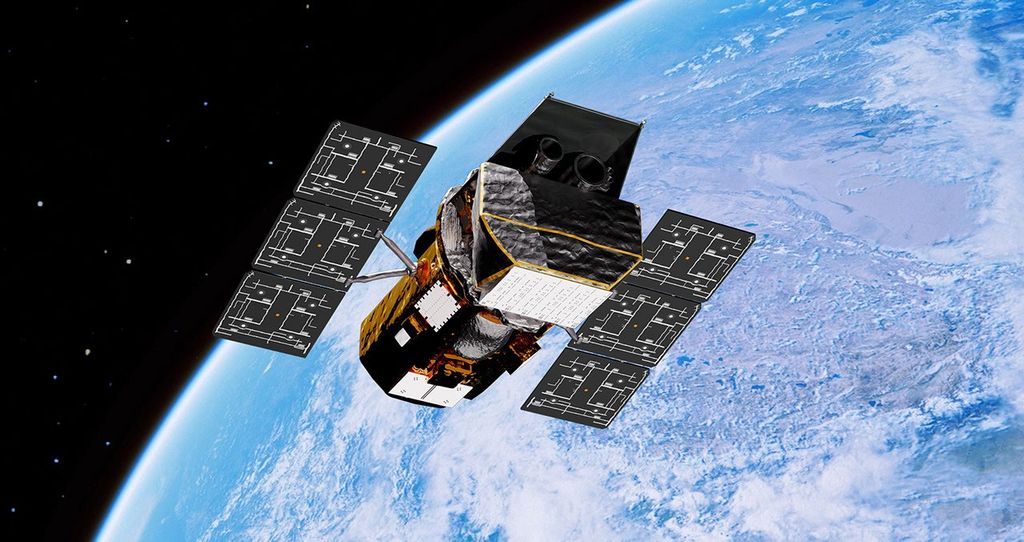
Starfish will outfit its 335 kilogram (739 pound) Otter 24C spacecraft with technologies that perform orbital maneuvering and close approach to inspect up to four inoperable space objects of U.S. origin, such as satellites, rocket bodies, or other objects. During the visual inspection, the spacecraft will characterize the physical state of each space object. The Otter spacecraft will perform visual inspections of each object, gathering information on surface condition, object geometry, and orbital details. The mission is expected to last approximately two years.
SSPICY’s mission will be enabled by four key technologies developed by Starfish Space. All technologies will be integrated onto a spacecraft bus developed by Astro Digital, Inc. of Santa Clara, California.
These technologies include:
- Manta: An articulating robotic boom for thruster pointing
- Nautilus: Otter’s docking mechanism that will allow docking with other spacecraft, even those not designed for docking
- CETACEAN: A modular, dynamic relative navigation software package that uses computer vision and sensors, including an imager that features a stereoscopic camera system
- CEPHALOPOD: Autonomous guidance and control software that uses data from CETACEAN to evaluate abort and approach decisions for the Otter spacecraft as it nears an orbital object of interest
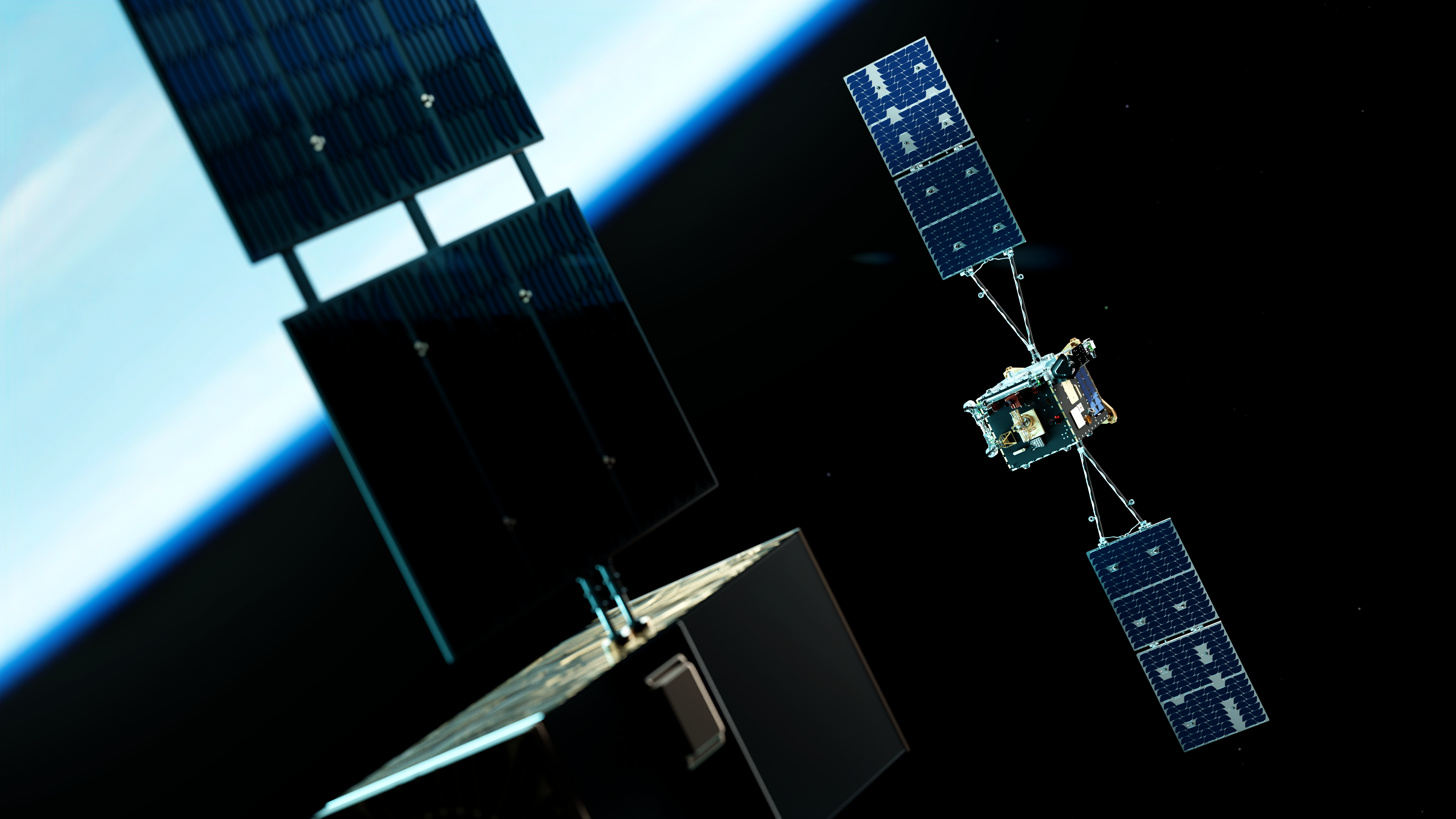
Mission Objectives:
The SSPICY mission has three primary objectives:
- Perform close-up visual inspections.
- Gather critical data on debris characteristics.
- Validate technologies for future debris remediation efforts.
Fast Facts:
- The Manta robotic boom includes multiple joints, which enables operations with six degrees of freedom.
- Nautilus is the spacecraft’s mechanical gripper that can dock to a wide variety of protrusions and surfaces – even those not designed for docking. While the SSPICY demonstration goals do not include docking with a client spacecraft, Nautilus could potentially be used for follow-on missions.
- The CETACEAN navigation technology uses computer vision to determine how an orbital object of interest is positioned and moving with respect to the Otter 24C.
- CEPHALOPOD uses data from CETACEAN to compute safe and stepwise approach decisions for the Otter 24C spacecraft as it nears an orbital object of interest.
- An efficient, low-thrust electric propulsion system will allow Otter 24C to travel to and safely approach each object to within hundreds of meters to conduct inspections and gather key information.
- Selection criteria for the space objects that Otter 24C will inspect include: proximity to the orbit where SSPICY will deploy after launch, medium size, of U.S.-origin, and at least 400 kilometers (248.5 miles) in altitude in a circular orbit around Earth.
- The Otter spacecraft is expected to launch in late 2026 and will begin performing inspections in 2027.
Partners:
- Starfish Space of Seattle is developing and will operate Otter 24C, which will perform the SSPICY mission.
- NASA’s SSDS within the agency’s RTMD funds and manages the technology demonstration. The program is based at NASA’s Ames Research Center in California’s Silicon Valley.
- NASA’s SBIR program, based also at Ames, funded awards to Starfish Space to support early development of the spacecraft’s key technologies and capabilities.
Learn More:
Getting SSPICY: NASA Funds Orbital Debris Inspection Mission
For Investigators:
Investigators interested in opportunities with the Small Spacecraft & Distributed Systems program please visit here.
For News Media:
Members of the news media interested in covering this topic should reach out to the NASA Ames newsroom.
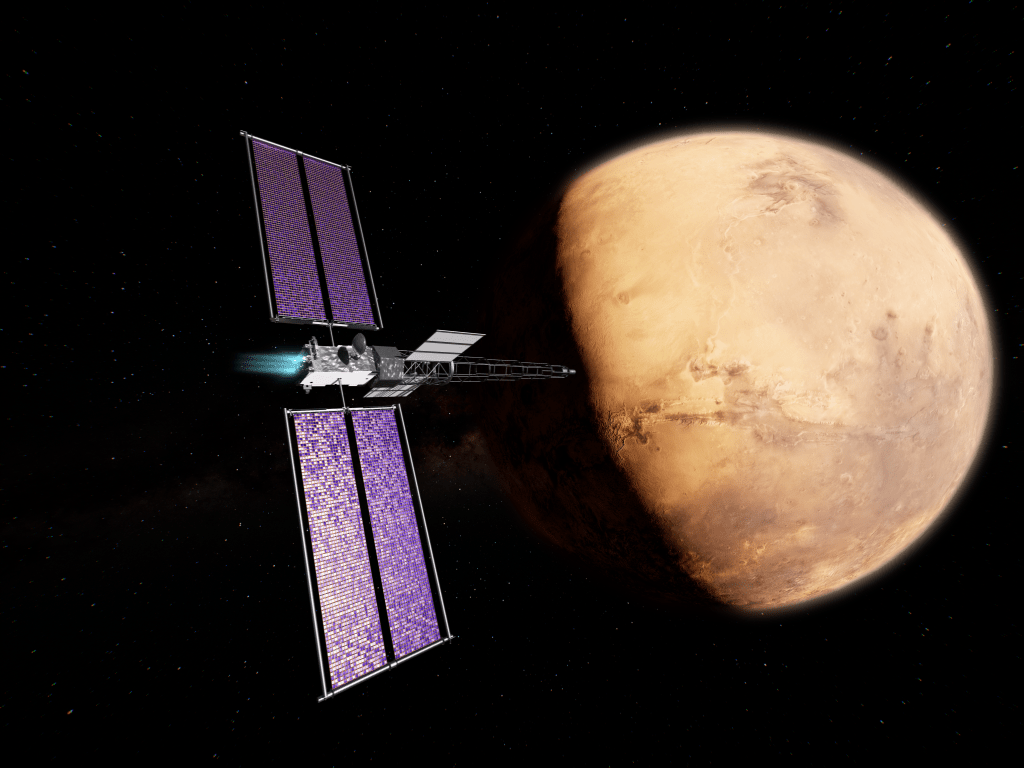
Banner image: Illustration of Otter, a satellite servicing spacecraft, in Earth orbit. Starfish Space of Seattle is developing and will operate Otter for the SSPICY mission.