












Episode description:
Almost 50 years after launch, NASA’s Voyager mission is exploring space beyond the Sun’s protective bubble. No other human-made object has traveled that far. Now, Voyager 1 reaches a new milestone: it will be one light-day from Earth. Explore the distant shores of interstellar space with Jamie Rankin, the Voyager deputy project scientist. Jamie helps us understand what Voyager is revealing about our corner of the universe and how NASA keeps a nearly 50-year-old mission running.
Find more information about Voyager at nasa.gov/voyager

HOST JACOB PINTER: This is NASA’s Curious Universe. I’m Jacob Pinter. For decades, NASA has sent missions all over the solar system. NASA spacecraft have flown past every planet, from the barren craters of Mercury, to swirling clouds on Jupiter and Saturn, all the way to Pluto and its mountains made of ice—even if Pluto isn’t officially a planet.
But only two spacecraft have ever left the Sun’s protective bubble, sailing the distant seas of interstellar space. They’re called the Voyagers. For 49 years and counting, Voyager 1 and Voyager 2 have revolutionized what we know about Earth’s neighborhood. They carry the famous golden record, a kind of time capsule, intended to communicate a story of our world to any extraterrestrials who may be in their path. Even today, the Voyagers continue to take measurements from interstellar space and send those data back to Earth.
Now, the Voyager mission is hitting another milestone. On November 18, 2026, at exactly 5:16 a.m. Eastern time, Voyager 1 reaches one light-day from Earth. Light is the fastest thing in the universe. To us, it seems to cross enormous distances in an instant. Voyager 1 is so far away that light or radio communications need a full 24 hours to reach the spacecraft. And if you want to ask Voyager 1 a question, you have to wait another 24 hours for the answer to travel back to Earth.
JAMIE RANKIN: I think it’s very exciting because it’s a tangible distance that people can relate to.
JACOB: Jamie Rankin is a research scientist at Princeton University. She’s the deputy project scientist for the Voyager mission. Jamie is going to help us understand what scientists are learning all the way out there.
JAMIE: The team has worked so hard over multiple decades. This is a multi-generational mission. The original generation of the Voyagers, they did the best they could. They stewarded it well, and then they handed it off. I mean, it’s neat when an object is just a light-day away that we made, but an object that can send us a signal back—it can talk to us—that’s incredible. And I see this as an exciting culmination of all that and a good reason to celebrate.
JACOB: There are these two spacecraft that were built on Earth. They lift off from Earth’s surface. Now, almost 50 years later, they’re, like, fantastically far away from Earth and still going. So what happened in between, over those 49 years?

JAMIE: So the original plan for the Voyagers was to take advantage of planetary alignment of all of the outer planets, and so I believe it was once-in-176-years alignment. And they said, “Wow, we need to send spacecraft out there.”
Archival Audio from 1977 film “Voyagers’ Mission to the Outer Solar System”: Jupiter and Saturn. These giant planets and the moons surrounding them will be looked at close-up by two 1,800-pound spacecraft loaded with cameras and scientific instruments. (fades out)
JAMIE: It was new to be able to fly by planets and to see what was happening in the different atmospheres of planets and try to understand.
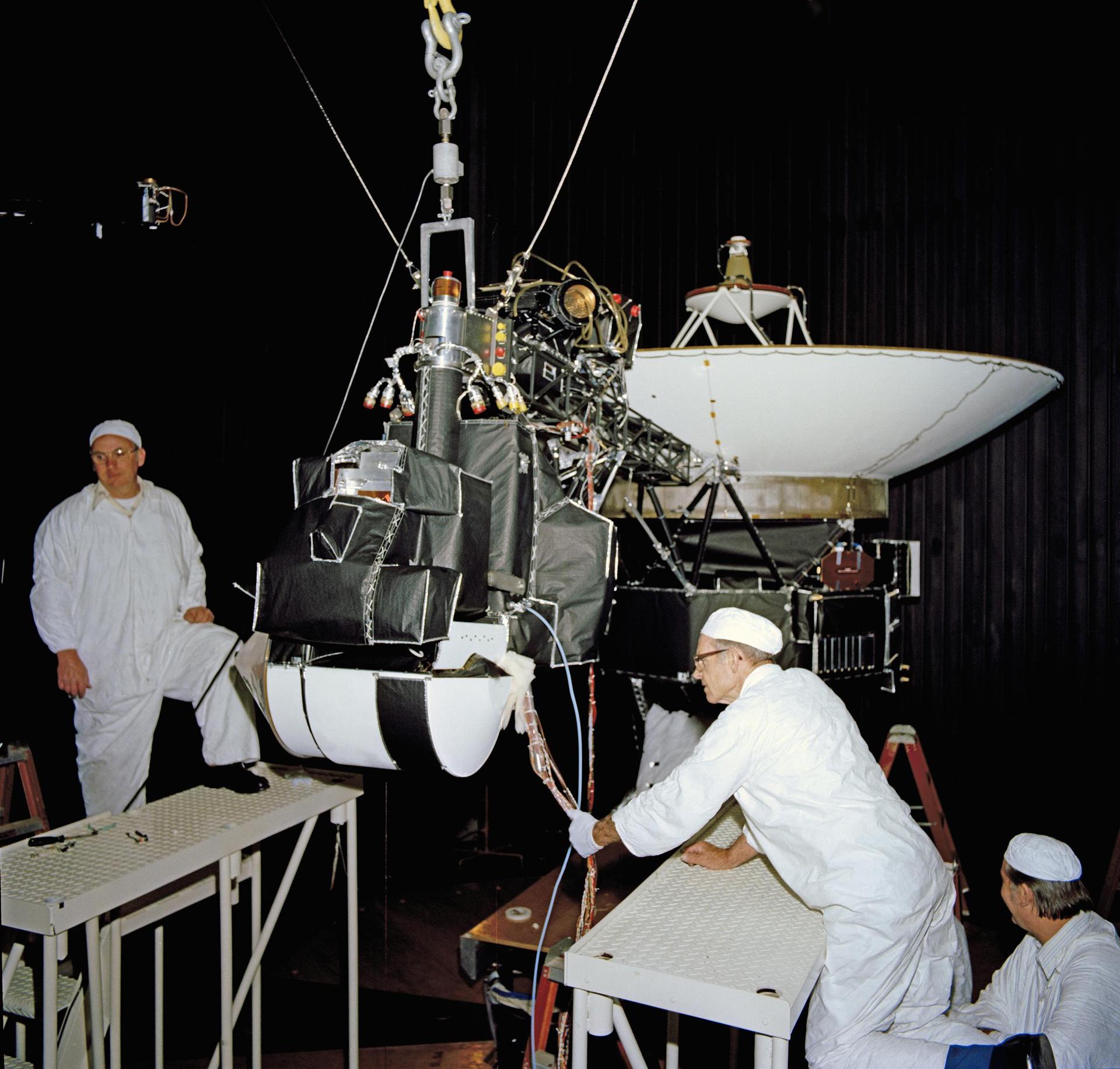
JACOB: The two Voyagers launched in 1977, a few weeks apart. They embarked on a grand tour to the outer solar system, promising to reveal details of planets and distant moons that no other spacecraft had seen. The two Voyagers are twin spacecraft. They carried cameras and 11 different science experiments. Less than two years after launch, in 1979, the Voyagers reached their first target.
Archival Audio from 1990 film “And Then There Was Voyager”: Man has known about the planet Jupiter ever since he took a good look at the night sky. But after all these centuries, we’re getting a closer look than we’ve ever had.
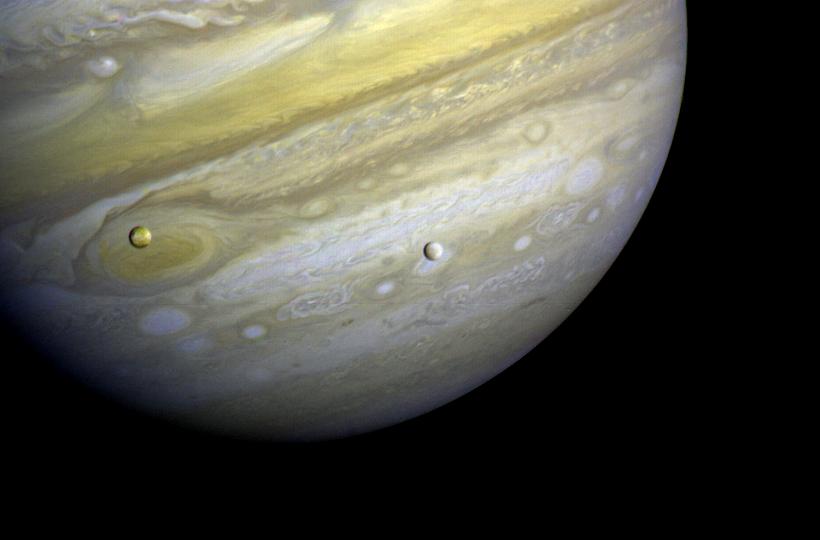
JACOB: The Voyagers sent back clear images of Jupiter and some of its moons, and they showed that the rest of the solar system is a lively place. The Voyagers detected lightning on Jupiter, the first time scientists had seen lightning on another planet. The Voyagers saw the moon Io, with intense volcanoes, and the moon Europa, with signs of an ocean of liquid water hidden under miles of ice. And then the Voyagers kept flying.
Archival Audio from 1990 film “And Then There Was Voyager”: After its billion-mile journey from Earth, the Voyager 1 spacecraft sent back pictures of man’s closest look yet at the ringed planet Saturn.
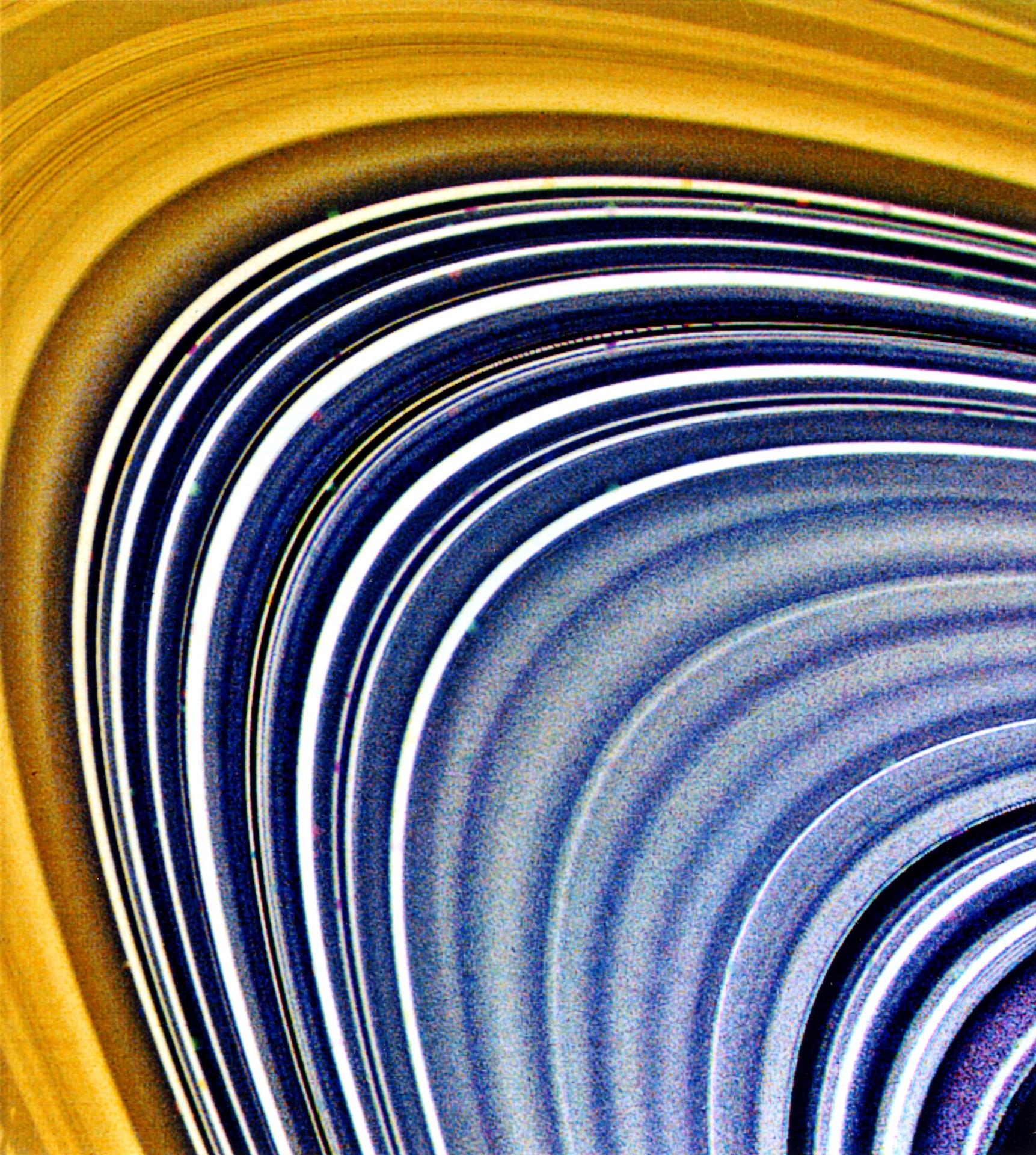
JACOB: After passing Saturn and its rings and several of its moons in 1980 and 1981, the Voyagers split up. Voyager 1 headed up, away from the rest of the planets. Voyager 2 continued on to Uranus and Neptune, planets that had never been visited by spacecraft.
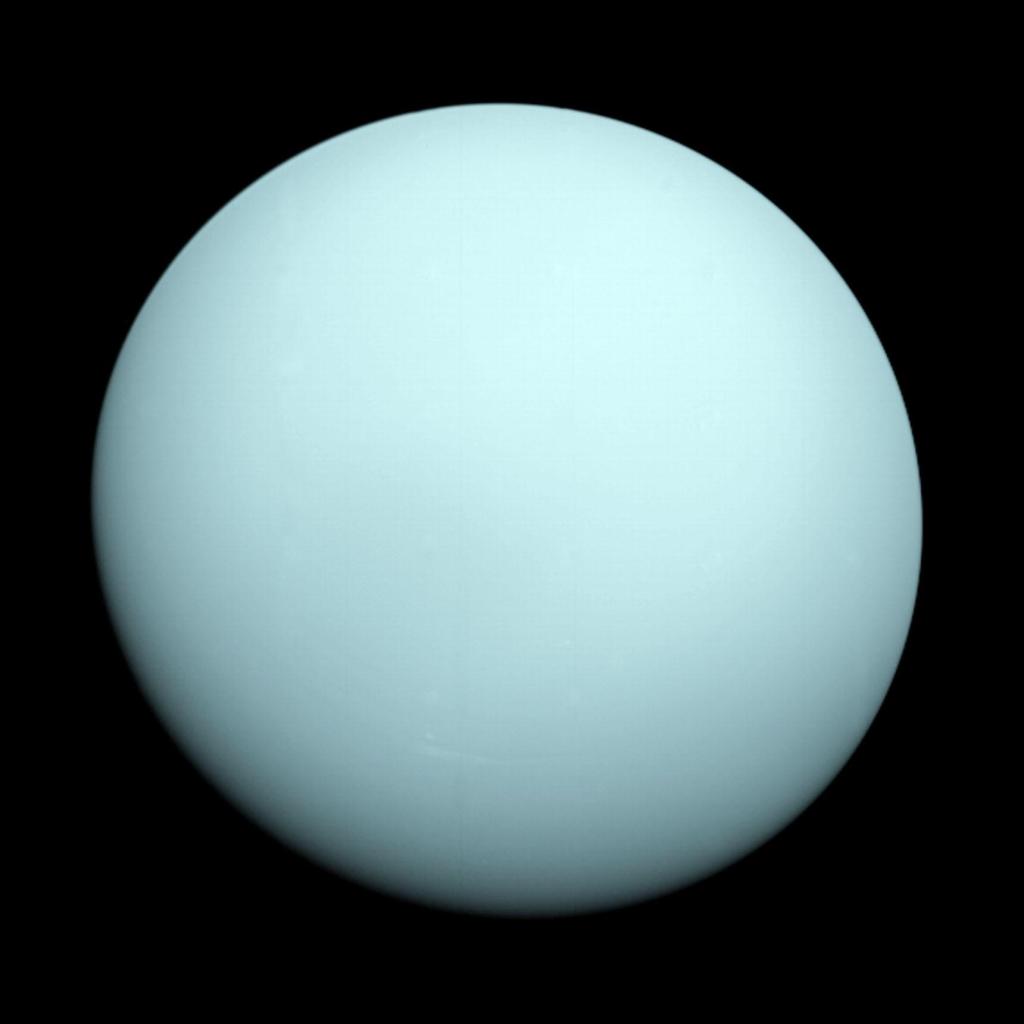
Archival Audio from 1990 film “And Then There Was Voyager” : Uranus is not a very photogenic place. It looks more or less like a big blue ping pong ball. But we did see clouds in the atmosphere of Uranus, and they did tell us something. (fades out)
JACOB: After Uranus, Voyager 2 traveled alone for three-and-a-half years, and then it reached the final planet in its path: Neptune.
Archival Audio from 1990 film “And Then There Was Voyager” : In fact, Neptune is the windiest planet in the solar system, and I was totally unprepared for that.

JACOB: After Neptune, the Voyagers would never again pass close enough to an object for their cameras to be useful. Mission managers decided to turn the cameras off to save resources for other science instruments. But before the Voyagers closed their eyes, Voyager 2 took one last look back toward us. It captured an image called the family portrait. We see six planets as they circle the Sun, including Earth.
CARL SAGAN: And you can see it. This is—it looks like more than a dot, but it is in fact less than a pixel.
JACOB: In 1990, the astronomer Carl Sagan unveiled Voyager 2’s perspective of our home planet. Sagan stood on stage with the project scientist who led the Voyager science team—a man named Ed Stone. Together they revealed our home, seen from about 4 billion miles away.
SAGAN: In this color picture you can see that it is slightly blue. And, uh, this is where we live—on a blue dot.
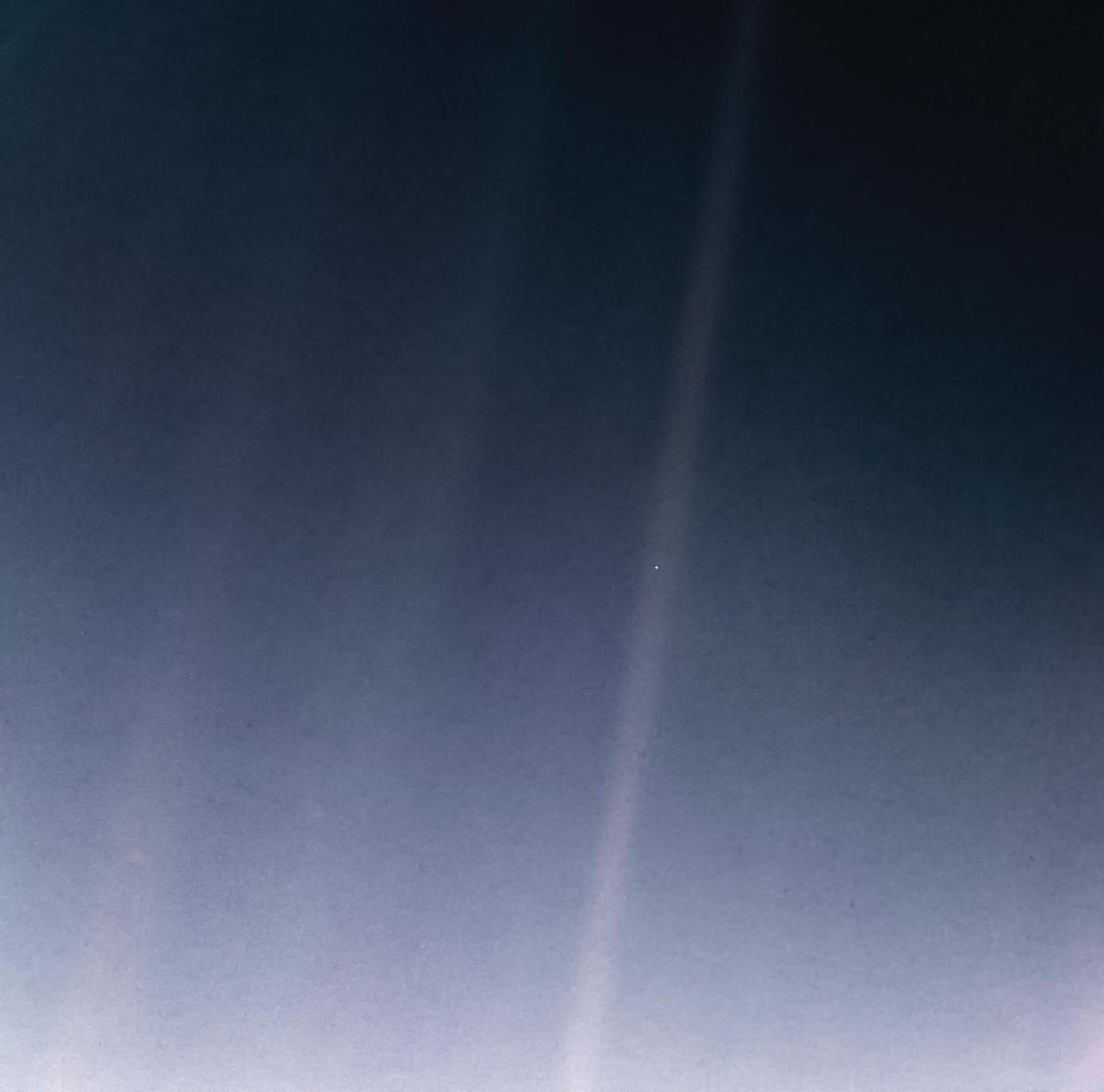
JACOB: The family portrait and the Pale Blue Dot were a moment of triumph. The Voyagers had done everything NASA asked them to do and so much more. But that was more than three and a half decades ago. Even though the Voyagers had no more planets in their path, their mission was not over.
Mission planners knew from the beginning that the Voyagers would continue traveling forever. They’re ambassadors from Earth to distant stars. That’s why the Voyagers carry a payload even bigger than any single science instrument.
Unidentified voice from Voyager’s Golden Record: Hello from the children of planet Earth.
JACOB: They have the famous golden record, a collection of music and greetings in more than 50 languages …
[Greetings from Voyager’s Golden Record in Arabic, Kannada, Mandarin, and French]
JACOB: … and all kinds of natural sounds from our home planet. And just to be clear: the Voyagers’ science campaign is not done. Not even close. After leaving the planets, they focused their attention on studying distant traces of the Sun.
You probably already know that the Sun is huge. The Sun can hold more than a million Earths. Its gravity is what holds the solar system together, and the Sun creates a massive, magnetic bubble that keeps out radiation from other stars. After passing Neptune, it was only a matter of time before the Voyagers reached the edge of that bubble. In 2013—or more than 20 years after the encounter with Neptune—lead scientist Ed Stone announced that Voyager 1 had done it.
ED STONE: Now what does it mean to reach interstellar space? Well, first of all, it’s just—we got there. I mean, this is something we all hoped when we started on this 40 years ago that this would happen, but none of us knew how big this bubble was, and none of us knew anything could last as long as the two Voyager spacecraft.
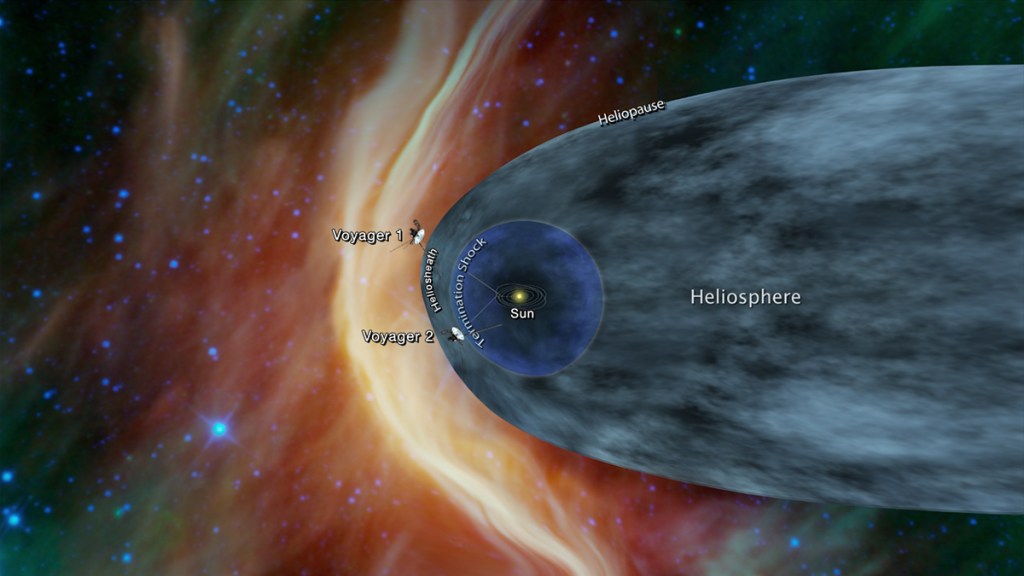
JACOB: All the while—as the Voyagers reached the edge of the Sun’s bubble and then crossed the boundary and then sailed through interstellar space—they sent back information. Jamie Rankin is one of the scientists making sense of that information. She’s is a type of scientist called a heliophysicist. “Helio” comes from the Greek word for “Sun”, so heliophysicists specialize in the Sun. They study the Sun’s protective bubble, which is called the heliosphere. The heliosphere extends way beyond the planets. If you travel all the way to Pluto, which is a long way away, you’ve only made it about one-third of the distance to the edge of the heliosphere. The edge of the heliosphere is another word with “helio” in it. It’s called the heliopause. All the while, you’re flying through gas, plasma, and radiation coming from the Sun.
JAMIE: Our instrumentation up there is directly interacting with the matter, and so we’re actually really directly measuring protons, and we’re measuring the plasma and the gases out there and how they move and how the Sun modifies that environment.
JACOB: Wow. That’s interesting to think about, that heliophysics missions are actually touching the stuff that they study.
JAMIE: Exactly.
JACOB: Of course, one of the major ways we experience the Sun is light. That’s one reason that Voyager 1 reaching one light-day from Earth is such a big deal.
There is really no way for a human brain to comprehend just how far one light-day is. But let’s try. One light-day is more than 16 billion miles. That is about 170 times as far as the distance from Earth to the Sun, or it’s along the lines of traveling from Earth to Pluto more than four and a half times.
JAMIE: The other way to think about it is in time, where the spacecraft—their average speed is a million miles a day. And so how long does it take when you have an object traveling about a million miles a day to reach one light-day away? In the case of the Voyagers, it took 50 years or so. So it’s a lot! [laughs]
JACOB: I know that the camera onboard Voyager 1 was turned off a long time ago. But if we did have a camera on it, or even if you and I were magically flying alongside Voyager 1 somehow—like in a little sidecar or something—what do you think we would see out there or feel, or anything we could experience?
JAMIE: We’re measuring the gas. It’s like an electrified gas out there. It’s a plasma. And you can imagine Voyager being on a distant shore. It’s not so far away that we don’t see ripples from the effects of solar activity. We do see just every so often signs of the disturbances from our heliosphere that can survive all the way out. Coronal mass ejections, blasts of materials from the Sun that create space weather—those can merge along the way, and they can send ripples that that disturb interstellar space. And Voyager does see that, which is pretty amazing.
JACOB: That’s cool. So even though it’s outside the solar system, it can still feel these little shots from the Sun, or these little … ?
JAMIE: Yeah. The presence of the Sun is felt out there at a light-day away. But in terms of all the gas and the surrounding environment that Voyager is in, it just comes from totally different origins than our Sun and the way it modifies everything.
JACOB: Well, I want to talk a little bit about you and your background, also, Jamie. So the Voyagers have been traveling through space since the 1970s. You joined the team about 15 years ago as a graduate student, right?
JAMIE: As a graduate student.
JACOB: I’m just trying to imagine, like, when you walk into a room like that on day one or something as a graduate student—can you just kind of put me in your shoes of, like, even what it feels like to just literally walk in the doorframe on that day?
JAMIE: When I arrived at Caltech as a graduate student, my first day on the job was literally watching history unfold. I arrived six days after Voyager crossed the heliopause, but they were still making sense of the data, so they didn’t know conclusively what had happened. And my first day on the job—I was told to go into a separate building on such and such floor and to go into a meeting. I had no idea what sort of meeting. That was just—I was told the location, and show up there. And I had no idea that it would be the Voyager Science Steering Group meeting where all these scientists in business suits dressed up and, you know, having debates and looking at the data. You know, very formal presentation—people many decades older than me.
And I felt completely underdressed. I was wearing a T-shirt that was this black hole eating a bunch of planets like a Pac-Man, and I had shorts and sandals, and everybody else was dressed up and having serious conversations. And then I walked in, and they said, “Oh, it’s a young person!” They were excited about that. I actually tried to sneak into the back of the room and not be noticed because it was intimidating. And Ed Stone noticed I was there, and he was running the meeting, and he said hello. The whole group said hello. They were very inviting and friendly, and it was just amazing to watch history unfold.
JACOB: I want to focus a little bit more on Ed Stone. You know, any NASA mission is the work of many, many, many people, and especially one that’s been going on for almost 50 years. But you know, Ed Stone, it seems like was kind of a singular person on the Voyager team. So I’m hoping you can tell me about him. I mean, first, what was his job officially, and what did he do? But also, what was it like working with him, and what was he like as a person?
JAMIE: Ed Stone was the Voyager project scientist. For 50 years he had the role of representing Voyager science and basically leading the team to have common consensus about the science. He led a lot by patience, a lot by listening. He was very quiet actually in a lot of meetings. He would be listening, and then finally he would say something, and whatever he said was just unbelievably on point, and people respected him for that. And I know that outside of the room, outside of the meetings, he was a very hard worker. He was in the office early in the morning—8 a.m. , 9 a.m.—till late at night—8 p.m., 9p.m. And he took a lot of pride in working hard and putting his hours in and contributing just as equally, I think, as any team member.
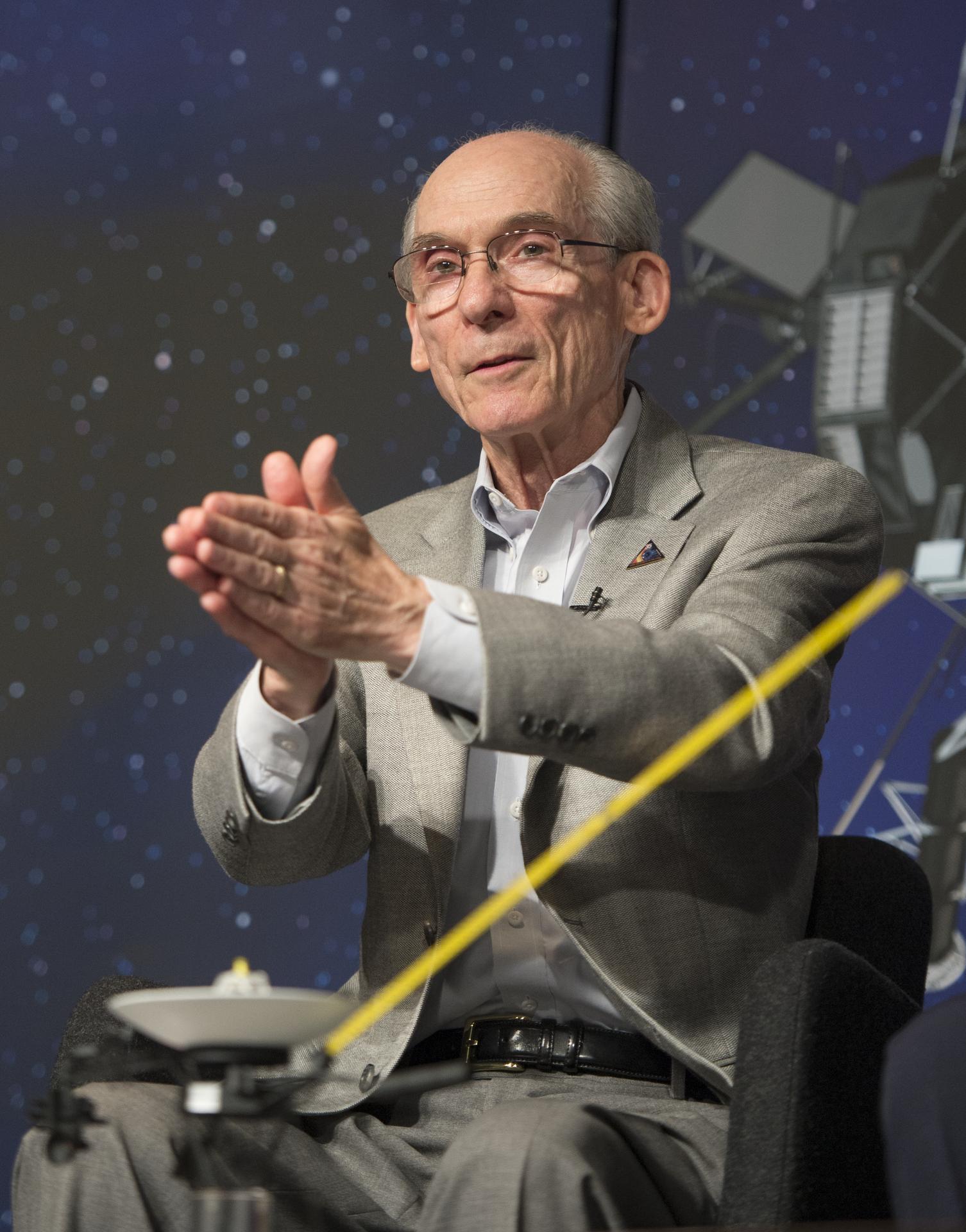
JACOB: And Ed was your thesis advisor, right?
JAMIE: He was. He was my thesis advisor, my PhD thesis advisor.
JACOB: You must be in a position now where you are either advising students or students come to you for advice more generally. I mean, do you ever find yourself talking to a student and thinking, like, I remember Ed telling me this? Or I remember seeing Ed do that? Do you have little flashes like that?
JAMIE: Yeah, I do actually. I do. Sometimes when I feel, “Oh, I I’m really busy. I have this deadline. I need to get this out. I need to do these things,” and then a student comes and they just want to talk, I definitely remember, you know, Ed Stone would talk to that student, and that student was me.
JACOB: Yeah, yeah.
JAIMIE: I think it’s so important to take that time to have those conversations, have the human interactions and not just solely be focused on the output, the amount of work and productivity and efficiency, you know that can be easy to get caught up in—but to remember the people involved.
JACOB: Under the guidance of Ed Stone – and with input from many, many scientists along the way – Voyager evolved into a phase called the Voyager Interstellar Mission. Engineers have to manage Voyager carefully. Each spacecraft has a generator that runs on plutonium. Those generators are still running after almost 50 years, but they won’t last forever. Over time, the team has turned off instruments to save power. Today, only a few instruments are in operation. The team has been able to keep buying time and stretching the mission a little farther. The instruments still powered on are the ones most likely to collect data about the Sun and the space beyond the Sun’s bubble. So far, no other spacecraft have reached interstellar space, and—as you can probably guess from how long it has taken the Voyagers to get there—any new interstellar mission would need a long, long time before it starts to pay off.
So what are we learning from the space between the stars? On one level, it’s an achievement just to get there. It’s a landmark in human exploration. And then, there are lessons we can only learn about the Sun and our corner of the universe by traveling to this part of space. Shortly after breaking through the Sun’s bubble, Voyager 1 returned data that allowed scientists to “hear” interstellar space. And I’ll just give you a heads up that this is kind of a harsh sound.
[Tone from Voyager data]
JACOB: This is based on data from Voyager 1’s plasma wave instrument. Scientists realized that each tone is rising and following the same slope. That means the plasma beyond the heliosphere was continuing to get more dense, and scientists did not know that until the Voyagers went there.
The Sun’s bubble acts kind of like a sci-fi force shield. It protects us from cosmic radiation coming from distant stars. By escaping the bubble, the Voyagers can sample that radiation directly. Jamie says that astronomers had come up with theories about the edges of the Sun’s bubble, but until the Voyagers, there was no way to know for sure what was out there.
JAMIE: The Voyagers gave the first opportunity to really test those theories, test what happened through the heliosphere, test where the boundaries are. The different boundaries were theorized in the sixties, but it took a while to get there, to actually see them. And I think figuring out what is our place here in this universe, what is our environment that we’re in, was an incredible part of the Voyager Interstellar Mission. And I think that even if the mission just was a short one—well, short is not short—even if it was half the length that it is now, it would have been an incredible boundary-pushing mission because we would have had a good example, an idea for the first time of how the environment of the Sun kind of operates. But then there was more! And that was reaching the heliopause and crossing into the interstellar medium, and with that, we were able to make measurements that have never been made in this same way.
JACOB: I’ve been sort of like digging through the crates or something of old Voyager stuff and watching all these old videos and things like that. And in 1990, there was a press conference to unveil this photo called the family portrait. It was this really cool moment. A reporter at the time asked Ed Stone what he expected to see when Voyager 1 left the heliosphere, which at that point was, like, decades in the future, you know?
JAMIE: Many decades!
JACOB: Yeah, and Ed had this great answer. He said …
STONE: Well, we have some ideas, but of course every time we’ve gotten some place new we’ve found out that what we expected was not nearly as interesting as what actually was there. But I’ll tell you what we expect, nevertheless … (fades out)
JACOB: “Every time we’ve gotten someplace new, we found out that what we expected was not nearly as interesting as what was actually there”. And then, you know, like 22 years later or something, he got to find out for real.
JAMIE: Wow.
JACOB: But it made me wonder, what has turned out to be interesting, or what has turned out to be surprising?
JAMIE: One of the big surprises was that when Voyager 1 crossed the heliopause, they expected a sudden change in the magnetic field direction to be aligned with interstellar space. And what they found instead—and now that both Voyagers have crossed—they’ve found that the magnetic field out there, which is comes in at an angle with respect to the solar system, basically, that actually squishes in our heliosphere and kind of creates a slightly asymmetric shape. But I think also we just didn’t know what the medium really looked like until we got there. People had some ideas about what the density would look like far away, and what maybe the magnetic field like would look like far away, but that’s different than what the Voyagers are measuring. There’s been new missions developed to image the size and the shape of our heliosphere. They’re getting kind of the two-dimensional mapping view, the aerial view, whereas the Voyagers are taking the road trips through the solar system in both time and space, and so it’s been an exciting time to put this picture together of what is the Sun doing out there. [laughs]
JACOB: I know that you’re not one of the mission managers, but can you help me understand some of the challenges that engineers have to deal with just to keep this mission going, just to keep sending back the science data that you want to use?
JAMIE: There’s a lot going on there. The Voyagers have pushed the science boundaries and the exploration boundaries in terms of going where no spacecraft have been gone before, but also the age boundaries are real. Just having a part in space out there for 50 years that’s been working reliably is—that’s a big deal. And how can you ever test that?
There are trades. One of those trades I watched Ed Stone lead while I was a graduate student was the decision on what to do when the time would come to power off instruments. And they asked the question, If we just turn off all the heaters, can we buy extra time for the instruments to still operate? Yes, they’ll be out of their calibration. They’ll need to have corrections applied to their data analysis. But can that work? And the answer was yes, which was incredible. And I think that the engineers do an incredible job of communicating with the scientists about, here are the trades, and what are your thoughts? You know we have these dialogs, and a lot of tough decisions. They carry the weight of those, but some of those are broader decisions amongst the science teams as well to maximize both the science and the returns of the mission—the operational returns.
JACOB: I mean, when you’re talking about weighing the decision to shut off instruments potentially—decisions like that sound nerve-racking.
JAMIE: Oh yeah.
JACOB: Do they feel that way, to be in that room?
JAMIE: I think that in some sense, yes. But in another sense, people know that it’s coming. And it’s also—I guess every day is a miracle with the Voyagers, and so some of these trades are like, wow, I’m amazed that I am so blessed to be at this point that I have to have this discussion. You know, the mission didn’t end right in the nineties. It’s still going, and so I think it’s—yes, it’s nerve-racking, but at the same time, I think this mission is just continually every day a surprise that wow, it’s amazing that it’s going, and we’re grateful for what we have.
JACOB: Yeah. I was getting ready for this a few days ago, and I was making my notes and stuff. And like literally, as I was typing in the document I was getting ready, there was this article that popped up on NASA’s website that said there had been an unexpected loss of communication with Voyager 1, and for I think about 48 hours it wasn’t responding. And then it came back. Was there a part of you when that happened that thought, maybe this is it?
JAMIE: Yeah, I think that is probably the most nerve-racking is when an anomaly occurs.
JACOB: Yeah?
JAMIE: And part of me was thinking that. But I think more of me was actually confident that we’d get it back. That nope, this is not that time. We’re going to ride through this. We’re going to solve it. We’re going to figure it out.
JACOB: Just off of vibes or something?
JAMIE: I mean, part of it is off of vibes, but also part of it is the engineering team has so carefully been curating, like, what are the power and thermal margins, how to do everything they can to maximize this mission—the output, and the science, and all of this. When we run out of power, that’s inevitable. When something freezes, that’s just—at some point that will happen. And we know we have a good sense—confidence, I would say—that we’re not close to those sorts of eventualities. Then again, when a single event occurs that is, “Uh oh. That’s it,” it can be nerve-racking, but I guess I had the sense that maybe this wasn’t it. And there’s been a lot of those.
I would just say the Voyagers have had a lot of anomalies, and it’s not just them being an old spacecraft. I mean, even the early history of the Voyagers, there was anomalies along the way, and I think the incredible part of the Voyager team is the story of being able to recover from those sorts of things. I’m not going to assume it’s over until it’s over.
JACOB: Do you ever think about that moment when you have to say goodbye? Hopefully far in the future and not like an anomaly like this. But I mean, if so, what do you think about? Or how do you process that, on a personal level, you know?
JAMIE: I do think about that. I mean, when this anomaly occurred, I thought, “I do need to write out the thoughts for the eventuality of when it is the end of the spacecraft operations.”
JACOB: What kind of thoughts, if you don’t mind me asking?
JAMIE: Oh yeah, yeah, yeah. So I think basically just—I was thinking in terms of writing a letter to the people past and present about like the thank you note, I think, for the multi generations where the Voyagers outlasted them. I had a chance to talk to Ed Stone, probably about a year before he passed away, and I asked him what he thought of the mission and its state. And he said he was just amazed that it could outlast him. And so I would write—what my thoughts would be, would be a thank you note, would be a, Wow it’s incredible that so many people over the many generations stewarded this well in their time and then they hand it off to the next generation and the next generation. And how can we take that, value that, and learn from that to push ourselves farther than we think we can?
JACOB: You’ve told us a lot about the science, which is so rich after—again—49 years and counting. This whole other thing we haven’t even gotten into with like the Golden Records and the sense that the Voyagers are like this message in a bottle, just headed out there somewhere. I mean, when you step back and just sort of look at all of that, what do you hope that the world and the people on this planet take away from the Voyager mission?
JAMIE: Oh, that is a great question. I would say two things that immediately come to mind, which is: we can do more than we expect of ourselves. And if individual people are doing their jobs well, it’s amazing how far we’ll go. There are so many people that contributed to the mission over the decades, and I can tell you from working on some number of NASA missions that any one thing could go wrong and end that opportunity. So it’s kind of [an] amazing story of so many people getting so many things right.
I would also say that it’s an important perspective on how small we are and yet how big the universe is, and we’re at this point where we can see it. We can measure it. We can we can send out the spacecraft to measure material that never will be visible by any spacecraft near Earth. And then the question is, what are we going to do with that perspective? I am so thankful, and I don’t know how I got to be a part of a mission like this, for example. But I am going to do everything I can and give it the best I have to make sure that that legacy gets preserved, the story of reaching for the stars.

JACOB: Jamie Rankin is the deputy project scientist for the Voyager mission.
You can find news and information about Voyager at nasa.gov/voyager.
Now, we have been talking a lot about Voyager 1, which is the spacecraft reaching one light-day from Earth. If you’re wondering about its twin, Voyager 2 is on track on get there in 2035.
This is NASA’s Curious Universe. This episode was written and produced by me, Jacob Pinter. Our team also includes Christian Elliott. Our executive producer is Katie Konans.
Krystofer Kim designed our show art. Our theme song is by SYSTEM Sounds. Special thanks to Kari Goodbar, Abbey Interrante, Calla Cofield, and the Princeton University Broadcast Center.
If you liked this episode or if you have any questions you want us to answer in the future, we would love to hear about it. Drop us a line wherever you’re listening right now. And subscribe to this podcast in your favorite podcast app to make sure you get the latest from NASA.
You can find a transcript for this episode—and information about all of NASA’s podcasts—at nasa.gov/podcasts.