



















Editor’s note: An update to this story, Artemis II: Meet the Moonbound Astronauts, was published on March 4, 2026.
After this episode was published, NASA announced changes to the Artemis program, including adding a new mission. Some references to future Artemis missions in this episode differ from the updated plan. For more details, refer to NASA Strengthens Artemis: Adds Mission, Refines Overall Architecture.
Episode description:
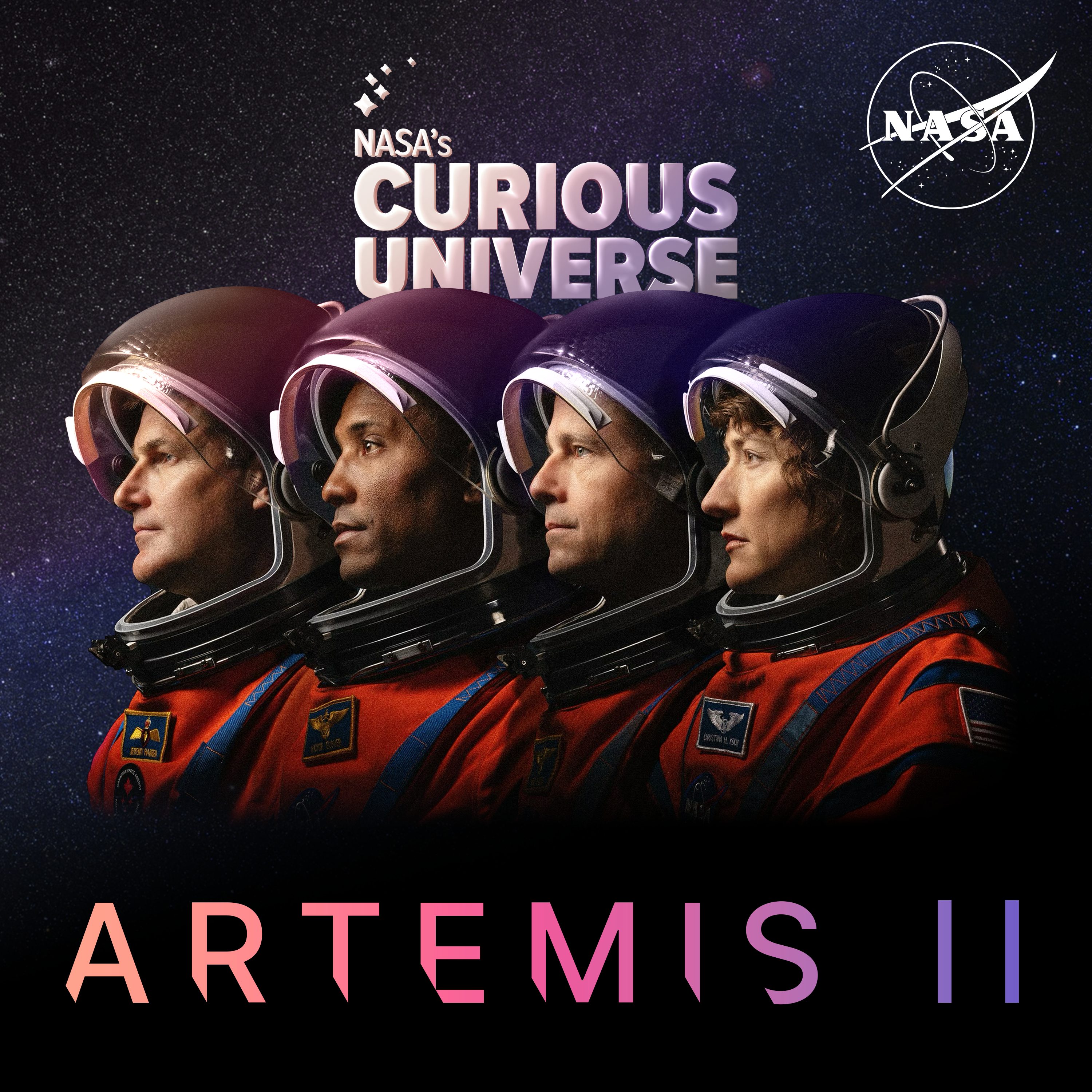
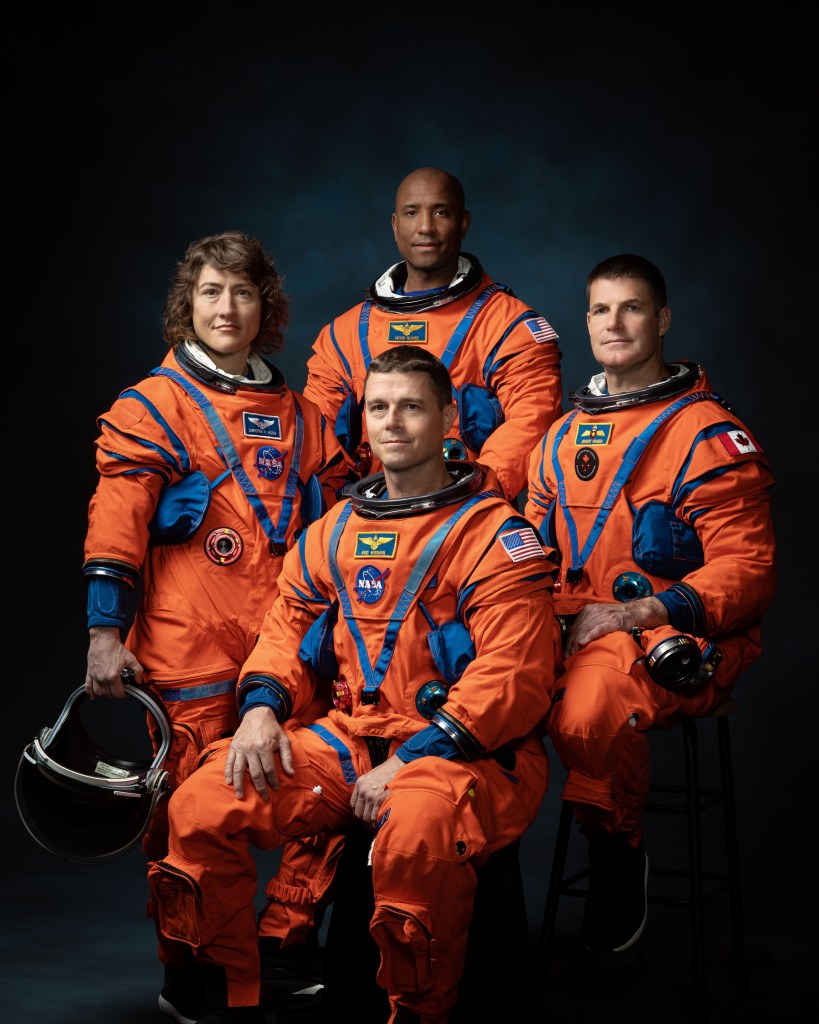
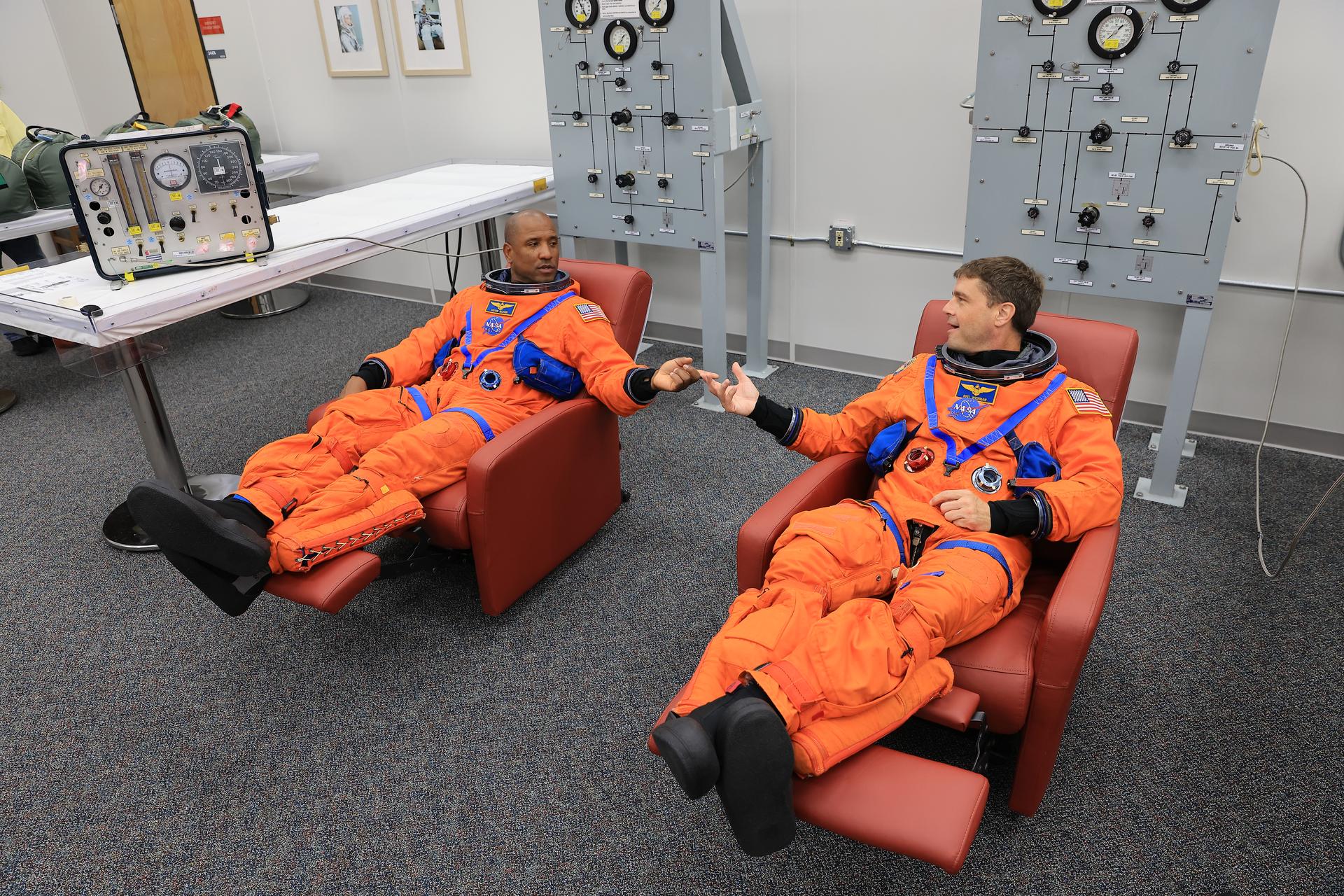
This year, four NASA astronauts will fly around the Moon and back for the first time since the Apollo program. Their mission is called Artemis II. It’s a key test flight that will set the stage for humans to land on the lunar South Pole for the first time and set up a long-term presence there. In this episode, meet your intrepid Artemis II crew: commander Reid Wiseman, pilot Victor Glover and mission specialists Christina Koch and Jeremy Hansen.
[MUSIC: “I Want to Be An Astronaut” by Alan D. Boyd]
APOLLO 8 ARCHIVAL: Transmission is coming to you approximately halfway between the Moon and the Earth. It’s a beautiful, beautiful view.
CHARLIE BLACKWELL-THOMPSON: I was just a kid in grade school at the end of the Apollo program, and I remember watching those moon landings with my classmates…
APOLLO 11 ARCHIVAL: Tranquility Base here, the Eagle has landed. Roger Tranquility, we copy you on the ground.
CHARLIE: …and being so intrigued, so curious, so inspired.
APOLLO 11 ARCHIVAL: That’s one small step for man, one giant leap for mankind.
CHARLIE: Apollo made the world stop and look.
APOLLO 17 ARCHIVAL: And as we leave the Moon and Taurus-Littrow, we leave it we came and God willing as we shall return, with peace and hope for all mankind.
CHARLIE BLACKWELL-THOMPSON: And I think that Artemis will do the same thing. The world will stop and look up in wonder, in intrigue, and will feel a sense of accomplishment.
[MUSIC: “Fast Motion Orchestra” by Laurent Levesque]
ARTEMIS I ARCHIVAL: And here we go. Hydrogen burn off…
VICTOR GLOVER: Pushing ourselves to explore is just core to who we are. That’s a part of being a human.
ARTEMIS I ARCHIVAL: Core stage engine start.
VICTOR GLOVER: We want to know what’s out there just beyond the horizon, and so the Artemis program is our opportunity.
ARTEMIS I LAUNCH ARCHIVAL: And liftoff of Artemis I. We rise together back to the Moon and beyond.
REID WISEMAN: At a high level, the Artemis II mission launches out of Kennedy Space Center on the Space Launch System and Orion spacecraft, and the crew will travel two orbits around Earth and then head on to the Moon, 250,000 miles from Earth. There’s only one primary goal of Artemis II, is to prepare this spacecraft for Artemis III and for our NASA astronauts to go land on the Moon.
JEREMY HANSEN: Artemis is the twin sister of Apollo. That’s intentional. It is to remind us that we’re going to go do great things. Yes, we’re going to put humans back on the surface of the Moon. But we’re not stopping there. When you see us fly around the Moon on Artemis II, that is just a snippet of the incredible things that are to come.
REID: We’re going back to the Moon because it’s the next step in our journey to Mars. We need to go explore the Moon. There’s vast regions of unexplored areas with the coldest, darkest places in our solar system.
CHRISTINA KOCH: From the time humans started exploring this was always in our future and in our fate. We were always going to the moon.
REID: In our lifetime, we’ve looked at the Moon knowing that people had been there. And now in the Artemis generation, kids will walk out and look at the Moon going, we are there. We are there now, and we are going further into our solar system.
CHRISTINA: I’m Christina Koch.
JEREMY: Jeremy Hansen.
VICTOR: I’m Victor Glover.
REID: NASA astronaut Reid Wiseman, I’m gonna fly with Victor Glover, Christina Koch, and Jeremy Hansen around the Moon and safely back to Earth.
[MUSIC: “Supercluster” by Sergey Azbel]
PADI BOYD: This has got to be one of the most exciting things we are preparing for and that we’ve ever prepared for. You’re listening to NASA’s Curious Universe. I’m Padi Boyd.
JACOB PINTER: And I’m Jacob Pinter. NASA is leading a golden age of space exploration. Through the Artemis campaign, humans are returning to the Moon for the first time in more than 50 years. In Artemis I, NASA tested the mighty SLS lunar rocket and the Orion space capsule with an uncrewed flight test around the Moon in 2022. Now, NASA is about to launch Artemis II with four astronauts who will fly Orion around the Moon and back to Earth.

PADI: And it gets even better. The Artemis II test flight will prepare us for the next Artemis missions, when astronauts return to the surface of the Moon and explore places where humans have never ventured before. And Artemis will build upon the foundation we’ve laid and prepare us for the first human journey to Mars.
JACOB: In this limited series–you are along for the ride of Artemis II. You’ll meet the astronauts flying around the Moon and go behind the scenes with NASA engineers and scientists powering this mission.
PADI: Basically, you’re going behind the scenes as the astronauts go behind the Moon! In this episode: the astronauts. We’re introducing you to the Artemis II mission through the people flying on it.
JACOB: We also had the rare chance to get these four very busy astronauts into a room together for a roundtable conversation about the bonds they’ve built as a team, the hard conversations they’re having with their families, and what’s going through their heads leading up to launch.
Now, are you ready to meet your crew?
PADI: First up, your Artemis II commander: NASA astronaut Reid Wiseman.
[MUSIC: “Singularity” by Sergey Azbel]
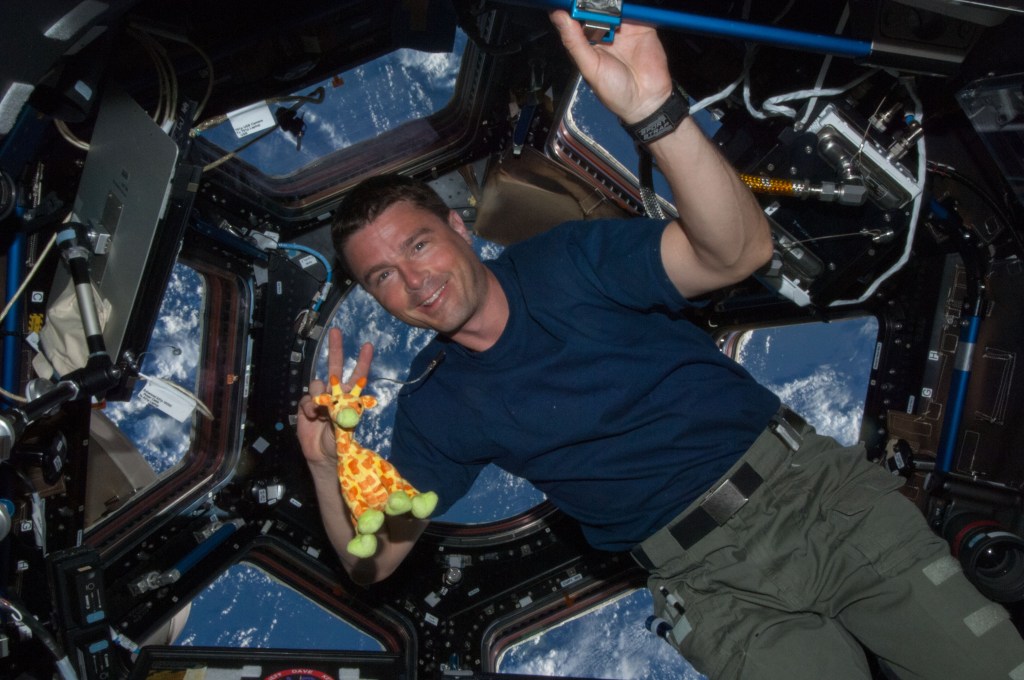
REID: My role as commander on this mission is simply to take care of my crew, take care of this Orion spacecraft, get us around the Moon, and get us safely back to planet Earth.
PADI: Reid joined the astronaut corps in 2009. This will be his second trip to space. He’s flown all sorts of fighter jets as a Navy test pilot. He’s a natural leader. He’s got a good sense of humor and a high-level view of the mission always in mind. He’s also served as chief of NASA’s astronaut office. But before all that, he was a kid from Baltimore.
REID: I was a tiny kid. Like, I was really skinny. I was really small. I never thought I’d be an astronaut. I mean, come on, it’s like an unobtainable dream.
PADI: But Reid knew one thing: he wanted to fly.
REID: Growing up in Maryland, there was a National Guard base nearby my house. And there were A-10 aircraft that would fly over every now and then, and I just would look up at them be like, Man, I want to be up there. I want to go do that. Flying is freedom to me. When you come off that aircraft carrier, you are truly just alone with yourself out there.
PADI: Reid spent 165 days on the International Space Station in 2014 as a flight engineer. He climbed into a spacesuit and stepped out of the space station airlock to make repairs on two spacewalks, and he’s conducted over 300 science experiments. But he says the best parts were the friends he made along the way.
REID: When you laugh so hard that you get tears in your eyes in space, they just stay in your eyes. They don’t run down your cheeks. That’s like one of the most memorable things.
PADI: Huh, wow, that is pretty cool. OK, now, meet your pilot: NASA astronaut and U.S. Navy captain and test pilot Victor Glover.
[MUSIC: “Aurora Borealis” by Frederik Helmut Wiedmann]
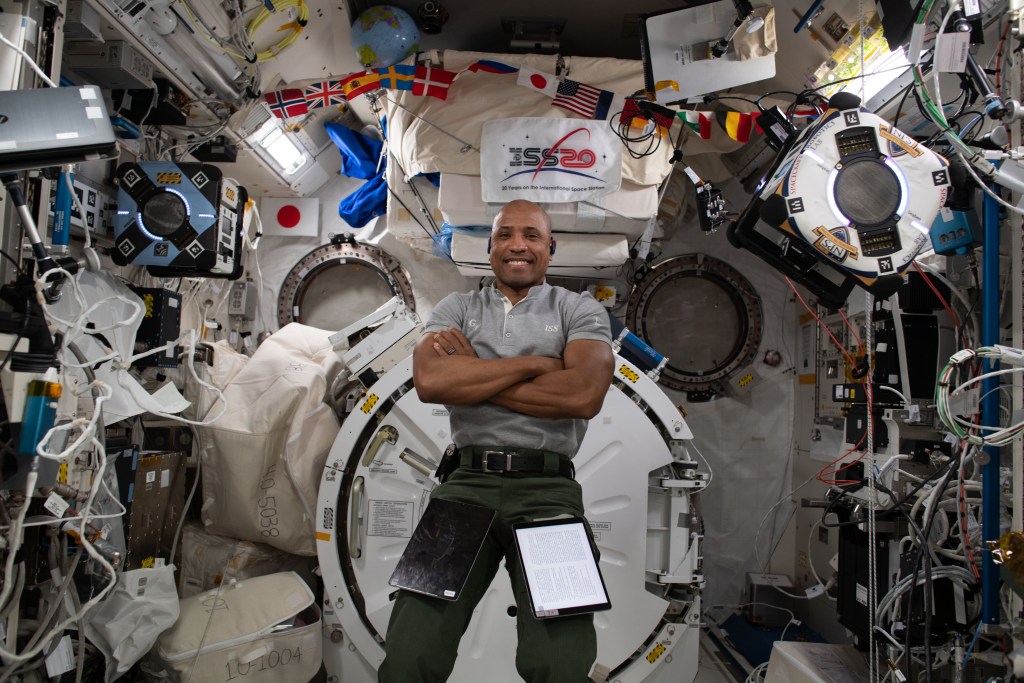
VICTOR: As a test pilot, the opportunity to fly a spaceship is just a dream. In all of human history, you know, we haven’t flown that many spaceships, and so the ability to fly one, actually in space on a test mission, is just a really unique opportunity.
JACOB: As the pilot, it’ll be Victor’s job to grab hold of the flight control stick and demonstrate Orion’s handling capabilities in space.
VICTOR: In the shuttle era, the pilot’s job was not to fly the spacecraft. The orbiter was landed by the commander, the pilot’s main responsibility was to make sure the toilet worked. And it’s funny, because in my interview back in 2012 maybe early 2013 I said to them, you know, if you need somebody to repair the sink or to fix the toilet, I’m your guy, you know.
JACOB: Victor joined the astronaut corps in 2013. This is his second trip to space. And second time flying a new spaceship. He was the pilot for the Crew-1 Dragon spacecraft to the space station on its first operational mission. Victor lived and worked for 168 days on the International Space Station in 2020 and 2021, and he conducted four spacewalks. Victor is a procedures guy. He’s very analytical, whether he’s flying a spaceship or making sure the crew’s checklists are in order. In fact, years ago one of his bosses gave him the nickname “Ike” for “I Know Everything.” Victor grew up all over Southern California. And moving around a lot, school was a constant for him.
VICTOR: My favorite subjects in school were math recess and lunch. My close friends, we called ourselves the Knights of the Round Table, and I’m not afraid to admit that. But we would stand around this water fountain, and we would just tell jokes and tell stories. And that group of friends to this day, they’re still my closest friends, and we still refer to ourselves as the knights.
JACOB: Victor is a super smart guy and a great engineer, but he’s always felt more confident on the field than in the classroom. Growing up, he wrestled, played football and ran track. Once he joined the Navy, he flew more than 30 different aircraft and picked up a masters degree in his spare time.
VICTOR: When I applied to be an astronaut, I thought I was going to get a nice letter saying, Hey, thanks, kid, we got this covered, you know? So being a part of Artemis II or Crew-1 , and flying on an expedition on the space station, I think these things are gifts.
JACOB: Let’s move on to our next astronaut. Your first mission specialist is NASA astronaut Christina Koch. Artemis II will be her second trip to space – although her first trip was a long one. Christina spent almost a full year on the International Space Station, where she participated in the first all-female spacewalk. Christina’s background is in engineering. In fact, before she became an astronaut, her resume included working as an electrical engineer at NASA, helping to develop instruments for missions to space. She’s also conducted science in some very remote places, including Antarctica. In her spare time, she’s a rock climber, a surfer, and a DIY motorcycle mechanic. Christina’s from the South. She grew up in nature, in the forests of coastal North Carolina and on her family’s farm in Michigan, where she spent summers.
[MUSIC: “Redshift” by Sergey Azbel]
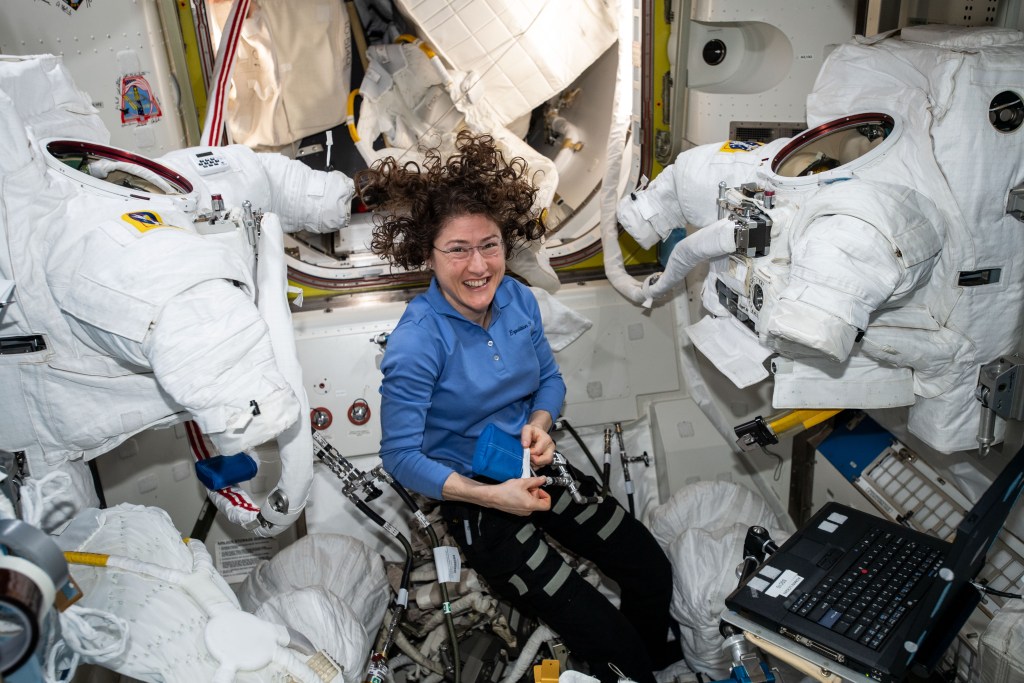
CHRISTINA: I was always outside. I was climbing trees in my backyard. I was going to the beach. I loved things that made me feel small. I love looking at the night sky, oftentimes between the pine tree branches, I love the ocean. North Carolina also has mountains and when we’d go there, I’d just love the vastness of those things. I loved how they made me feel and what they made me think about, and the vastness of the universe and how much out there was to learn, and just that perspective of there’s so much more out there than we can see in our day to day lives, and what do we learn about ourselves when we go to explore it?
PADI: Christina came to NASA through civilian life. But ever since she was in elementary school, she wanted to be an astronaut. She had a poster of Earthrise hanging in her bedroom—that famous photo of Earth from the perspective of the first astronauts ever to fly around the Moon. And it was a dream she never outgrew. Christina studied engineering in college and took a semester off to study abroad in Ghana, which is where she started to learn to love exploration—going to new places like tropical islands in the middle of the South Pacific or Antarctica. She feels more comfortable in a space suit or a snow suit than at a computer desk. The research she did in extreme environments prepared her for the challenges of space.
CHRISTINA: There are things about our universe we can only learn if we go to certain places. Only those places can tell us those things about the universe. I always say to people, do what scares you. And that means I have to follow my own advice. So doing what scares me meant getting on a plane and going to the Antarctic, getting on a plane and going to study abroad in Ghana, applying to become an astronaut, strapping myself onto a rocket, opening the EVA hatch in the airlock and going out of it into the darkness.
JACOB: Rounding out your crew: Jeremy Hansen, also a mission specialist.
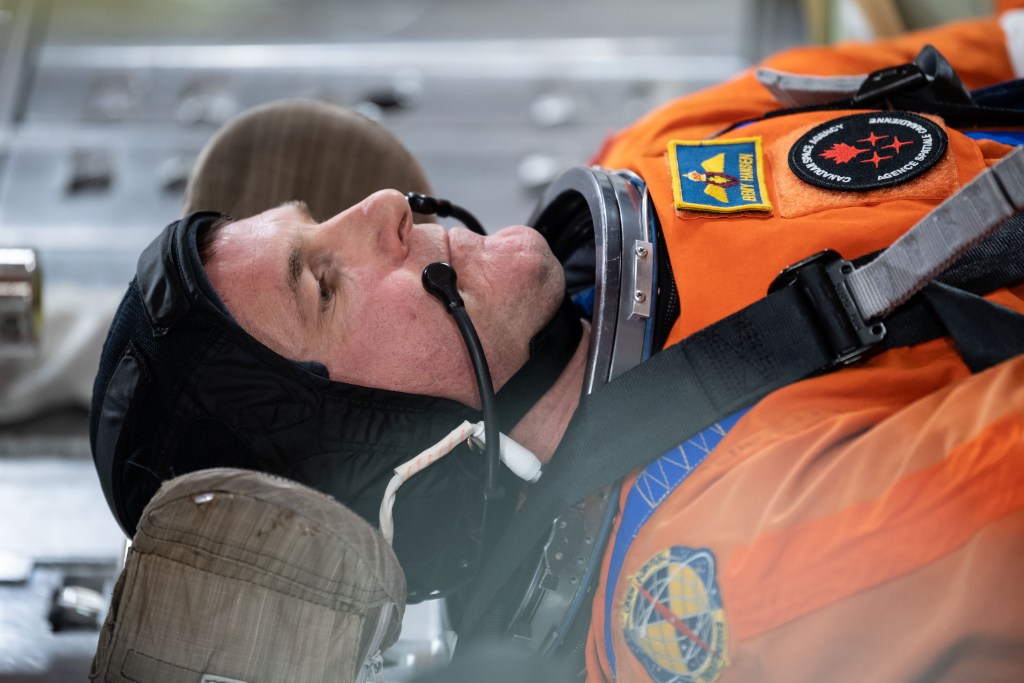
JEREMY: Je suis Colonel Jeremy Hansen. Un astronaute avec l’agence spatiale canadienne.
JACOB: Jeremy is an astronaut with the Canadian Space Agency, which means he has to speak French as well as English. His spot on the crew makes him the first non-U.S. astronaut to venture to the Moon. He’s a pilot with the Canadian Royal Air Force. He joined the Canadian Astronaut program in 2009 and has worked closely with NASA astronauts since then.
[MUSIC: “Political Strategy” by Pip Heywood]
This will be his first trip to space, but he’s well prepared. He’s lived underwater for a week in the Aquarius undersea research station. He even went on simulated moonwalks on the seafloor as an aquanaut. He’s also delved into caves with the European Space Agency to learn to work together with other astronauts in harsh environments.
JEREMY: And every day we just explored deeper. We slept in the cave. We ate there. So for seven days, we were truly just inside Mother Earth, exploring deeper and deeper. It’s one of the most dangerous things I’ve ever done. Caves are a really dangerous environment, where one moment you can be in this safe environment, and the next moment there’s a huge cliff that you could fall off of and you have to make decisions. Are we going to take time to set up safety ropes, or can we manage this risk if we just go slowly and carefully?
JACOB: Jeremy grew up on a farm in Ontario in southern Canada, helping his dad in the fields and fixing tractors. He loved airplanes, even when he was a little kid. He loved them so much that he would pull down the “A” volume of the encyclopedia and open it to the entry for “airplane”. And then one time, he opened it to the wrong page. He was looking at A for Armstrong. There was a photo of Neil Armstrong standing on the Moon.
Now here is the part where I get really jealous of Jeremy. He had a tree house—a real one, like you see in the movies. And with that picture of Neil Armstrong burned into his brain. Jeremy’s tree house became a spaceship.
JEREMY: Although my dad did most of the building of the tree house, it was a pretty elaborate tree house, it even had a fireman’s pole you could slide down. But inside, I put a lot of effort into it. I went to the barn and I rummaged around and found some scrap wood, and I made a control column that I could steer with hinges. I had the switches that I found in the barn that were circuit breakers, and I mounted them in there. I had dials I’d cut out cardboard, and then some popsicle sticks so I could change the altitudes and the speeds. I’m not much of an artist, but I did draw on the wall with crayon, some kind of star fields. And I would just go on these missions to explore space. And when my friends and cousins would come over, we would go on these missions as well, together.
JACOB: So that’s your crew for Artemis II: Reid, Victor, Christina, and Jeremy. These are the explorers bringing humanity back to the Moon.
PADI: Over the past almost three years, these astronauts have trained, traveled and lived together, preparing for this mission with endless hours of simulations and grueling trainings.
[MUSIC: “Busy Life” by Laurent Levesque]
PADI: They’ve practiced flying Orion in simulators and escaping the capsule in a giant pool. They’ve even hiked through craters in Iceland to learn geology. And they’ve emerged as just about as tight knit a team as possible. Now they’re about to make history.
JACOB: So let’s talk about how Artemis II is going to go. I have to put in a quick plug because NASA is going to be covering all of this. You can watch the launch; the lunar flyby, when a new generation of NASA astronauts sees the Moon up close with their own eyes; their return to Earth; and every second in between at nasa.gov/artemis.
This show is your behind-the-scenes guide.
PADI: So Artemis II astronauts, we’re all going with you in spirit.
JACOB: So suit up. And don’t forget your helmet.
JEREMY: Artemis II, the second in this campaign of missions to take humanity back to the moon with an eye towards Mars, will be the first time we put humans on this rocket. So on Artemis I we flew an uncrewed test mission of the Orion capsule and the SLS rocket. But this time, there will be a crew of four, be Reid, Victor, Christina and myself, and we’ll be testing this Orion capsule, making sure the life support systems work all the manual control systems work. To do that, we’ll fly it around Earth, initially, test some things out, then take it around the Moon and ultimately, our goal is to make sure it is ready to take humans back to the surface.
JACOB: OK, let’s get into that in a little more detail. On launch day, the crew will wake up about eight hours before liftoff.
[MUSIC: “Turbulent Times” by Laurent Levesque]
JACOB: They’ll say goodbye to their families, get checked out by doctors, suit up, and then drive out to the launch pad and ride an elevator up 274 feet or about 84 meters to the Orion spacecraft, which the astronauts have named Integrity.
When the crew are strapped in and the countdown reaches zero, four big rocket engines ignite, followed by the two solid rocket boosters. And then the SLS rocket soars.
REID: When the four RS-25s light up, we got about seven seconds before we lift off. And then our two solid rocket boosters light, and we are definitely going when those five-segment solids light.
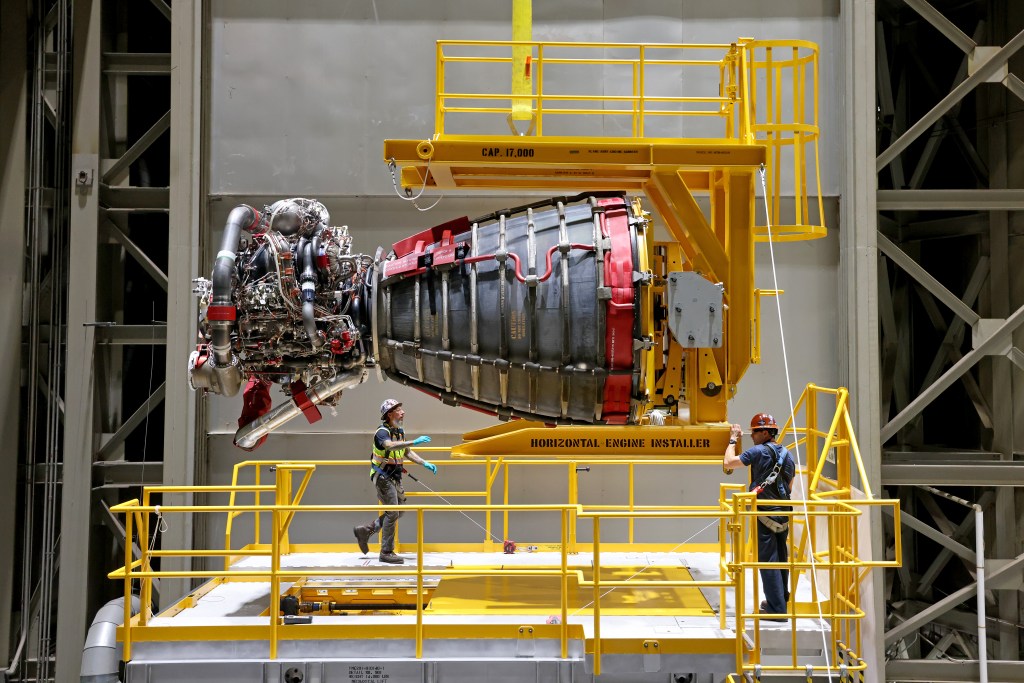
JACOB: Seven seconds later, the bottom of the rocket clears the launch tower and flies into the sky, and off they go.
REID: Once that happens, the vehicle will do an automated roll and start tracking down range. It’s pretty neat to see how quickly we pick up speed and how quickly the nose of the spacecraft drops down as we accelerate across planet Earth to build up that orbital velocity.
PADI: Once the astronauts reach Earth orbit, they’ll check out the systems in Orion. If everything looks good, they’ll do a maneuver called an apogee raise burn to reach an orbit 38,000 nautical miles above Earth. Just to put that in perspective, that’s about 150 times farther from Earth than the International Space Station—farther than anyone has been in decades. From that distance, Earth will be about the size of a basketball held at arm’s length out Orion’s windows. And that’s just the start.
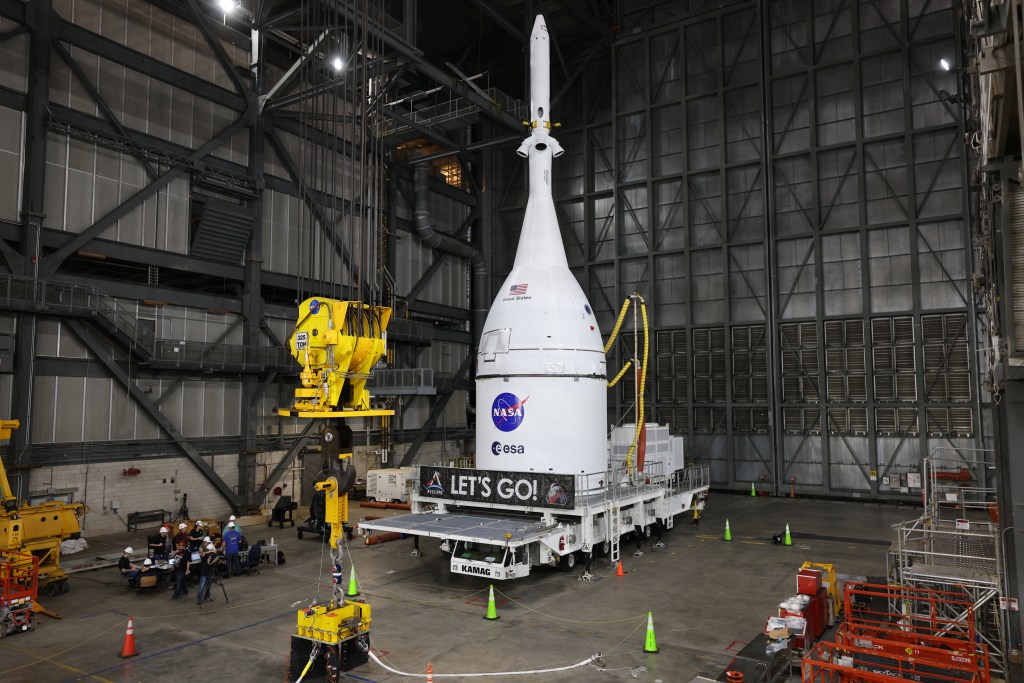
REID: About an hour and a half after that apogee raise burn, we will disconnect from our interim cryogenic propulsion stage, our upper stage, and we’ll turn the Orion spacecraft around. At this point in time, Victor Glover will be flying, and we’ll do a prox operations demo.
JACOB: OK, let’s break down some astronaut jargon. “Prox ops” is short for “proximity operations.” Even though this happens before the astronauts head to the Moon, this is a really important milestone. It’s basically a test drive. So first, Orion’s software automatically spins the spacecraft around to face the discarded upper stage of the rocket. At this point, Victor takes control manually with Orion about a football field away from the rocket. Victor flies Orion closer, like a practice run for docking with a lunar lander on future missions. Orion gets to within 30 feet of its target. In space terms, that’s really close.
[MUSIC: “Spacewalk” by Sergey Azbel]
JACOB: Ok, phew. That’s a lot, right? Well that’s just the first day of a 10-day mission! At this point, the crew is only about one-sixth the distance to the Moon. At this point, they’ll have a few more hours of checkout, making sure all systems are go. And then it’s time to head to the Moon. They’ll make one big engine burn, a major milestone called translunar injection. Then, it’s a four day trip to the Moon.
PADI: Now, the part I’m most excited about: the crew will fly around the lunar far side. During the three or more hours of lunar flyby, these four humans will have a better view of the Moon’s surface than anyone has for decades. And with eyes trained by NASA geologists, they’ll observe lunar features up close and may see parts of the Moon that no one has ever seen before. For about 45 minutes, when they are on the opposite side of the Moon, they won’t be able to communicate with Earth at all. It will just be the four astronauts floating in their capsule and the Moon.
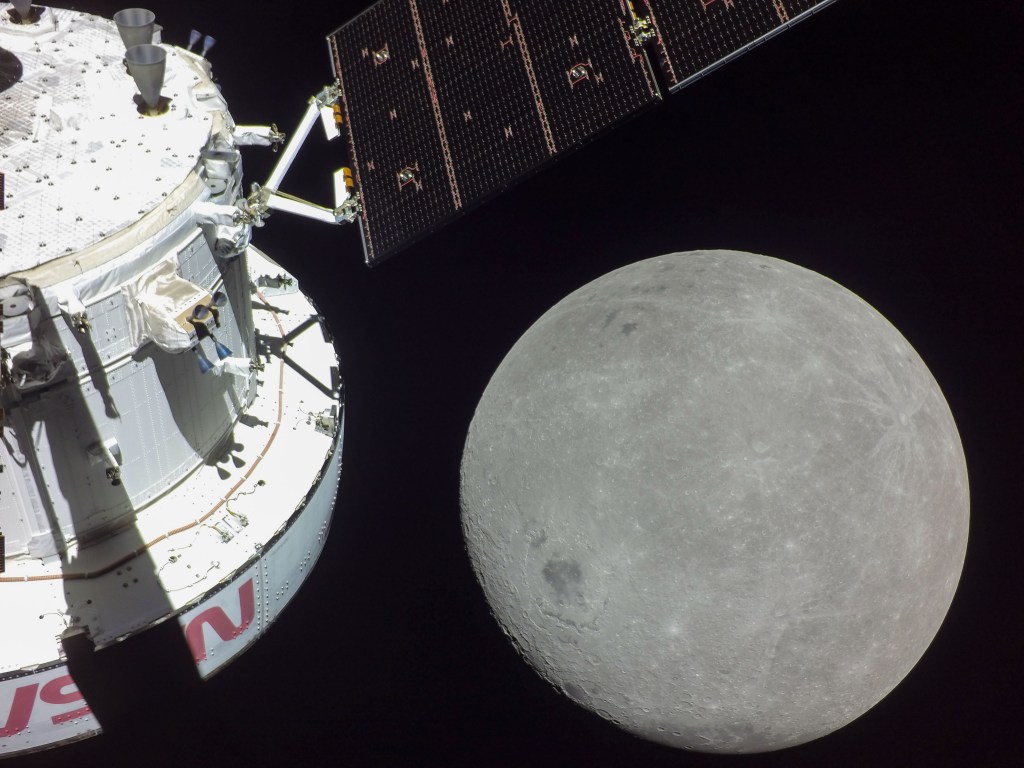
Then, the pull of Earth’s gravity will bring Artemis II back home. Four days later, Orion will parachute through the sky and splash down into the Pacific Ocean. Results from this mission will prepare NASA for future Artemis missions, when humans again leave footprints on the Moon and establish a long-term presence there.
JACOB: These four intrepid explorers are going to be responsible for a lot of firsts. The first to return to the Moon. The first to fly Orion. But they have this saying: they insist that they don’t want people in the future to remember those firsts—or to remember them at all—because even bigger things are coming.
CHRISTINA: I have to be honest, I hope that they don’t remember Artemis II. I hope that people recognize that Artemis II was the stepping stone for something so much greater
JEREMY: Victor coined this term in our crew early on about a relay race. And it just really resonates.
CHRISTINA: We are enablers. We are here to make sure that the future is as good as it can be every bit of effort that we spend a lot of it actually won’t affect our mission, but we’re making it better for the people that are coming,
JEREMY: We are just proving out the Orion capsule. The next crew has to prove out a lunar lander, and you put those two together, and then you can put people on the surface of the moon. I do hope that the globe will pause when there are humans who have left the planet and are on the far side of the Moon. I hope that we all pause during that time frame. I think that would be good for us as a human race.
PADI: During Artemis II, the astronauts will bring their unique skillsets and perspectives and act as one unit. To prepare for this remarkable mission, the astronauts have gone through an intensive training program. For almost three years, they have studied their spacecraft, simulated as many mission scenarios as NASA engineers can think of, and immersed themselves in geology so they can gather valuable data as they fly past the Moon. And they have also worked hard to be a better team. They’ve studied psychology and worked with coaches to maximize their performance together.

JACOB: As you’re about to hear, they have formed a unique bond. There are just some things about being an astronaut that nobody else can relate to. But I wanted to try.
[MUSIC: “Towards the Light” by Cliff Haywood]
So we gathered these four astronauts for a round-table interview to learn about their training and how it feels to be in their shoes. And to really make the most of it, we teamed up with Houston We Have a Podcast. Houston We Have a Podcast is another official NASA podcast. As you probably guessed, it is based in Houston, at the Johnson Space Center. It explores the world of human spaceflight through in-depth conversations with episodes dropping every week. So let me introduce you to Nilufar Ramji. She is a NASA public affairs officer. She’s one of the hosts of Houston We Have a Podcast. Hi Nilufar!
NILUFAR RAMJI: Hey Jacob! Excited for this collaboration.
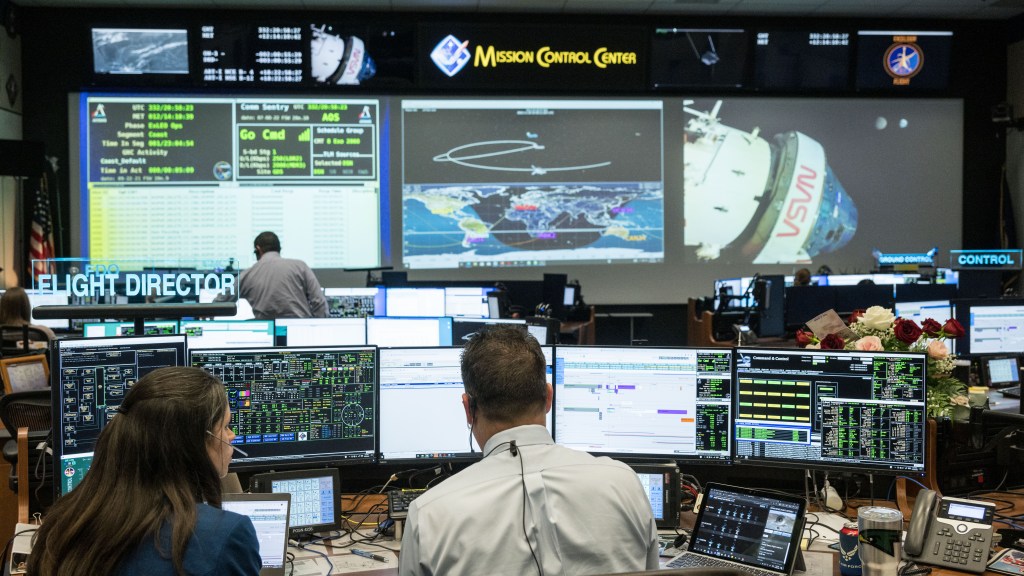
JACOB: Me too. OK, so during the Artemis II mission, you have a super cool job. You’re going to be taking shifts inside mission control. You’ll be one of the public affairs officers communicating with the world in real-time. And can you just describe what it feels like to be in that room?
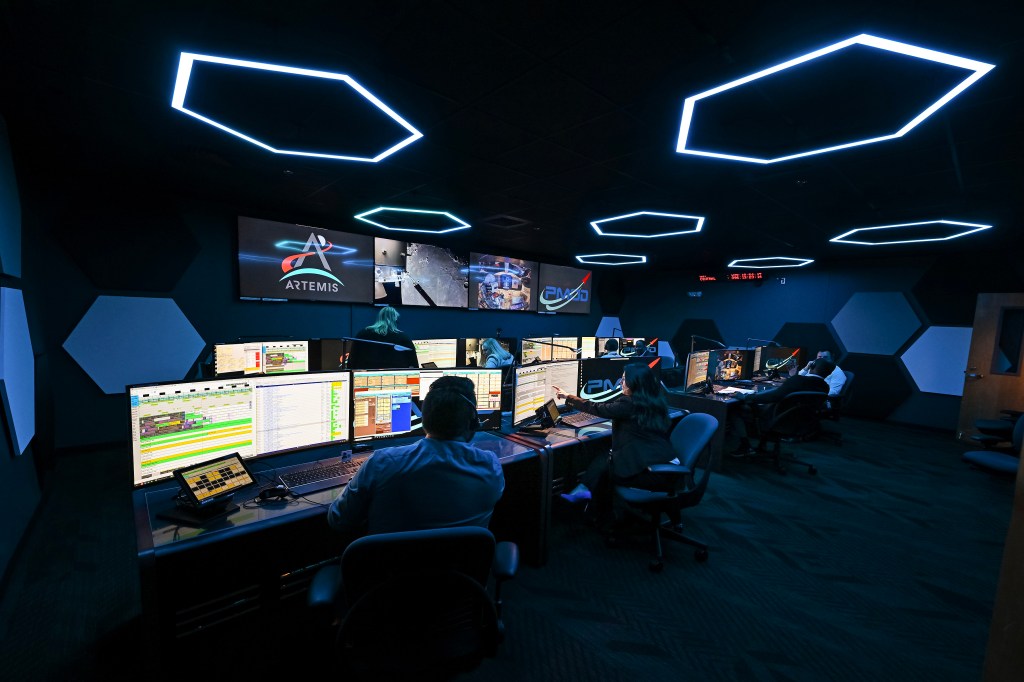
NILUFAR: Yes I can. I’ve been in simulations practicing for this mission over the last nine months, and let me tell you, it is an absolute honor to be sharing this mission to the world. What we’ll be doing is taking what you hear on the communications loops. We’ll hear what they’re talking about, what they’re doing over the course of the mission, and our job on console is to be able to translate what is being said to the world so you can go ahead and talk about the Artemis II mission to your family and friends.
JACOB: So you’re listening in to the real communications between the astronauts and mission control and people within mission control and picking out the salient parts and then explaining it for the rest of us.
NILUFAR: Exactly. I will have probably 10 or 15 other voices going on in my head—literally on a headset—and I will be listening for those, as well as the public loops and be articulating what exactly is going on. If the crew is talking about something they’re repairing or going through a procedure, then I should be able to articulate that to you.
JACOB: And so, the four astronauts of Artemis II—you’ve worked with each of these four astronauts over the years. What stands out to you about them and just what you’ve seen from them during that time?
[MUSIC: “The Perfect Process” by Laurent Levesque]
NILUFAR: All four of these individuals—along with the entire astronaut corps—are incredibly talented, and the combination of any three or four crew just makes for an epic team. I am so happy that I got to record this episode with them.
JACOB: Alright, well you and I sat down with the astronauts for about an hour. We’re going to hear a portion of that interview now. The full version will air on Houston We Have a Podcast.
Here’s Nilufar, along with Reid Wiseman, Victor Glover, Christina Koch, and Jeremy Hansen.
NILUFAR: So y’all have some deep roots with each other, going back to the selection as astronaut candidates. Reid and Jeremy, y’all were in astronaut group 20, aka The Chumps, in 2009. And Victor and Christina, you were both in astronaut group 21, The Eight Balls, in 2013. So first off, tell us a little bit about what your first impressions were of each other.
REID: Well, Jeremy asked me to move in with him when I was looking for a place to live when we first got here, and I was like, there is no way I’m moving in with that guy. Like, we’ll never graduate from our astronaut candidate period. So I said no. And I look back and really regret that. I think we would have had a lot of fun if I said yes to that request.
JEREMY: Yeah, you should regret that life choice.
CHRISTINA: My biggest memory of Victor from our astronaut—of Ike from our astronaut candidate years—was something he said to our entire class to start us out on the right foot and set the stage for what I think was a really successful training period. And he said, “Our goal as a class is to cross the finish line together.” And I will never forget that. It set the bit for what an amazing human you are. And I think about that all the time.
VICTOR: Wow. I’m gonna need a minute. [laughs]
JACOB: You looked really concerned, Victor.
VICTOR: I was like, Oh gosh. I said a lot during that time. The single biggest impression that Christina made on me—during astronaut candidate training, we were having a conversation about what it was like to transition here from our previous lives. And I just remember a moment in this conversation where I felt like, “Oh, you think this place is like the military? It’s not!” And she’s like, “Wait, you think this place is like the civilian world? It’s not!” And so I just remember feeling like, OK, that’s cool. We’re both in a culture that’s new to us. And that was a very important part of my transition to NASA.
JEREMY: Well, I feel a bit guilty for not giving an impression on Reid. Something that just carried forward—and I think people probably pick up on this from Reid themselves very quickly—but it’s just very easy and natural to have a friendship with someone like Reid, and that just translated through our entire time here at NASA as part of this crew. It’s just easy. You never feel like you have to be someone else. And I think that’s just a really important and genuine person.
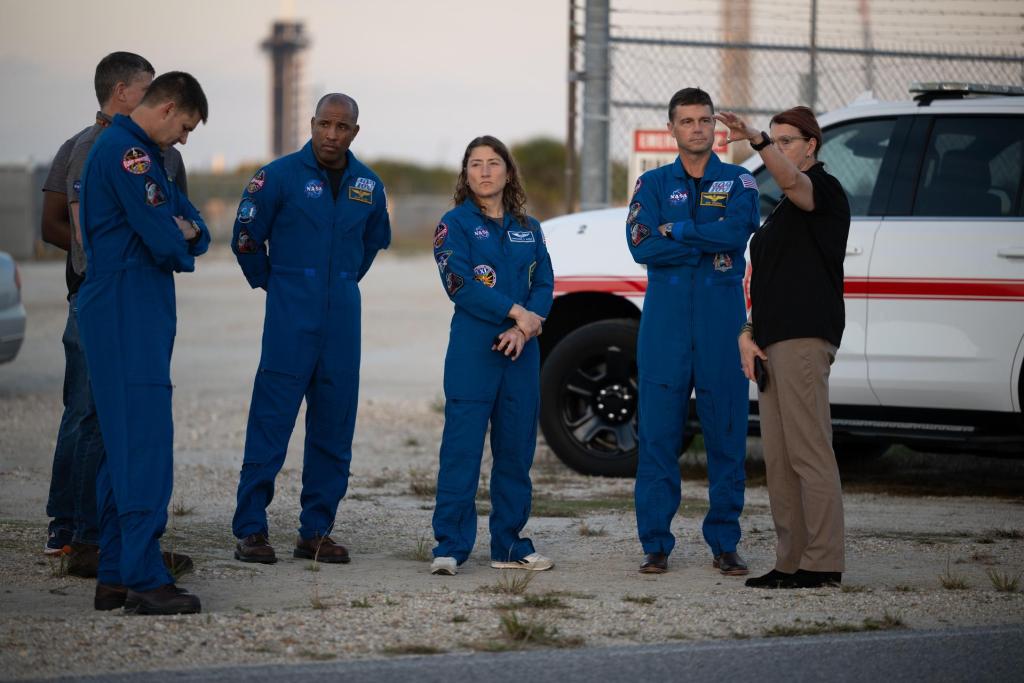
NILUFAR: So the four of your names were announced to the world in early 2023. I want to know a little bit about how you were told and how you were feeling in that exact moment.
REID: Everybody always asks this question. First, we would have to have shown up to the meeting on time.
VICTOR: Will never forget. March 7, 2023. A date that will live in infamy.
CHRISTINA: We really demonstrated to our leadership that they chose the right crew. None of us were on time. [laughter] Yeah, we were late because I had the wrong impression that it was a virtual meeting, which I took from a different NASA site here. And I know my impression was when I finally did make it, 15 minutes late, walked into the room, saw my boss and my boss’s boss, and you—yeah, just Victor and those other two. And I thought, Oh, wow, we’re in for something here. And sat down and got the question.
VICTOR: So they tried to set it up so that we wouldn’t have any idea what was happening. And I think that backfired a little bit. You know, it was as much of a joke for them as it was for us. We got there, and, you know, they were kind of keeping up the ruse, talking about whatever the surreptitious subject was. But he says, “How would you like to fly Artemis II?” I believe that was what he said.
CHRISTINA: Those were the exact words. I remember.
VICTOR: There were a lot of feelings, a lot of feelings. It was a very profound moment.
REID: I think most people think you get told that and you run out like jumping for joy. And that is not the typical reaction to that moment. The typical reaction to that moment is you just, you’re thinking about this whole astronaut office, and there’s very few people that are going to get to go do this. And then you also think about the tremendous workload that’s coming. Who are you going to go fly with? What is now going to be on your shoulders? And so more of like—I guess maybe it’s because we’re operators. We’re astronauts. We’re always operating. As soon as you find out one piece of information now, it’s on to the next part of this journey and that it just kind of felt surreal. But also it was—it was pretty heavy. It was not like you just won the lottery and you’re running out and jumping for joy. It was not that feeling at all.
JACOB: You’re thinking about the to do list, not the accomplishment.
REID: It’s a lot. It’s just a lot of things.
VICTOR: A lot of things. You know, he said one of them that was really heavy for me. At the time, I was the assigned Crew Branch Chief, so the office that is responsible for getting astronauts prepared directly for their missions, supporting them while they’re in flight, and then transitioning them back when they get home. And that job was really meaningful, and we were also trying to change some things and to really make that time in that branch what it ought to be for the crew members and their families. And I was 11 months into that job, and I was really hoping to do it for two years. And I will tell you—I don’t talk about it much, but I felt like I was letting that group down. And so it was hard for me to just be happy, because it felt selfish.
NILUFAR: How did your families react when you told them?
CHRISTINA: My husband was very excited. We live at the beach, and so we took a bike ride at night out to the end of a jetty when the Moon rose, and that’s when I told him. He was very excited and happy for me.
NILUFAR: That’s really romantic.
CHRISTINA: It was actually too foggy to see the Moon.
[Everyone laughs]
JEREMY: But it was there.
CHRISTINA: It was there.
VICTOR: You had one job! [laughter]
JEREMY: I also was really pleased by the reaction of my children and my wife. They were just really excited for me. And even though there’s, you know, there’s a risk aspect to this, they knew it was something that that I was interested in pursuing, and I it just felt really good that they were as excited, genuinely, as excited as they were, which was felt very supported.
REID: I’m an only parent with two daughters, and it was hard for me to go home and tell the. I’ll just keep this short, but I—once, I told them, they turned it around in their head to an extremely positive thing. And the next morning, I woke up and my older daughter had made Moon cupcakes for the family. And she was the one that was, I think, most against this for her life. And so I just—I thought that was amazing. Like here these two kids I thought were gonna pull me, but they were pushing me, and I that was, I will never forget that like that is exactly the way you want to feel as a parent. It was such a cool moment for me.
VICTOR: At the time I had two children away in college, and they’re in California. And so we happened to go out there to visit them. So we were all together in a hotel room, and it was a heavy conversation, and knowing that, you know, it is this thing, what’s coming. There’s the estate planning and all of these other things, and it’s dangerous. We know dad’s job is dangerous. And I told them, and one of my kids just yelled out, “Let’s go!” And that set the—it was just contagious, like it caught fire. And Dionna, my wife, already knew, but even her reaction was just different. And I needed that. Very similar, like it just was so nourishing to my soul. It was like, OK, yep, we can celebrate. And that’s actually when I started to really feel the celebration.
JACOB: And so these conversations you’re talking about, these were more than two years ago. And so now these people in your life have seen you going through the training. That date on the calendar is getting closer and closer. What are the conversations like now that you’re having with the people you’re close to?
[MUSIC: Contemporary Art Daily by Laurent Dury]
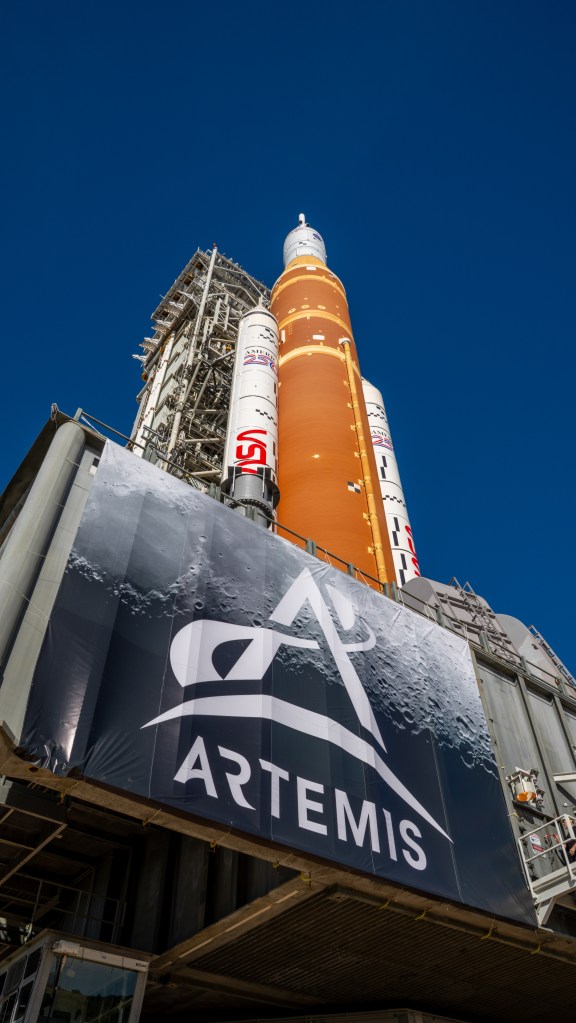
CHRISTINA: Well, I will say it got real for my husband when he saw the rocket. You know, we talk about it a lot, but until that gigantic 300 foot rocket was in front of him, I don’t think it had really sunk in. I don’t think it can. And I don’t think it really ever can fully. But I can say our conversations changed that day. They just feel a lot more real, and I think that internalizing what we’re doing together has become real.
JEREMY: I had an experience standing on the roof of the Launch Control Center at Kennedy Space Center with my family on the tour. That’s where they’re going to watch the launch from. And that—I could just tell that was a moment for them where they’re like, Oh, there’s going to be some emotions on that day. You know, we’re gonna have to lean into one another and support mom. And there are just a lot of comments like that. And that was a very real moment for us thinking about those things. And then people ask them—they get asked that a lot, like, what do you think about your dad going on this risky mission around the Moon? And I think that definitely—well, I know—it has made them contemplate those things, which is good, because you have to think about those realities. We have to have those honest conversations. The most likely outcome—and this is how I truly feel about it—is that we’ll be fine and we’ll make it back. That is the most likely outcome. But it’s not the only outcome, and we do have to prepare for that as well.
REID: I think when I talked to my kids about that, it actually liberated them. I don’t think it scared them. I think it liberated them that we just looked at it head on and I talked to them. If I don’t come back, here is where you’ll go, and here’s the estate plan, and here is exactly what I have built this foundation for the both of you. And it’s incredible. It was hard for me to have that conversation, but then it was also very freeing, I think for all of us.
VICTOR: That is a—that’s what just keeps running through my mind, is that there’s a lot of logistics, some of which is not fun to discuss. But the thing that I have appreciated the most at the end of it—I just sit there and meditate about it, or write about it, pray about it. And I’ve written in my journal several times how this conversation was quick, this one was long, but I’m glad they feel they have the space to say what they think. My kids are all average age adults now, and it’s just really cool to see their contribution. They bring up things and talk about things. It’s been cool just to think about it afterward, like, Wow, all these adults having this discussion.
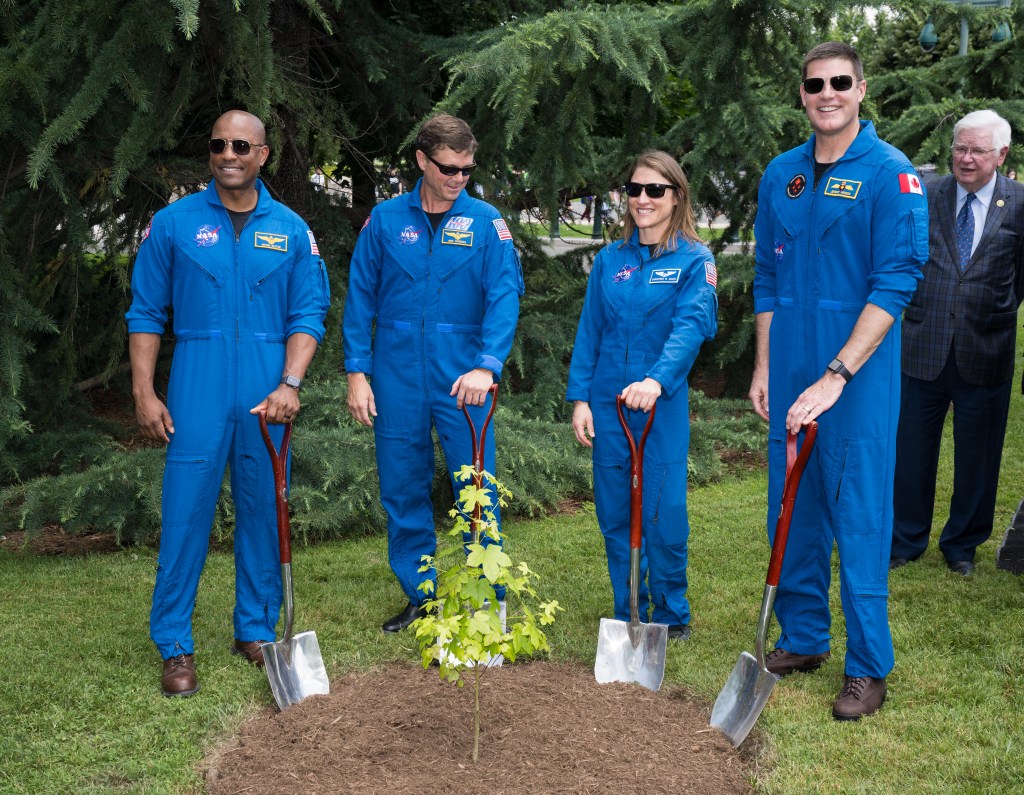
NILUFAR: So what’s something about your job that all of you understand but nobody else understands?
JEREMY: Well, just one thing people probably wouldn’t know is, like, just before we came out here to record this and do some filming, we were in a spacesuit, completely covered in sweat, doing emergency egresses from the capsule in Building 9, and then we completely put on a different hat and come over here and do this. And I just think it’s something people would not expect.
VICTOR: There’s a lot. I thought when you brought up Building 9, Jeremy, that you were going to talk about how often we have to pee on ourselves.
[Everyone laughs]
You know, sleeping and using the bathroom in uncomfortable positions and places is actually a very important part of this job, and it can be very challenging to do both. So that’s one I think most people don’t know. But actually I was, I was, I was thinking about something else. You made me think—you put that there. You put that there. [Everyone laughs again]
REID: I’m so glad you went there, Ike. Thank you.
VICTOR: It’s a reality. I’m not kidding. Sleeping and using the bathroom—and it can be a challenge. We try very hard not to speak for the crew, for each other, when it’s not appropriate. I’m going to take a little bit of liberty here and speak for the crew. We understand why so many people focus on our names, why our pictures hang all over the center, but that we—we are happy for humanity sending people to the Moon, even though a lot of humanity is happy for the four of us going to the Moon. And that little nuance, like it’s not about us. We try very hard to make it not about us. It’s about landing on the Moon and eventually landing on Mars, and it’s about the next thing. And I think people hear us say it a lot, but really that’s truly our focus.
JACOB: Jeremy, I have a question for you. Artemis II will be your first trip to space. What is the best advice that you’ve gotten from these three?
JEREMY: Lots of advice on just how things are different in microgravity and how, I mean—they were just telling me the other day in a sim, you know, I was simulating, kind of throwing something across Integrity to one of them, they’re like, Hey, you’re gonna throw that too hard in space. I’m just telling you right now. You’ve got to take some time to get used to it and go slow. And then I also see them carving out time mentally. You know, when we’re doing sims that, hey, let’s just make sure that you take a few moments in these early hours in space to really take it in, like sneak over the window and have a look at the Earth when it’s zipping by. I mean, because even in the sim, the view is just unreal, the things you see in the first few hours.
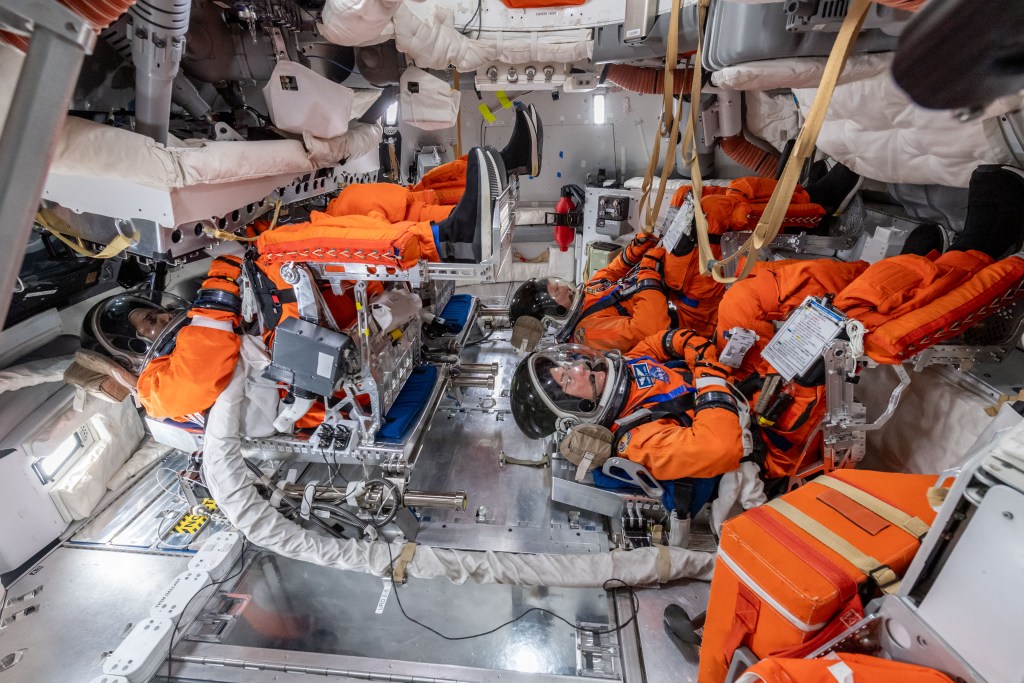
JACOB: You guys are going to have a really busy schedule. How are you guys going to find time—or are you going to be able to find time to just appreciate what you’re doing and seeing?
REID: Day one is hard. This is going to probably be the most dynamic first day of a mission, I think NASA—at least in NASA’s recent history, for sure. So day one is highly orchestrated. We’ve practiced the first 48 hours a lot. And when I say day one, I really mean probably the first 36 hours in space, and we’re getting up eight hours before that. It’s a long day. I think that period is, it’s so highly orchestrated, and we have trained it so many times, that is going to be the most difficult part, getting that one down. And even in that there are moments, as Jeremy said, where we’re like, Whoa. Like, look at all of Canada there. All of Greenland. Oh, there’s the entire Earth the size of a basketball out the window now, and so you still take these little, tiny, acute human moments in this huge, choreographed plan of day one and day two, and then the mission sort of slows down as we head out towards the Moon. We do have a little bit of time to regroup. There’s a lot of testing, there’s a lot of science that we’re going to do. And then again, as we go around the far side of the Moon, we get into this very choreographed structure for about eight hours of our trip, and then we’re coming back. So there, I think there will be some time to appreciate a touch of downtime, but those first two days, for sure, it’s just all go.
CHRISTINA: I think it’s going to be neat to just be spending time as a crew together. And we won’t always be at the windows, because there won’t necessarily be a view at all times of either Earth or the Moon or the Milky Way. There will sometimes, but I think there’s gonna be times when we just bust out a show and watch a movie together or all put on our headphones and sit in separate corners and read something off of our tablet. So I think there’ll be a lot of human and that’s—I’m excited for that
JACOB: You need that too.
CHRISTINA: Yep.
[MUSIC: “One Step At a Time” by Alan D. Boyd]
JACOB: Other countries can go to space. There are private companies that can send people and machines to space, but still only NASA can send people around the Moon. What is it that makes this agency special?
CHRISTINA: Well, like Jeremy says, everyone’s using their gifts. We are a group of people that has come together, a big team, and everyone is here because they found what fulfills them. They found something that they can do and work hard at and be passionate about, because they care about something bigger than themselves. And I think people aren’t afraid to really dig in here and be selfless.
VICTOR: NASA’s mission is to explore the unknown in air and space, to innovate for the benefit of humanity, and to inspire the world through discovery. And I really believe, even if people can’t rattle that off, they come to work to do that, and that’s what makes us special. I mean, the mission—we all believe in this. And at every level, I don’t mean the human spaceflight piece. You know, the human spaceflight is kind of like the face of it. We get to be the ambassadors of all of these amazing things NASA does. But NASA does so many more amazing things besides sending humans to space. And I think people show up because of that.
NILUFAR: I want to know a little bit about what you hope your legacy is, not just as an astronaut, not just as someone who flew around the Moon, but just as you—as individuals, as people.
JEREMY: For me—and you kind of hit on it when you were talking about the team that makes this possible and asking if there are people we could highlight, and it’s just so amazing how complex it is and how many people have to come together to do this. And, like, I have lived and breathed space for so long, you know, as a child, growing up, and I couldn’t—I’m still shocked at how much intricacy is involved in actually making this happen and how many people are grinding it out to actually send the four of us around the Moon. It still blows me away. And so we’re all just doing the exact same thing. We’re all just showing up and using our energy every single day for something that’s bigger than ourselves, like Victor was talking about, and just investing in the future of humanity. That’s not my legacy, but that is a great legacy for any human being to just simply just use your energy for good. You can’t fix all the problems of the world. Artemis II isn’t going to fix it all. But one thing we all can do is we can get up every morning, say, I’m just going to try and make sure the energy that I have today adds a little bit of value to this world.
REID: Nobody’s going to speak after that. That was perfect.
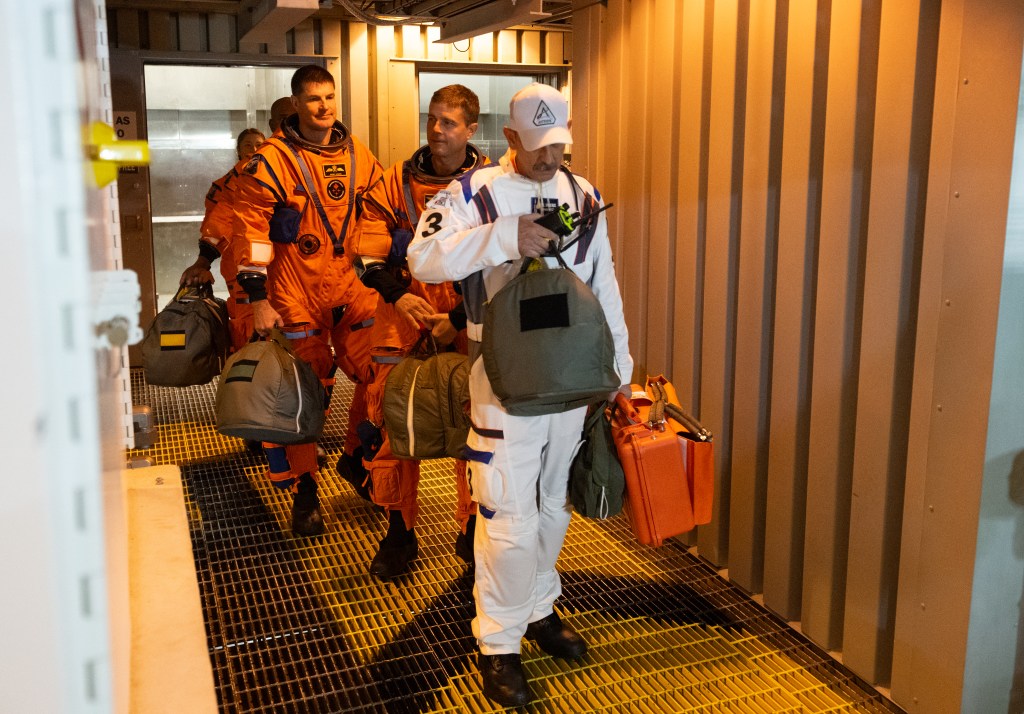
NILUFAR: OK, take us home. I know that a lot of people are—when they look up at the Moon, they’re like, I am looking at the Moon differently now, now that I’m going on this mission, now that I’ve been part of a lunar mission. When I look up at the sky, it’s a whole different ball game for me. So what does the Moon and this mission mean to you?
[MUSIC: “Staring Into Infinity” by Carl David Harms]
REID: I do love looking up at the Moon, especially when I was younger. I would look at the moon when my brother was away at college, and we had a pretty close relationship, and just knowing he’s looking at that same Moon. We’re pretty far apart from each other, but when I’m looking at the Moon, he’s looking at the Moon. Like, I think the Moon, for so many humans, is an anchor. It is a calendar, it is a spiritual symbol. The Moon can be so many things, but it is just that concept is the one thing that we all look up at, and it is the same, and we have very similar dreams across the entire planet. And to me, when I look at the moon, it is connection to civilization on planet Earth. That is what I think about.
CHRISTINA: My dad told me a story once, when he was young, that him and his mom were looking at the Moon, and it was maybe around when the human space flight program was starting, and there was some maybe talk of sending humans there. And she looked at the Moon and she said, “Don’t worry, Ronny, we’ll never get there.” And fast forwarding 70 years now, his daughter is going there, her granddaughter. And I think that’s why I would say it just means possibility, and it means to me reaching for something, no matter how impossible it might seem like it is.
VICTOR: When we first got assigned to this mission, my dad asked me if I see the moon differently, and I was pretty quick to say, no. No, I don’t. But somewhere in the middle of this training—during the lunar geology training, specifically—it changed, and I wrote a note to my family and my dad included to say that it is a different thing. And it’s kind of like the gravity. It’s the center of this mission now, and just to feel that through this training flow—and it surprised me. I hope people open themselves to the possibility of seeing it differently.
JACOB: I was really struck by the way a couple of you talked about your family seeing the SLS rocket or seeing the spot where you’ll launch from and where they’ll be, and that really making it real for them. And of course, you guys have seen all those things too. Do you expect that you know what you’ll be feeling on launch day? And do you have a, like, a strategy to kind of get your mind right if you need it? I always think of athletes in the locker room with their headphones on, just, like, getting in their own little world. Do you have a process or a mantra or something like that?
JEREMY: We have a nap strategy.
[Everyone laughs]
CHRISTINA: Napping and food. Revolves around those two things.
REID: This is gonna sound really weird, but I think we have the easiest job on launch day. We have a scripted schedule. We have people that are there to support us. We know exactly what we have to go do. Our families, they have the hard job on launch day, watching their loved ones go do this, and watching from afar. That is very, very difficult. Our job that day is crystal clear, and it’s—it is easy.
JEREMY: I think more about the day before. You know, saying goodbye to family, giving them that last hug. And I think that’ll be the tough day. But like Reid said, day-of it’s going to be go time.
VICTOR: I do appreciate that you’ve opened the door to this, though, and I won’t even go deep into it, just crack the lid on. There are lots of emotions swirling around on that day. And even having been through something like it before—three of us have sat on top of a rocket and gone to space and been a fireball coming back to Earth—but it doesn’t make doing that the next time easier, especially now on a new system that humans haven’t sat atop. And so there is a lot. Just like we don’t talk about it enough, that this job is dangerous, it’s also quite emotional, and just so the ability to focus and work through that. And a big part of that is being together. I mean, we make time intentionally. NASA brings our families to Kennedy Space Center, because that’s an important part of processing it all, and it is not an afterthought. I mean, there’s a lot to process.
[MUSIC: “New Horizons” by Cliff Haywood]
VICTOR: When you go into quarantine, life gets a little bit simpler. It’s nice. Training is done.
NILUFAR: Well, Reid, Christina, Victor, Jeremy, we are rooting for you. Congratulations, and we wish you all the best on this mission.
ALL: Thank you.
REID: Let’s go!
[MUSIC: “Inner Peace” by J.C. Lemay]
PADI: This is NASA’s Curious Universe—an official NASA podcast.
Our Artemis II series was written and produced by Christian Elliott and Jacob Pinter.
Our executive producer is Katie Konans.
Wes Buchanan designed the show art for this series. Music for the series comes from Universal Production Music.
JACOB: We had support throughout this series from Rachel Kraft, Lisa Allen, Lora Bleacher, Brandi Dean, Courtney Beasley and Thalia Patrinos.
Huge thanks to the multimedia team at Johnson Space Center – especially Nilufar Ramji, Dane Turner, and Daniel Tohill.
You can find transcripts for every episode of Curious Universe — and explore NASA’s other podcasts — at nasa.gov/podcasts.
If you enjoyed this episode of NASA’s Curious Universe … let us know! Leave us a review wherever you’re listening right now. Why not send a link to one of your friends. And you can follow NASA’s Curious Universe in your favorite podcast app to get a notification each time we post a new episode.
NASA PODCASTS STINGER: 3, 2, 1… This is an official NASA podcast.