















Texas Aerospace Scholars Junior Experience
Overview
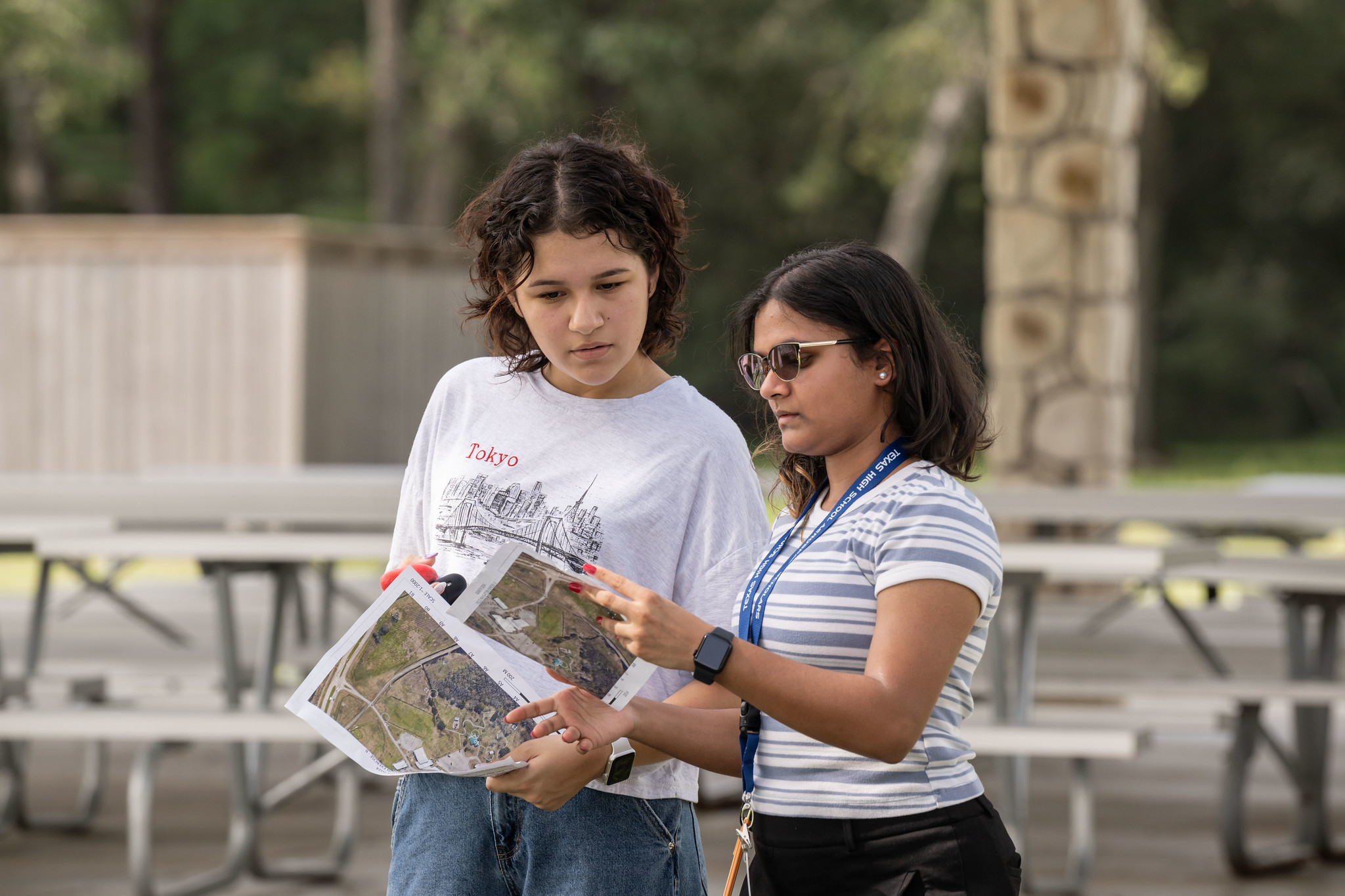
The TAS Junior Experience is a year-long commitment for high school juniors in which students engage directly with NASA scientists and engineers while building transferable skills in coding, computer-aided design (CAD), and engineering, and exploring STEM careers in the aerospace industry.
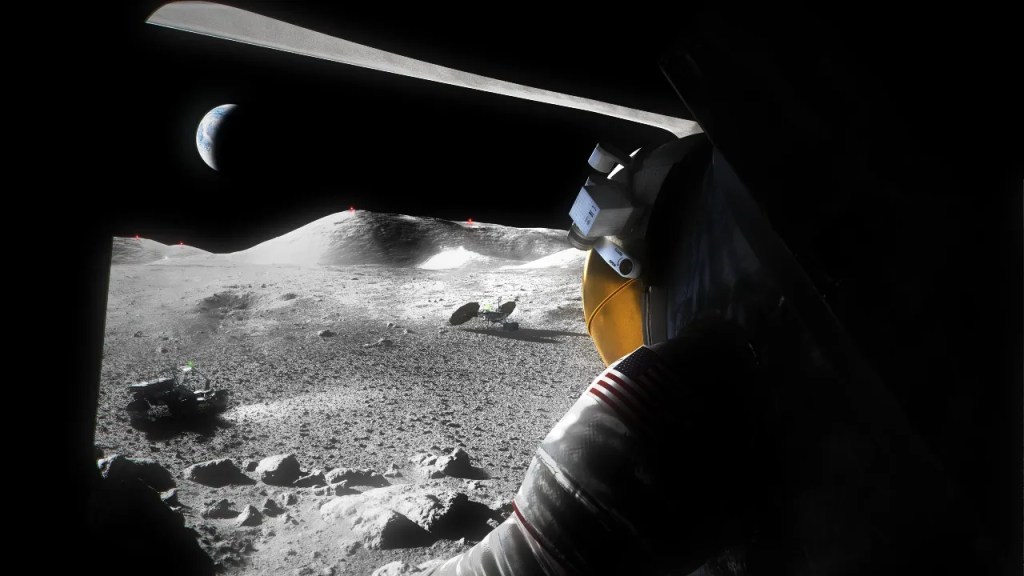
The Junior Experience starts in the fall with Launch Pad, an online course in which students explore four mission-inspired modules that cover topics from Earth science, space exploration, and technology. High achieving students are invited to participate in a five-day virtual summer challenge, Moonshot, mentored by NASA scientists and engineers. During the summer experience, students work in teams to plan an Artemis-themed mission to the Moon and Mars. The top teams are invited to attend Base Camp, a residential experience at NASA’s Johnson Space Center in Houston, TX.
Eligibility Requirements
In order to qualify, students must be:
- A U.S. Citizen
- A Texas resident
- Enrolled as a junior in a Texas high school
- Interested in science, technology, engineering, or mathematics
- Able to access the internet (from home, school, or a public library)
- Committed to completing online course to qualify for Moonshot
Information Session
The first information session for the Texas Aerospace Scholars Junior Experience was held on July 21, 2026 at 3:30 p.m. CT. View the recording here.
How to Apply
Complete the following steps to submit an application in NASA STEM Gateway:
- Login OR Create a Customized Profile – Create an account for access to additional functionality and curated experiences.
- Visit the TAS Launch Pad Opportunity Page – The opportunity will only be accessible during the active (open) application period.
- Upload transcript from a Texas high school.
- Name should be visible on transcript and match the name on the Gateway account.
- Transcript should show that the student is currently enrolled as a junior or has completed sophomore year.
- Complete the “Expression of Interest” essay to be shared with state legislators.
- Click on the Apply button in the upper-right corner and complete the application.
Check the timeline for important dates.
Timeline and Important Dates
All dates are subject to change.
| July 1 – Sept. 16, 2026 | Junior Online Course Application Window |
| July 21, 2026 at 3:30 p.m. CT | Information Session #1 | Click Here to Join |
| Aug. 6, 2026 at 2 p.m. CT | Special Information Session for Teachers and Administrators | Click Here to Join |
| Aug. 20, 2026 at 6 p.m. CT | Information Session #2 | Click Here to Join |
| Aug. 29, 2026 at 10 a.m. CT | Information Session #3 | Click Here to Join |
| Sept. 2, 2026 at 5 p.m. CT | Information Session #4 | Click Here to Join |
| Sept. 22, 2026 | Student Orientation #1 |
| Sept. 24, 2026 | Student Orientation #2 |
| Sept. 28, 2026 – March 6, 2027 | Launch Pad Online Course |
| Nov. 7, 2026 | Engineering Design Challenge #1 |
| Dec. 5, 2026 | Engineering Design Challenge #2 |
| Jan. 23, 2027 | Engineering Design Challenge #3 |
| Feb. 27, 2027 | Engineering Design Challenge #4 |
| April 2027 | Student Virtual Moonshot Selections |
| Week #1 (May 31 – June 4, 2027) or Week #2 (June 7 – 11, 2027) | Summer Virtual Moonshot Experience |
| June 2027 | Top Team Selections |
| July 25 – 30, 2027 | Residential Experience |
Frequently Asked Questions
Applicant must be:
- U.S. citizen
- Texas resident
- Texas High school junior
- Committed to the ten-month program duration, including a virtual summer experience
- Able to access the Internet (home, school, or public library)
Students enrolled in our program can attend any type of school, including homeschool, public, private, charter, and online schools, as long as the school is based in the state of Texas. Proof of enrollment may be requested.
Email hq-nasa-stem-gateway@mail.nasa.gov for all questions about your application.
Transcripts should show the student’s name and match the name on the NASA STEM Gateway account. Transcripts should verify that the student is a current Texas high school junior. Transcripts may also show completion of the sophomore year. Unofficial transcripts are accepted. Please upload a copy of the transcript to your application on the NASA STEM Gateway.
The Texas Aerospace Scholars team will share the essay from your STEM Gateway application with state legislators to coordinate your nomination. Please ensure your essay captures your interest in TAS in a concise and professional manner. No additional action is required from students.
Award notifications of application acceptance will be sent at the end of September via email from hq-nasa-stem-gateway@mail.nasa.gov. You must accept this offer. Once accepted a notification about login to the online course and student orientation will be sent via email from jsc-has@mail.nasa.gov.
- July-September: Application and selection process for students.
- Late September-March: Students engage in interactive online learning and discussions related to space exploration, including webinars and online discussions with NASA engineers and scientists.
- April-May: Selected students prepare for the summer virtual experience.
- Early June: Virtual summer experience – Moonshot.
- Late July: Onsite residential experience for the top scoring Moonshot teams.
Online Course: During the school year students complete an online course. This state-aligned STEM curriculum focuses on Earth, aeronautics, the International Space Station, Moon to Mars, and the solar system. The course includes interactive lessons, rubric-based activities, and quizzes.
Summer Experience: Students achieving a 70 percent or greater overall average and meeting any additional requirements will receive an invitation to a five-day virtual summer experience. In this portion of the course, students collaboratively work with a team to complete an Artemis-themed Moon to Mars mission and design challenge by working with NASA mentors.
No cost for selected students or educators involved in the program.
Based on the developed Engineering Design and Problem Solving course by the Texas Education Agency, students who perform research in high school under the direction of trained professionals may be granted a science elective credit toward graduation upon completion of TAS. The PEIMS number available is: 13037300 for Engineering Design and Problem Solving.
Students who qualify for the science credit can expect to receive a credit in the mail following the conclusion of the program cycle in August. Students who complete only the online portion of the course, will receive documentation for 0.5 science elective credit. Students who successfully complete both the online portion of the course and the Moonshot summer virtual experience, will receive documentation for 1 science elective credit. The elective credit documentation will be provided to the student, who is then responsible for submitting the documentation to the school. It is at the discretion of each student’s high school if and how the credit will be awarded.
For more information about Texas Aerospace Scholars, please email questions to jsc-has@mail.nasa.gov.