















Printing and Reproduction Facility
Johnson Space Center, Building 227
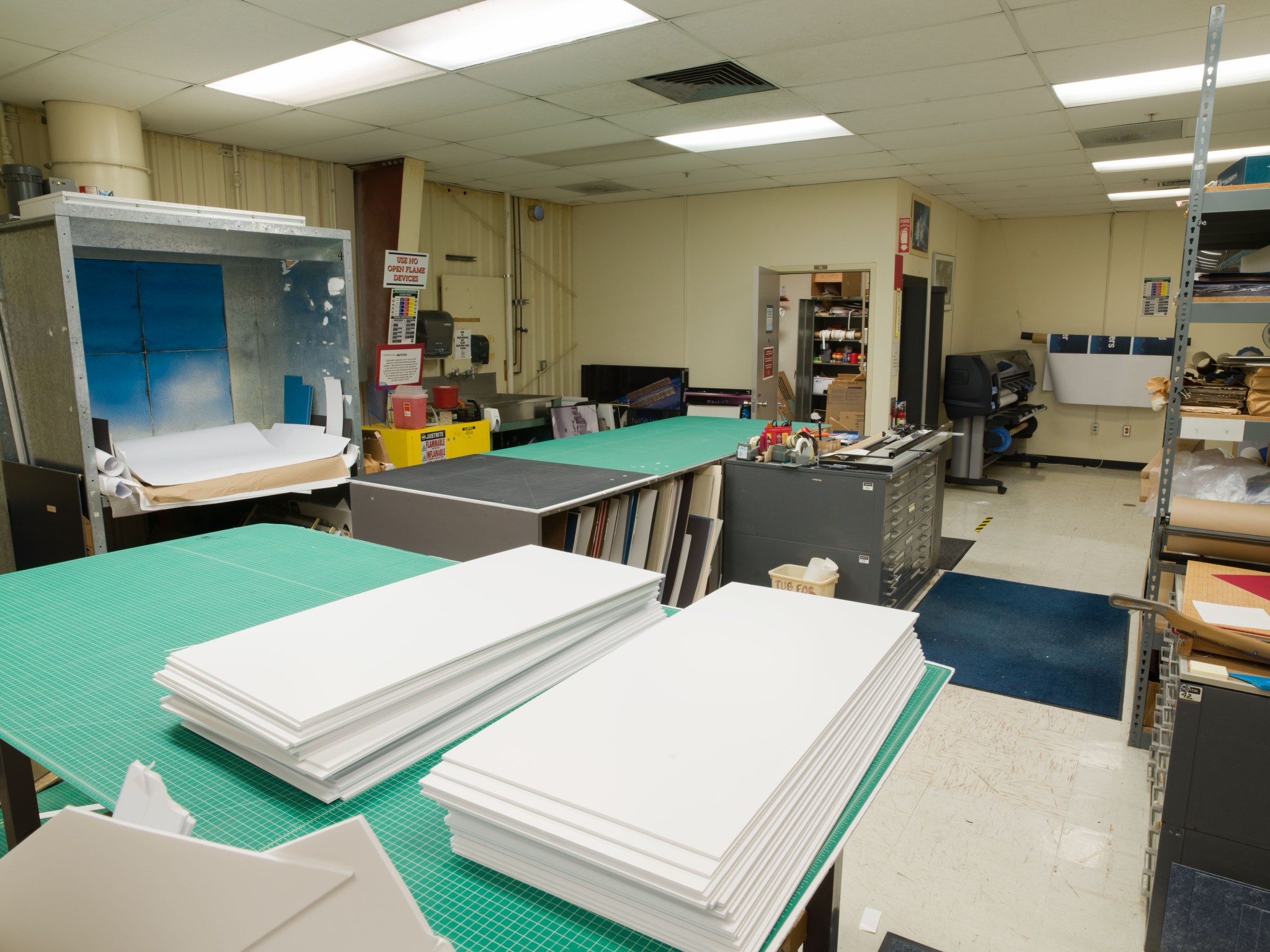
Building 227, Printing and Reproduction Facility
NASA Lyndon B. Johnson Space Center
Houston, Texas
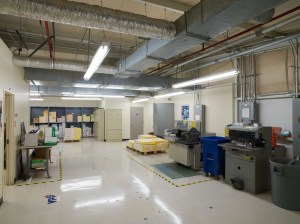
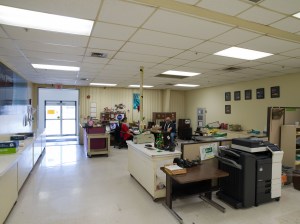
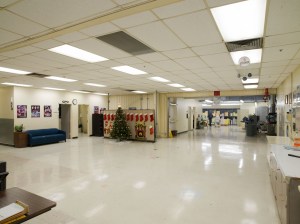
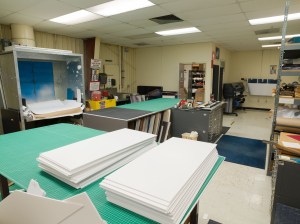
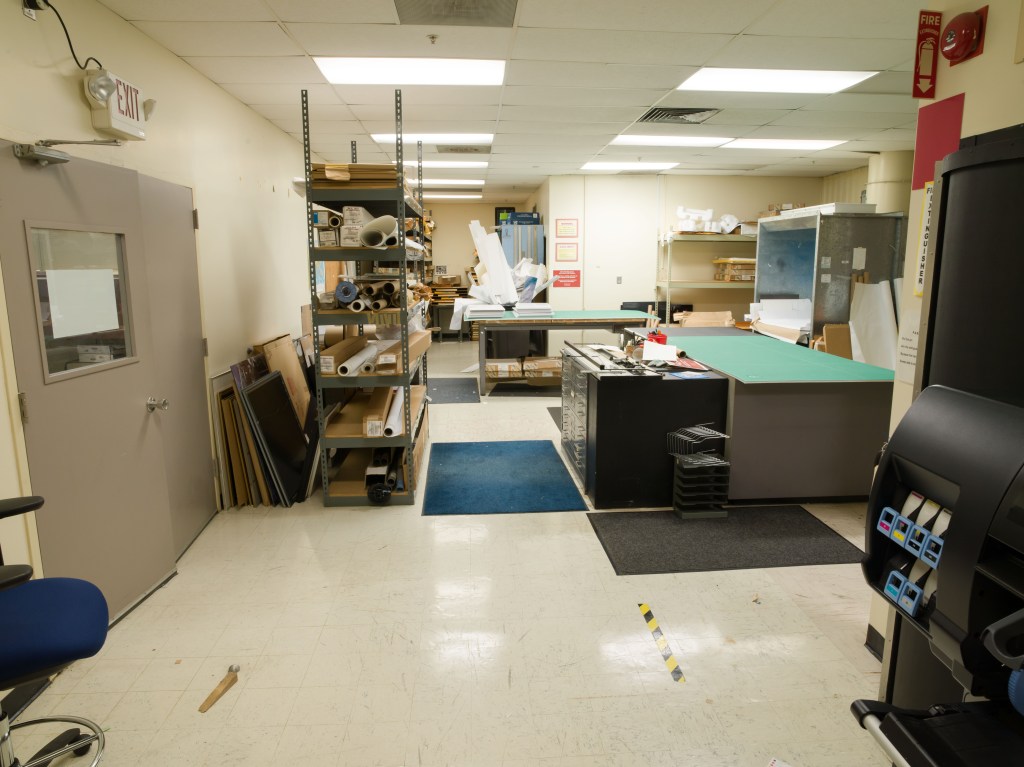
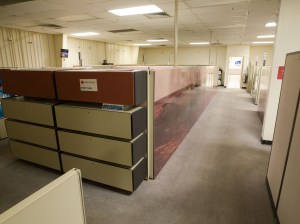
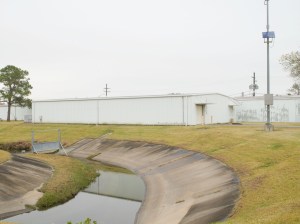
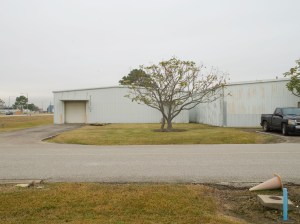
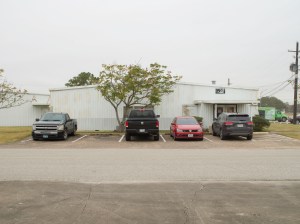
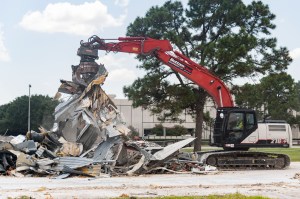
The Printing and Reproduction Facility (Building 227) consisted of a long, rectangular main building and a rectangular addition (Room 18) that extended from the main building’s center along its south side. A small ancillary building (Building 227B) was located adjacent to the northwestern entrance of the main building. The facility was on the southwest corner of Theta Link and Fifth Street and accessible via a main entrance along Fifth Street, an annex entrance along Fifth Street, and two entrances on the north side of the main building along Theta Link. The main building was approximately 222 feet in length and 60 feet wide with an original floor area of 25,046 square feet. Built in 1965, original construction features included a concrete foundation and floor, metal walls, and a metal roof. Improvements were made to Building 227 that include an addition of 5,280 square feet in 1967, the addition of 6,155 square feet in 1970, and the addition of 5,110 square feet in 1991. In 2017, Building 227 housed Printing Services and Mail Services, as well as graphics and data conversion facilities.
Building 227 was originally designed to support the first Apollo Program flight, which required real-time documents for astronaut training. At the time of its construction in June 1965, the facility consisted primarily of a large offset printing shop. Other facility features included a service dock and shed (Shed 227A). At the JSC’s original printing shop, images were inked to paper using a metal plate transfer process. This process was used to print early editions of the Space News Roundup, as well as the JSC’s “pocket” flight plans, which were regarded as the most complex printing job conducted at any NASA center. Final documents were organized for distribution in Room.
Until approximately 20 years ago, classified documents were processed in the original vault (Room 14). As of 2017, some classified documents were still processed in contemporary Special Mail Services (Room 21). During the Apollo Program, Room 29 was used for 16-mm film dark room services and Room 30 for microfiche and aperture card production services. Also at this time, Room 34 (located in the northernmost section of the building) was used to print 16-mm film and house refrigerated film storage. More recently, Room 34 is used to scan sensitive documents, such as engineering drawings and medical records. Room 32 was originally sectioned into multi-functional rooms that, at different times, contained Apollo and Shuttle landing film storage, general storage, and microfiche services. Room 31 formerly stored Space Shuttle Columbia documents (now located in the JSC library), and Room 26 provided revolving shelf storage for SSP engineering drawings, along with some pre-Shuttle documents. In 1990, the Congressional Joint Commission on Printing downgraded all NASA printing facilities from printing to duplicating services (e.g., laser printing). This necessitated the removal of large offset printing presses in Building 227, thereby opening space for graphics services. The laser printing addition (Room 18) was constructed at this time (circa 1991), and additional available space in the main building was converted into a conference room (Room 6).
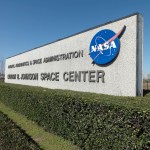
Examples of Documents Produced in JSC Building 227
| Apollo 10 Mission Report | August 1969 |
| Apollo 11 Flight Plan | July 1, 1969 |
| Apollo 12 Mission Report | March 1970 |
| Apollo 15 Lunar Roving Vehicle Systems Handbook | June 22, 1971 |
| Shuttle Digital Flight Control System Manual | August 1, 1976 |
| STS-56 Space Shuttle Mission Report | July 1993 |