






Suggested Searches

1 min read

NASA’s James Webb Space Telescope Captures Eerie Cat’s Head

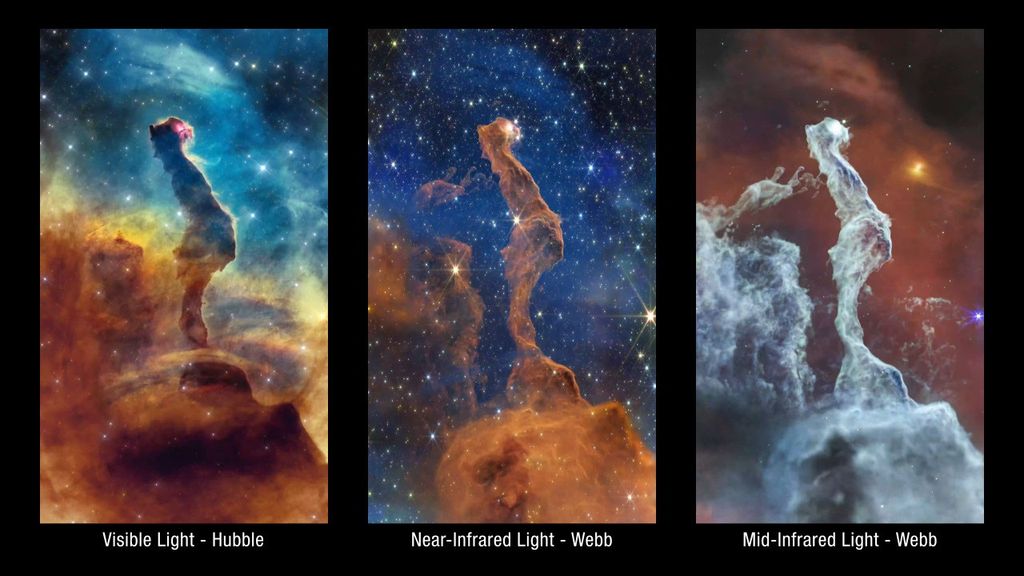
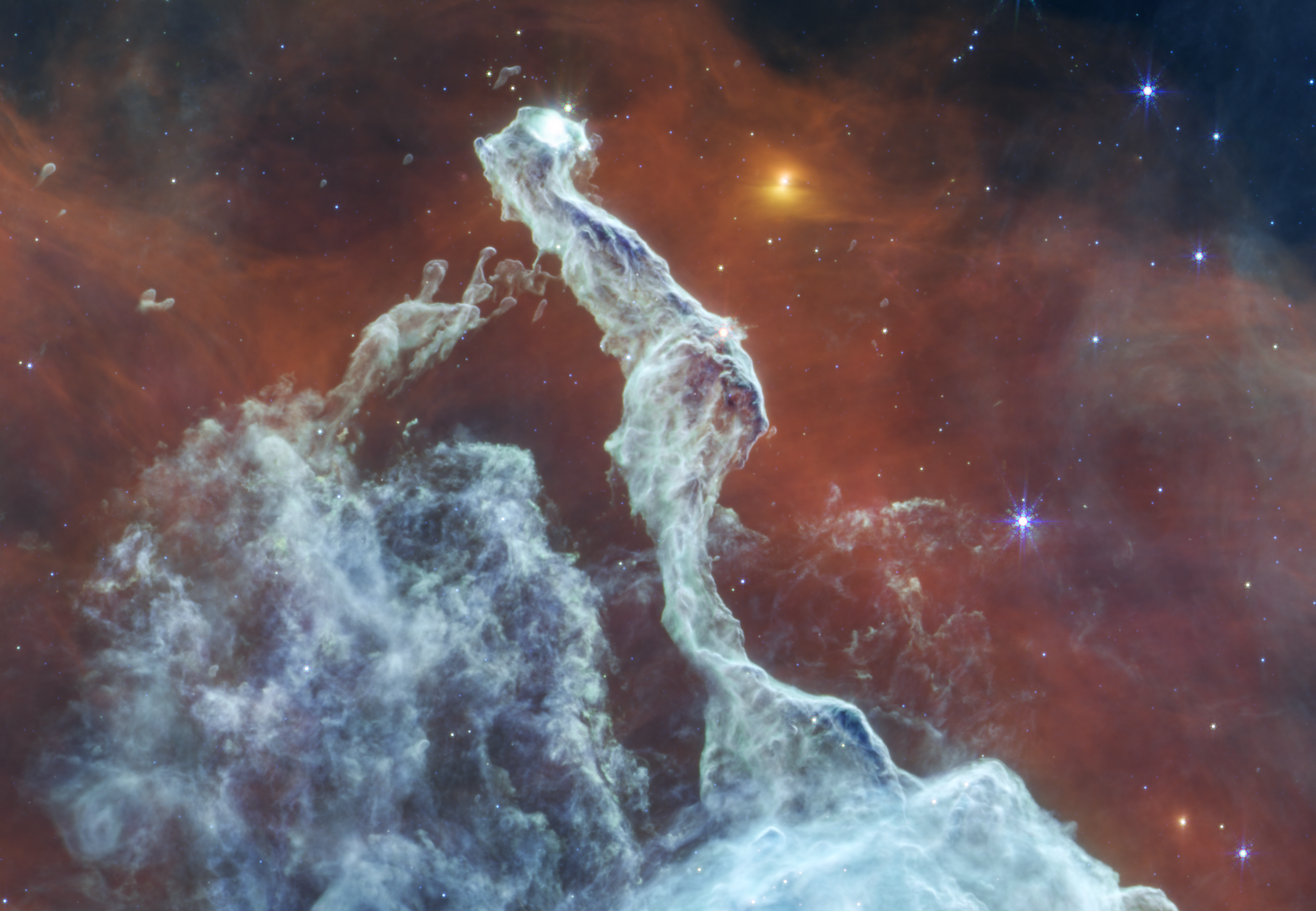
Mid-infrared image of the Cat’s Head Nebula by the James Webb Space Telescope. A bluish-gray filament of dust is in the center, stretching from the bottom to almost the very top. It has a narrow, irregular shape that resembles a cat sitting with its back toward the viewer and a tail extending downward. The tail ends at the lower one-third of the image and widens to a triangular peak of dust. The cat’s head is turned toward the right, revealing a white glowing eye. The background is mostly red, with the top left and right corners revealing the black background of space. On the cat’s left is a dome-shaped grouping of faint filaments of dust. Scattered throughout the view are yellow and blue stars, some with Webb’s signature eight-point diffraction spikes.
NASA, ESA, CSA, STScI; Image Processing: Joseph DePasquale (STScI)

Intricate structures within the Cat’s Head Nebula are illuminated in this mid-infrared view from NASA’s James Webb Space Telescope released on Oct. 29, 2026. The distinctive “cat’s head” shape of the nebula was likely sculpted over time by the intense ultraviolet radiation and winds from massive stars in the Carina Nebula. As this stellar feedback erodes the surrounding gas and dust, denser material within the feline-shaped pillar resists erosion, at least for now.

Image credit: NASA, ESA, CSA, STScI; Image Processing: Joseph DePasquale (STScI)