














Fred Haise didn’t get to see much of the NASA centers he visited while training during the Apollo era. After all, he was gearing up to go the Moon.
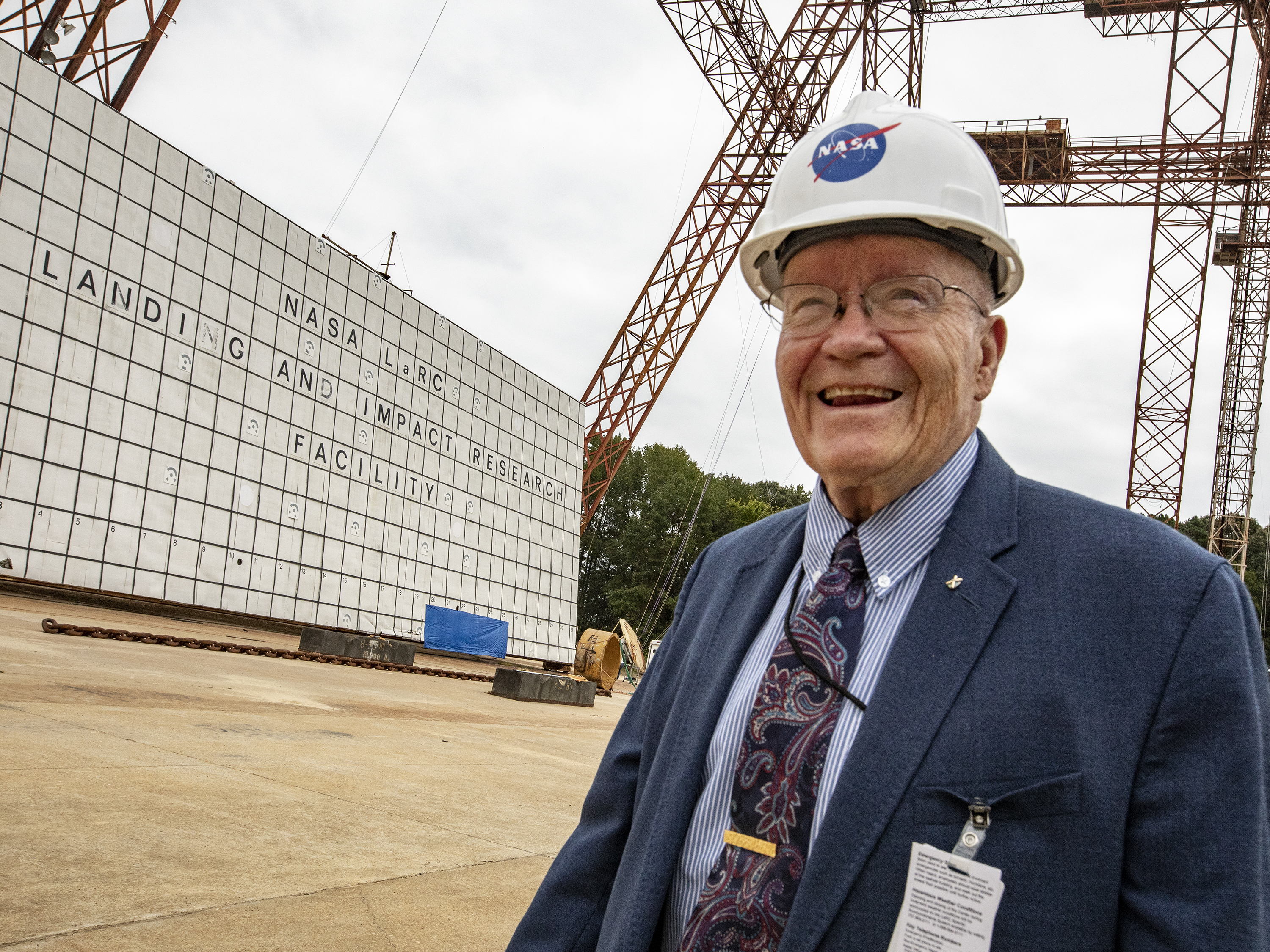
So when the former astronaut paid a visit to NASA’s Langley Research Center in Hampton, Virginia, he got quite the experience – especially at the historical gantry facility, known as the Lunar Landing Research Facility during the time Haise trained here to go to space.
“I’ve seen more today than I’ve ever seen,” he said.
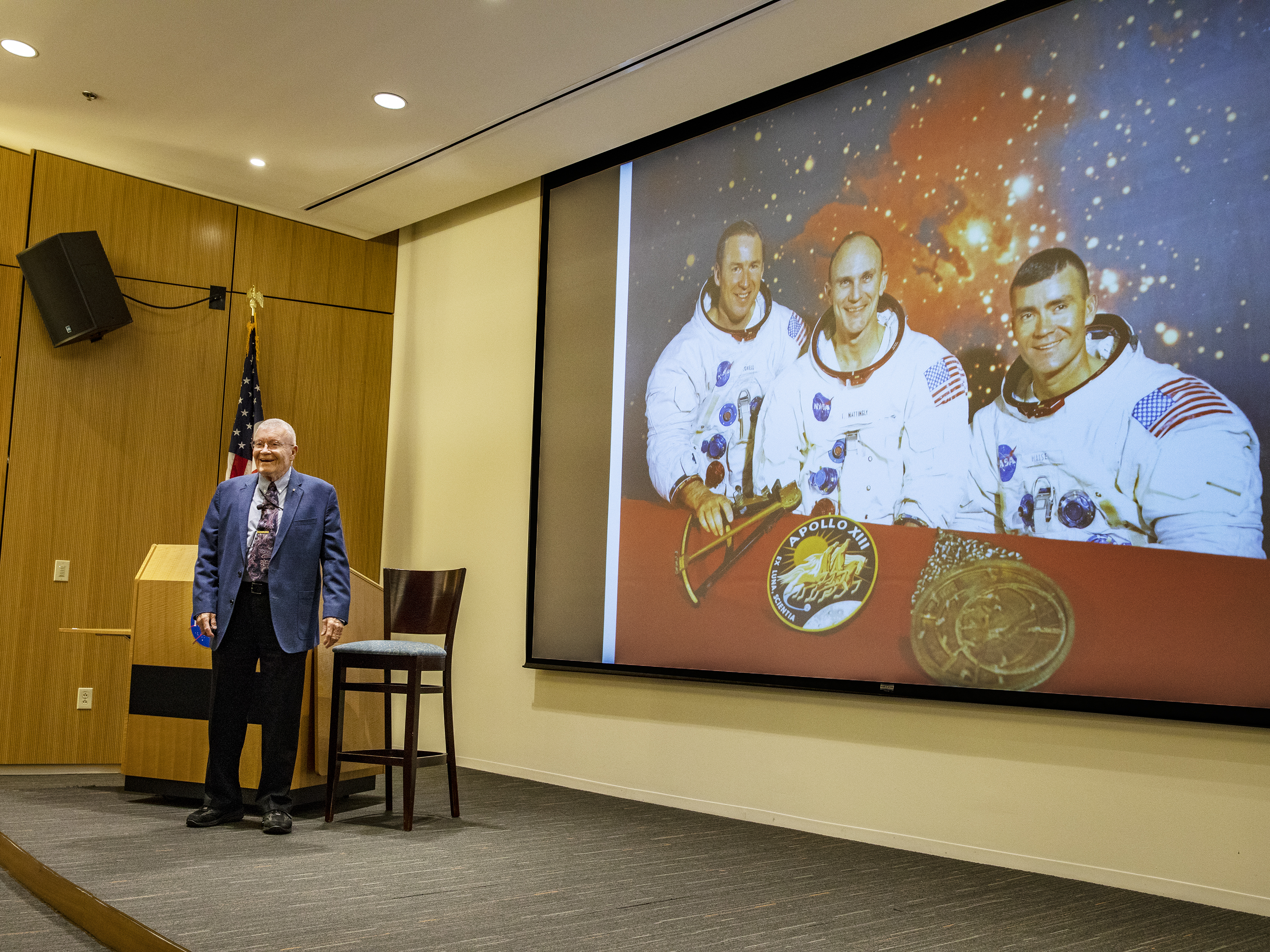
Haise came back to visit Langley decades later as part of a recent talk to the center’s workforce about his time on the fated Apollo 13 mission that became a near-disaster and a cautionary reminder about the dangers of human space exploration.
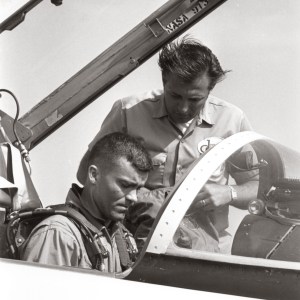
During his talk, Haise recalled memories of training as an astronaut and how the thought of going to the Moon drove him to NASA. He was a civilian research pilot before being selected in 1966 as part of NASA’s Astronaut Group 5.
“I didn’t join NASA for the money,” he said.
I didn't join NASA for the money.
Fred Haise
NASA Astronaut
Haise said he was inquisitive about the other plusses and minuses of being an astronaut. So he asked Neil Armstrong, who later became the first man to walk on the Moon. Haise recalled Armstrong giving him a very dry description of being an astronaut.
“Well, you sit in a lot of meetings, you sit in a simulator a lot, and there’s not much good flying,” he said jokingly. “That was Neil’s description of being an astronaut.”
Haise added that Armstrong was talking about his time at Edwards Air Force Base in California at NASA’s Dryden Flight Research Center, which is now named after Armstrong. Through that conversation, Haise knew he had to make a move, as the Moon was calling him.
“If I stay at Edwards, I’m never going to get to the Moon,” he said.
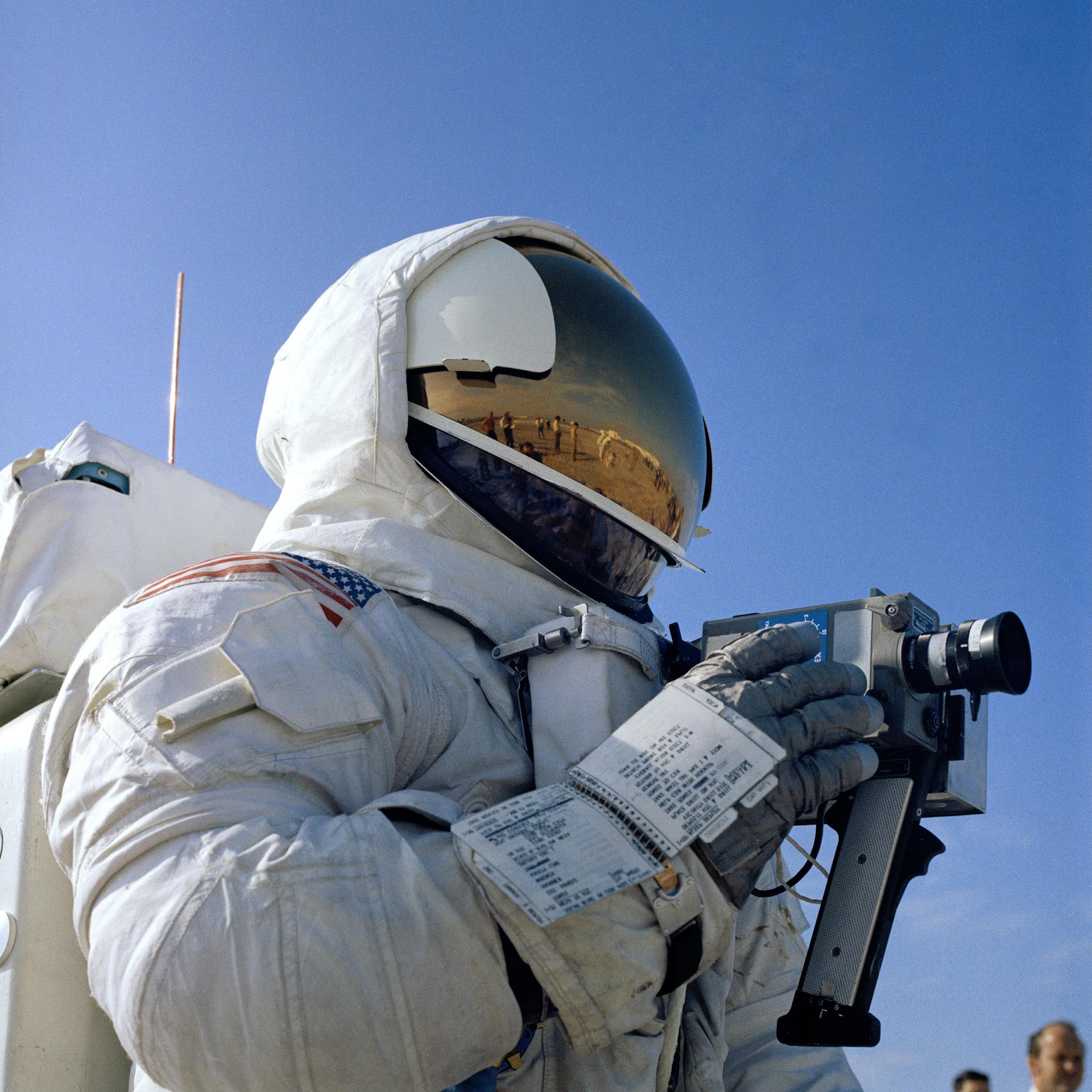
Haise was the first astronaut among his class to be assigned to a mission, serving as a backup lunar module pilot for both Apollo 8 and Apollo 11.
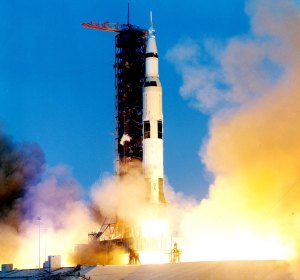
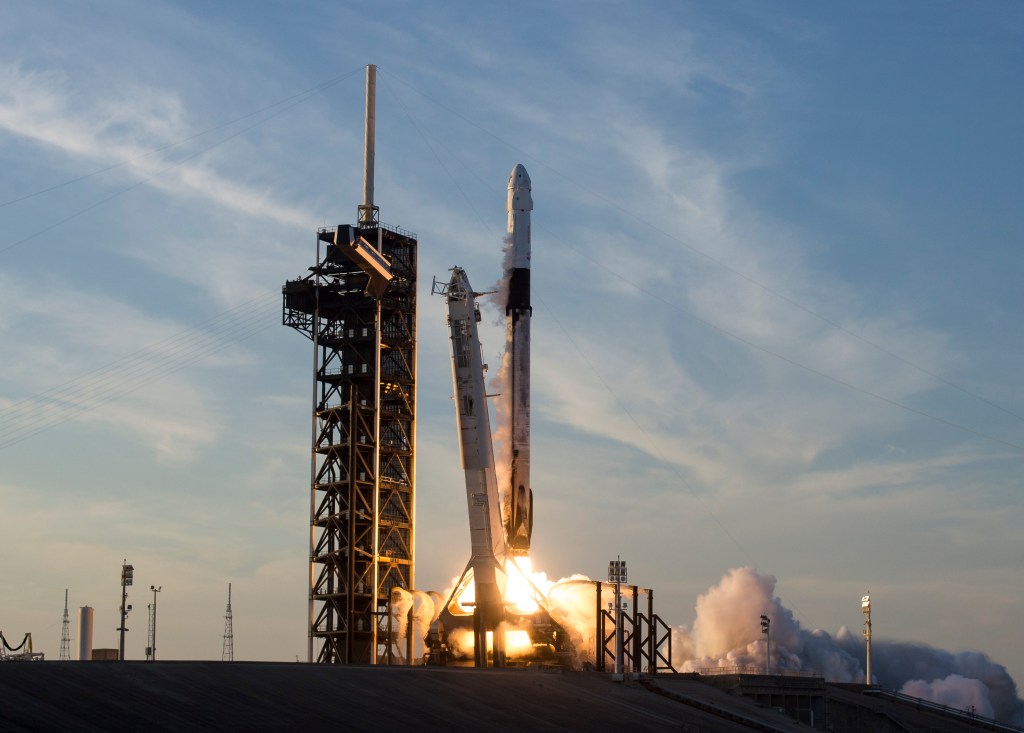
Apollo 13 was the seventh manned mission in the Apollo space program and the third intended to land on the Moon. The craft was launched on April 11, 1970, from NASA’s Kennedy Space Center in Florida, but the lunar landing was aborted after an oxygen tank exploded two days later, crippling the service module upon which the command module had depended.
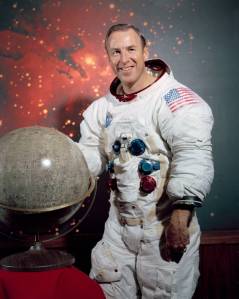
Haise flew as the lunar module pilot for the Apollo 13 mission. He told the standing-room-only assembly at Langley’s Pearl Young theater that there was no procedure to shut down the command module.
Bit by bit over the span of two hours, the command module was shut down so no further damage was made to the vehicle so the crew could attempt to safely return to Earth.
Despite great hardship caused by limited power, loss of cabin heat, shortage of potable water, and the critical need to make makeshift repairs to the carbon dioxide removal system, the crew returned safely to Earth on April 17, 1970, six days after launch. This mission was dramatized in the 1995 Hollywood movie “Apollo 13.”
Haise was slated to become the sixth human to walk on the Moon if all went well on Apollo 13.
Haise had a 20-year NASA career which included serving as an Aeronautics Research Pilot at Lewis Research Center in 1959, a research pilot at the NASA Flight Research Center in 1963, and as an astronaut at Johnson Space Center starting in 1966. In addition to Apollo, he flew five flights as the commander of the Space Shuttle Enterprise in 1977 for the Approach and Landing Test Program at Edwards Air Force Base.
Haise said flying in the skies vs. in space are relatively similar as far as the mechanics go. However, the views from space are worth the work, he said.
“The views are grander out of the window in space,” he said.
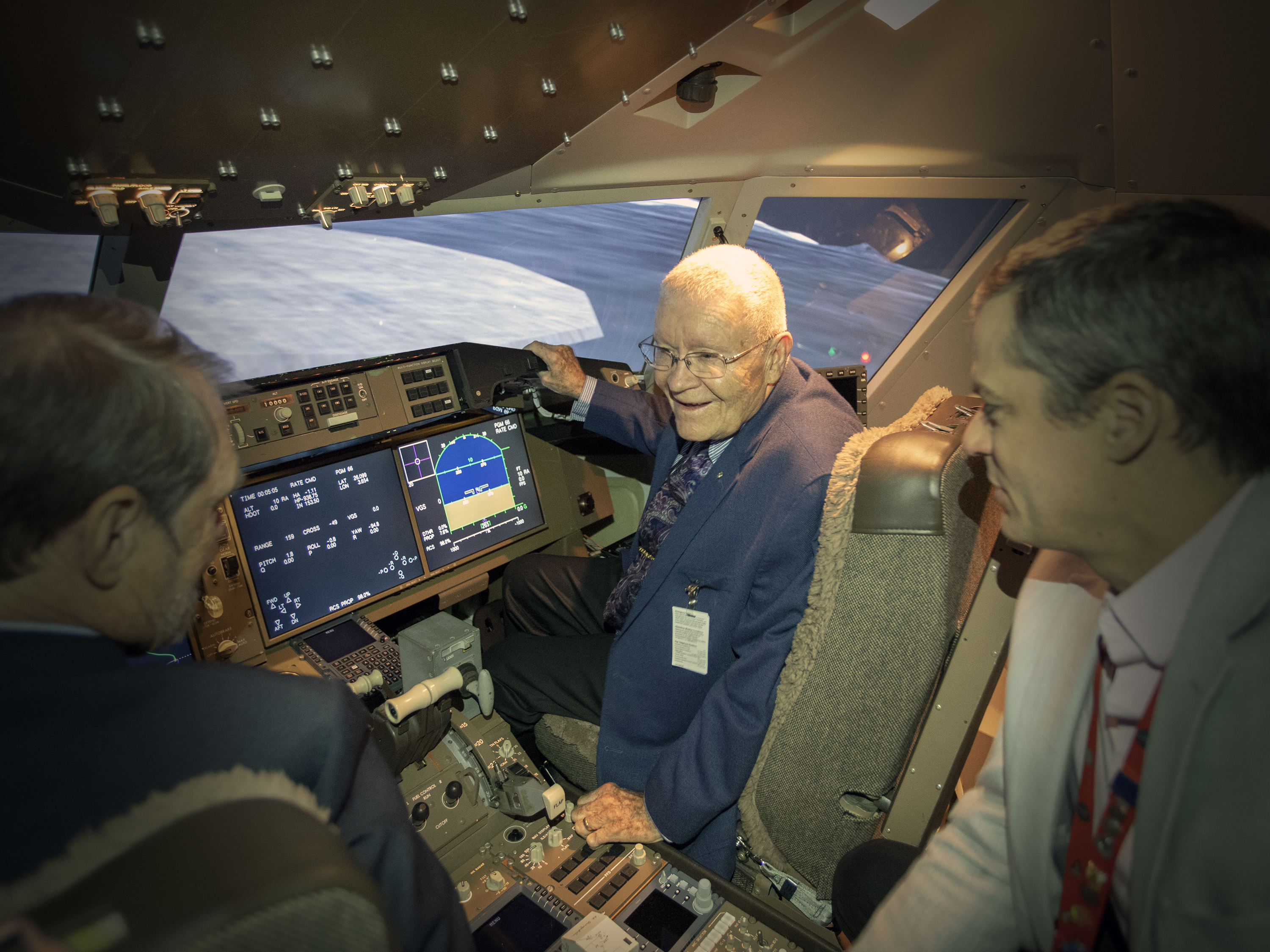
During his Langley tour, Haise was impressed by the center’s efforts in NASA’s mission to go back to the Moon and onto Mars via the Artemis program. He even took a spin on a flight simulator landing on the Moon and landed on target.
“I’d better quit while I’m ahead,” he said.
Despite Haise missing an opportunity to walk on the Moon, he nevertheless stressed the need for NASA to return there as a stepping stone for what could be the future of humanity.
“The Moon isn’t important to NASA. It’s important to the world,” he said. “It’s the first step to figure out how to make a new place habitable for people to live and exist.”
At the end of the talk, Haise told the crowd he is in the process of writing his autobiography. “To reflect back on my career, I’ve been very lucky,” he said. “It’s the kind of stuff I’ve enjoyed. I’ve got no complaints. I felt very privileged to fly.”
Haise began his career as a U.S. Marine Corps fighter pilot in the 1950s and after NASA, he worked in the aerospace industry. Among numerous other awards, he has received the Presidential Medal of Freedom and is in the U.S. Astronaut Hall of Fame.
Eric Gillard
NASA Langley Research Center