












For the latest LCRD news, experiment results, and opportunities to propose experiments, visit the ESC’s LCRD page.
Currently, most NASA missions use radio waves to send data to and from spacecraft. However, as space missions generate more data, the need for enhanced communications capabilities grows.
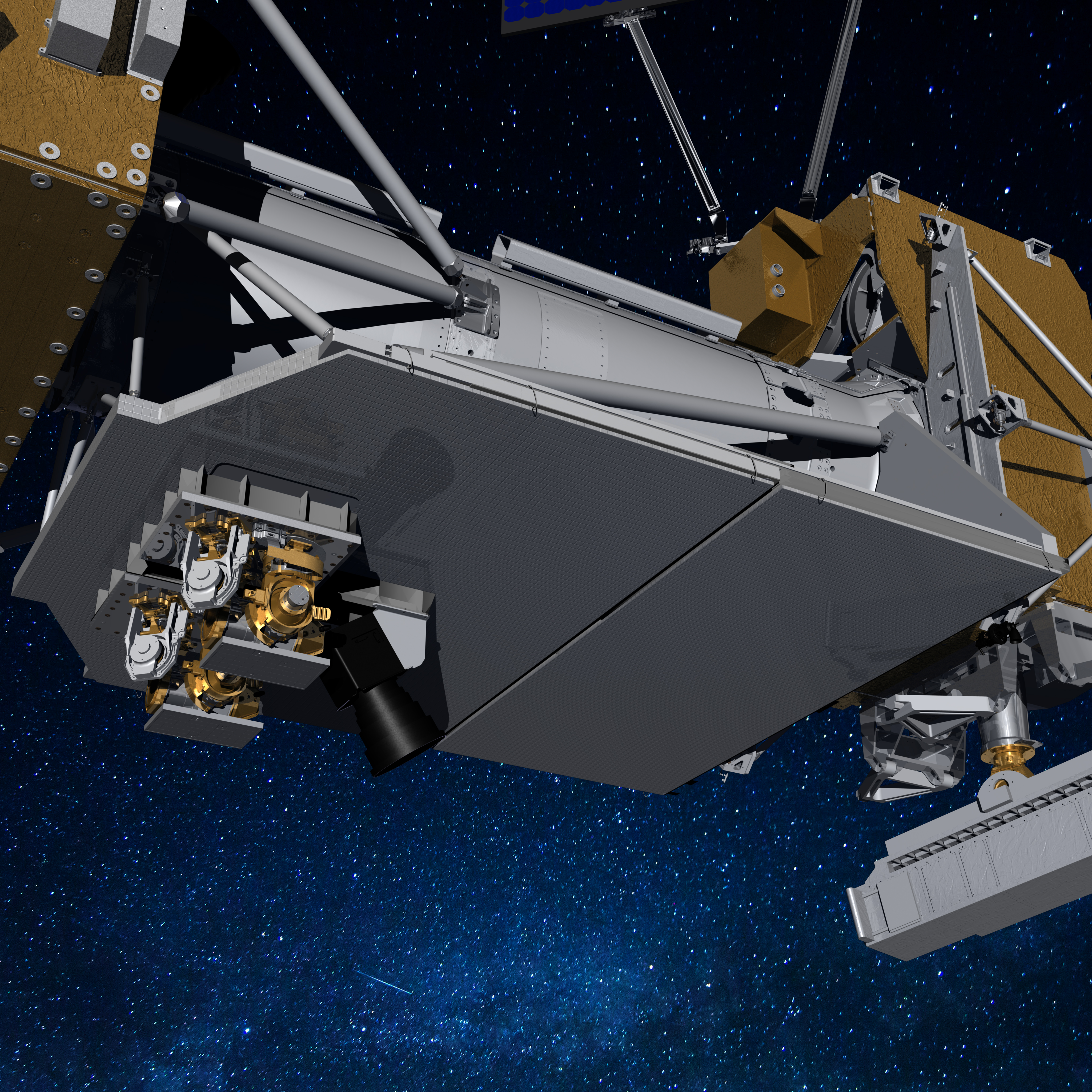
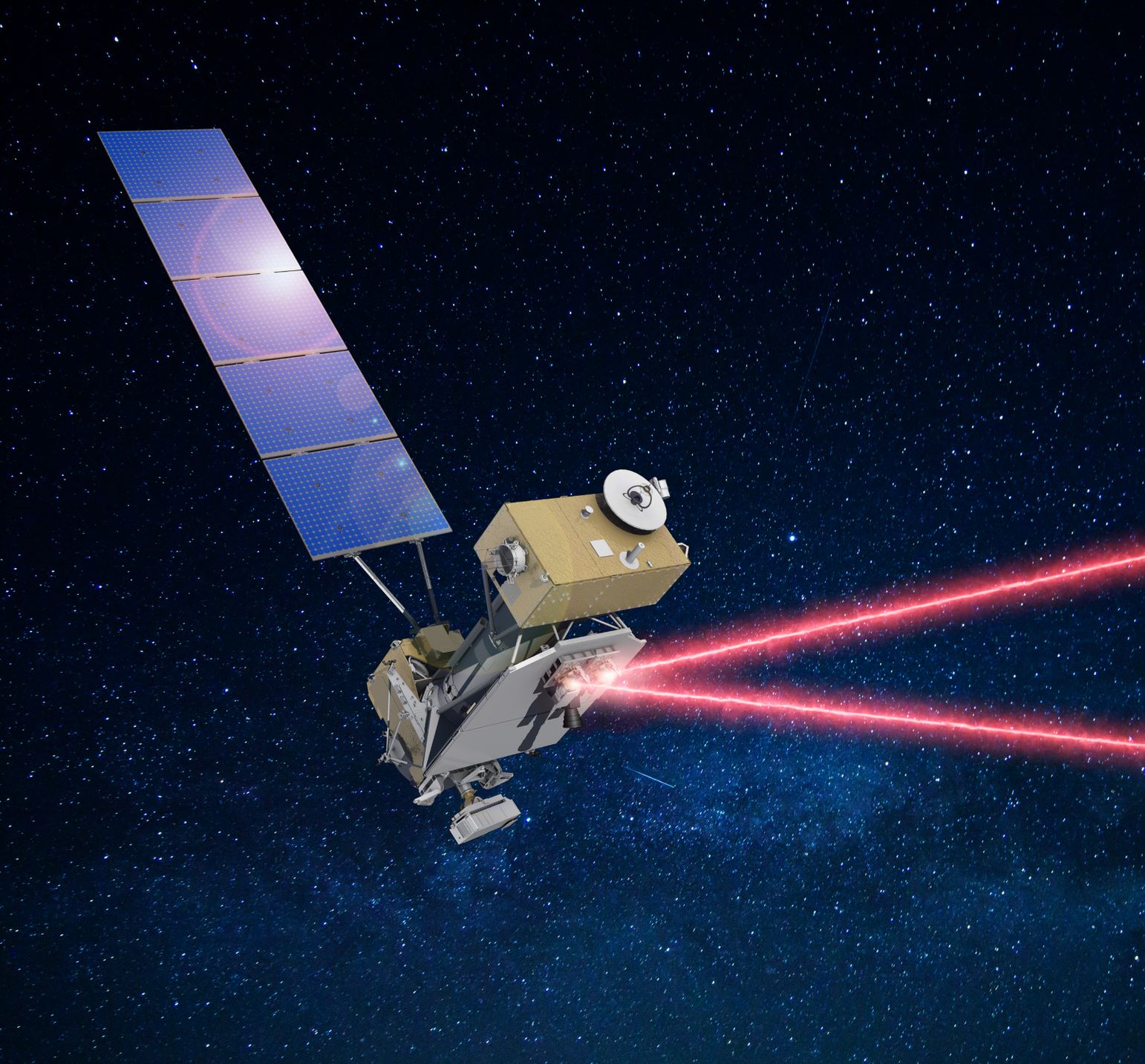
The Laser Communications Relay Demonstration (LCRD) is NASA’s first two-way, end-to-end optical, or laser-based, communications relay. In addition to being smaller, lighter, and using less power than radio hardware, LCRD’s pure optical links can offer a 10- to 100-fold increase in data transmission rates over traditional radio links for comparable mass and power. These efficiency gains leave more capacity and power for science instruments.
How LCRD Works
NASA’s LCRD is a communications relay. Data to LCRD can be sent via laser links, and LCRD relays that data down to ground stations on Earth. As a communications relay, LCRD can create a continuous path between spacecraft and ground stations, when the spacecraft is out of view of the ground stations. The demonstration is capable of both sending and receiving data, allowing spacecraft and ground stations to share data with each other.
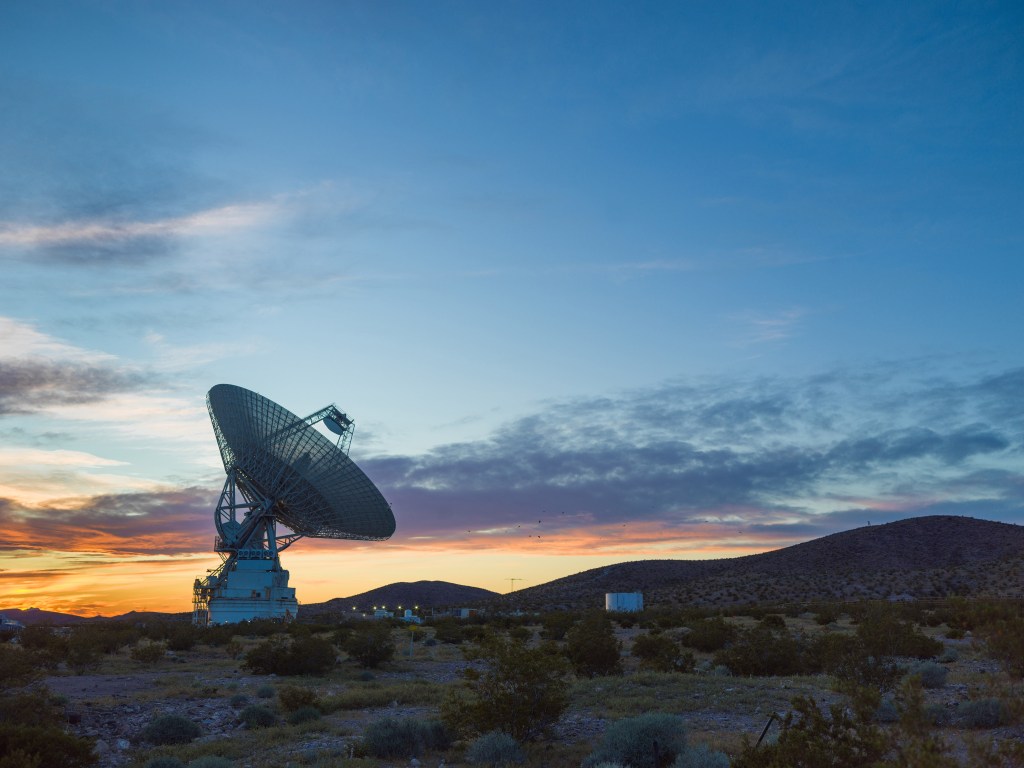
The LCRD payload transmits data to and from two optical ground stations located at Table Mountain, California and Haleakalā, Hawaii. These locations were chosen for their high altitude and minimal cloud coverage. Unlike radio signals, infrared laser links are highly sensitive to clouds cover and atmospheric conditions, making the ability to switch between multiple ground stations essential to reliable service. During experiment operations, LCRD teams learned how weather affects signal availability and integrity. An LCRD experiment known as LCRDEX-3, “Propagation through Clouds,” demonstrated that the system could maintain links through certain thin high clouds, extending operational flexibility during changing weather conditions. Even so, the results highlighted the value of additional ground stations to provide redundancy and maintain reliable service during weather or equipment disruptions.
LCRD's Accomplishments
Over 30 Experiments and Counting
Since beginning experiment operations in June 2022, LCRD has completed or is currently executing 31 experiments, totaling more than 3,400 test sessions with participants from NASA, other government agencies, academia, and commercial companies.
Experiments have included networked communications; atmospheric characterization of turbulence, clouds, and weather; adaptive optics testing for atmospheric distortion correction; precision optical ranging; relay service demonstrations; and guest experiments. These efforts also enabled a space-based user, the Integrated LCRD Low-Earth Orbit User Modem and Amplifier Terminal (ILLUMA-T).
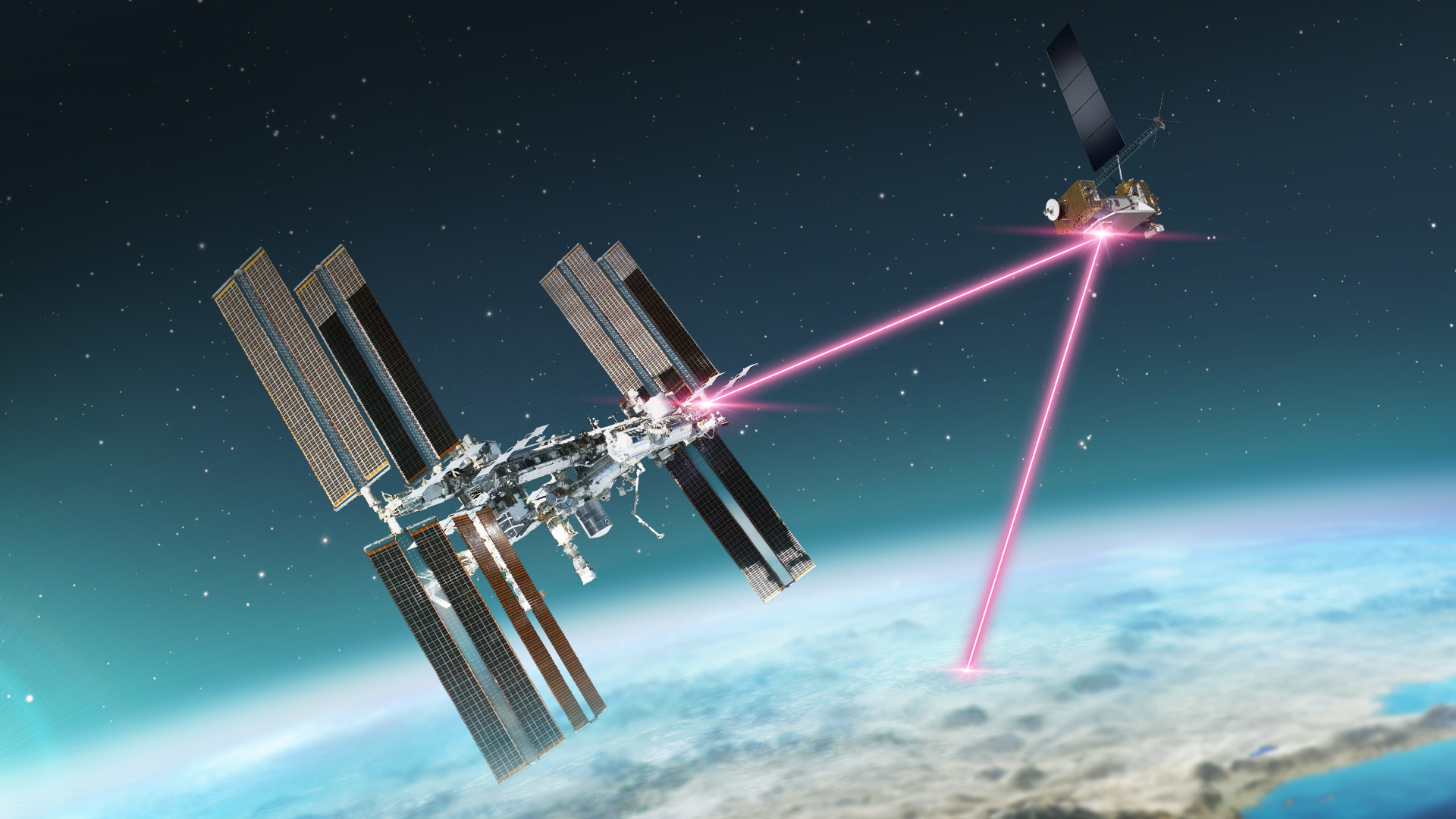
LCRD's First User: ILLUMA-T
On Dec. 5, 2023, ILLUMA-T, a payload mounted to the International Space Station, achieved its first laser link with LCRD, completing NASA’s first two-way, end-to-end optical relay system with a user in low Earth orbit.
The ILLUMA-T experiment was able to send data to LCRD at 1.2 gigabits per second (Gbps), fast enough to download a high-definition movie in under a minute. Once the capability was established, ILLUMA-T supported a standard Gigabit Ethernet (GbE) connection between the International Space Station, LCRD, and the Optical Ground Stations. This connection was used to join computers flying on the space station to a network that included NASA’s Glenn Research Center in Cleveland, Ohio as well as NASA’s Marshall Space Flight Center in Huntsville, Alabama. Both forward and return rates exceeded mission goals. Testing was completed on June 29, 2024, and the ILLUMA-T instrument was decommissioned.
High-Rate Delay/Disruption Tolerant Networking
The LCRD/ILLUMA-T demonstration also tested Delay/Disruption Tolerant Networking (DTN), an approach that provides Internet-like connectivity and scalability for space users by using secure ‘store-and-forward’ techniques to ensure data reaches its destination even when signals are interrupted or bandwidth varies. Building on this approach, High-Rate DTN (HDTN) enables the network to operate at the speed of laser links while remaining efficient when it encounters lower-speed connections. LCRD links are then used as building blocks in larger, interconnected space communications networks. During the HDTN experiments, data was routed from aircraft on Earth through LCRD to an HDTN laptop on the International Space Station, which successfully received files and video streams. These tests laid the groundwork for future networking across the solar system.
LCRD’s First User Ground Terminal: Aerospace Optical Ground Terminal
In March 2023, LCRD gained its first user ground terminal for testing when the Aerospace Corporation Optical Ground Terminal successfully linked with the relay. The one-way laser link from the ground to space tested data rates between 51 Mbps and 311 Mbps and demonstrated the potential to reach up to 1.2 Gbps.
The Future of Laser Communications
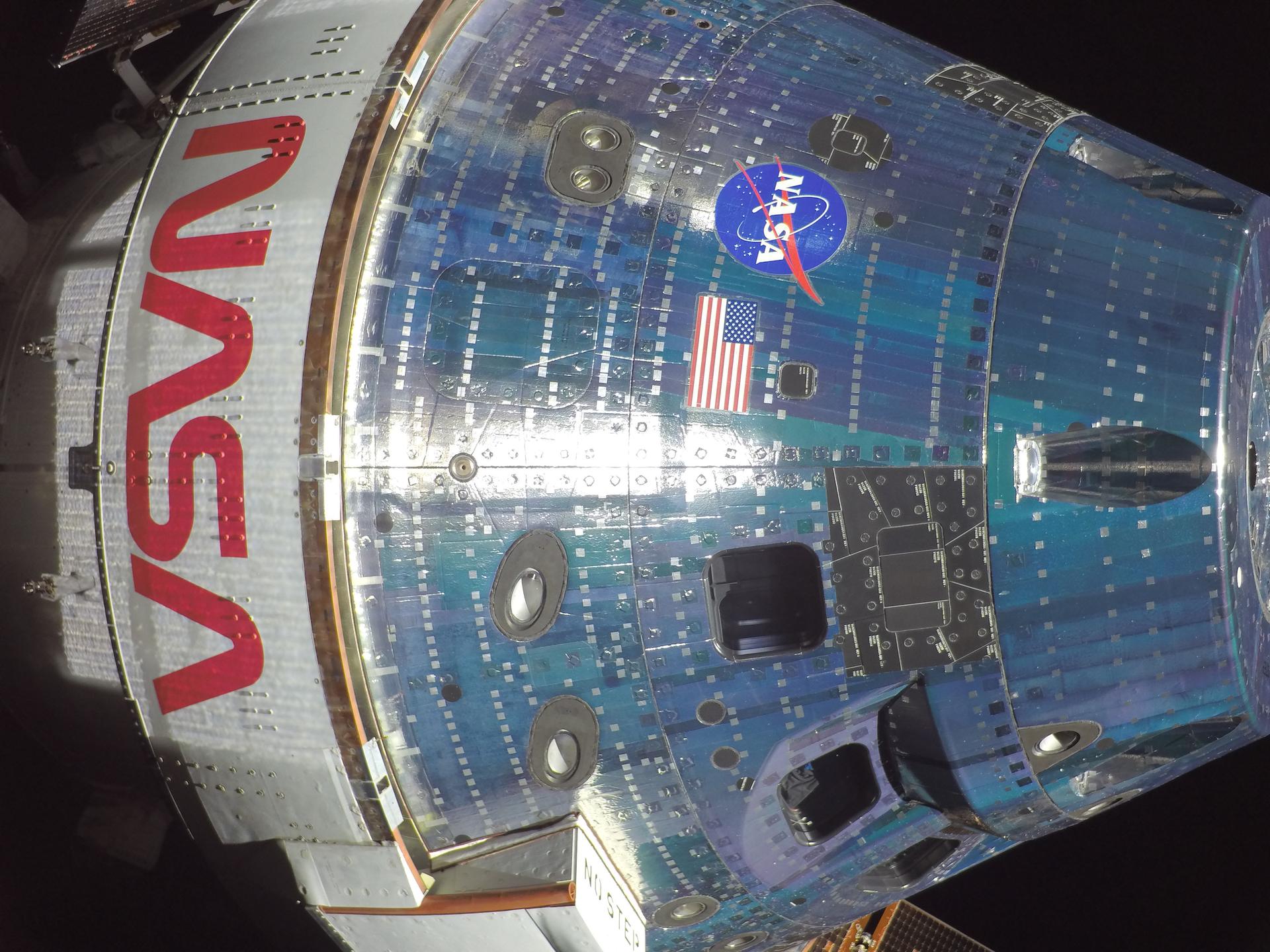
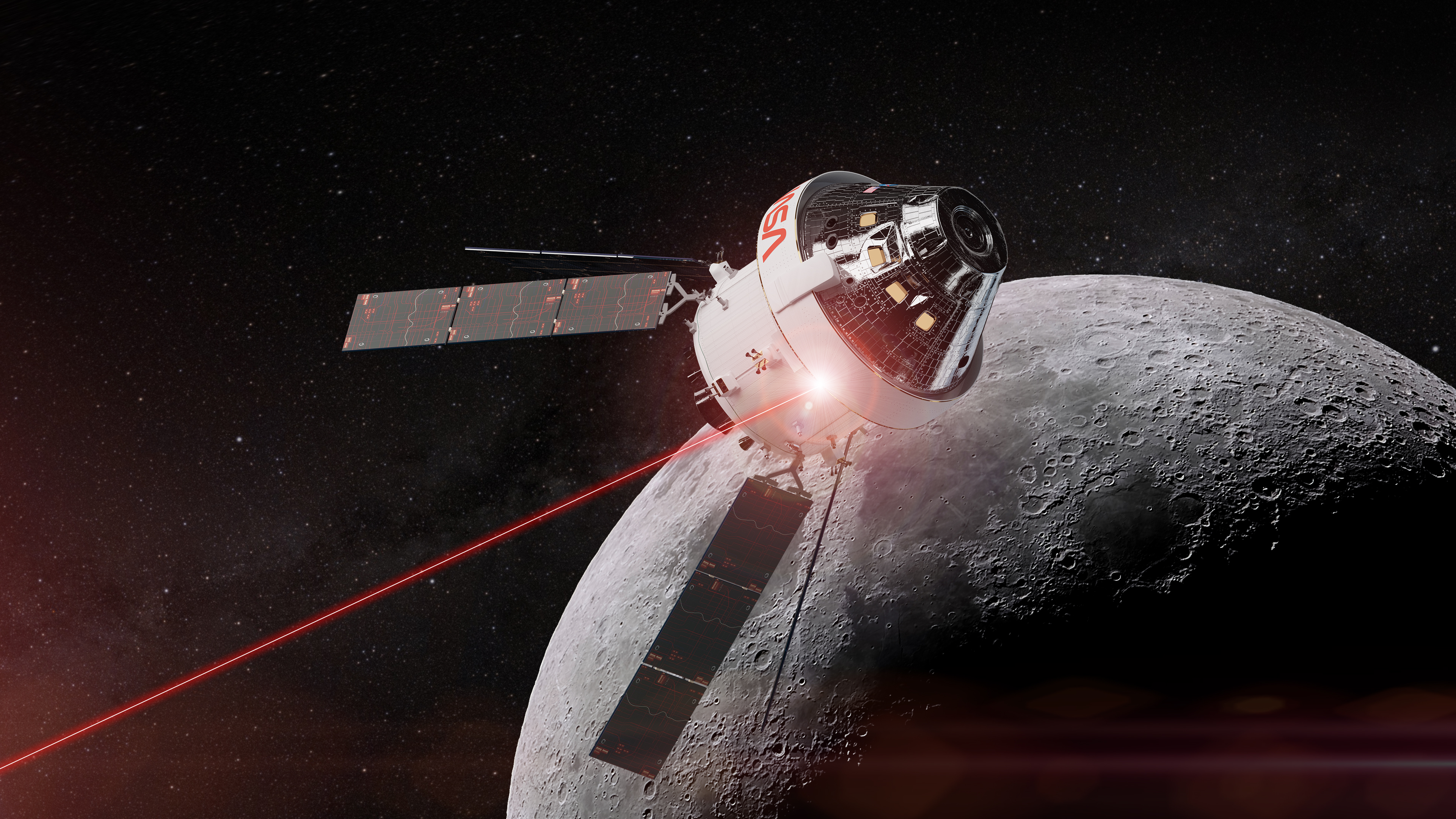
The LCRD payload supports a variety of optical experiments, including end-to-end design, testing, and development of systems and operations. It is one in a series of missions demonstrating laser communications capabilities across different space environments and network configurations. In 2013, its predecessor, NASA’s Lunar Laser Communications Demonstration (LLCD), demonstrated 622 Mbps from the Moon as a point-to-point link between the spacecraft and Earth. TheTeraByte InfraRed Delivery (TBIRD) payload, launched in 2022 on a CubeSat, achieved 200 Gbps direct-to-Earth downlinks — NASA’s fastest optical data rate. The Deep Space Optical Communications (DSOC) experiment, launched aboard the Psyche spacecraft in October 2023, demonstrated laser communications as far as 307 million miles from Earth in September 2025. TheOrion Artemis II Optical Communications System (O2O), which uses the same optical module that flew on ILLUMA-T but with a different modem, launched on Artemis II on April 1, 2026, enabling high-definition video transfer between the Orion crew and Earth at up to 260 Mbps. Together, these demonstrations prove the viability of laser communications from low Earth orbit to the Moon and deep space.
Milestones
- Apr. 1, 2026: O2O, built with the same terminal architecture flown on ILLUMA-T, launches on Artemis II, becoming the first laser communications system on a crewed deep-space mission. O2O transmitted over 484 gigabytes of data from Artemis II, roughly equivalent to 100 high-definition movies.
- Jun. 29, 2024: ILLUMA-T was jettisoned from the International Space Station after completing its six-month experiment campaign.
- Jun. 6, 2024: A collage of pet photos from agency employees was sent over laser links from Earth to LCRD to ILLUMA-T on the International Space Station. Animals submitted included cats, dogs, birds, chickens, cows, snakes, pigs, and more.
- Dec. 5, 2023: ILLUMA-T completed its first laser link with LCRD, called “first light,” forming NASA’s first two-way, end-to-end optical communications relay system.
- Nov. 9, 2023: ILLUMA-T launched to the International Space Station aboard NASA’s SpaceX 29th commercial resupply services mission from Kennedy Space Center in Florida.
- Dec. 7, 2021: LCRD launches from Cape Canaveral aboard an Atlas V 551 rocket. The demonstration is in geosynchronous orbit, about 22,000 miles above Earth. Following the launch, engineers at LCRD’s mission operations center in Las Cruces, New Mexico activated the payload and began transmitting data over infrared lasers.
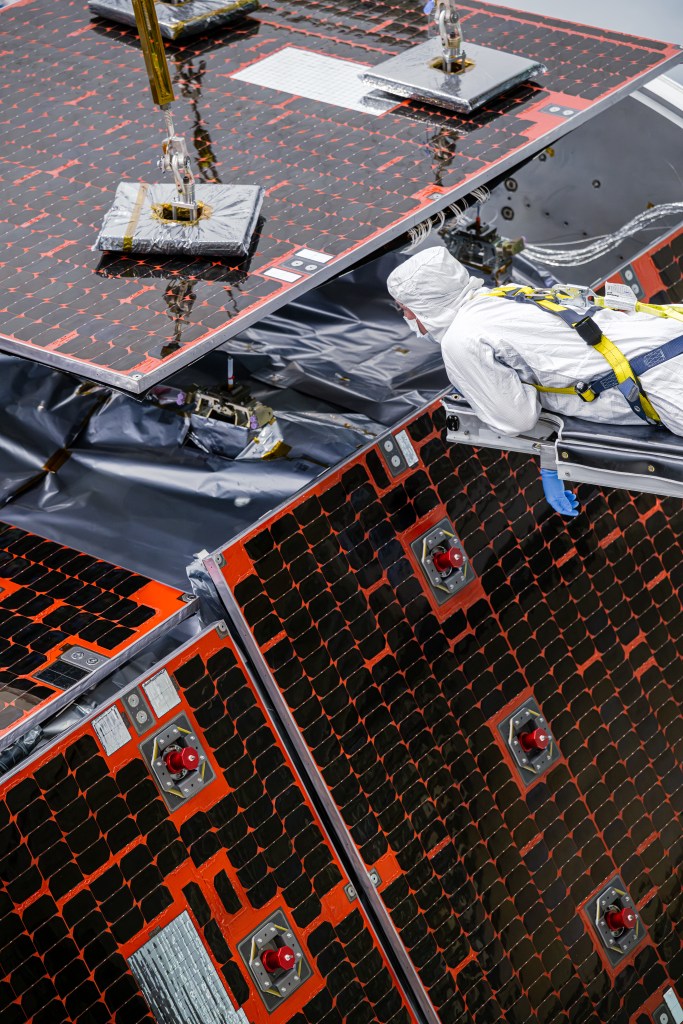
- Jul. 7, 2020: The LCRD payload was fully integrated with U.S. Department of Defense’s Space Test Program Satellite 6 (STPSat-6) and the entire spacecraft entered the final environmental testing phase.
Partners
NASA’s LCRD is funded and managed through NASA’s Technology Demonstration Missions Program, part of the Space Technology Mission Directorate, and the Space Communications and Navigation (SCaN) Program at NASA Headquarters.
The demonstration was developed by NASA’s Goddard Space Flight Center and is flying aboard a U.S. Space Force spacecraft. Throughout the development process, the NASA LCRD team worked closely with the Space Force as well as commercial partners like Northrop Grumman and the Massachusetts Institute of Technology (MIT) Lincoln Laboratory, a federally funded research and development center. Northrop Grumman performed integration and testing of the payload and spacecraft, while MIT Lincoln Laboratory provided the instrument designs for LCRD and verified all of the NASA-developed builds.
Contact
For Researchers:
Through the LCRD experiment proposal process, the LCRD project seeks additional experiments to help test the functionality of optical communications links. Researchers interested in LCRD and the LCRD guest experimenter program can contact the team here.
For news media:
Members of the news media interested in covering this topic should get in touch with the Space Communications and Navigation (SCaN) media contact at NASA’s Goddard Space Flight Center, listed here.
News and Updates
- Exploration and Space Communications LCRD Page
- STEM Launch Kit
- Multimedia Resources
- NASA Launch Photos