









Suggested Searches

NASA Scientific Balloons

NASA's scientific balloon program is managed out of the agency's Wallops Flight Facility.

  • Fourth Balloon of NASA Scientific Balloon Campaign Launches

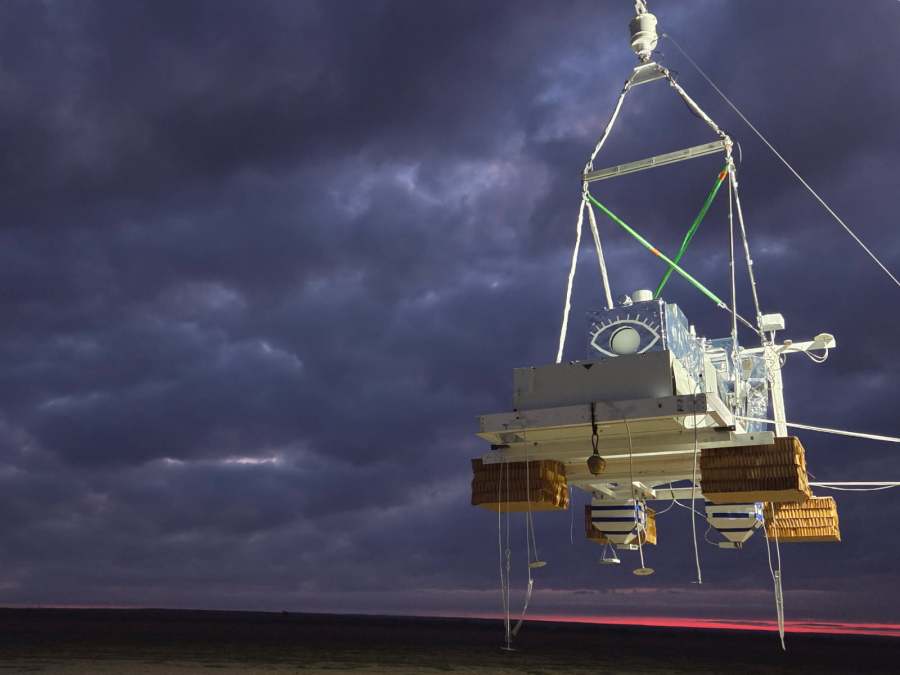
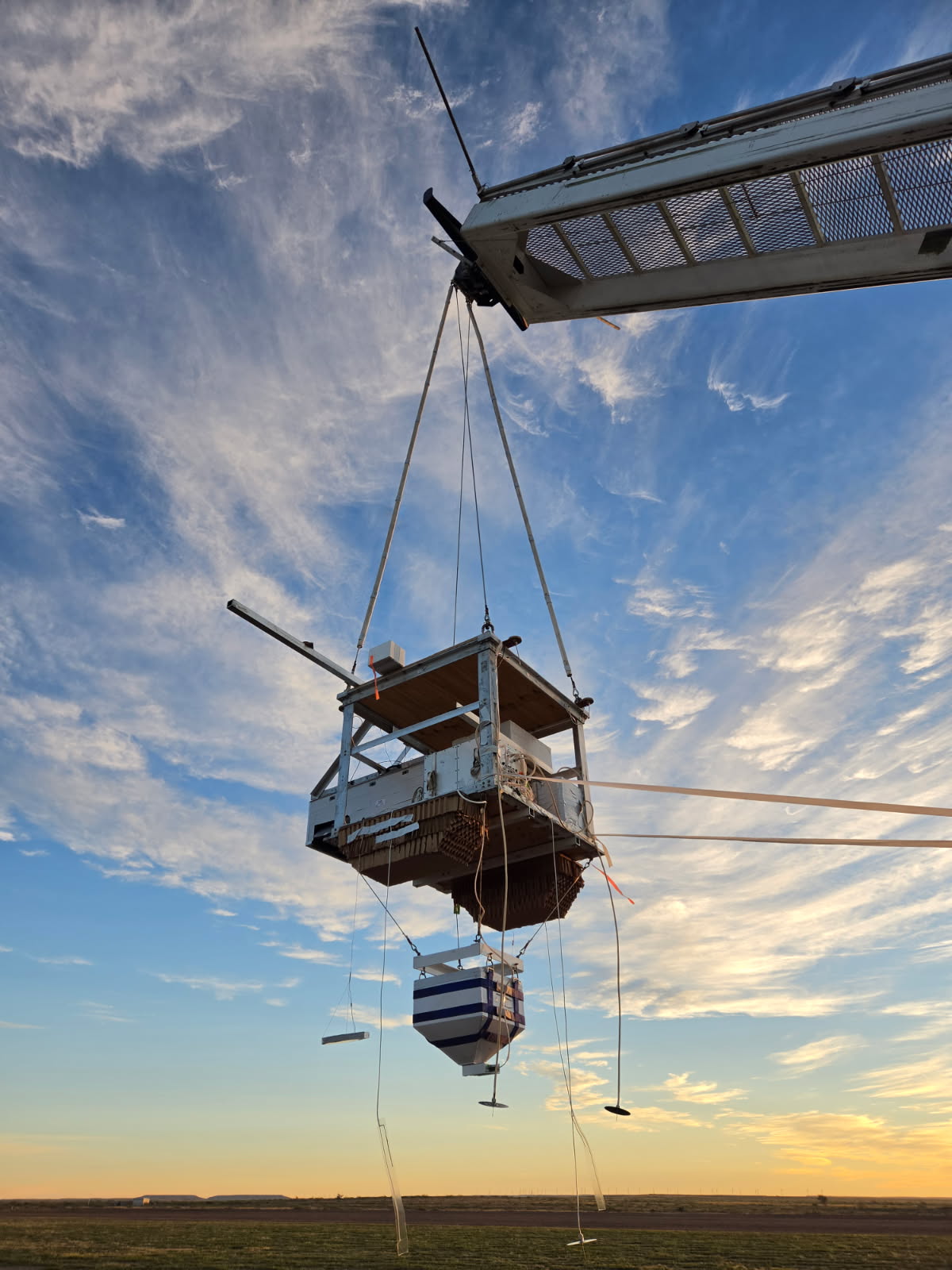
    The BOOP! mission was launched on a scientific balloon from NASA's launch facility in Fort Sumner, New Mexico, at 8:03 a.m. MDT (10:03 a.m. EDT) on Sept. 13, 2026. This is the second year for NASA’s Balloon Program Office’s Balloon Optimization Opportunity Payload, or BOOP!, which allows multiple technology instruments to be tested during flight for future missions.  The mission carried experiments to test compact tools for future planetary exploration, map high-energy space radiation, and evaluate a newly developed flight camera system.

    The balloon and payload reached a float altitude of around 123,000 feet, and flew for a total of 4 hours, 29 minutes. 

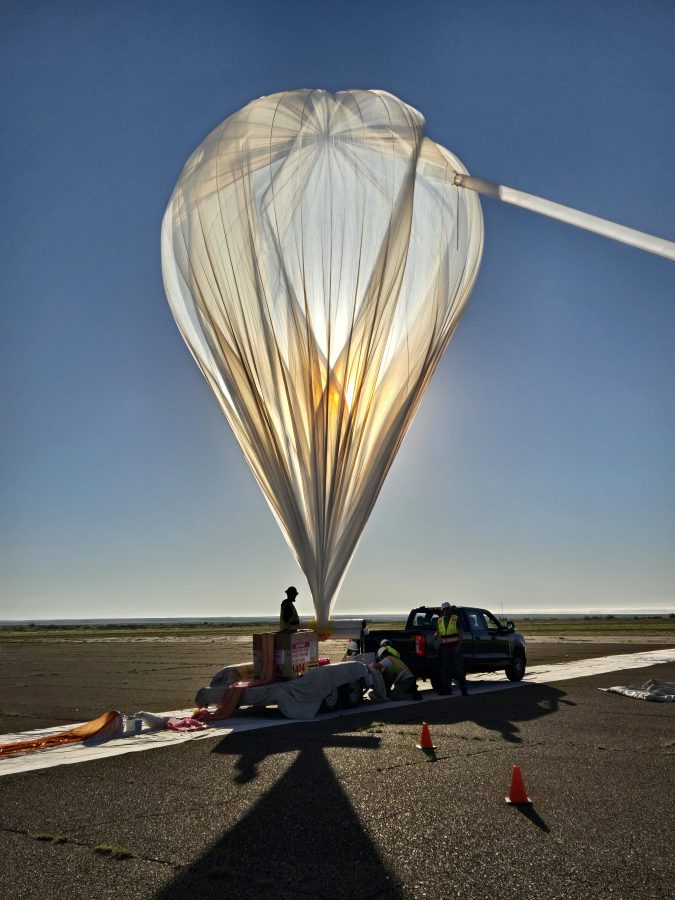
    A scientific balloon partially inflated before flight. The balloon is clear plastic in the shape of an upside down teardrop. The rest of the ballon trails behind it on the ground.
    The BOOP! scientific balloon mission is prepared for flight Sept. 13, 2026.
    NASA/Todd Lankford
  • NASA’s HASP Scientific Balloon Launches from Fort Sumner

    The HASP mission was launched on a scientific balloon from NASA's launch facility in Fort Sumner, New Mexico, at 8:05 a.m. MDT (10:05 a.m. EDT). The balloon and payload reached a float altitude of around 122,000 feet and flew for a total of 6 hours, 45 minutes.

    This year’s campaign marks the 20th flight for the High-Altitude Student Platform carrying payloads developed by student teams. Over the course of two decades, more than 1,900 students from about 25 institutions across the United States have participated in flying experiments on the balloon platform.

    The High-Altitude Student Platform program is a partnership among the Louisiana Space Grant Consortium, the Astrophysics Division in the Science Mission Directorate at NASA Headquarters, and the agency’s Balloon Program Office and Columbia Scientific Balloon Facility in Palestine, Texas. 


  • Second NASA Balloon Mission Launches from Fort Sumner

    The CLIC 2 mission was hand launched on a scientific balloon from NASA's launch facility in Fort Sumner, New Mexico, at 7:16 a.m. MDT (9:16 a.m. EDT). The balloon is the second flight for the Compact Large-sensor Imaging Camera mission, carrying a small camera system that can process images in real-time to help determine safe landing spots for rovers for future Moon or Mars missions. The balloon and payload reached a float altitude of around 126,000 feet, and flew for a total of 3 hours, 41 minutes. 

  • NASA Launches First Scientific Balloon of Fort Sumner Campaign

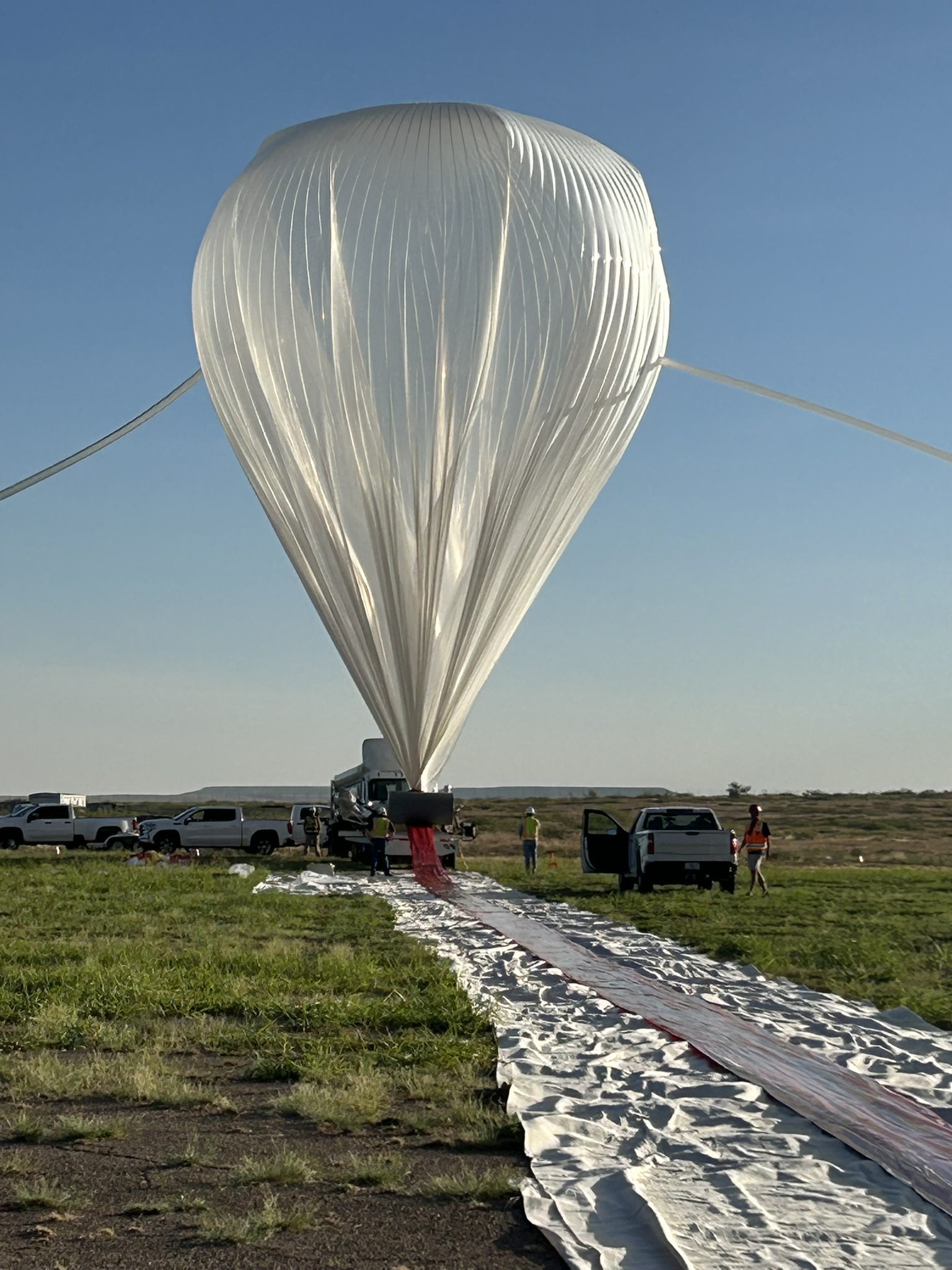
    A scientific balloon is partially inflated on the right with the mobile launch vehicle carrying a payload on the left.

    The Salter Test Flight launched at 8:31 a.m. MDT (10:31 a.m. EDT) Saturday, Aug. 22 from the agency’s balloon launch facility in Fort Sumner, marking the first successful scientific balloon flight of the campaign. The balloon and payload reached a float altitude of around 123,000 feet, and flew for a total of 4 hours, 8 […]

  • NASA Scientific Balloons Prepare for 2026 Fort Sumner Campaign 

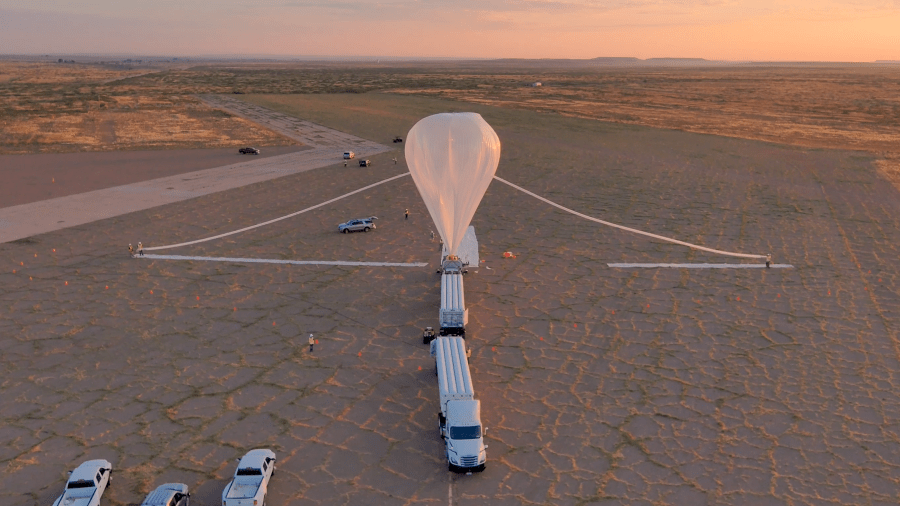
    Aerial view of a high-altitude scientific balloon launch preparation in a desert setting at sunset. The white balloon is partially inflated and tethered to a launch vehicle, with support vehicles and personnel positioned around the launch area on a cracked desert surface

    A NASA Scientific Balloon Program annual campaign is getting ready to take flight at the agency’s balloon launch facility in Fort Sumner, New Mexico. Six balloon flights carrying scientific experiments, technology demonstrations, and student payloads are scheduled to launch starting in mid-August.  This year’s campaign marks the 20th flight for the High-Altitude Student Platform carrying payloads developed by student teams. Over the course […]

  • NASA Completes Latest Scientific Balloon Campaign From Antarctica

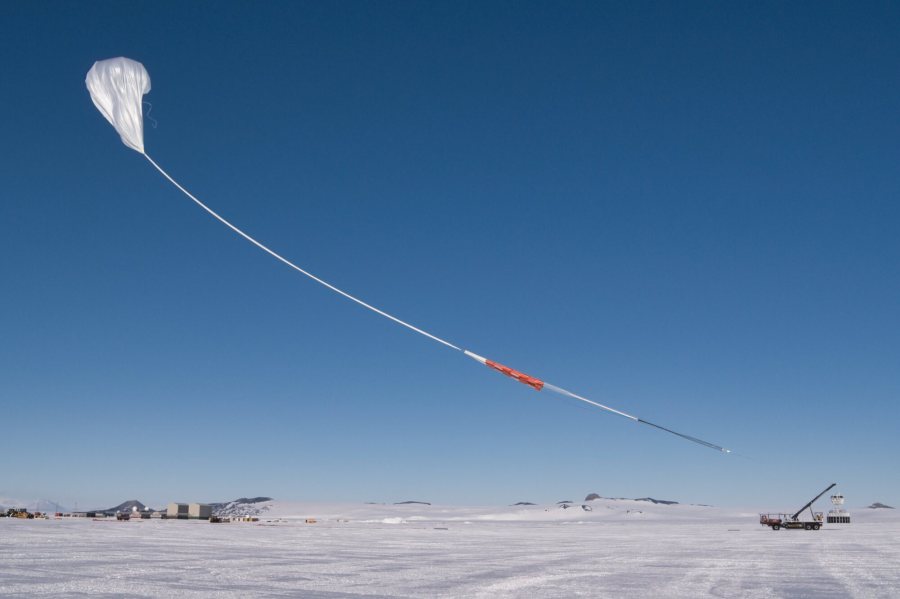
    A white scientific balloon rises into the bright blue sky above snowy Antarctica. The sky and the balloon take up most of the image, with the ground only being a small white stripe at the bottom of the photo. The balloon has a long white "tail" with orange and black portions.

    NASA’s Scientific Balloon Program has completed four successful Antarctica flights during a long-duration campaign that began in early December. The balloons launched from the agency’s facility located near the U.S. National Science Foundation’s McMurdo Station on the Ross Ice Shelf.   The General AntiParticle Spectrometer (GAPS) balloon lifted off Dec. 15. The GAPS payload is an experiment designed to detect anti-matter particles entering Earth’s atmosphere to help reveal the origin of dark matter — an invisible […]

  • Second Scientific Balloon for NASA Launches from Antarctica

    A large metal scientific instrument that is mainly white with black panels is suspended off the ground by a large crane. A white trail of material is on the ground and attaches to a partially inflated white balloon in the background on a snowy landscape.

    The second scientific balloon flight for NASA’s Antarctic scientific balloon campaign has reached its float altitude of 120,000 feet after lifting off from the agency’s facility located near the U.S. National Science Foundation’s McMurdo Station on the Ross Ice Shelf at 5:56 a.m. NZST, Saturday, Dec. 20 (11:56 a.m., Friday, Dec. 19 in U.S. Eastern […]

  • First NASA Scientific Balloon Launches from Antarctica

    A man in a yellow safety vest looks at a scientific balloon in the distance. In the foreground is the GAPS payload hanging from a crane preparing for launch.

    The first scientific balloon flight of this year’s NASA Antarctica Balloon Campaign reached its float altitude after lifting off from the agency’s facility located near the U.S. National Science Foundation’s McMurdo Station on the Ross Ice Shelf at 5:30 a.m. NZST, Tuesday, Dec 16 (11:30 a.m., Monday, Dec. 15 in U.S. Eastern Time). The balloon […]

  • Two NASA Scientific Balloon Launches Planned From Antarctica

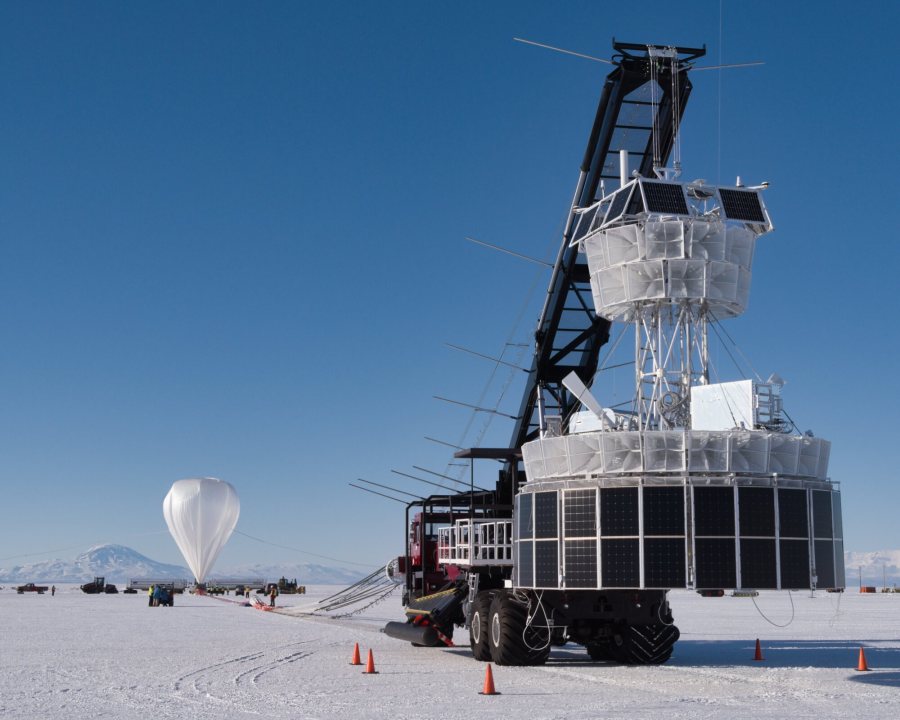
    A large scientific balloon payload is being lifted by a black crane against a bright blue Antarctic sky. The payload consists of multiple tiers of white protective panels or covers arranged in a cylindrical configuration, with solar panels visible on the top section and various antennas protruding upward. The equipment is suspended by cables and positioned over a wheeled transport cart on the snow-covered ground. A technician in a bright yellow safety vest operates the crane from an elevated platform on the left side of the image

    NASA’s Scientific Balloon Program is back in Antarctica for another long-duration scientific balloon campaign, with two launches planned from the icy surface. Launch operations will begin early December from the agency’s facility located near the U.S. National Science Foundation’s McMurdo Station on the Ross Ice Shelf. To follow the missions, visit NASA’s Columbia Scientific Balloon […]

  • New Mexico Scientific Balloon Campaign Update – Sept. 19

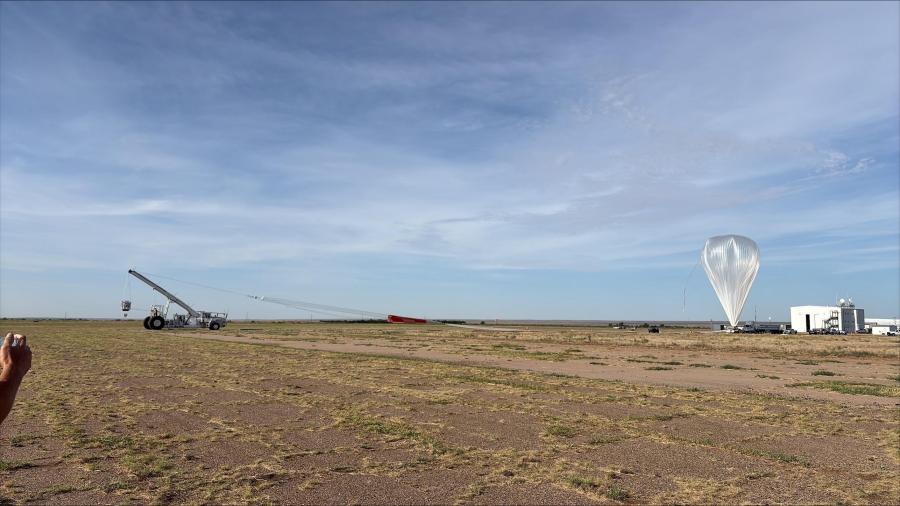
    A large white scientific balloon in the shape of an upside down tear drop floats high in a bright blue sky with wispy white clouds, suspended by a long tether line connected to a white vehicle with a crane visible on the ground below in an open field. The crane is holding the BOOP experiment.

    NASA’s Balloon Program Office launched the sixth scientific balloon flight for the fall 2025 campaign. The Balloon Program Office, Optimization Opportunity Payload (BOOP) mission launched at 9:44 a.m. EDT (7:44 a.m. MDT) on Sept. 19. The balloon and payload reached a float altitude of 114,000 feet and flew for 4 hours, 44 minutes. BOOP is […]