

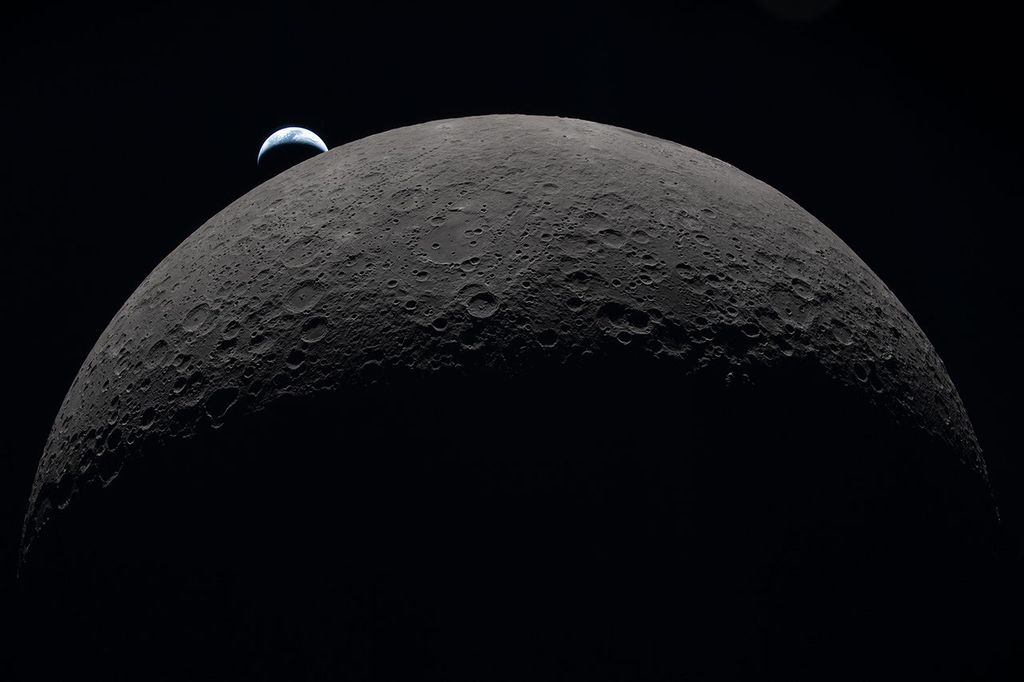

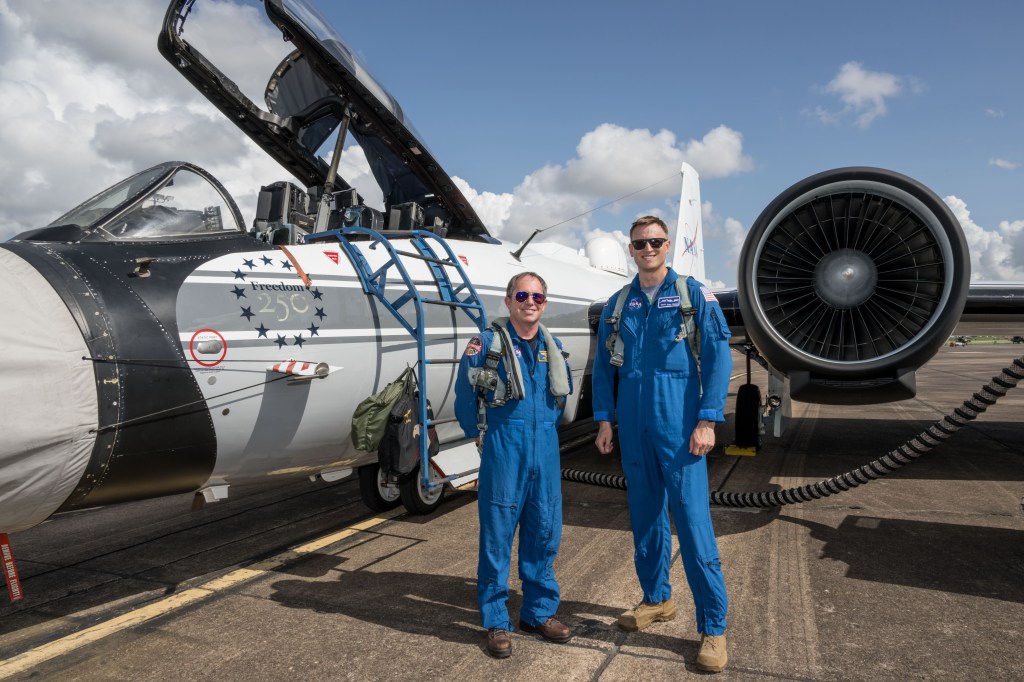










Host Andres Almeida: When Artemis II lifted off on its historic mission on April 1, 2026, NASA pilots took to the skies to track the rocket, image it, and stand by for anything that may be needed. One of those pilots was Shannon Gregory, chief of flight operations and lead pilot at Kennedy Space Center. He heads the team that supports launch and splashdown recovery operations, when they happen off the coast of Florida, from the air.
What’s it like to witness a launch from the cockpit of your aircraft? Let’s hear it from somebody who knows the experience firsthand. This is Small Steps, Giant Leaps.
[Intro music]
Welcome to Small Steps, Giant Leaps, the podcast from NASA’s Academy of Program/Project & Engineering Leadership, or APPEL. I’m your host Andres Almeida.
Shannon Gregory joins us from his office at Kennedy Space Center.
Host: Shannon, welcome.
Shannon Gregory: It’s great to be here. Thank you.
Host: As chief of flight operations and lead pilot, what does all that entail?
Gregory: Yeah, great. I oversee all flight activities as pilot, also aircraft readiness. I ensure safety and efficiency with our mission sets and execution. I also work instrumentally into integrating your NASA and commercial interagency partners together where we can do that.
And also, my big goal is also to build a culture of safety, standardization, and excellence. And that includes not just the Kennedy Space Center, but UAS at five centers. So, Stennis, Michoud, and also Marshall and KSC for UAS operations.
Host: UAS, can you explain that for our listeners?
Gregory: Yeah, that’s, that’s unmanned aerial systems. So, it’s basically our drone fleet that we have at five centers. So, to integrate that operation is also a part of my role here.
Host: Excellent. Yeah, Cape Canaveral is pretty busy these days. Do you fly during uncrewed launches, too?
Gregory: Yeah, that’s a great question. We actually do more of our launch operations now, some more launch support. So generally, it’s crewed support. So, any crewed launch, or any additional launches that have high value payloads as well. So, we’ll be a part of some of that.
Some are DoW (Department of War) type of payloads, crewed, and generally, anything that is required and deemed high value.
But most of our work is on the launch side, so that’s ensuring that we have airspace security. Also, that’s to ensure that the range is clear as well for those particular launches and any sort of contingency operations that happen within that.
And then, generally, with a crewed launch, we also have a medical evacuation requirement as well. So, that provides one aircraft as a standby aircraft, and then the rest of the two would reconfigure in the medical configuration and move either crew or any additional individuals that are supporting the crew at a time of emergency as well.
On our recovery side, though, generally now, back in the early Dragon [spacecraft] days, we did much more recovery work, and that’s generally an imagery requirement.
So, we’d fly out to the recovery site sometimes, anywhere from 30 to 60 miles off the coast. We would arrive and actually fly a holding pattern where we would provide aviation imagery, IR [infrared] imagery from our, from our aircraft, of the spacecraft, having drogue chutes, and also chute recovery as well, and deployment. And we provide some support with that as well.
So, that was real time imagery that we have the ability to support. So, that part is pretty critical, and it really provides the leadership, the ability to have situational awareness on station at time (so, time of deployment of drogues and chutes, and also splashdown as well).
On the Artemis side, though, we actually teamed with another commercial operator and were able to provide some support there as well.
Host: And I see your primary aircraft is a helicopter.
Gregory: Yes, and that helicopter primarily is used with us, mostly for security operations, and like I said before, medical operations as well, and then some imagery capture.
Host: You have extensive experience flying for the military and for NASA. How do you approach risk in real time from the cockpit?
Gregory: There’s some things that we do here, and have done in my military career, really, managing risk in real time.
So, what we do is we do our best, really, to manage and run that risk management culture in our training. And then we emphasize that with discipline and decision making as well. And then we kind of turn that on its head and create rules that require strong crew coordination as well.
So, we basically start with a foundation of that, and then every year, we continue to build on that as well. And then what that delivers is trust in team, in established procedures and tactics as well, and also it empowers our organizers as well and operators to make timely decisions and really provide that vehicle for informed decisions.
So, it starts out little in our training, and then it just grows into this thing where the team grows together, and then, collectively, we have the opportunity to be able to make those informed decisions together.
Host: Do you do debriefs and lessons learned meetings after every flight?
Gregory: Absolutely, generally they’re right away. So, we’ll have those meetings directly with the crew, and then, if required, we’ll sit down and have significant hot washes if more than one crew is involved in an operation.
And we talk through some of our achievements and also some of our challenges and opportunities and how we can go forward. Many of our procedures here have been developed from that process, which is really good. So, it takes a thick skin. It does.
It also takes as a leader just to come out right away and just say that you make mistakes, and generally, I’ll just come out and say the mistakes that I’ve made in the flight. So, then that opens up more individuals, so they feel comfortable with talking about things, either calls that were missed or steps in checklists or steps that were missed.
So, it just gives them an opportunity, really, to provide the primacy to be, to be accountable, and also hold others accountable as well, and then use that accountability to build a program, a stronger program in the end.
Host: Yeah, I can imagine, when they see the chief opening up, it might help break down some walls.
Gregory: It’s just, it’s just humility, and you just try to use it in practice. It’s tough at first, because you don’t wanna let all the cats out of the bag, but you just kind of do because you want them to understand that it’s okay to talk plainly and to just admit to your mistakes relatively early.
Host: Are there any NASA missions or flights that you’ve done that really stick out in your head?
Gregory: I’ve had a couple. I think Artemis itself. Artemis II itself was fantastic. I mean, just an incredible opportunity to see the rocket that close at that altitude.
Every now and then we get the mission to actually film the launch. So, there’s an 8k camera that exists that we have here on Center. It mounts onto the helicopter. It’s basically like a film, fine film camera. And there are times when, when we have another aircraft available, we’ll provide the platform for filming the launch.
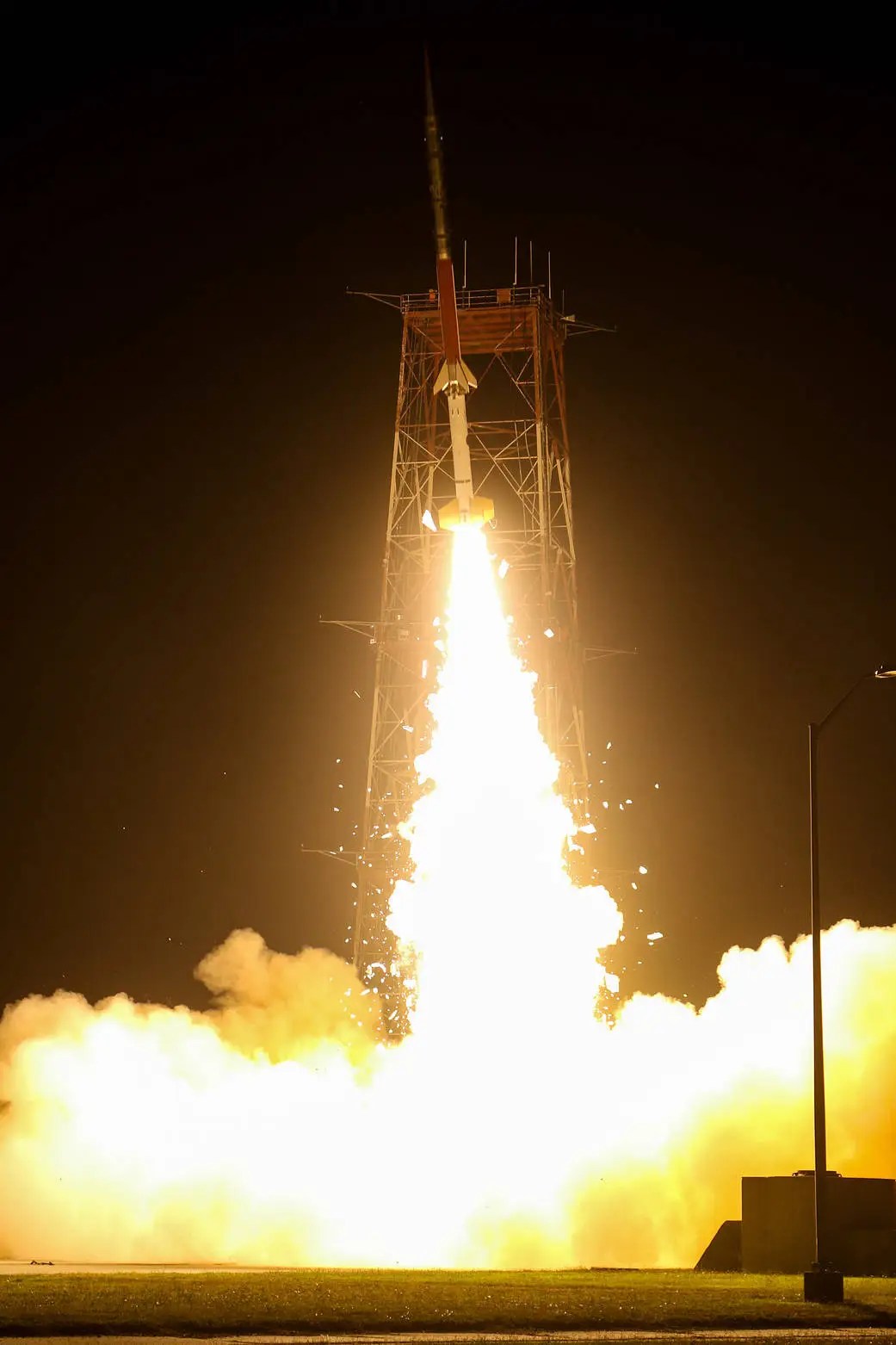
So, we’ll have a camera operator and a focus puller in the back of the aircraft, and we’ll fly it. And if anyone watches the Crew-8 launch, it was at night, and it was, it was by far the most amazing thing I’ve seen up close.
And we’re still relatively two and a half miles away, but a launch coming by you at two miles away at like 7,000 feet is quite the thing to see, and it’s pretty impressive. So, it stands out in my mind as probably one of the most dynamic things that I’ve seen here, here at NASA.
Another one is actually just, just being there for the recovery as well. So, much like the launch, you’re, you’re a couple of miles away, but what you realize, too, with an IR camera is that you can catch the actual capsule and heat signature coming back through re-entry.
So, once you start seeing it, and once you capture it, and once we start downlinking it to the launch director or recovery director’s console, it’s just neat to be able to be there and present for it, and seeing it through our night vision goggles, and it’s actually coming right at us.
And then all of a sudden, chutes come out, and it’s there, and you’re there.
So, launches and recoveries, I think, have been the most dynamic things that we’ve seen.
We had a group of ours go out for OSIRIS-REx as well, and we were able to catch, capture the OSIRIS-REx imagery as well. And it really made for an opportunity, one, for us to forward deploy at the aircraft and also be able to gather the imagery as well in real time for our, for our NASA partners. So, it was pretty remarkable as well.
Host: Yeah, no doubt. Are you able to feel or hear the launch rumble when you’re in the air?
Gregory: Yeah, that’s a great question. You absolutely can. The launch rumble itself you can hear through the sound of the aircraft, and also through the sound, basically the sound definitely up in your helmet as well. And then you can feel it a little bit, too. So, being able to see it and hear it and feel it is just so, you know, heart stopping really, and it’s incredibly exciting.
And just the thing that you try to, you know, take the moment in. It’s kind of hard to take your phone out and try to recover it, or try to record it with your phone, because it doesn’t really pay a lot of justice to it. I mean, just being there and watching it is really just biggest gift that you can have.
Host: For someone interested in becoming a NASA pilot, what skills or experiences matter beyond the ability to fly?
Gregory: That’s a great question. I think really those skills beyond the ability of actual flying ability. Of course, you need a foundation of some pretty good flying. So generally, we’re looking for individuals that have anywhere from 1,500 to beyond hours of flying and 250 hours of PIC [Pilot-in-Command] time.
But we’re looking for strong judgment, really, decision making under pressure, that ability to operate in complex environments, which happens here quite a bit often. Effective communication and teamwork is really just the biggest of all the big things, of course. And then, like I mentioned earlier, that accountability and also that mission-focused mindset as well.
And then lastly, just what can happen a lot is just our commitment to just continuous learning and improvement. Sometimes, some of the improvement that you have to do with yourself is just self-taught and self-paced.
I’ve taken courses on leave where I would go to a course for a week, take a week off, go to university and take courses, leadership courses to continually develop myself, so I’m the strongest, most adaptive leader that NASA can have in this particular role. And that basically sets the tone for the next role as well as we move forward.
And I think every individual coming from the outside should be ready for that, and then also every NASA leader should be doing those same things as well.
Host: That’s great advice. You’ve had a fascinating career. What was your giant leap?
Gregory: My giant leap was going from an individual contributor to a leadership role. And it’s different in the military. It’s much different than military, because basically the place is built for you to be a leader and to eventually take over a thing.
At NASA, it’s a little bit different. There’s so many silos of excellence at NASA. It helps you kind of open up and focus and look at other areas at NASA. One, because there’s always something new to learn. And two, also something new to observe and to be a part of.
So, my giant leap, really, was, one, jumping into NASA from the leadership roles that I’ve had in the military, and then understanding how NASA works as an organization, and then taking that to be able to build partnerships. And also to be able to use my previous leadership to be able to build strong and dynamic teams here at NASA, and also with the agility needed to be able to take on the increased launch tempo and some of the other things that happen quite a bit here.
For instance, we’re working with a commercial partner just this week, and the launch tempo is just moving, moving, moving. And there are times where you have either slips or scrubs that happen, and the crew, you know, waking up early and being here, sometimes a crew doesn’t always (and your body doesn’t always) understand. “All right, okay, this is going to happen again tomorrow and again tomorrow.” So, the window, your own personal window… I tell folks all the time, “Try not to make too many deep plans, because just in case this big opportunity moves, we need to be prepared to do it.”
With Artemis, I think the entire crew was ready, basically ready until around October 31 [2026] for the, we call it “the Artemis window.” So, we reset all of our maintenance here, all of our operations, all of our, all of our vacation days as well, just in case something happened and it kept, it would just possibly keep moving to the right. Our entire organization was ready for that.
I had to go brief that to Charlie Blackwell Thompson so she understood that, and really that helped us be successful in the mission as well. So, agility and flexibility as an organization is the thing I really had to learn and build our team to be.
Host: And Charlie Blackwell Thompson being the Artemis launch director.
Gregory: Yes!
Host: ISo, I’m curious about something. When you and I were emailing back and forth, coordinating this interview, you signed one of your emails as LUNAR instead of Shannon. Is LUNAR your call sign?
Gregory: Yeah, it kind of was. It was, it was one that I got from someone here.
So, generally, when you get them from someone, they start sticking. And I’m trying not to have that one stick. But the more I try, the more it sticks, so I’m just going to kind of let it ride.
And this guy knows who he is. He’s, he works here on Center, and it’s kind of a joke that he has going right now. So, I’m just going to let it ride a little bit, and we’re going to keep it moving. So, if it, if it is LUNAR, then I’ll have it stick as LUNAR.
But I’ve had other names during my, during my military career. And generally, your call sign is something that you’re not always proud of and it helps you learn every time you’re going through your flying in your military career.
So, I had an opportunity where I was incredibly fearful of one particular maneuver and it was form, or formation flying. It was just — helicopters in formation flying? It seems like it just doesn’t go together. And it was, it was not during the day that I was afraid of it. It was during the night vision goggles section.
So, we’re flying under goggles and flying with this helicopter in in close formation. And for a bit, I was pretty fearful. And as a joke, one of my commanders called me Fearless. “Well, they got Fearless on Chalk 2,” and made a comment about it. And we had a large formation that just kept kind of zigzagging. And so, when you’re in and out on being number two, the rest of the aircraft in the formation feel it, and it’s a thing.
So, I made a point of flying formation more often than anyone for that next year. And I kind of became the formation guy. Like, “If you’re going to fly with anybody, go fly with it Fearless, because he flies really close.” So, then I started flying very close, and it became one of those things that stuck with me.
I ended up commanding a unit. We went overseas to Kuwait, and the unit call sign also was Fearless. So then, okay, then that one actually gained wings and became a thing.
So, I think that lesson and that call sign makes me realize, okay, there are times in your career and also times in your life where something may seem like it’s not possible. And just leaning forward and doing the work and every day getting about 2% better, eventually you’ll turn out being the best person at it, or near, near the best person at this particular thing. And that was the thing that I learned from that particular, that particular flying lesson.
Host: Wow, so you really pushed through that apprehension and made something positive for yourself.
Gregory: Absolutely, absolutely. Yes, sir.
Host: Shannon, we’ve really enjoyed talking with you. Thanks for all you do, and thanks for your time.
Gregory: Yeah, absolutely. And for anybody out there who’s still aspiring, I say start early, start early as you can. NASA’s hiring heroes every two weeks. So, if you’re looking to looking to jump on this team, we’d love to hear from you.
[Outro music]
Host: That’s it for this episode of Small Steps, Giant Leaps. For a transcript and to hear previous episodes, visit nasa.gov/podcasts. While you’re there, you can check out our other podcasts like Curious Universe, Houston, We Have a Podcast, and Universo curioso de la NASA. As always, thanks for listening.
Outro: This is an official NASA podcast.