
![Request for Information – Potential [Placeholder for Prize]](https://assets.science.nasa.gov/dynamicimage/assets/science/psd/solar/2023/09/s/solarsystem_0.jpg?w=1024)



Kennedy and NASA
Though NASA was formed by Dwight Eisenhower, President Kennedy gave the infant agency its early focus with his famous challenge to land astronauts on the moon by the end of the decade. Kennedy’s interest in NASA was broader, though, as noted in these excerpts from space policy expert John M. Logsdon’s contribution to “NASA and Ten Presidents” from NASA’s 50th Anniversary Magazine
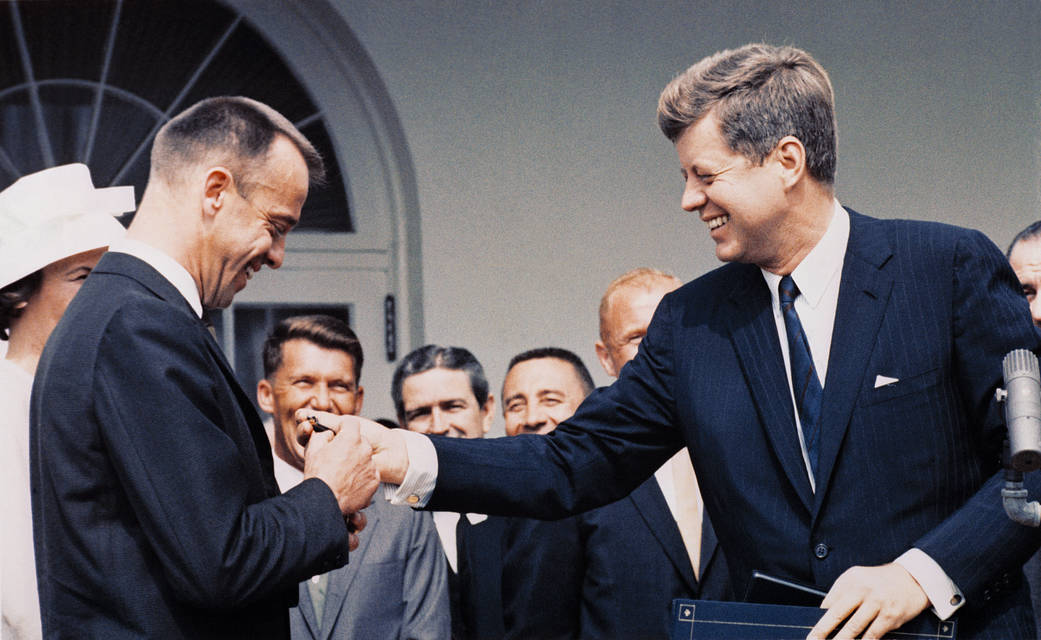
“Kennedy’s attitude toward the space program was complex. He entered the White House thinking space could be an area for tension-reducing cooperation with the Soviet Union, and he never gave up that hope . . .
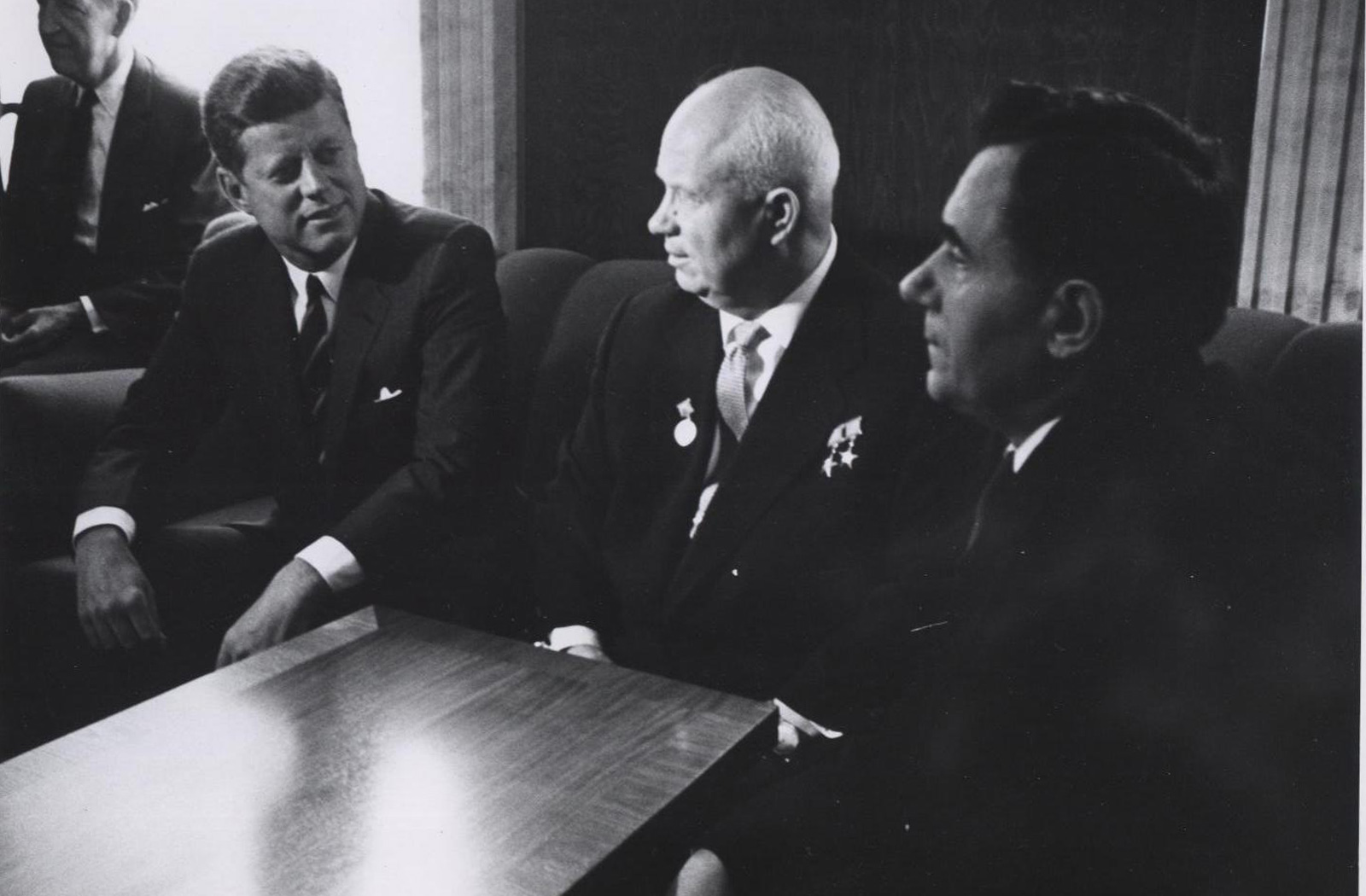
At his June 3-4, 1961, summit meeting in Vienna with Soviet Premier Nikita Khrushchev, (above, to Kennedy’s left) Kennedy suggested, “Why don’t we do it together?” After first responding positively, the next day Khrushchev reportedly said “no,” on the grounds that an agreement on disarmament must come first . . .
Near the end of his presidency, Kennedy returned to the idea of superpower cooperation in space. Speaking before the United Nations on Sept. 20, 1963, he proposed “a joint expedition to the moon” and asked, “why should man’s first flight to the moon be a matter of national competition?” ”
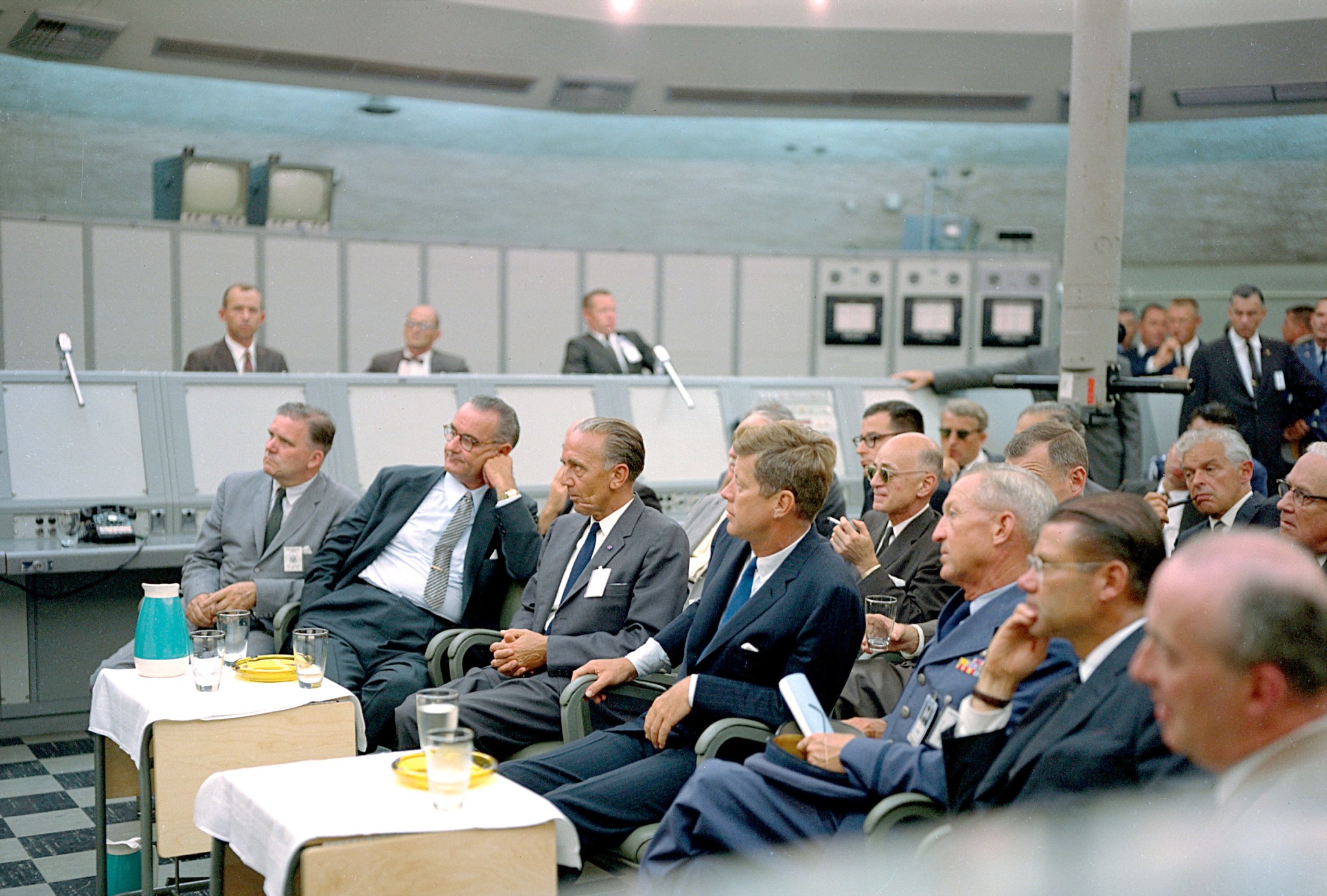
“However much he might have wished to cooperate, Kennedy in 1961 had set the United States on a course to enter, and win, a race to the moon. This decision came in the aftermath of the huge global and domestic reaction to the April 12, 1961 Soviet launch of the first human to orbit Earth, Yuri Gagarin. Eight days later, Kennedy asked for a crash review to identify a ‘space program which promises dramatic results in which we could win.’ As part of the crash review that the president had ordered, Vice President Lyndon B. Johnson (left, with glasses) met with, among others, Wernher von Braun. After that meeting, von Braun wrote a letter saying of a moon landing goal, ’We have a sporting chance. With an all-out crash program I think we could accomplish this objective in 1967–68.’ Johnson quickly reported this judgment to Kennedy, and in effect the die was cast.”
“On May 25, 1961, Kennedy addressed a joint session of Congress to announce his decision to go to the moon. He backed up this decision with remarkable financial commitments. In the immediate aftermath of his speech, NASA’s budget was increased by 89 percent, and by another 101 percent the following year. To carry out Apollo, NASA became the large engineering organization centered on developing capabilities for human space flight that it is today.”
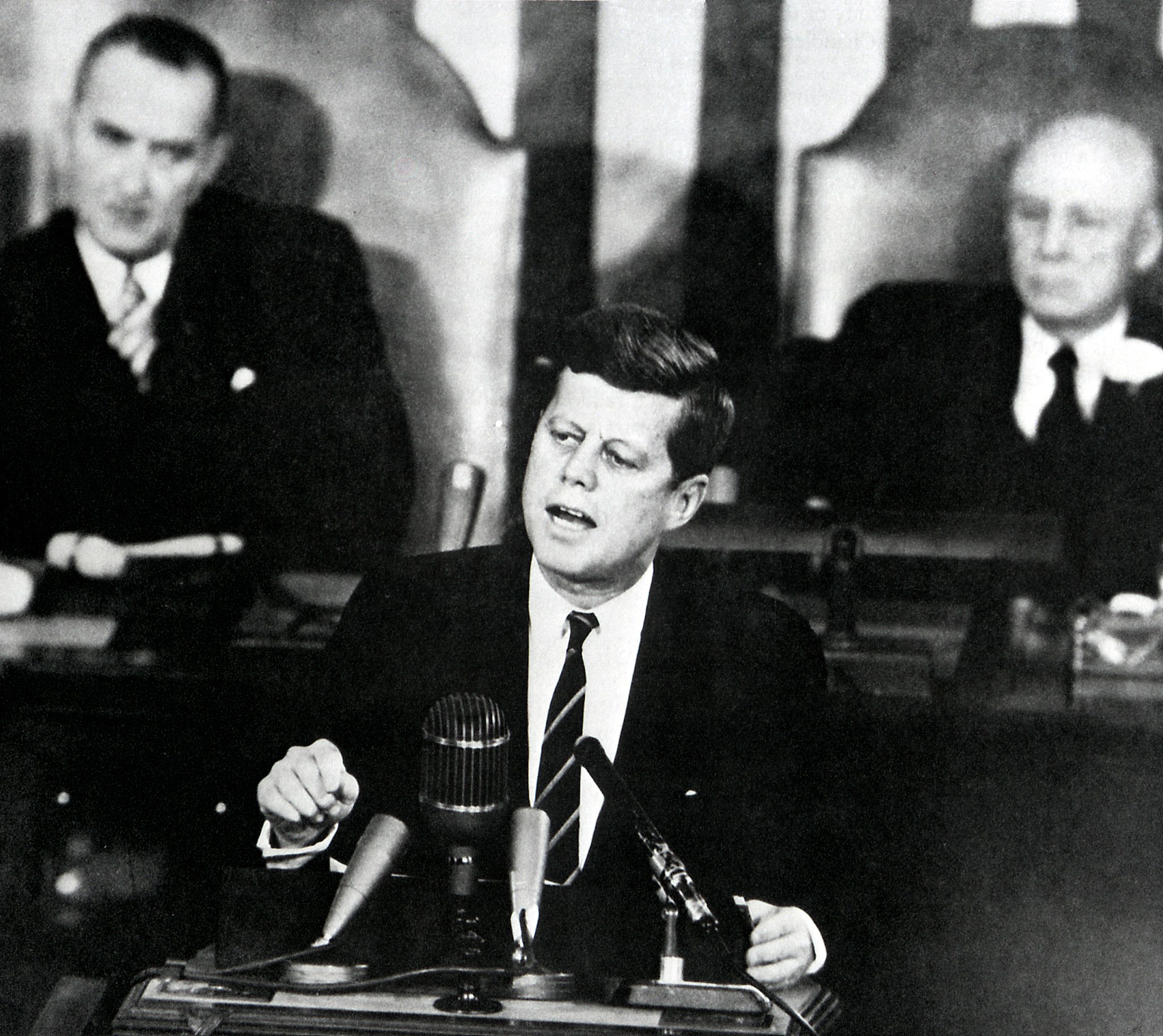
“Urgent National Needs”
In an address to Congress on “Urgent National Needs” on May 25, 1961, President John F. Kennedy called for America to send astronauts to the moon and return him safely to Earth before the end of the decade.
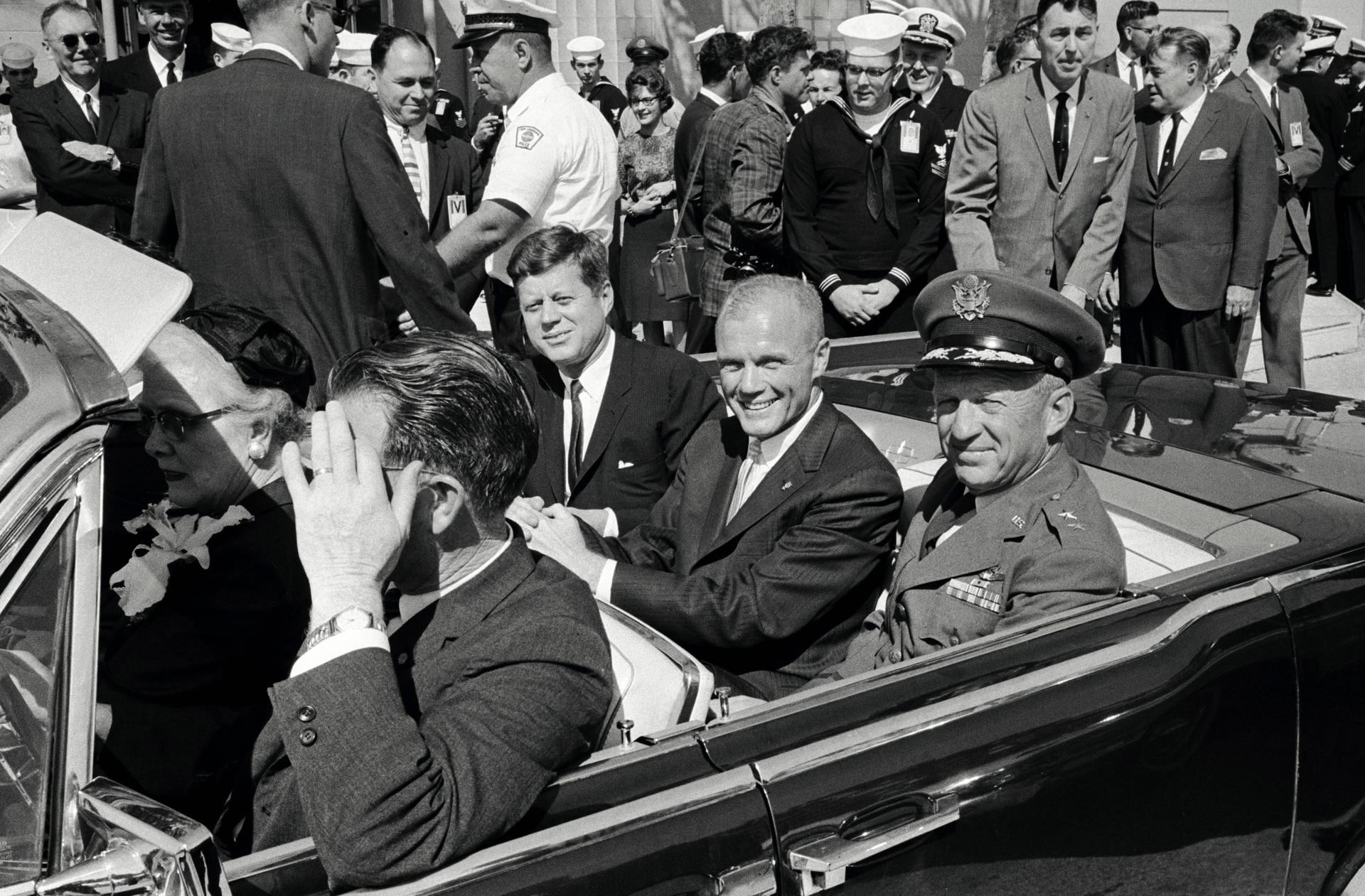
Read the Transcript of Section IX: Space“Kennedy was particularly drawn to the astronauts, who became popular symbols of an administration that embraced the New Frontier. John Glenn (riding in the back seat with Kennedy) was a frequent visitor to the Kennedys’ Hyannisport, Mass., compound, where he waterskied with Jacqueline Kennedy and successfully lobbied the president on behalf of the astronauts’ right to sell their exclusive stories to Life magazine. When Glenn’s Friendship Seven mission launched Feb. 20, 1962, on live national television Kennedy watched raptly along with millions of his fellow countrymen.”
“What might have happened to Apollo and NASA overall, had Kennedy spent another five years in the White House, can only be a matter of speculation. We know the public’s association of the space program with Kennedy was so strong that six days after Kennedy was assassinated, the new president, Lyndon Johnson, announced in a nationwide television address that the NASA center from which our moon voyagers would launch would be named in Kennedy’s honor. . . . A less grand but very fitting tribute to the assassinated president took place on the evening of July 20, 1969, when an anonymous citizen placed a small bouquet of flowers on the Kennedy gravesite at Arlington National Cemetery with a note that read, ‘Mr. President, the Eagle has landed.’ ”
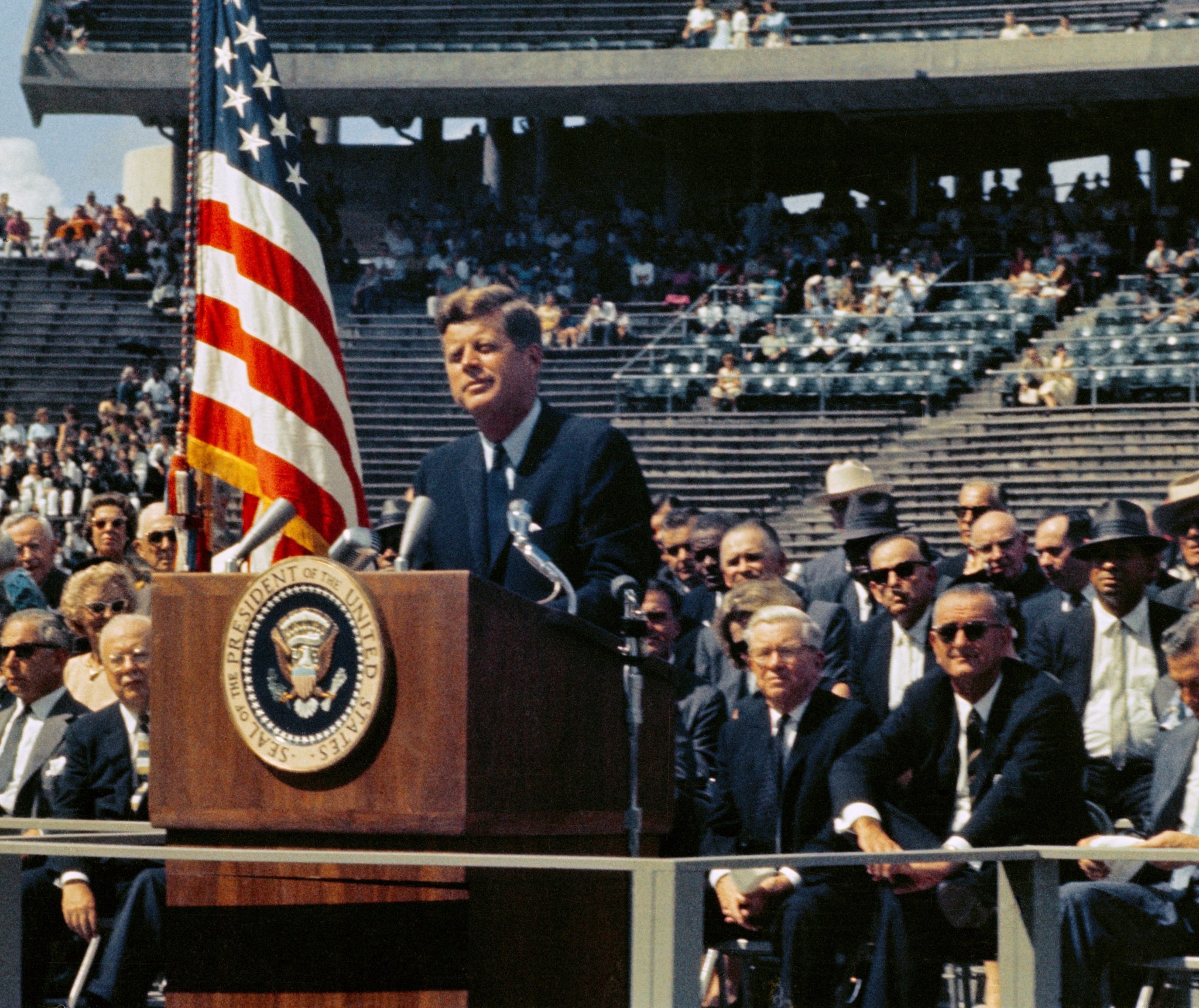
“We Choose to Go to the Moon”
In this well-known speech at Rice University on September 12, 1962, Kennedy stated that we explore space not because it is easy but because it is difficult.
Learn More