









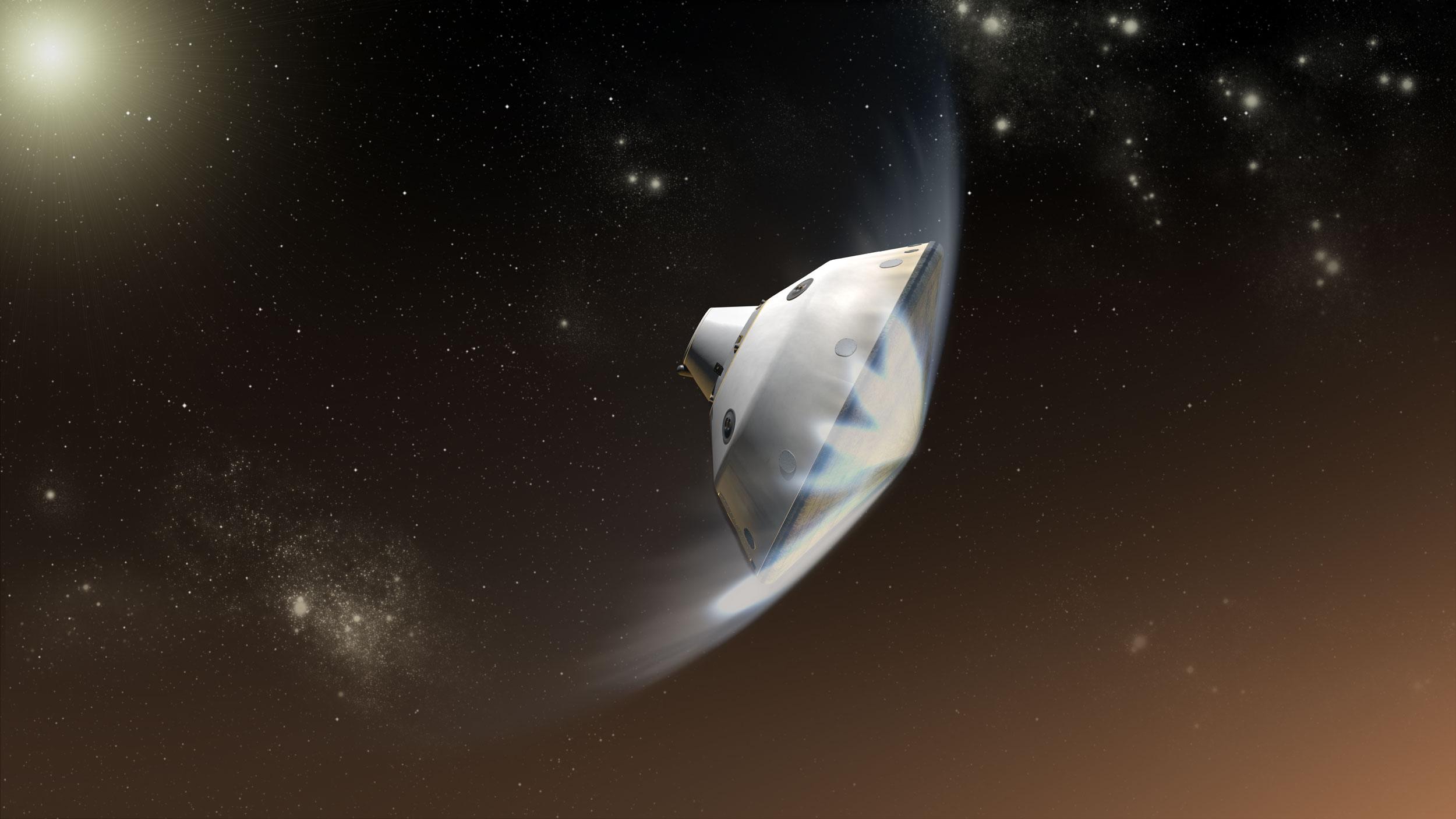
Screaming through the thin Martian atmosphere at hypersonic speed, the Mars Science Laboratory is about to experience heat and pressure up to three times more intense than when a space shuttle returned to Earth, and NASA engineers hope to soon have the data to prove it.
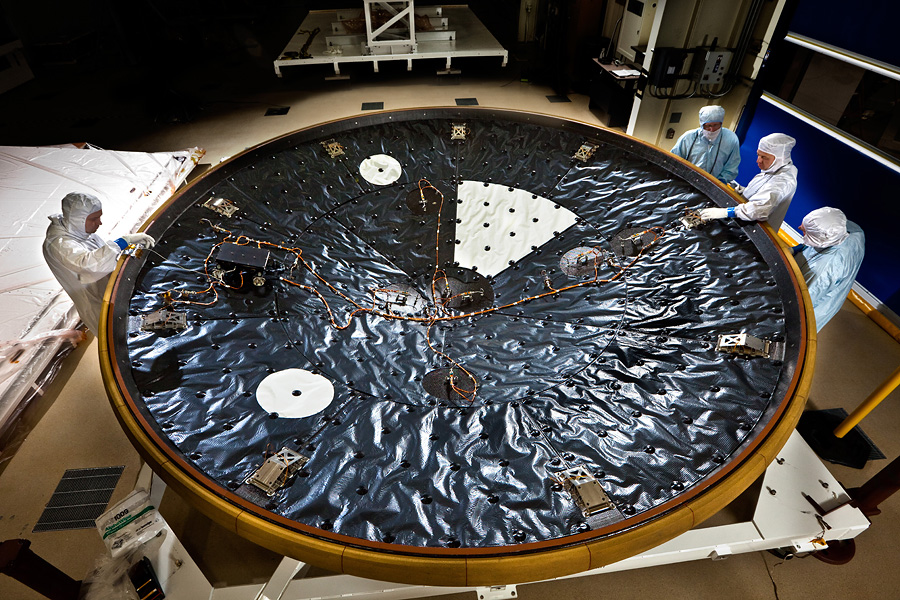
A suite of 14 sensors are embedded in the MSL spacecraft’s heat shield, which will protect the Curiosity rover during its seven-minute plunge toward the Red Planet. Seven sensors will measure temperatures within the heat shield during entry, while the remaining seven sensors will measure changes in atmospheric pressure being exerted on the heat shield.
All of the measurements will be recorded aboard Curiosity for playback to Earth, both during the entry and descent, and three to four days later after the rover safely touches down.
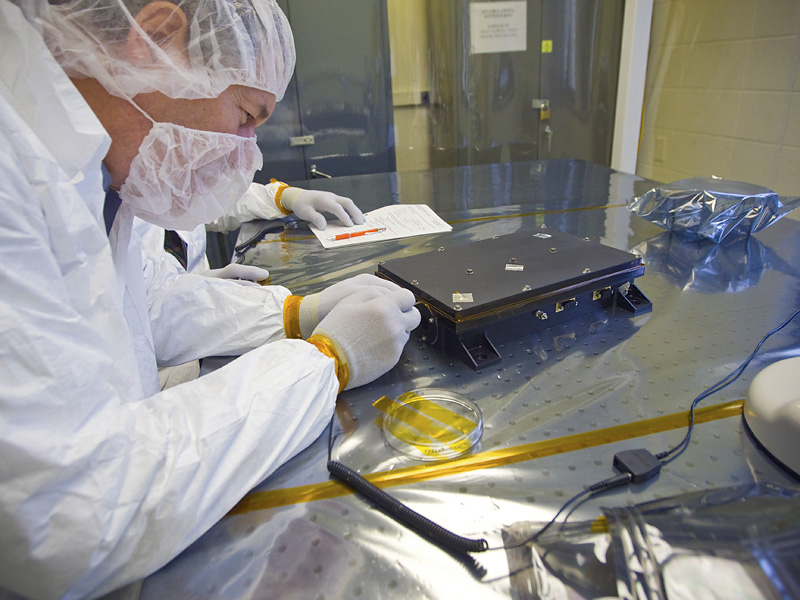
The team responsible for the instruments – which are called MEDLI, for MSL Entry Descent and Landing Instrumentation – can’t wait.
“This will be a first for us,” said Jim Pittman, NASA’s head of hypersonic research. “We’ve never had the chance before to collect this kind of high-quality data from a spacecraft entering another planet’s atmosphere.”
Information about what Curiosity’s heat shield experiences during entry and how it responds is expected to help engineers design future aircraft and spacecraft to better fly through a planet’s atmosphere – including Earth’s – at hypersonic velocities, or more than five times the speed of sound.
MEDLI’s data also will be used to develop future Mars entry systems that are safer, lighter weight and more reliable, which in turn would allow future landers to be larger and more scientifically capable.
The $28 million experiment managed by NASA’s Space Technology Program is the first Technology Demonstration Mission to fly in space. MEDLI originated within the agency’s Aeronautics Research Mission Directorate.
Read Earlier Story about MEDLI