



















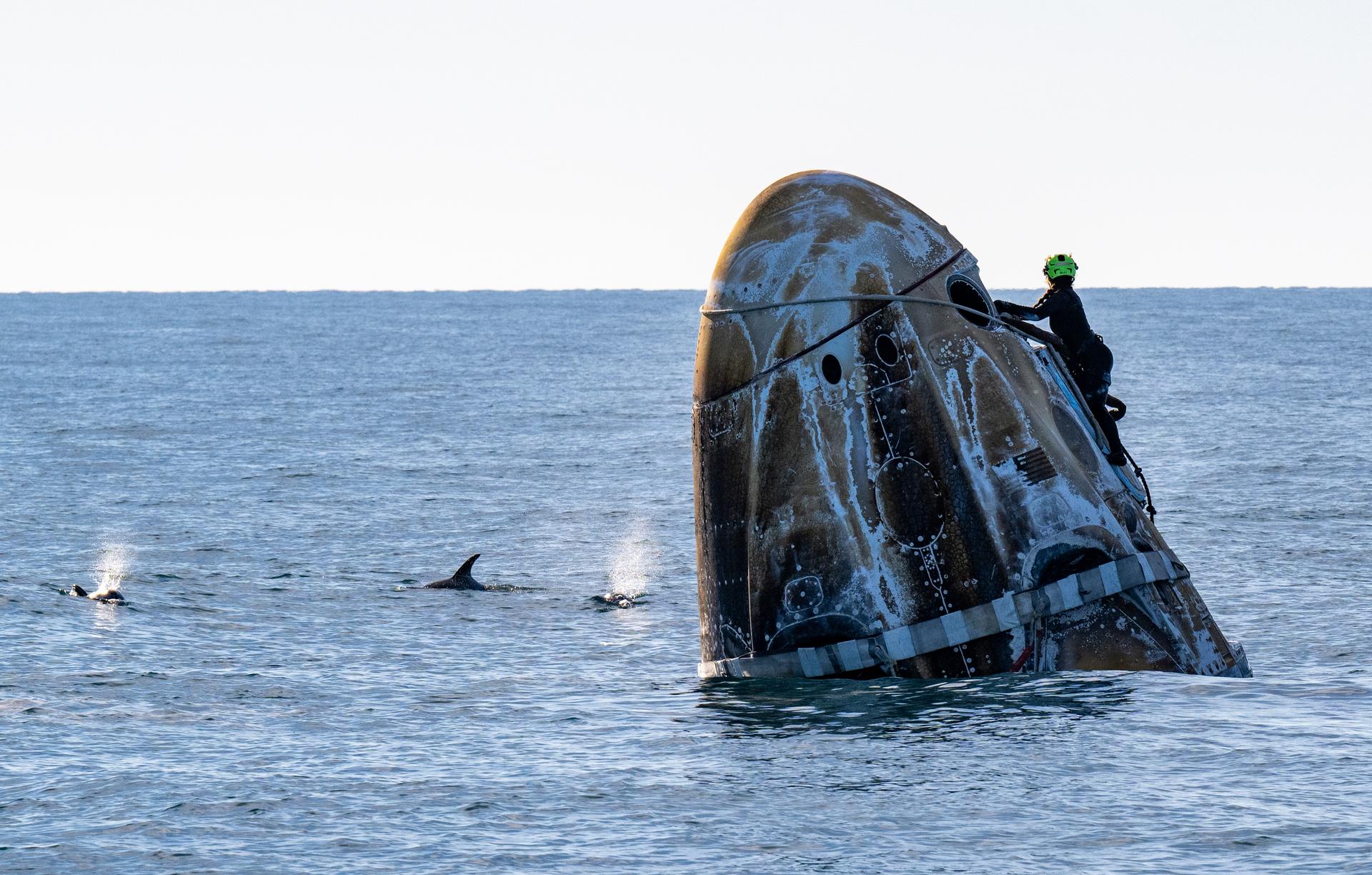
Host Andres Almeida: For any crew returning to Earth from space, the journey home includes the intense heat of re-entering the atmosphere, a parachute-assisted splashdown in the ocean, and a carefully choreographed recovery effort to bring them safely back after their time in orbit.
Today we’re talking with Christine St. Germain, NASA recovery director for the Commercial Crew Program at Kennedy Space Center. She shares how NASA teams work with commercial partners to recover astronauts after splashdown, prepare for unexpected scenarios, and ensure crews return home safely after their missions in space.
This is Small Steps, Giant Leaps.
[Intro music]
Welcome to Small Steps, Giant Leaps, the podcast from NASA’s Academy of Program/Project & Engineering Leadership, or APPEL. I’m your host Andres Almeida.
Christine St. Germain is with us today.
Host: Hey, Christine, good to have you here.
Christine St. Germain: Thank you. It’s good to be here.
Host: Tell us about your role at Kennedy Space Center.
St. Germain: Currently, I’m an operations director in the Commercial Crew Program. I work in a ground and mission operations subgroup over there.
I primarily focus on crew recovery. So, my main task is as a NASA recovery director. I do also support launch operations as a backup for that function as well, but recovery is my main function.
Host: Return is such a critical phase. The public sees the launch, they get excited for it. But reentry, splashdown, and recovery are also critical.
St. Germain: Oh, definitely, right? I mean, we have to launch to get the crew to the space station, but we also have to be able to get them home safely. So, I think they’re both equally as important. They’re just, you know, different, different ends of the mission.
Host: So, what are your core responsibilities as lead for commercial crew recovery?
St. Germain: So, for the recovery director, we work with our commercial providers. So right now, that’s SpaceX or Boeing for the crewed recoveries, and we help them. We’re the main point of contact on the NASA side for the NASA team that will support their operations.
So, we help manage and organize all of the activities that the NASA part of the team is responsible for. And then we work very closely with our commercial counterparts in planning, in the training events that lead-up to each mission.
And then during the mission, our main function is we are their boots-on-the-ground point of contact if they have any concerns on the NASA side of, like, if there’s a requirement, they’re not sure they can meet for some reason. If there’s a major change to the ConOps [concept of operations] due to something that’s happening real time.
We’re there to speed up that process, so that instead of trying to reach someone on the phone to get someone on the nets, we’re there with them, seeing what’s happening, able to give them a faster, real-time input on how we can move forward from there.
Host: Do you do periodic rehearsals out in the field, out in the ocean for spacecraft recovery? Or is that sort of already baked into knowledge?
St. Germain: We do, like, tabletop-type of rehearsals. We do a lot of reoccurring mission prep with the SpaceX team, for example, because they’re running missions, obviously, in addition to the NASA missions.
We don’t have the time to, you know, be loading up the vessel in between, just to take people out to do training. So, we found other ways to do regular kind of refreshers, I would say, for the team to make sure that everybody’s up on it.
Right now, with the Boeing team, we do have, and with their operations being land-based, we have a little more flexibility to do training exercises ahead of the missions. So, we do what they call mission dress rehearsals on the Boeing provider side of our operations.
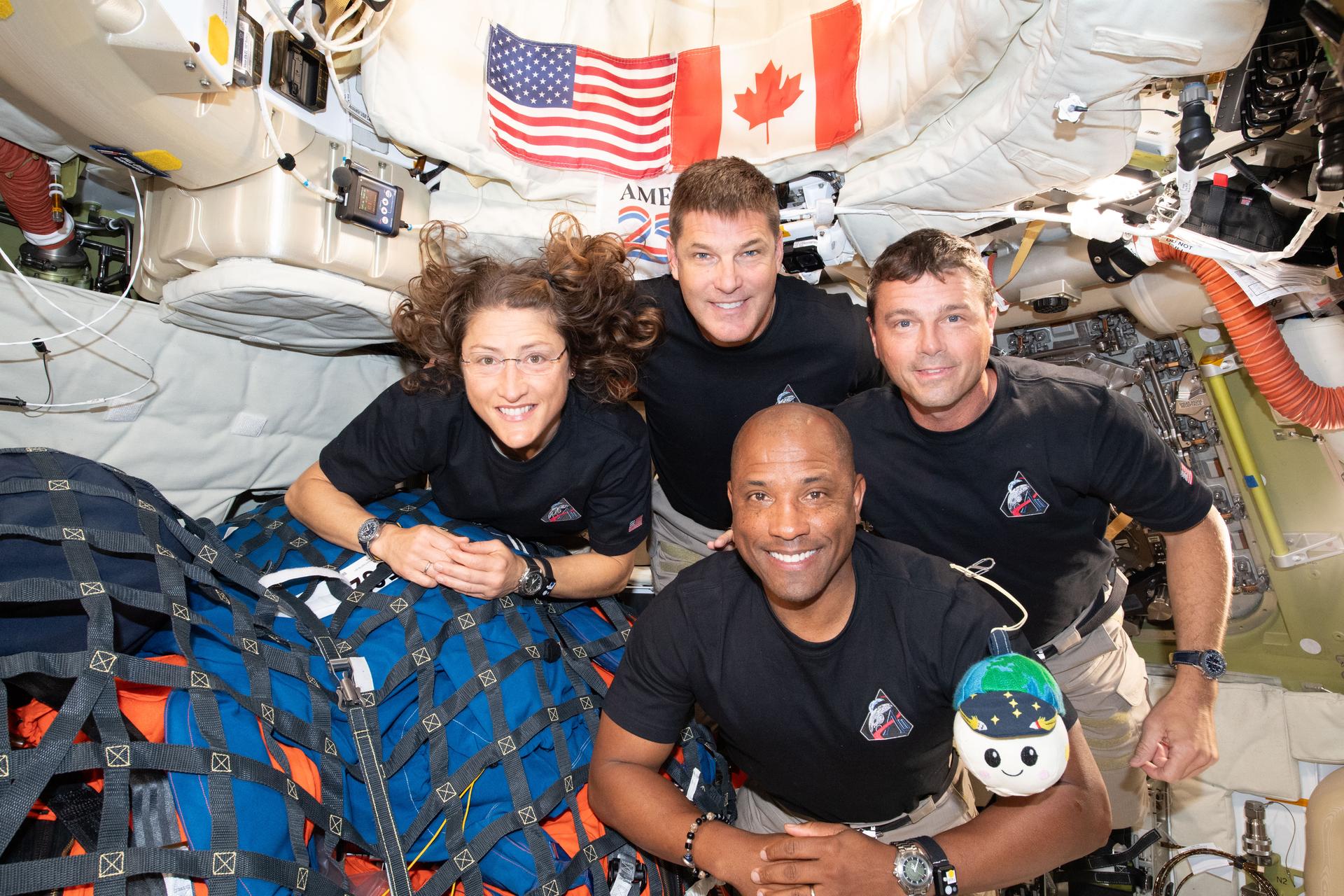
Host: We were supposed to do this interview a few weeks earlier because Crew-11 was still on its planned schedule, but that’s spaceflight for you!
St. Germain: [Laughter] Yes! So, when this early return was needed for Crew-11, we already were in the planning phase. We already had teams partially spun up, and so that really helped us respond quickly but thoroughly, right?
We weren’t caught by surprise in any kind of scramble, as it were. We already have our checklist. We already know what we need to do. So, it was just, you know, how fast can we do it smartly, right?
One of the things that recovery is also responsible for, is planning for in case of a return after fail to dock.
So, if the spacecraft was unable to dock with the space station for some reason, they have a process they go through to do a few attempts, depending on what caused the issue in the first place. And then if they’re unable to dock, they will return to Earth.
And so, we have a team that even on the launch side, is basically on standby, ready to go support with the commercial provider if we should have to do a recovery in a short timeframe after launch.
Because of that, you know, the recovery planning starts at the beginning of the mission. It’s not something that starts after launch has already happened.
Host: How much is risk management part of your conversations with your team?
St. Germain: You know, we spend a lot of time when we’re certifying our providers and as we’re leading up to each mission, you know, we have the engineering teams and the technical teams that are really looking into all the different things, any changes, any issues from previous missions.
And so, I feel like the risks are well understood. I think what it comes down to is more of the no matter how prepared we are, you don’t know what you don’t know until it happens.
And so it’s having the teams, what’s their, like, risk acceptance posture, and do we have the right processes in place so that the teams can make those decisions and assess those situations in a short amount of time effectively and safely so that we can continue on with the mission without, you know, having any kind of mishap or situation occur.
Host: And do you ever get crew involved with your planning?
St. Germain: We do, yes. We have representatives from the crew office involved. They’re in a lot of our conversations. Depending on how big or complicated of a technical issue, they may be involved in some of those conversations as well.
You know, we always want their input and their awareness, because at the end of the day, right, they’re the ones that are taking the ride. They’re the ones who are putting, ultimately, their lives at risk, and so their feedback is valuable and crucial, because there’s aspects of all of these missions that, if you aren’t a crew member, there’s just things we don’t understand about what may or may not be going on as well.
You know, because there’s stuff we don’t do, we’re not trained as astronauts, so we keep them involved in the conversations and the planning. They’re an integral part of the team
Host: Any lessons learned come to mind?
St. Germain: Obviously, every mission has very specific, little lessons learned here and there, sometimes bigger lessons learned.
But I think just in general, with the different things I’ve done out at the space center, what I’ve learned is the best thing we can do is be prepared to be flexible. And so, you know, with everyone having such technical and typically like engineering-type backgrounds, right? We kind of like our boxes and everything to be defined. Here’s the problem, here’s the solution.
But when you get into operations, there’s always things you can’t plan for, and so we do try to spend a lot of time doing the simulations, the what-if scenarios, the kind of like the oddball edge-case type of things. “And if this happened, what would we do?”
But a lot of that focus actually ends up being more on the how would we handle that problem when it comes up in that who do we talk to? When do we talk to them? What are the comm. paths, that type of thing. So, it’s more about the decision-making process.
And so, the main thing with being prepared to be flexible is understanding the communication paths that need to happen and just being comfortable with communicating those things.
So, like, I’ve probably on every mission that I’ve worked had some just weird thing pop up that’s like, not normal, maybe not necessarily a big impact, but like, could turn into an issue if it’s not handled.
Usually it’s been almost like, administrative, operational type of, you know, stuff in the background. If you’re working with another group and you need a facility, or you need a component, or you need a whatever, and you’re not sure, all of a sudden they’re like, “Oh, we don’t know if we can get this,” right?
And so, one of the main things is making sure that the right people know, “Hey, we don’t have an issue yet, but an issue could be coming,” so that if it happens, they’re already prepared. But also they might be able to help you prevent that issue, because they had awareness early enough in the process.
Host: Are you also accounting for human factors like fatigue? Do you get feedback from crew?
St. Germain: We do, yeah. So, our planning process, you know, we worry a lot about crew duty days, not just the crew, like the astronauts, but also like the teams that we work with, right? Our commercial partners, our team that’s traveling for a lot of these things, or our team that’s on console.
Do you folks have someone who can swap out with them if something goes sideways? Do they have someone who can come and relieve them? Is there a way to split the duties? That type of stuff. You know, we work with air crews for the G5 [Gulfstream G550] for transporting the astronauts. We work with helicopter pilots, that type of thing. So, we’re definitely always keeping an awareness of what kind of days and hours these folks have worked, because we want everyone to be well rested so that they can, you know, function optimally.
We definitely do tend to work slightly longer days when we’re in operations, but even just making sure that the team gets a chance to rest ahead of that is something that we take very seriously to help mitigate that issue, because, yes, that human factor is a big concern across the board.
Host: Yeah, and when you say, you have long days, does that often mean you’re out at sea?
St. Germain: It depends. So, for recovery, right? If we’re doing a SpaceX recovery, and then we’re on the vessel, those of us who transport to the vessel via helicopter arrive on vessel about four and a half hours before splashdown.
On average, it’ll be another four to five hours post splashdown before we leave the vessel. Could be longer, depending on what’s going on, depending on how much time the crew needs in the med bay before they’re comfortable, you know, being transported, that type of thing.
But you know, if you’re looking at that, that’s about an eight-hour day, but you’ve got stuff on the front end of us, getting staged, getting on the helicopter, getting transported. You’ve got stuff on the back end, you know, do all of that in reverse, and that’s assuming that everything is completely nominal, right? So, now you’re at a 10-, 12-hour day, potentially, for nominal ops.
So, the good thing is, we can plan for that. So, we make sure the teams have a rest period beforehand. We sleep shift, we do all that type of stuff, and definitely try to divide and conquer the tasking, including that we have team members back home, for example, who maybe there’s a meeting that needs to happen during when we should be resting in the field.
Somebody else on the team will take that meeting, and then they’ll let us know if there’s something that changes our operations, or they’ll wake us up if it’s something critical that has to be dealt with right now, you know?
So, we have a good support structure, I would say, for that type of thing.
Host: Yeah, you’re kind of figuring out how to best triage your days. How do you do knowledge sharing within your organization?
St. Germain: I’m a huge fan of training, and so I like processes that have checklists, that have training products that have like we do for our missions. We have a regular schedule, basically, where we will do tabletops prior to each mission, and we talk about, you know, what’s the same? What’s different? That type of thing.
So, it really comes down to documentation, but also documentation that’s designed with the thought in mind that, like, somebody else may need to pick this up and figure out how to do this job. So, that’s something that I try really hard to do as much as possible.
And when I come into a new role, if we have folks who haven’t had an opportunity to do that, if I’m starting to pick up and learn tasks that they’ve been responsible for, I try to document that while I’m learning it so that it helps the next person.
Host: What was your giant leap?
St. Germain: Well, for me, I would say that was definitely when I actually took my first job as a NASA civil servant.
I had the opportunity to join the NASA Test Director Office, which is part of the exploration Ground Systems program with Artemis, and that was almost 10 years ago, actually, when I had that opportunity.
It was really cool for me because there was…so many things that happened in that job where, you know, there were a lot of people who had former [space] shuttle experience still, and I don’t have that.
And so, there was a lot of stuff where my career development was, “I don’t know, but let me find out, or I don’t know, but let me go try it,” you know?
So, like, it was just a really neat opportunity to just get in and still work with people who had a lot of experience.
So, I had the resources to ask the questions, to talk to people, to get the tribal knowledge, as it were, but it’s something that you know could have been really scary if I wasn’t in an environment where they supported that attitude of, “I don’t know but, but I’m willing to learn.”
Host: Great. Well, Christine, this has been a great conversation. Thanks for being on the podcast.
St. Germain: Yeah, definitely. Thanks for having me. Those were cool questions. I liked those.
Host: That’s it for this episode of Small Steps, Giant Leaps. For a transcript and to hear previous episodes, visit nasa.gov/podcasts. While you’re there, you can check out our other podcasts like Curious Universe, Houston, We Have a Podcast, and Universo curioso de la NASA. As always, thanks for listening.
Outro: This is an official NASA podcast.