












NASA Glenn Faculty Fellowships
NASA Glenn Faculty Fellowship Program
Overview
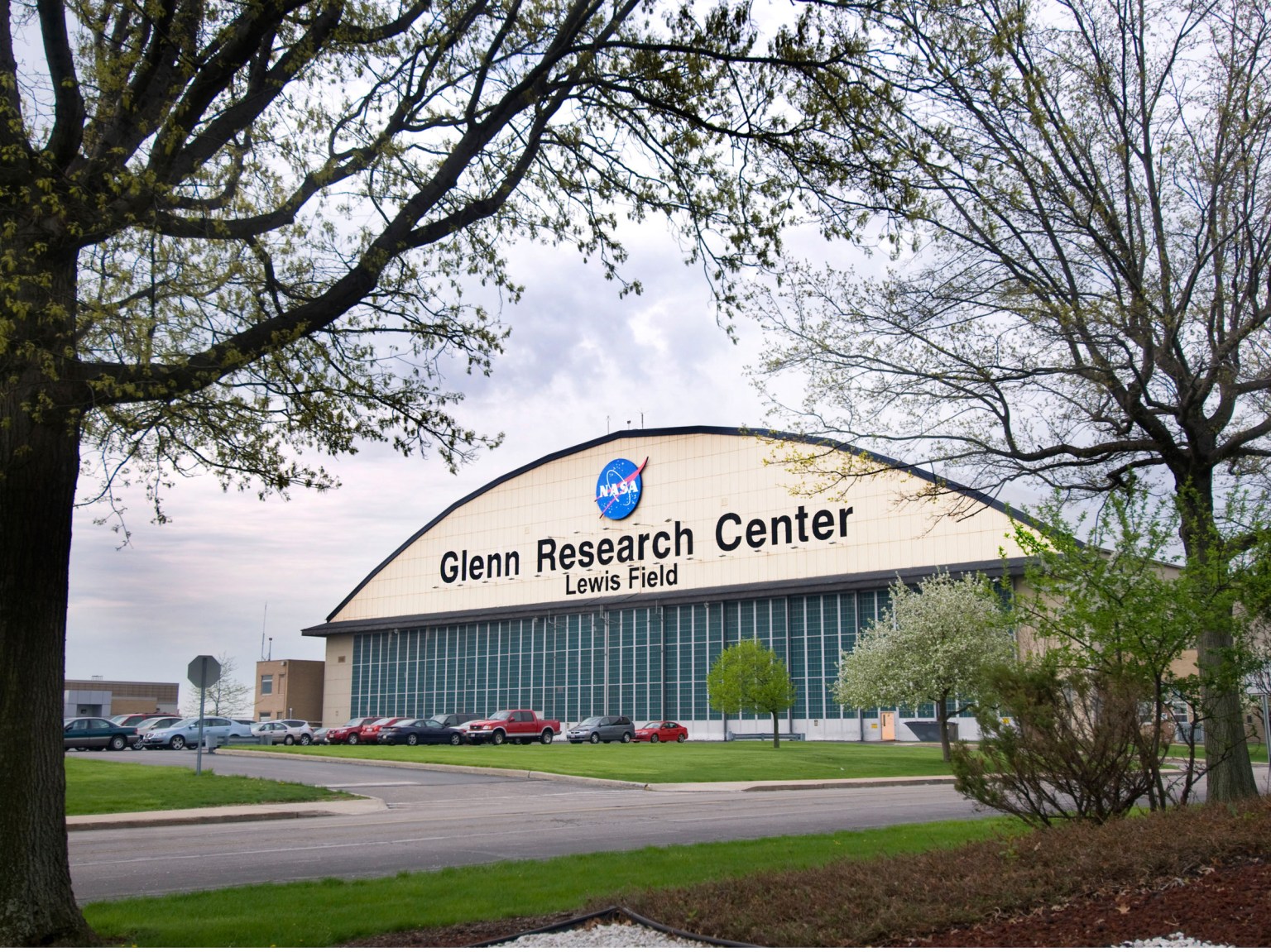
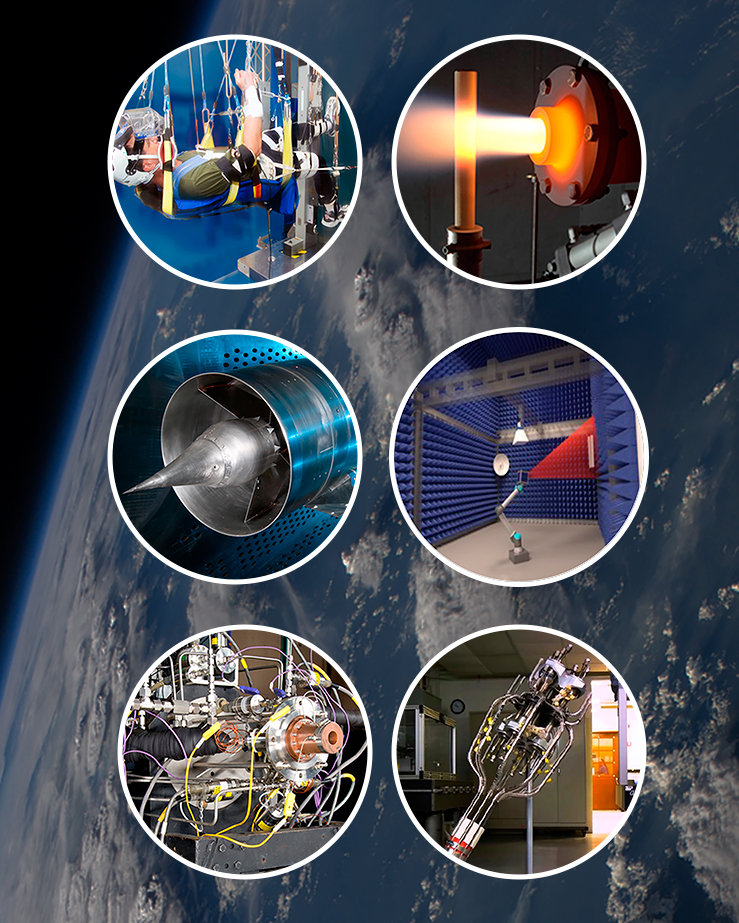
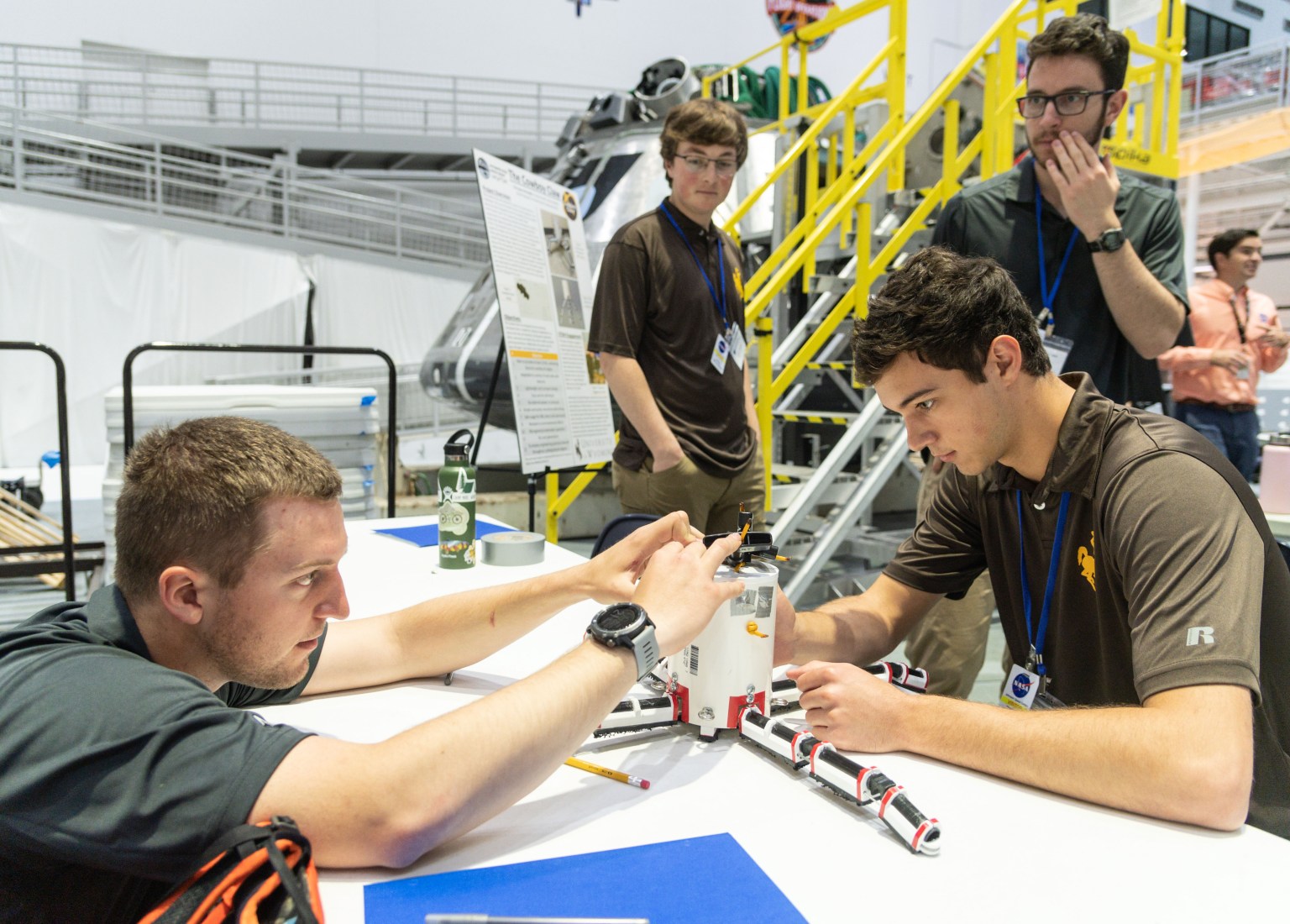
NGFFP is a 10-week residential research program that is open to full-time science, technology, engineering, and mathematics (STEM) faculty members who are U.S. citizens, Lawful Permanent Residents (LPR), Permanent Resident Aliens (PRA), or green card holders and who are currently teaching at accredited U.S. universities and colleges. An NGFFP award is for one summer residency (June to August) at NASA’s Glenn Research Center in Cleveland. Fellowship engagements are aligned with one or more of Glenn’s areas of expertise, cross-cutting engineering disciplines, or focused research areas for meeting the center’s commitments to advance NASA’s mission.
The benefits of participating in NGFFP are:
- Enhancing professional knowledge through engagement in cutting-edge research at NASA Glenn
- Engaging with NASA subject matter experts in research and engineering
- Enriching research and instruction at U.S. academic institutions by infusing NASA mission-related research and technology content into classroom teaching
- Contributing to the in-house research, technology and engineering goals and objectives of Glenn in support of NASA’s mission
2026 Summer Projects
Fellowship Project 1: Polymer Aerogel for Fire Resistance in High Oxygen and Extreme Environments
Fire-resistant materials are critical to the success of NASA’s mission of habitation off world. Spacecraft for lunar and Mars missions will have lower ambient air pressure and a higher oxygen content (> 30 %) referred to as “exploration atmosphere.” In these increased oxygen conditions, the fire risk is heightened, and the health and safety of the crew must be put at the forefront of engineering decisions. The currently used polymeric materials in the living quarters of the International Space Station, which operate at an approximate 20 vol% oxygen content, will not be viable in the new exploration atmosphere when considering fire safety. Polymeric materials have a minimum value of oxygen needed to sustain combustion [limiting oxygen index (LOI)]. For example, the LOI of many commonly used polymers such as traditional epoxies, vinyl esters, polyamides (Nylon), and polycarbonates, to name only a few, have a LOI between 20 – 30 %, making them safe in the current environment, but flammable in the new exploration atmosphere, posing a risk to the safety of the crew. Therefore, investment in the development of high oxygen compatible materials for thermal insulation and acoustic barriers for use in habitation systems are of high interest to NASA. This work will focus on the development of light weight polymeric aerogel material with fire retardant properties in high oxygen environments.
Fellowship Project Description: A statistical analysis approach through design of experiments (DOE) will be used to identify the optimal aerogel formulation that exhibits enhanced physical, mechanical, and flame-resistant properties. An optimization study and the scale-up of these materials will focus on reproducibility for large scale testing of flame resistance in high oxygen environments.
- Technical Discipline/Area of Research: Materials and Structures (High Temperature/Extreme Environments)
- NASA Mission Area: Space Technology
- Area of Expertise Required: Synthetic Chemistry
- Specialized Skills Required: Chemical Synthesis, Polymer Chemistry
Fellowship Project 2: Ultra-High Temperature Thermochemical Properties of Aerospace Materials
Rare-earth (RE) mono silicate and phosphates, particularly Xenotime-type (REPO), where Er, Gd, Lu, Nd, Sc, Y and Yb, are emerging as advanced Environmental Barrier Coating (EBC) materials for SiC-based ceramic matrix composites (CMCs) in high-temperature aerospace applications. They are considered promising alternatives to traditional RE silicates due to superior water vapor corrosion resistance and excellent chemical compatibility with SiC at elevated temperatures. This project uses aerodynamic levitation, laser heating, and drop calorimetry to measure essential thermodynamic properties such as fusion enthalpies and entropies, liquidus and solidus temperatures, and heat capacities that will be combined in thermodynamic functions to compute temperature-dependent Gibbs free energies. The resulting data will fill critical gaps in high-temperature databases, enable predictive modeling of phase stability and performance, and guide EBC material design, all while providing the professor with hands-on experimental and computational materials science experience in direct support of NASA goals. The project is for supporting NASA’s Aeronautics Research Mission Directorate (ARMD)’s ability to revolutionize aircraft propulsion and advance aircraft performance in flight. It also explores new material properties that are broadly critical to advancing ARMD strategic outcomes, such as the understanding of new types of ultra-high temperature materials for extreme environments applications, and innovative computational and experimental techniques.
Fellowship Project Description: The development and reliable performance of aerospace materials in extreme environments depend on a comprehensive understanding of their thermochemical properties. These properties are routinely used in equilibrium phase-stability calculations to evaluate material interactions with corrosive environments at very high temperatures and to elucidate degradation mechanisms in coatings and components used in gas-turbine engines, which is an area central to NASA’s current research and development focused on improved propulsion systems. Rare-earth (RE) mono silicates and phosphates, particularly xenotime-type rare-earth phosphates (REPO; RE = Er, Gd, Lu, Nd, Sc, Y, and Yb), are emerging as advanced environmental barrier coating (EBC) materials for SiC-based ceramic-matrix composites (CMCs) in high-temperature aerospace applications. These materials are promising alternatives to traditional rare-earth silicates because of their superior water-vapor corrosion resistance and excellent chemical compatibility with SiC at elevated temperatures.
This fellowship project will investigate the thermochemical properties of rare-earth (RE) mono silicates and phosphates, with emphasis on xenotime-type RE phosphates (REPO; RE = Er, Gd, Lu, Nd, Sc, Y, and Yb). Measurements will leverage aerodynamic levitation with laser heating and drop-and-catch calorimetry, complemented by X-ray diffraction, infrared and Raman spectroscopy, and electron microscopy. The project will produce a readily usable thermodynamic database that supports NASA’s ultra-high-temperature materials development efforts, reduces experimental trial-and-error, and identifies promising next-generation ceramics with optimized enthalpy–entropy balance. For the Fellow, the project provides practical training in experimental chemical thermodynamics integrated with computational methods, data analysis, and cross-disciplinary collaboration with NASA materials scientists, and skills aligned with agency workforce needs for computational and experimental design of materials for extreme environments. Anticipated deliverables include technical reports and publications, potential conference presentations, and contributions to open materials repositories.
- Technical Discipline/Area of Research: Advanced Propulsion Technologies, Materials and Structures (High Temperature/Extreme Environments), Combustion and Hypersonics
- NASA Mission Area: Aeronautics Research
- Area of Expertise Required: High Temperature Chemistry and Materials Science
- Specialized Skills Required: Laser melting, aerodynamic levitation, drop-and-catch calorimetry, CALPHAD methods, X-ray diffraction, Raman and FTIR spectroscopy, and electron microscopy
Fellowship Project 3: Commercial Low Earth Destinations (CLDs) Thermal Test Bed
To support NASA’s exploration mission and utilize commercial low earth destinations (CLDs), a thermal testbed is being proposed to characterize the effect of microgravity on the performance envelope on various thermal management technologies, specifically, oscillating heat pipes, variable conductance heat pipes, thermal energy storage devices, and spray cooling. In order to take advantage of CLDs’ proposed initial capabilities, it is necessary to identify experiment concepts and define requirements that do not exceed the CLDs’ specifications including size, weight, power, and heat rejection. Concepts must comply with known restrictions regarding acceptable working fluids and materials and identify types of sensors and measurement rates, imaging techniques, and their resolution and frequencies. The envelope for test matrix parameters should be identified. Requirements for data storage and telemetry should be identified.
Fellowship Project Description: T support NASA’s exploration mission and utilize commercial low Earth destinations(CLDs) , a thermal testbed is being proposed to characterize the effect of microgravity on the performance envelope on various thermal management technologies. Specifically, oscillating heat pipes, variable conductance heat pipes, thermal energy storage devices, and spray cooling. The CLDs’ proposed initial capabilities are limited to smaller than one or two mid-deck lockers, 500 W of total power and cooling to power the thermal experiment as well as instrumentation, data acquisition and appropriate mechanical devices such as fans and pumps. Experiment concepts and define requirements that do not exceed the CLDs’ specifications including size, weight, power, and heat rejection. Concepts must include flow schematics not only for the investigation itself but also interfaces to cold plates and/or heat exchangers and comply with known restrictions such as fluid containment, touch temperatures between the range of 4 to 40 degrees Celsius. Test fluids should be nonhazardous to human health and have no deleterious impact on the environmental control and life support system for the CLDs. Sensor types, and measurement rates, imaging techniques and their resolution and frequencies and their location within the flow schematics and concept should be identified. The envelope for test matrix parameters should be identified. Requirements for data storage and telemetry should be identified.
- Technical Discipline/Area of Research: Fluid Dynamics and Aerodynamics, Thermal Management
- NASA Mission Area: Science Mission Directorate
- Area of Expertise Required: Thermal Engineering and Fluid Physics Research
- Specialized Skills Required: Experimental techniques in imaging acquisition and analysis
- Supporting Information/Resources
Fellowship Project 4: Design, Modeling, and Data Analysis of Ceramic Matrix Composites (CMC) Joints for Enabling the Utilization of CMC Components in Turbine Engine Applications
The activity will directly support the NASA Glenn thrust areas of power and propulsion, materials development, and advanced manufacturing. Ceramic matrix composites (CMCs) are an advanced material in development at NASA Glenn which offer benefits of higher temperature capability, lower cooling requirements, and much lower material density compared to superalloys. These benefits translate into optimal turbine engine operating conditions, higher efficiencies, and lower fuel burn and costs. A crucial element toward CMC component deployment in turbine engine applications is the development of robust joining and integration technologies which are enabling for the buildup of large and complex shaped CMC components and their integration into metallic based systems. Each CMC joining application requires a tailored solution that considers material pairings, part geometry, material properties, operation conditions, and service life requirements. The design of joints and the modeling of thermomechanical properties are crucial for joining technology development. The project will focus on modeling the design of joining test configurations to include single lap offset and tube to plate joining. Thermomechanical analysis of the elevated temperature and stress states will be correlated with tests results for CMC to CMC and to metal joints. The modeling and analysis will focus on the stress states in the sub-elements and at the joining layer to map the stress profile and identify peak stresses. The activity will be a valuable contribution towards raising the technology readiness level of CMC joining and integration technology development.
Fellowship Project Description: The fellow will be part of a research team within the Ceramic and Polymer Composites Branch, which is conducting research and development in CMC composite constituents, processing-microstructure-property correlations, joining technologies, thermomechanical testing, and turbine engine component development. The project will focus on modeling the design of joint test configurations to include single lap offset and tube to plate joining. Thermomechanical analysis of the elevated temperature and stress states will be correlated with tests results for CMC to CMC and to metal joints.
- Technical Discipline/Area of Research: Advanced Propulsion Technologies, Materials and Structures (High Temperature/Extreme Environments), Systems Engineering and Integration, Thermal Management
- NASA Mission Area: Aeronautics Research
- Area of Expertise Required: Areas of expertise required to complete the Fellowship project: thermomechanical modeling, component design, and component/sub-element testing.
- Specialized Skills Required: Numerical modeling, COMSOL Multiphysics, design optimization, and thermal performance evaluation
Fellowship Project 5: Energy Optimal Control Strategies for Hybrid Electric Aircraft Engines
Electrified aircraft propulsion (EAP) relies on the generation, storage, and transmission of electrical power for aircraft propulsion purposes. It enables system designers to apply advanced propulsion concepts that offer multiple potential benefits including reductions in fuel burn, emissions, and noise. Due to their complex integrated nature, EAP systems present novel multi-variable control challenges and opportunities. This Summer Faculty Fellowship will evaluate the application of optimal control strategies to a hybrid electric aircraft engine simulation consisting of a turbofan engine with a fuel-burning combustor, electric machines attached to the engine’s rotating shafts, and an electrical energy storage device. The task will seek to optimally control the use of fuel and electrical energy during engine transients or disturbances while adhering to system operating constraints and limits. This 10-week fellowship will be conducted within the Intelligent Control and Autonomy Branch of NASA Glenn.
Fellowship Project Description:
This Summer Faculty Fellowship will evaluate the application of optimal control strategies to a hybrid electric aircraft engine simulation consisting of a turbofan engine with a fuel-burning combustor, electric machines attached to the engine’s rotating shafts, and an electrical energy storage device. The task will seek to optimally control the use of fuel and electrical energy during engine transients or disturbances while adhering to system operating constraints and limits. This 10-week fellowship will be conducted within the Intelligent Control and Autonomy Branch of NASA Glenn.
- Technical Discipline/Area of Research: Advanced Propulsion Technologies
- NASA Mission Area: Aeronautics Research
- Area of Expertise Required: Control Systems and Control Theory
- Specialized Skills Required: Knowledge and/or experience designing optimal or energy optimal control systems, experience with MATLAB/Simulink
- Supporting Information/Resources: Additional information on EAP-related controls research of NASA Glenn’s Intelligent Control and Autonomy Branch can be found at:
- Publications:
- Labs:
- Engine Models:
Fellowship Project 6: Study of Guided Waves in High-Speed Jets Using Spectral Proper Orthogonal Decomposition
The High-Speed Flight project will develop technologies that enable high speed commercial flight from Mach 1 to Mach 5 and above. At the lower end of the speed range, the project develops technologies to break barriers that have restricted commercial supersonic transportation, such as sonic boom and airport noise. Here, the project supports the X-59 quiet supersonic vehicle testing and research on noise of high-speed propulsion. At the higher speed end of the speed range, the project focuses on fundamental and applied research in hypersonic flight, and maintaining unique, specialized facilities and experts.
Fellowship Project Description: NASA’s High Speed Flight project uses experiments in conjunction with physics-based simulations, such as Large Eddy Simulation (LES), to explore aero acoustic phenomena in jet exhaust systems. A recently discovered phenomena, referred to as “guided jet waves” or “trapped waves”, are upstream-traveling neutral waves in the potential core of high-speed turbulent jets. The waves occur in discrete frequency and wave number bands and can be fully confined (“trapped”) within the jet potential core or partly transmit through the shear layer, propagating as free stream acoustic waves in the ambient. In addition to having implications for far-field noise prediction in the forward flight direction, these waves could play an important role in other aero acoustic resonance phenomena involving high-speed jets. Recent analytical and numerical studies have investigated the fundamental mechanisms governing guided jet waves, conditions for their existence in the jet potential core, and their transmission to the acoustic far-field. The potential role these waves play in the upstream propagation of energy in various aero acoustic feedback processes, such as screech and jet surface interactions, also continue to be investigated.
A series of experimental campaigns at NASA Glenn over the last few years have demonstrated the significance of guided jet waves in the near- and far-field acoustics of various model-scale aircraft exhaust nozzles; for high-speed jets at cold and heated conditions, the signature of these waves is manifested as a series of spectral peaks in the forward-flight directions. More recently, time-resolved schlieren visualization and Spectral Proper Orthogonal Decomposition (SPOD) were used to experimentally establish the presence of upstream-propagating waves in the potential core of jets at near-sonic speeds. The results revealed that the observed family of waves occur at discrete wave number and frequencies, and that their azimuthal and radial structures are consistent with theoretical predictions in literature.
This fellowship project will continue the analysis of time-resolved flow field data to examine the properties of guided jet waves and their role in the resonance mechanisms of high-speed jets. SPOD will be used to analyze data from various simple and complex nozzle designs operated at on- and off-design conditions. The relevant resonance mechanisms involving neutral waves and their connection to spectral peaks observed in the far-field will be examined in detail. A careful reconstruction of the SPOD basis functions will be performed to examine the spatial mode shapes, frequency content, and distribution of energy for different families of upstream-traveling neutral waves. The results will be compared to existing theoretical models and computational datasets in literature. In addition, the efficiency and scope for the existing SPOD workflow will be improved to allow processing of large-scale datasets of different formats and coordinate systems. Finally, the effort will seek to establish metrics to facilitate dynamic comparisons between experimental and LES datasets. The impact of SPOD variables (e.g., effects of windowing, convergence, flow variables) on the quantitative results will be analyzed.
- Technical Discipline/Area of Research: Advanced Propulsion Technologies, Fluid Dynamics and Aerodynamics
- NASA Mission Area: Aeronautics Research
- Area of Expertise Required: Fluid dynamics, jet aeroacoustics, turbulent flows, acoustic measurements, experimental techniques, optical flow diagnostics (such as schlieren, shadowgraph, Particle Image Velocimetry), advanced data processing and reduction, and Spectral Proper Orthogonal Decomposition
- Specialized Skills Required: Turbulent flow measurement, jet aeroacoustics, time-resolved flow visualization and measurement techniques such as schlieren and Particle Image Velocimetry, unsteady data processing using MATLAB and Python, advanced data analysis using Spectral Proper Orthogonal Decomposition, and working knowledge of Tecplot and some experience handling Large Eddy Simulations datasets preferred
Fellowship Project 7: Assessment of Third Generation Partnership Project (3GPP) Capabilities for Lunar Surface Communications
This project evaluates which existing 3GPP Long Term Evolution (LTE)/New Radio (NR)/Non-Terrestrial Network (NTN) features can support lunar extravehicular activity (EVA), rover, and lander communications. The Faculty Fellow will review relevant 3GPP capabilities, identify key technical gaps, and assess the applicability of 3GPP positioning features for lunar Position, Navigation, and Timing (PNT). Throughout the summer, the Fellow will work closely and regularly with NASA Glenn’s 3GPP engineering team to ensure alignment, share findings, and refine analyses. The project will produce a concise assessment and recommendations that support early architecture planning and help strengthen NASA Glenn’s internal 3GPP expertise.
Fellowship Project Description: The Fellow will conduct a focused study of 3GPP NR/NTN capabilities for lunar EVA, rover, and lander communications. Work includes reviewing key features, mapping them to mission needs, identifying technical gaps, offering recommendations to address such gaps, and assessing positioning feature relevance. The Fellow will meet frequently with NASA Glenn’s 3GPP engineering team for technical discussions, feedback, and coordination. The effort concludes with a short technical assessment and a knowledge sharing session.
- Technical Discipline/Area of Research: Communications and Navigation
- NASA Mission Area: Human Exploration and Operations
- Area of Expertise Required: Wireless communications, 3GPP NR/NTN, communication systems engineering, PNT, secure and resilient networks
- Specialized Skills Required: Experience with 3GPP Releases 15–18, non-terrestrial RF environments, synthesizing standards, and clearly communicating findings
- Supporting Information/Resources
Stipend
The 10-week stipends for faculty fellows are as follows:
- Assistant Professor – $15,000
- Associate Professor – $17,000
- Full Professor – $19,000
Additionally, fellows whose academic institutions are located more than 50 miles from NASA Glenn will receive a relocation allowance and travel allowance of $1,500.
2026 Timeline
- March 20: Application Opens
- April 20: Application Closes
- May 8: 2026 NGFFP Fellows Announced
- June 1 – August 24: NGFFP 10-Week Session
How to Apply
To be considered for a 2026 summer fellowship at NASA Glenn applicants must submit a complete application package no later than April 20, 2026 at 11:59 p.m. ET. Download Application Brochure
Application Package Required Documents
- Electronic Application Form (submitted online, Google form)
- Supplemental Documents (Email to GRC-NGFFP@mail.nasa.gov using the subject line “APP-Applicant LastName-FirstInitial-NGFFP26”):
- Curriculum Vitae
- One-page Statement of Academic Benefit to be derived from participating in the fellow opportunity.
- Recommendation Letter(s)
- Email to GRC-NGFFP@mail.nasa.gov using the subject line “RL-Applicant Last-Name-FirstInitial-NGFFP26”
- Applicant must request an endorsement letter from your dean or department head that includes your current academic tenure (required)
- If desired, applicant may include up to two additional recommendation letters
NASA Contact
Catherine Graves, Ph.D.
Office of STEM Engagement
NASA Glenn Research Center
Email: grc-ngffp@mail.nasa.gov