













Storytelling Kit
View or download NASA Langley’s latest science highlights and resources.
Science at NASA’s Langley Research Center
Pioneer. Discover. Inspire.
Langley explores concepts from Earth’s oceans to deep space and from low speeds to hypersonic. Langley’s unique capabilities, facilities, and expertise are delivering for today while creating tomorrow for the benefit of NASA, the nation, and humankind.
SCIENCE NUGGETS
We respond to challenges and societal needs that drive the U.S. economy, and lead to wide-ranging applications and benefits.
NASA POWER Breakthrough Broadens Clean-Energy Impact Through Hydropower Planning & Operations
NASA POWER is making a significant breakthrough into the hydrology and water resource sector, expanding its reach beyond solar energy by providing data that provides real-world applications in hydropower planning and operations.
Learn More
Radiation Forecasts Shield U-2 Pilots During Extreme Solar Storm
NASA’s NAIRAS radiation-prediction model played a critical role in protecting U.S. Air Force U-2 pilots by forecasting dangerously elevated radiation levels during the intense 9–13 November 2025 solar storm.
Learn More


SCIENCE AWARDS
Dr. James H. Crawford Receives the 2025 AGU Ambassador Award
The annual American Geophysical Union (AGU) Ambassador Award honors individuals whose achievements extend beyond those recognized by traditional scientific discipline awards.
Jim Crawford received his B.S. in mathematics from the United States Military Academy in 1986 and his Ph.D. in atmospheric chemistry from the Georgia Institute of Technology in 1997. Since then, he has been a research scientist at NASA Langley Research Center, currently serving as the senior scientist for atmospheric chemistry.

Dr. Norman Loeb Receives AGU Fellow Status
American Geophysical Union (AGU( selects Fellows that demonstrate scientific eminence in the Earth and space sciences through achievements in research.
Dr. Norman Loeb is the NASA Senior Technologist for Radiation Sciences in the Science Directorate at NASA’s Langley Research Center. He also serves as the NASA Principal Investigator for Clouds and the Earth’s Radiant Energy System (CERES) and is a Commissioner of the International Radiation Commission (Co-Chair of the Global Energy Balance (GEB) Working Group). He is a panel member on the World Climate Research Programme CLIVAR (CLImate and ocean – VARiability, predictability, and change) research focus team on Planetary heat balance & ocean heat storage. Dr. Loeb is a fellow of the American Meteorological Society.

The NASA’s Disasters Response Coordination System (DRCS) team was recognized by the International Association of Emergency Managers (IAEM) with the 2025 Technology and Innovation Award.
The Technology and Innovation Award recognizes the development of technology and innovation to improve emergency management operations, public education, and the emergency management/homeland security field.
NASA’s Disasters Response Coordination System (DRCS) is redefining how advanced science supports emergency management. Awarded the Technology and Innovation Award, DRCS exemplifies a transformative “One-NASA” approach—unifying expertise, data, and technology from across NASA’s centers to provide reliable, timely, and actionable disaster insights.
Designed with partners in mind, DRCS focuses on real-world decision-making, rapidly providing critical products such as flood maps, wildfire extent, landslide assessments, and power outage detection using nighttime light data. The system is notable for its adaptability, transparency, and measurable impact.
By combining global Earth observation capabilities with locally tailored support, DRCS ensures that space-based science delivers real value on the ground. It embodies a forward-looking vision: transforming advanced technology into lifesaving tools that help communities prepare for, respond to, and recover from disasters.

Dr. Yolanda Shea Receives the AMS Distinguished Scientific Accomplishment Award
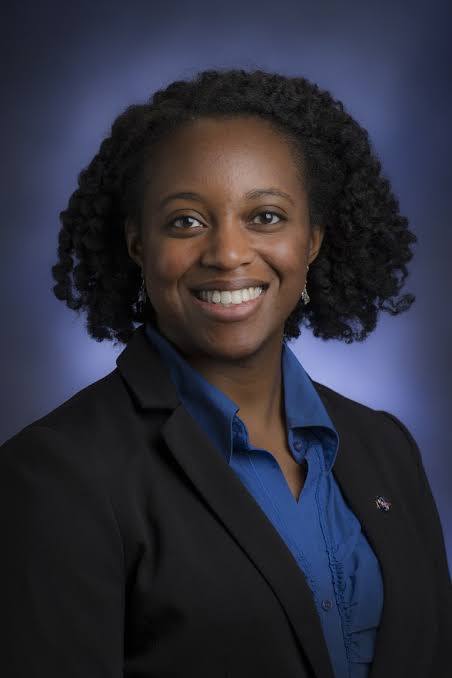
Yolanda Shea is the recipient of an American Meteorological Society (AMS) 2025 Scientific and Technological Activities Commission (STAC) Distinguished Scientific/Technological Accomplishment Award, bestowed by the AMS Atmospheric Radiation Committee.
The citation reads: “For exceptional contributions to the measurement of shortwave spectral radiation and leadership of CLARREO Pathfinder.” Dr. Shea is the CLARREO Pathfinder Project Scientist.
IMPACT STORIES
NASA’s Prediction of Worldwide Energy Resources (POWER) project provides solar and meteorological data from satellite observations and models to help worldwide users respond to challenges and societal needs in the areas of energy, infrastructure, and agroclimatology.

NASA POWER Helping Scientific Expeditions Sail the Oceans
Enabling more accurate energy generation forecasting for solar and wind-powered unmanned vessels used to study oceans and provide maritime security.

NASA POWER and RWDI Bring the Heat to Analyze Thermal Comfort and Efficiency
Reliable global meteorological data increases energy efficiency and improves temperature management in buildings and other spaces.

POWER Data Helping to Serve an Affordable Cup of Coffee
Maine coffee roasting company saves thousands on heating costs so you can save on your at-home brew.
MULTIMEDIA
NASA Langley is solving problems across aeronautics, space exploration, and science, enabling new technologies with multiple infusion pathways across missions and markets.
Shotout to the Moon for the Assist!
A one-of-a-kind NASA instrument, NASA Langley’s Arcstone, successfully launched to improve the quality of data from Earth-viewing sensors in orbit.
This visualization shows how Arcstone will operate to measure lunar reflectance and establish a new, improved calibration standard.