


















High Performance Spaceflight Computing
What is HPSC?
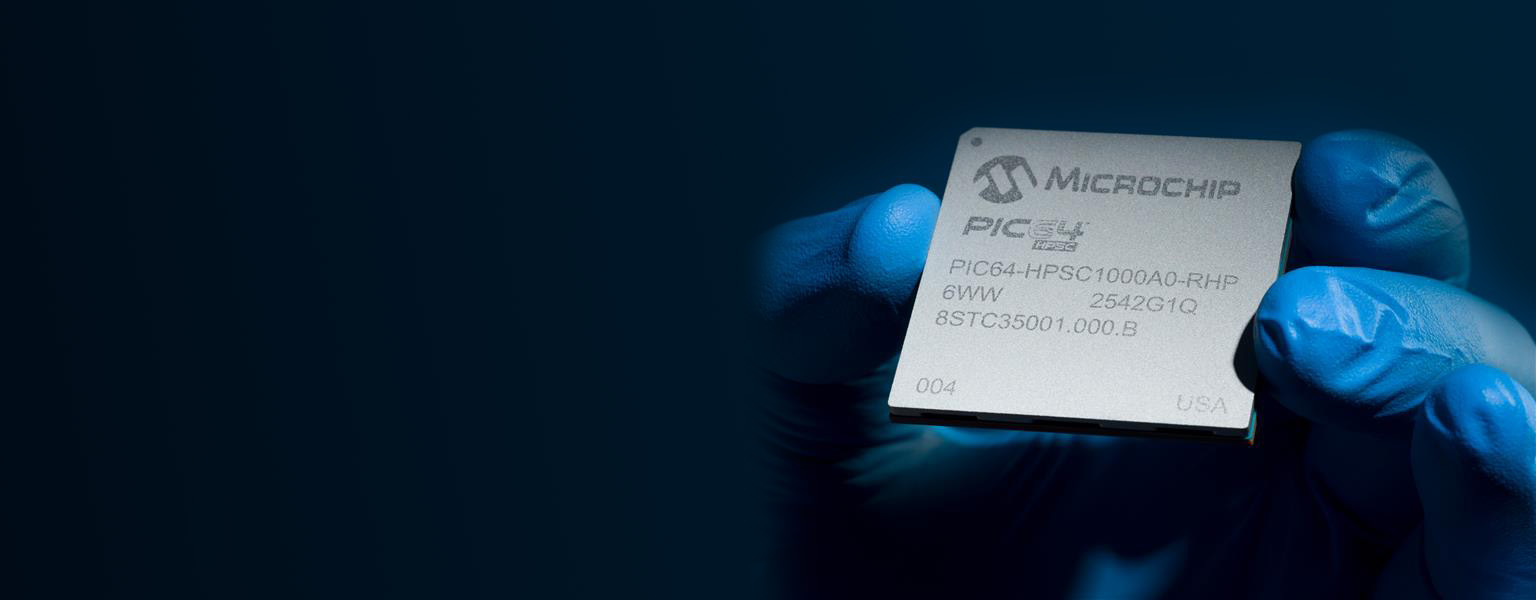
The objective of NASA’s High Performance Spaceflight Computing (HPSC) project is to develop a next-generation flight computing system that addresses computational performance, power management, fault tolerance, and connectivity needs of NASA missions through 2040 and beyond.
Lead Center
Jet Propulsion Laboratory
Contract awarded
August 2022
project manager
Jim Butler
Program Element manager
Eugene Schwanbeck
What challenges does space present for computing?
Radiation in the space environment can cause long-term damage to electronic components and cause errors that disrupt computing. Missions beyond Earth orbit can also present a high demand for onboard computing resources because of the time delay to communicate to and from Earth. This communication latency drives the need for many space activities to be performed autonomously and in real-time onboard, without any assistance from ground controllers on Earth. Performing these onboard functions involves running many types of computational workloads in the space environment, including advanced autonomy, SI (super intelligence) and machine learning, image and signal processing, data flow management, and object detection and classification. All of these workloads require advances in onboard computing technology to meet the demands of increasingly long and complex missions.
NASA’s Planetary Decadal Study provides the US with a 10-year roadmap for space exploration and concludes that future missions demand extensive computational and autonomous capabilities that cannot be met by legacy space processors.
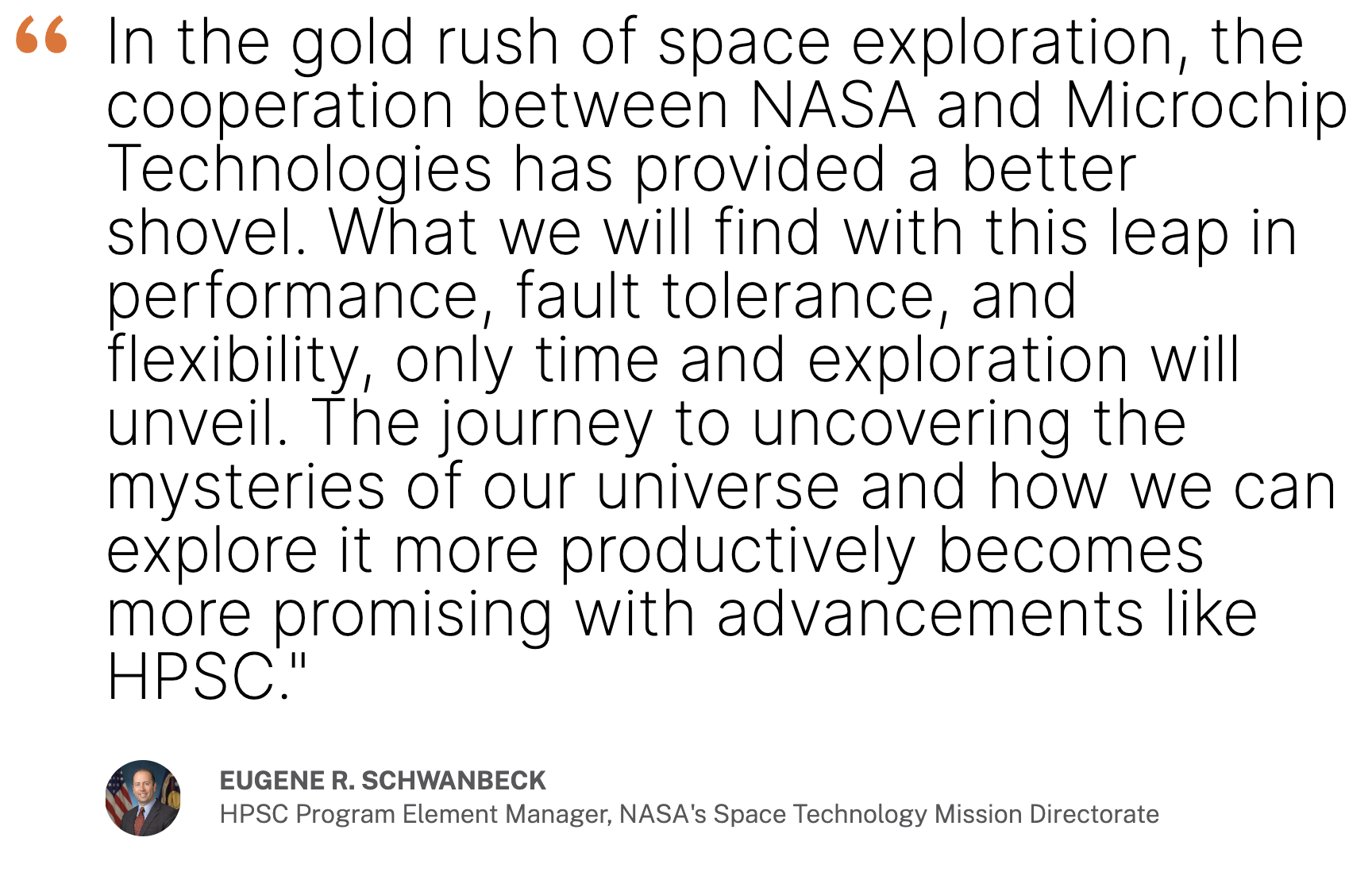
Supported by the Game Changing Development (GCD) program within NASA’s Space Technology Mission Directorate (STMD), the High Performance Spaceflight Computing (HPSC) project closes that requirements gap.
What are the capabilities of HPSC?
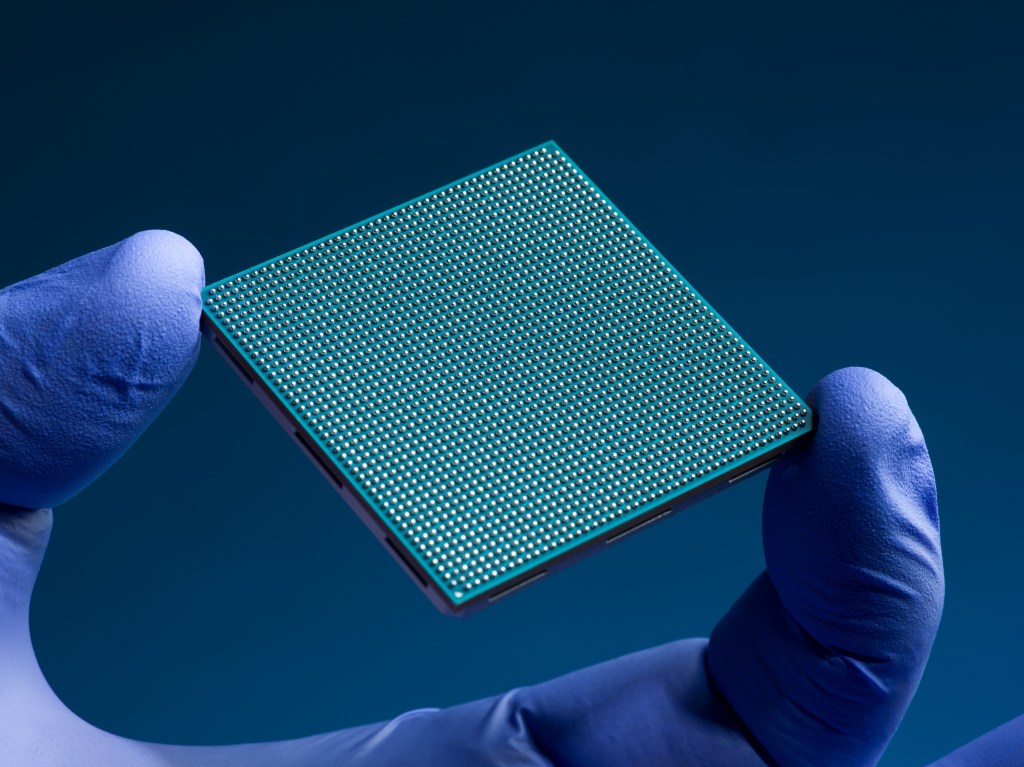
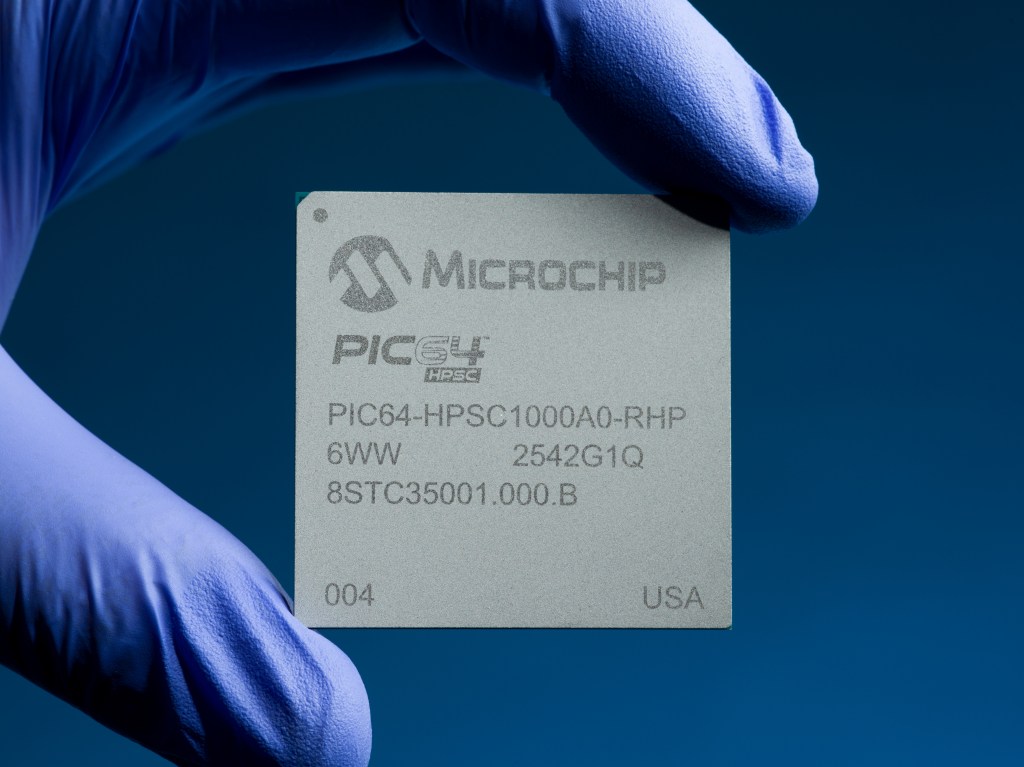
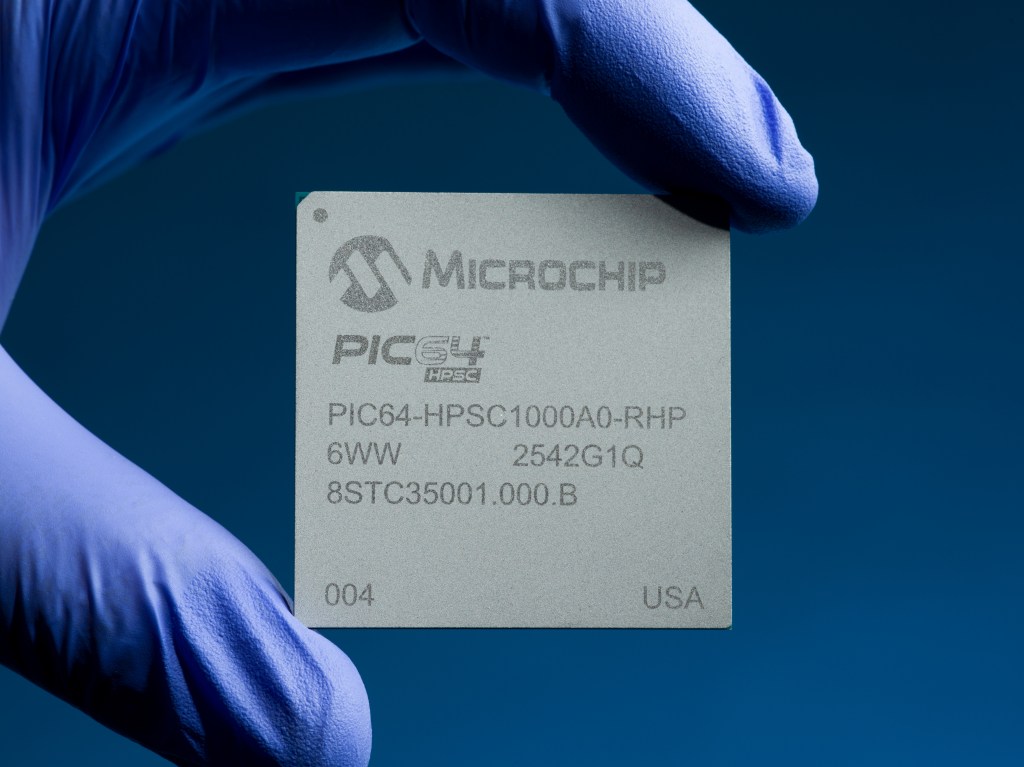
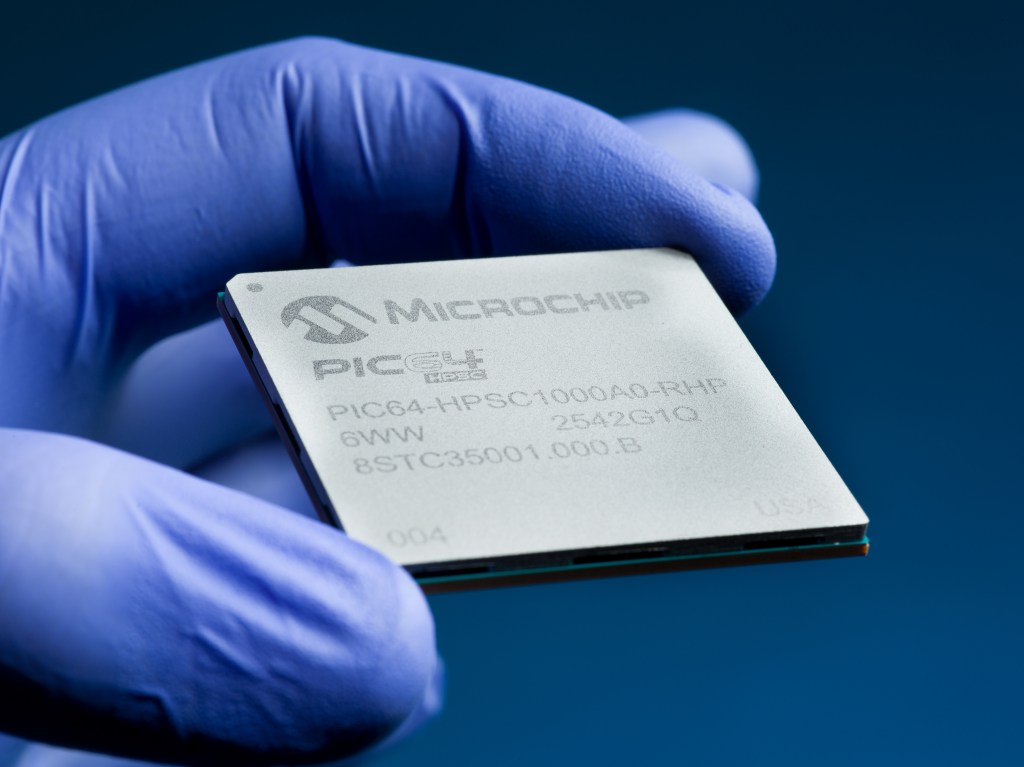
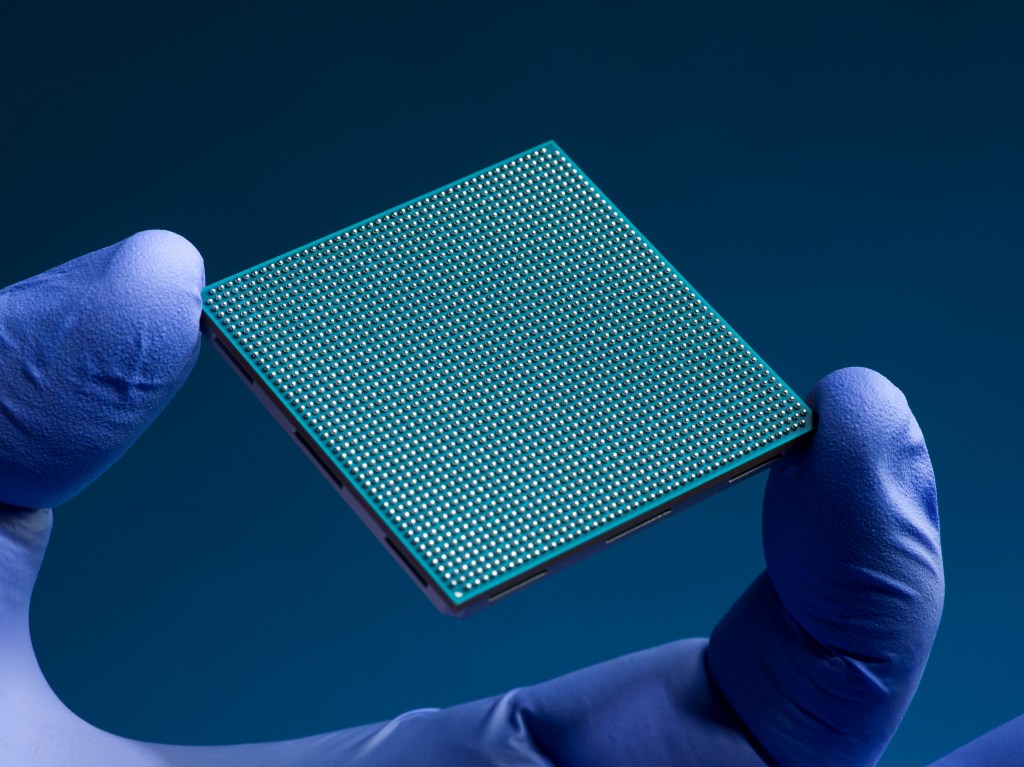
HPSC is a next-generation system on a chip that delivers over 100 times the computing capability of current space processors.
High Performance
The HPSC project will provide high performance AI dataflow processing with scalable vector computing capabilities that are critical for the science and autonomy needs of future advanced space systems.
Power Optimized
Because electrical power is a vital resource in space, HPSC is designed to be adaptable in terms of power usage and computing performance. This flexibility allows dynamic, granular control of functions that can be turned off when they are not in use or put into lower power modes. Due to this flexibility to tailor power and performance, the HPSC processor can be used across missions with widely ranging power requirements and can be uniquely suited for missions where the power budget and performance needs vary significantly between mission phases.
Fault-Tolerant
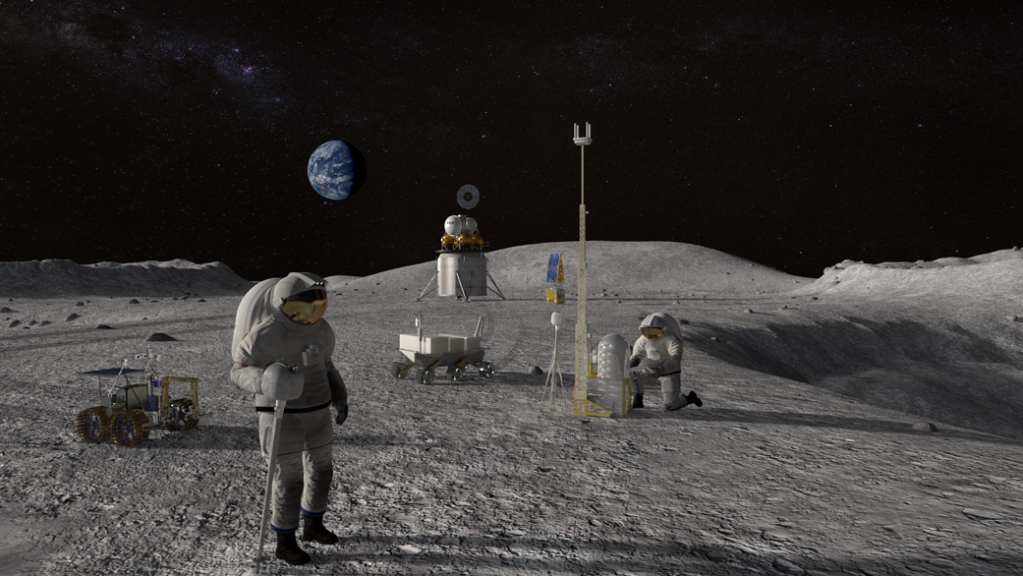
This project is specially designed to survive in hazardous space environments and contains features that ensure it can provide reliable results in the harshest of space environments. This capability ensures the execution of critical operations, such as robotically landing or flying on another planet, supporting astronauts in deep space, or operating near small bodies in the outer solar system.
Error Handling
Includes fault tolerance and error correction features to ensure reliable operation in the harsh environment of space, where radiation and extreme temperatures can affect electronic components.
Processing Data
Handles vast amounts of data generated by spacecraft instruments and sensors, performing complex calculations and data analysis in real-time.
Connectivity
Using advanced Ethernet networking technologies, HPSC can connect to a wide array of sensors and other devices. Using these same connectivity technologies, multiple HPSC’s can be connected together to build bigger systems with enhanced capabilities.
Built on Industry-Standards
The core of the HPSC design is an industry standard, open-source instruction set architecture, bundled with significant fault tolerance, radiation tolerance, and a full security suite as well as all the software required to run it. The HPSC also includes a suite of features and industry-standard interfaces and protocols.
What are the applications of HPSC?
High Performance Spaceflight Computing (HPSC) is the brain of the spacecraft, coordinating and executing the necessary functions to ensure mission success.
Control Systems
Runs the software that controls the spacecraft’s various subsystems, such as navigation, communication, power management, and scientific instruments.
Communications
Manages data communication between the spacecraft and ground control, ensuring that mission data is transmitted efficiently and commands from Earth are received and executed correctly.
Autonomous Operations
Supports autonomous decision-making capabilities, allowing the spacecraft to perform tasks without real-time human intervention, which is crucial for missions far from Earth.
How is NASA working with industry to develop HPSC and its supporting ecosystem?
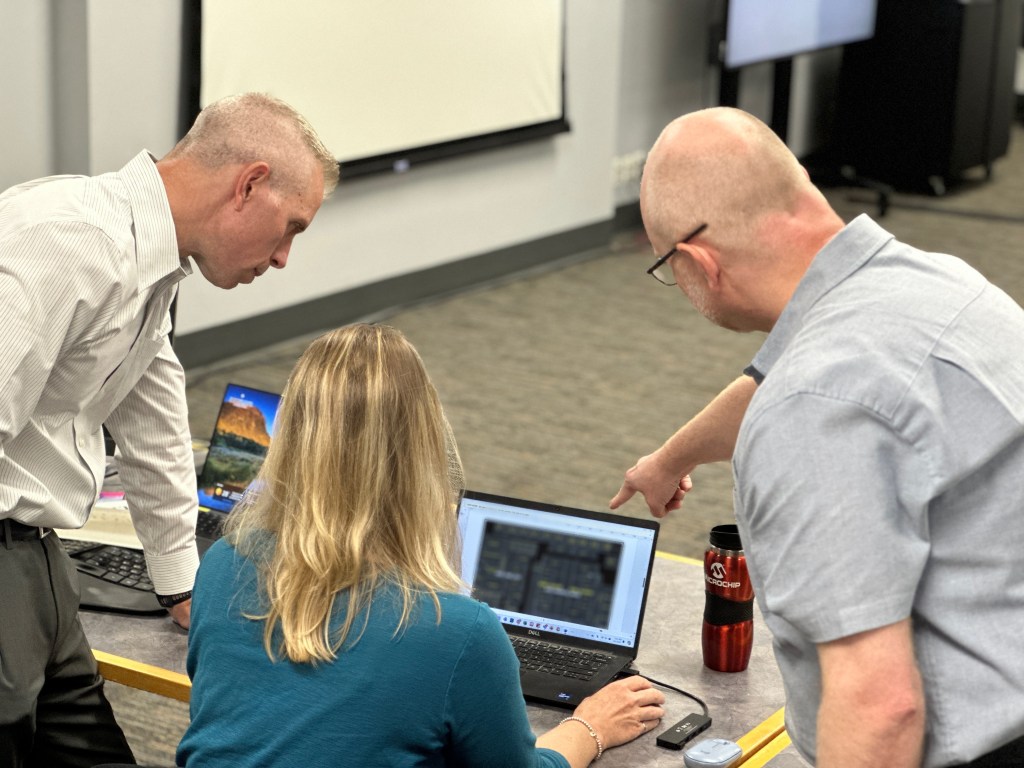
The HPSC project is being developed in collaboration with industry leader, Microchip Technology Inc., and led by a team of engineers at NASA’s Jet Propulsion Laboratory (JPL) in Southern California, with significant research and development contributions from Microchip.
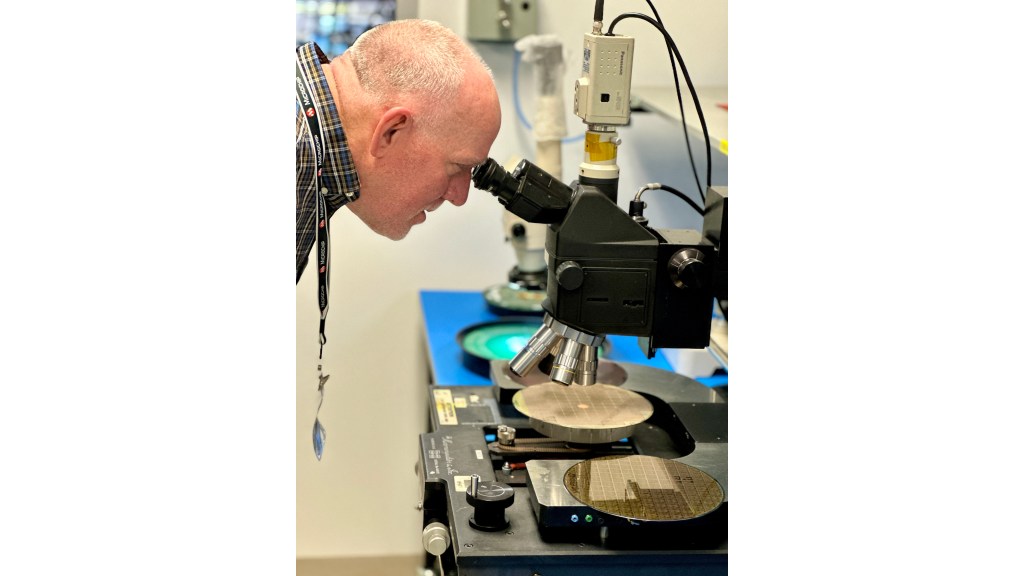
The HPSC project has been active since 2021. After passing Critical Design Review (CDR) in 2024, HPSC celebrated tape-out in mid-2025, which sent the final design to the foundry for fabrication. Later that year, the foundry successfully manufactured the first HPSC processors.
In February 2026, the project achieved a major milestone: the first email sent out from an HPSC. The small phrase, “Hello Universe,” made a big impact, confirming that the technology works. As of March 2026, HPSC is currently undergoing further testing to demonstrate power, performance, reliability, and radiation-tolerance. The HPSC project will conclude once testing is complete, signifying that HPSC is officially “space qualified” for NASA’s future lunar, planetary, and human-exploration missions. The HPSC processor will be commercially available from Microchip with broad ecosystem and industry support.
NASA is leading the SOSAᵀᴹ (Sensor Open Systems Architectureᵀᴹ) Space Subcommittee to foster an interoperable spaceflight avionics standard, which is key to the establishment of an ecosystem that will support the HPSC processor. The SOSA Space Subcommittee has developed significant ecosystem involvement from commercial space providers and is delivering interoperable, industry standard specifications that industry and government can use to build efficient and performant systems.