SLS Fact Sheets
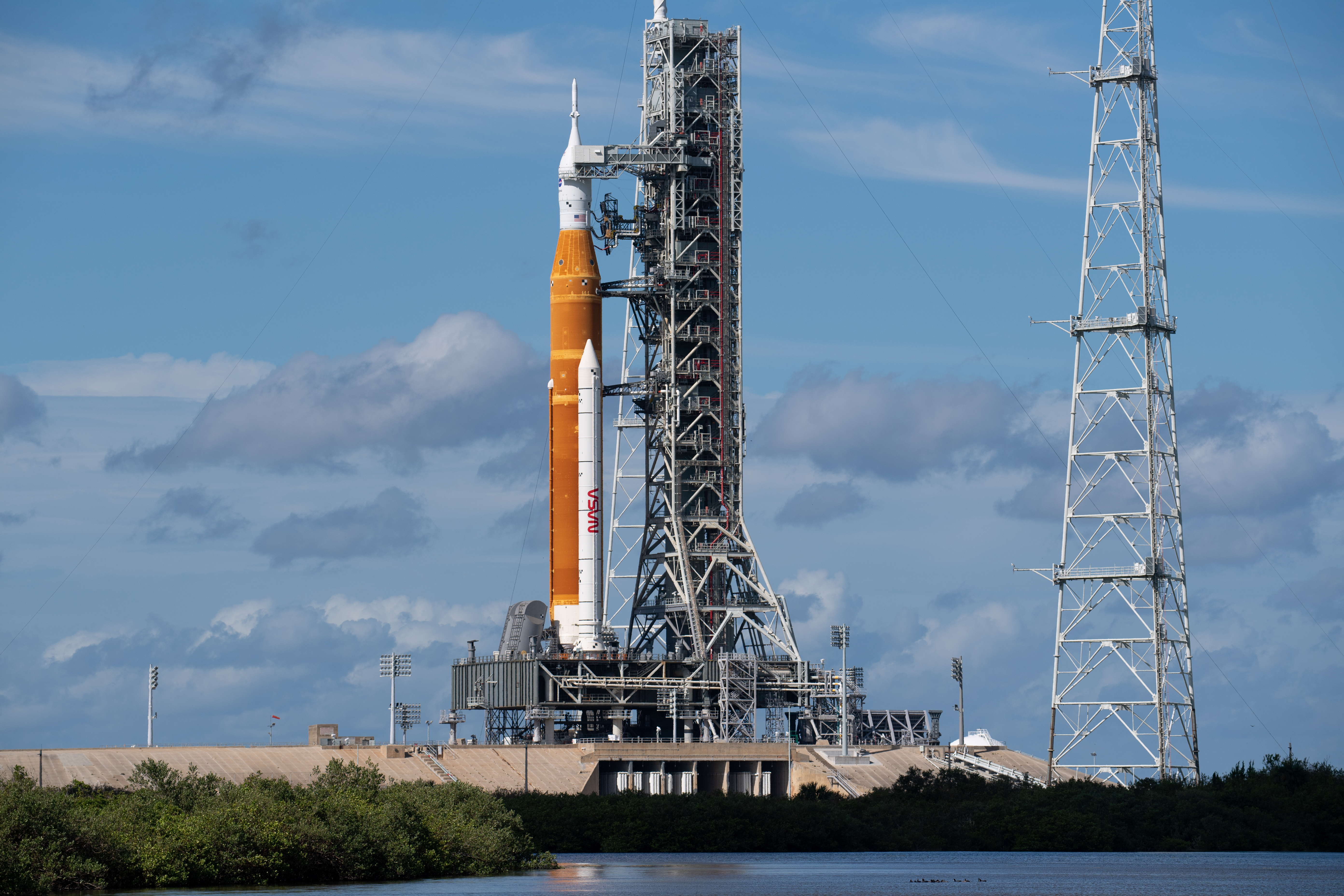
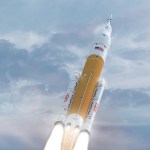
NASA’s Space Launch System, or SLS, is a powerful, advanced launch vehicle for a new era of human exploration beyond Earth’s orbit.
Learn more about the SLS mega rocket
SLS Overview Fact Sheet
NASA’s SLS (Space Launch System) is a super heavy-lift rocket that provides the foundation for human exploration beyond Earth orbit. With its unprecedented capabilities, SLS is the only rocket that can send NASA’s Orion spacecraft, four astronauts, and large cargo directly to the Moon on a single launch.
SLS (Space Launch System) Core Stage
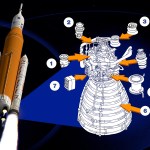
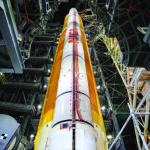
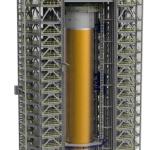
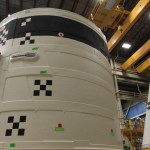
NASA’s SLS (Space Launch System) core stage is the tallest stage NASA has ever built. Towering 212 feet with a diameter of 27.6 feet, it stores cryogenic liquid hydrogen and liquid oxygen and all the systems that will feed the stage’s four RS-25 engines.
Meet the Rocket Infographic
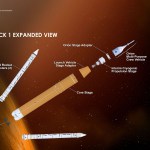
NASA’s Space Launch System (SLS), the most powerful and capable rocket NASA has ever built, will send missions farther and faster through space. SLS, along with NASA’s Orion spacecraft, the Gateway in lunar orbit and, the human landing system are the agency’s backbone for deep space exploration and the Artemis lunar program.
SLS Advances Science & Technology
NASA’s new rocket, the Space Launch System (SLS), will launch America into a new era of exploration to destinations beyond Earth’s orbit. In addition to demonstrating NASA’s new heavy-lift capability and sending the Orion spacecraft into deep space, SLS also has the capability to carry CubeSats to deep space.
SLS Avionics
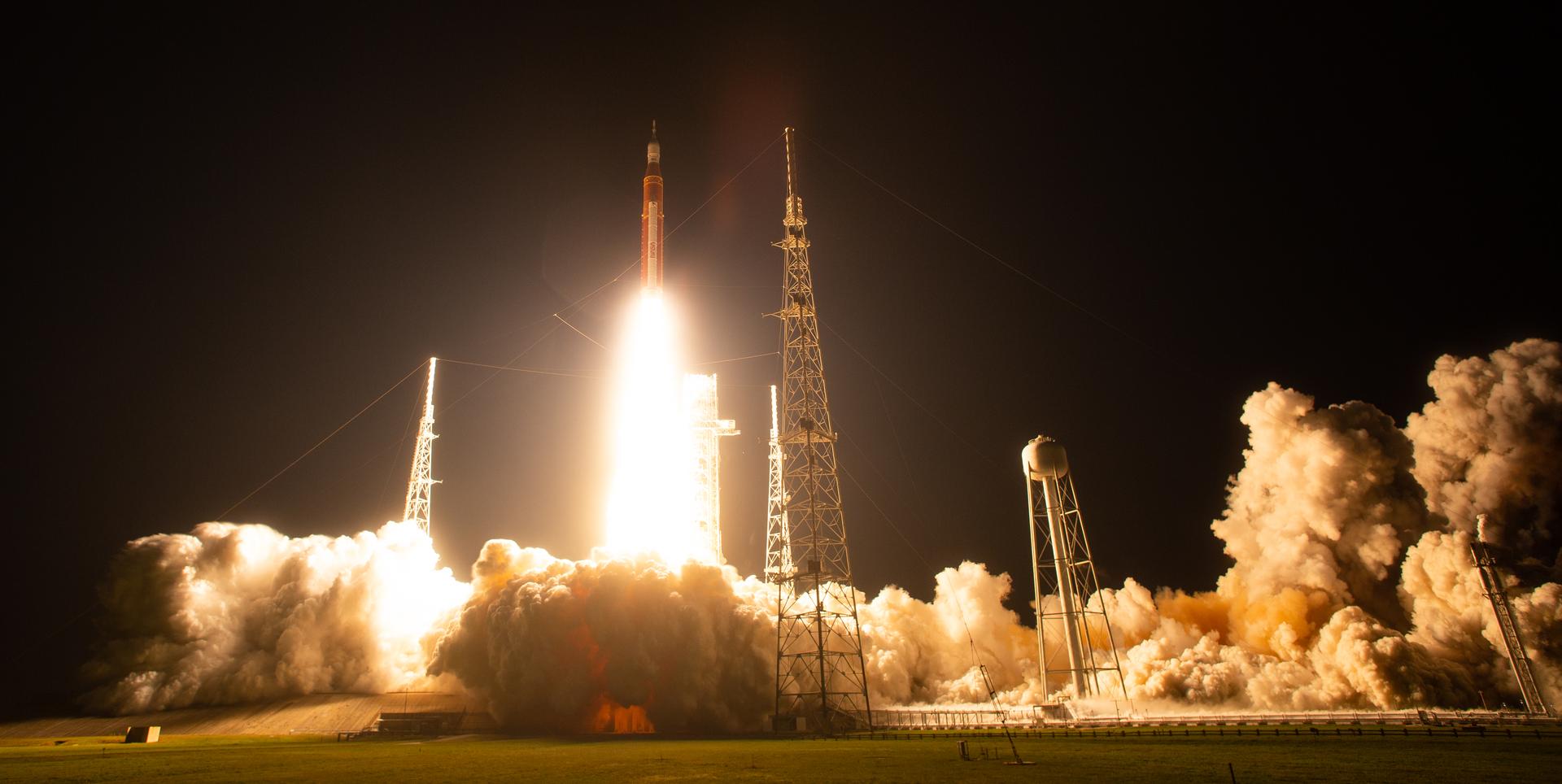
On Nov. 16, 2022, NASA’s SLS (Space Launch System) rocket launched for the first time. Lifting off the launch pad with over 8 million pounds of thrust and reaching space soaring at speeds of almost 25,000 miles per hour in just over 8 minutes requires more than power — it requires brains.
SLS Interim Cryogenic Propulsion Stage
The SLS (Space Launch System) interim cryogenic propulsion stage (ICPS) is an in-space rocket stage that provides propulsion to the Orion spacecraft during the first three Artemis missions.
SLS Exploration Upper Stage
The Exploration Upper Stage (EUS) will enable the Space Launch System (SLS) rocket’s future configurations to launch NASA’s most ambitious human and robotic deep space missions.
SLS Launch Vehicle Stage Adapter
The cone-shaped launch vehicle stage adapter (LVSA) connects the interim cryogenic propulsion stage to the SLS (Space Launch System) core stage for the first three Artemis flights.
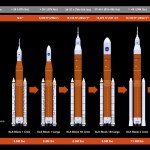
SLS Lift Capabilities
Space Launch System Lift Capabilities
SLS Orion Stage Adapter
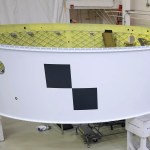
The OSA (Orion stage adapter), built by NASA’s Marshall Space Flight Center in Huntsville, Alabama, connects the SLS (Space Launch System) rocket’s interim cryogenic propulsion stage to NASA’s Orion spacecraft. The small ring structure is the topmost portion of the SLS rocket.
NASA's Pegasus Barge
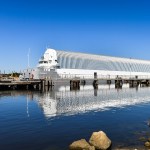
NASA’s barge, Pegasus, will ferry the massive core stage of the agency’s new rocket, the Space Launch System, on journeys from the Michoud Assembly Facility in New Orleans to other NASA centers for testing and for launches.
SLS RL10 Engine
After successfully providing the in-space propulsion to send an uncrewed Orion space- craft to the Moon on Artemis I, the storied RL10 engine is ready to reprise that role on the Artemis II and III crewed lunar missions.
SLS RS-25 Core Stage Engine
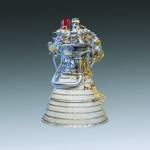
NASA’s SLS (Space Launch System), the most capable rocket in the world, is powered by RS-25 engines that combine proven performance with advanced engineering and technology. SLS will launch astronauts on the Artemis missions to the Moon and eventually expeditions to Mars
SLS Solid Rocket Boosters
The SLS booster is the largest, most powerful solid propellant booster ever built for flight.
SLS Test Stands
Two new test stands are changing both the skyline at NASA’s Marshall Space Flight Center in Huntsville, Alabama, and the future of space exploration.
Booster Fabrication Facility
The Booster Fabrication Facility (BFF) is a 45-acre site at NASA’s Kennedy Space Center in Florida, located near the Vehicle Assembly Building and the mobile launcher site.
The Great Escape: SLS Provides Power for Missions to the Moon
Getting to the Moon requires a powerful rocket ship to accelerate a spacecraft fast enough to overcome the pull of Earth’s gravity and set it on a precise trajectory to its destination.
SLS Block 1B
NASA’s SLS (Space Launch System) is the primary crew transportation to the Moon for the agency’s Artemis campaign. SLS Block 1B is a more powerful and versatile upgrade of the Block 1 variant that successfully launched the Artemis I uncrewed test flight to the Moon in November 2022.
Secondary Payloads
of exploration to destinations beyond Earth’s orbit with the successful launch of Artemis I in November 2022. In addition to demonstrating NASA’s heavy-lift capability and sending the Orion spacecraft into deep space, SLS also has the ability to carry CubeSats to deep space.