





Significant announcements:
- 1-6 October 2019. Diana Gentry (ARC-SGE) and David Smith (ARC-SCR), the co-directors of the Ames Aerobiology Lab, have been invited via Dr. Adriana Ocampo’s office at NASA HQ to attend the Venera-D Landing Sites and Cloud Habitability Workshop in Moscow, Russia.
The Venera-D mission concept has been under development for four years, with the goal of advancing the investigation of Venus’ atmosphere, surface, and interior and the processes that link them as a system. The workshop will be held on 2-5 October 2019 at the Russian Space Research Institute (IKI), Moscow, to gather community input on the criteria for scientifically desirable landing sites at Venus for the Venera-D lander and methods that can advance our understanding of Venus’ habitability, present and past. Dr. Gentry and Dr. Smith will be sharing their expertise on life and biochemistry in terrestrial clouds, including methods for sampling and detection technologies.
Link: https://www.hou.usra.edu/meetings/venera-d2019/
September 25, 2019
- 23 – 25 September 2019: The NASA Terrestrial Ecology (TE) Science Team Meeting (STM) was held in College Park, MD. The purpose of this meeting was to bring together project leads, team members, and students of past and recently funded NASA TE projects. These projects are funded through NASA solicitations such as Terrestrial Ecology, Carbon Monitoring System (CMS), Interdisciplinary Science (IDS), Carbon Cycle Science (CCS), and other related programs. Over 170 participants from numerous government agencies, universities, and private research organizations were in attendance and a full participant list can be found here: https://cce-datasharing.gsfc.nasa.gov/conferences/participants/17/h/0
In attendance from NASA Headquarters (HQ) were Program Managers Hank Margolis, Ken Jucks, Michael Falkowski, and Kathy Hibbard. Matt Johnson (Biospheric Science Branch) attended on behalf of Ames Earth Science.
The meeting was designed with the following objectives: Address issues/opportunities within the NASA TE Program, Gather community input on future directions for the program, Review recent scientific accomplishments and milestones.
-
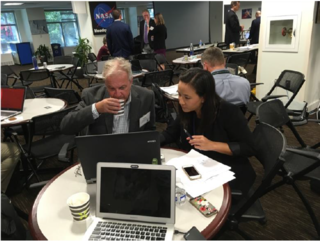
Designated Observables Annual Review, 24-25 Sep 2019, Washington, DC — Ryan Spackman, Ian Brosnan, Scott Horner (Code RE), and Anh Nguyen (Code RS) attended the Designated Observables Annual Review at NASA HQ. This review is the first milestone for four Earth Science Decadal Survey satellite missions engaged in pre-Phase A studies. Staff from Ames’ Science, Exploration Technology, and Engineering Directorates are providing leadership and support on each of the study teams and were recognized by the study leads to their unique contributions.
-
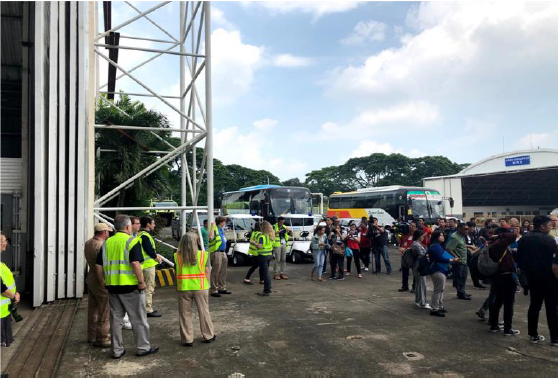
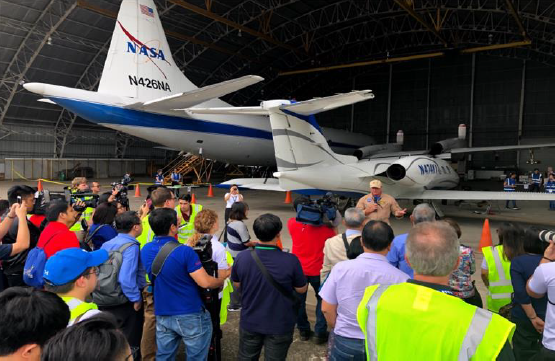
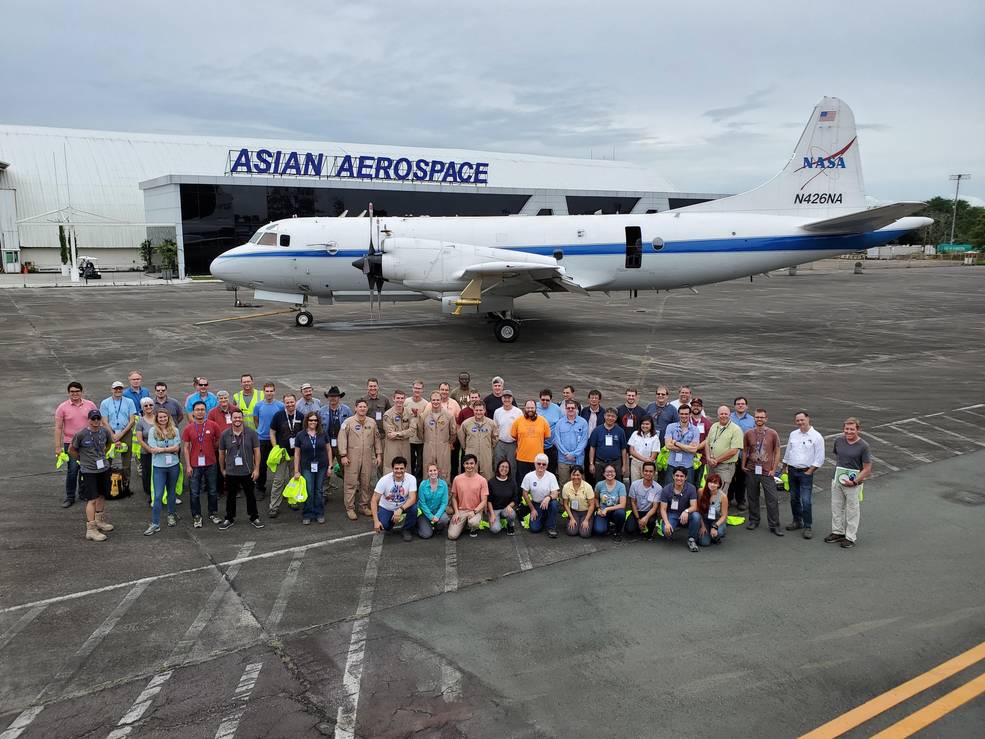
CAMP2Ex (Cloud, Aerosol, Monsoonal Processes – Philippines Experiment) – Science flights on the NASA P-3B are ongoing. Thirteen flights have been completed through 24 September 2019. Media Day on 23 September 2019 was a great success. Approximately 70 VIPs, Embassy personnel and media attended. The local media youtube story by PTV is available at https://m.youtube.com/watch?v=2ZWDICGyBWA
- 24-25 September 2019. Ved Chirayath and the Laboratory for Advanced Sensing hosted a workshop at Ames to collaborate on improving seagrass habitat characterization globally. Seagrasses and Neural Networks Workshop
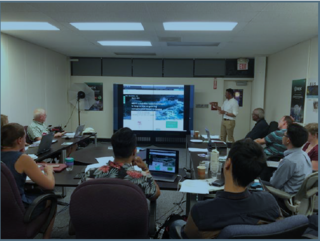
The workshop covered the challenges, requirements and preliminary results of using machine and deep learning to track changes in these ecosystems autonomously and at a larger scale than current methods. This workshop is part of the NeMO-Net project, which aims to create a global dataset of classified aquatic ecosystems.
Link: http://www.nemonet.info
- Donald Sullivan is attending the 11th International Symposium on Digital Earth (ISDE 11) in Florence, Italy. He will be presenting on 25 September 2019: “Sensor Web Evolution – Webs of Webs for NASA Science – Focus on small Uninhabited Aerial Systems (sUAS)”
Abstract:
This paper will describe the evolution of information collection, derivation and delivery mechanisms in webs of NASA sensor webs, with a focus on recent advancements in small Uninhabited Aerial Systems (sUAS).
Sullivan will discuss the movement to “Fog Computing”, also known as Edge Computing. Fog Computing facilitates the distribution of common operations and networking between edge devices and cloud computing facilities, optimizing the production of actionable intelligence.
Link: http://www.digitalearth2019.eu
September 4, 2019
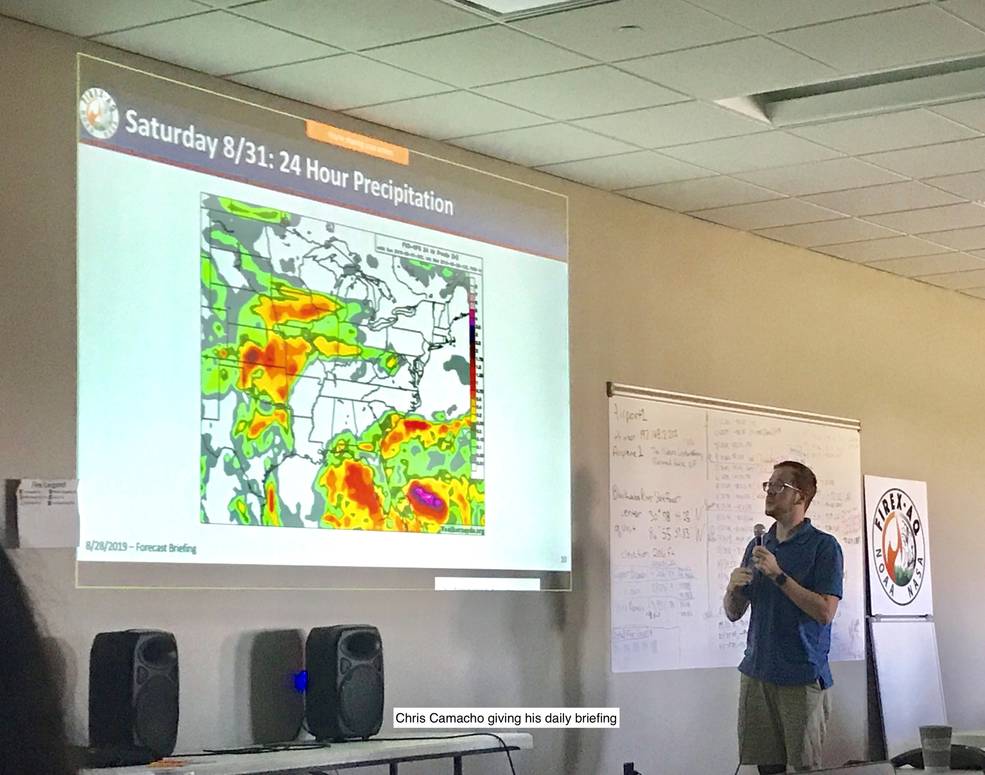
- FIREX-AQ (Fire Influence on Regional to Global Environments eXperiment– Air Quality) – The NASA DC-8 has flown 7 science flights so far from Salina, Kansas (plus 14 flights from Boise, Idaho earlier in the campaign). The DC-8 will transit back to Palmdale on 5 September 2019. Ames is providing project management on this mission in addition to operating several payloads onboard including the MODIS ASTER Airborne Simulator (MASTER), the enhanced MODIS simulator (eMAS), and the Meteorological Measurement System (MMS).
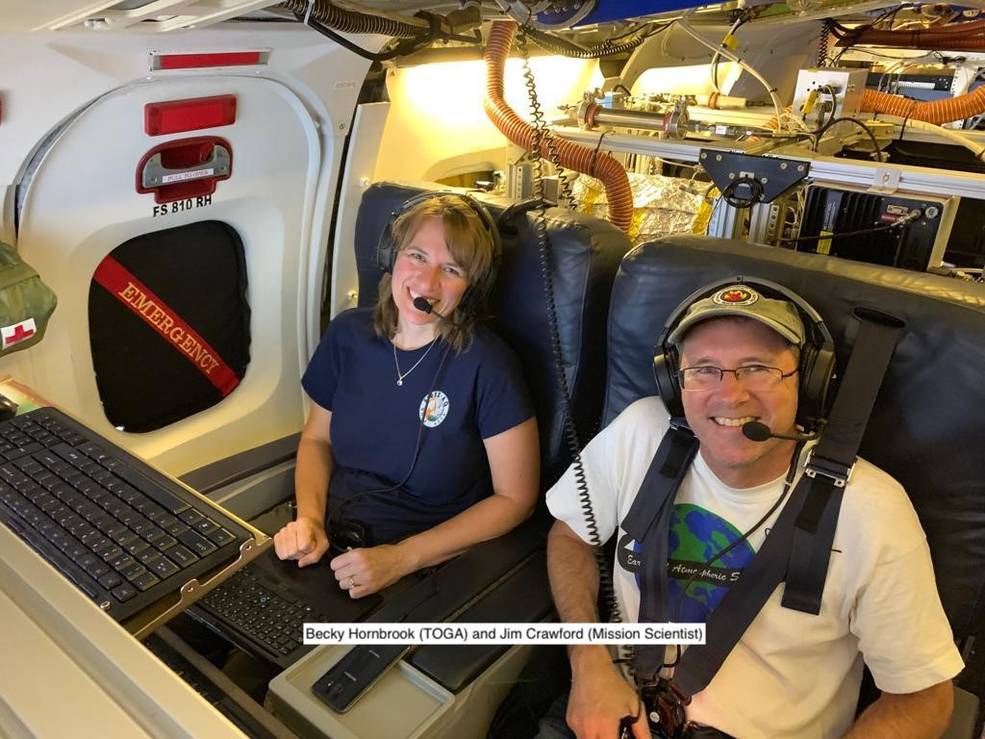
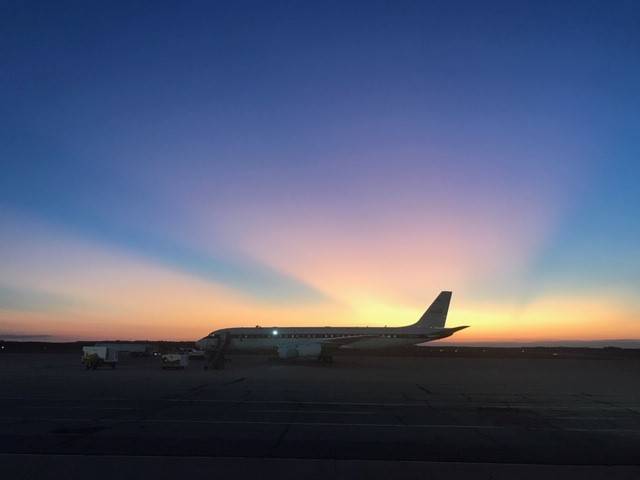
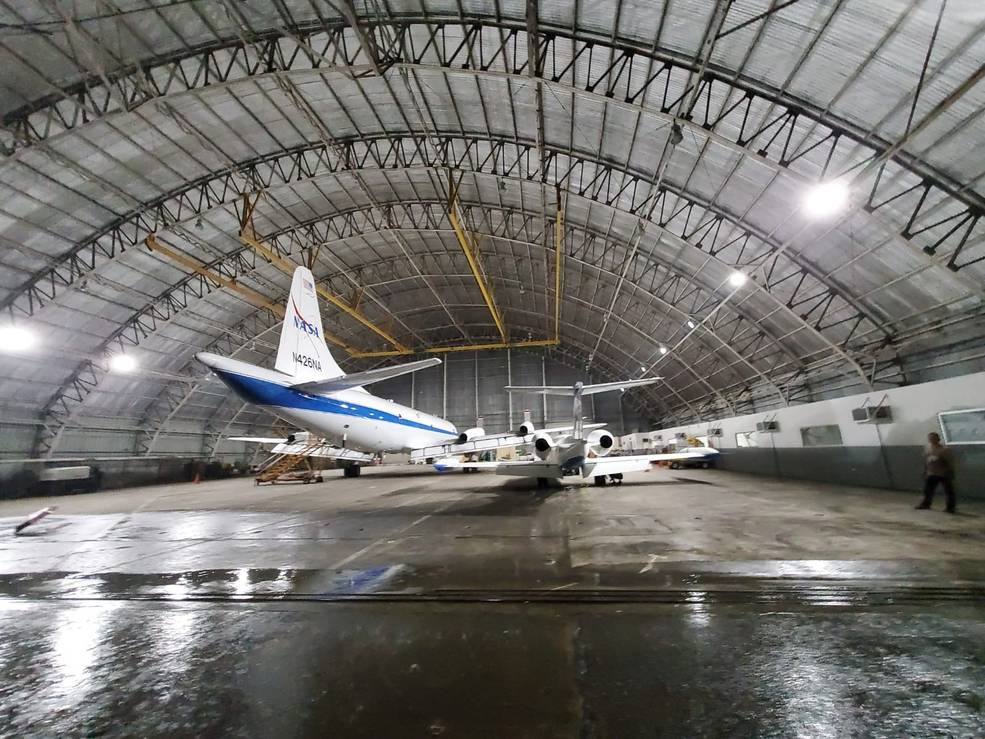
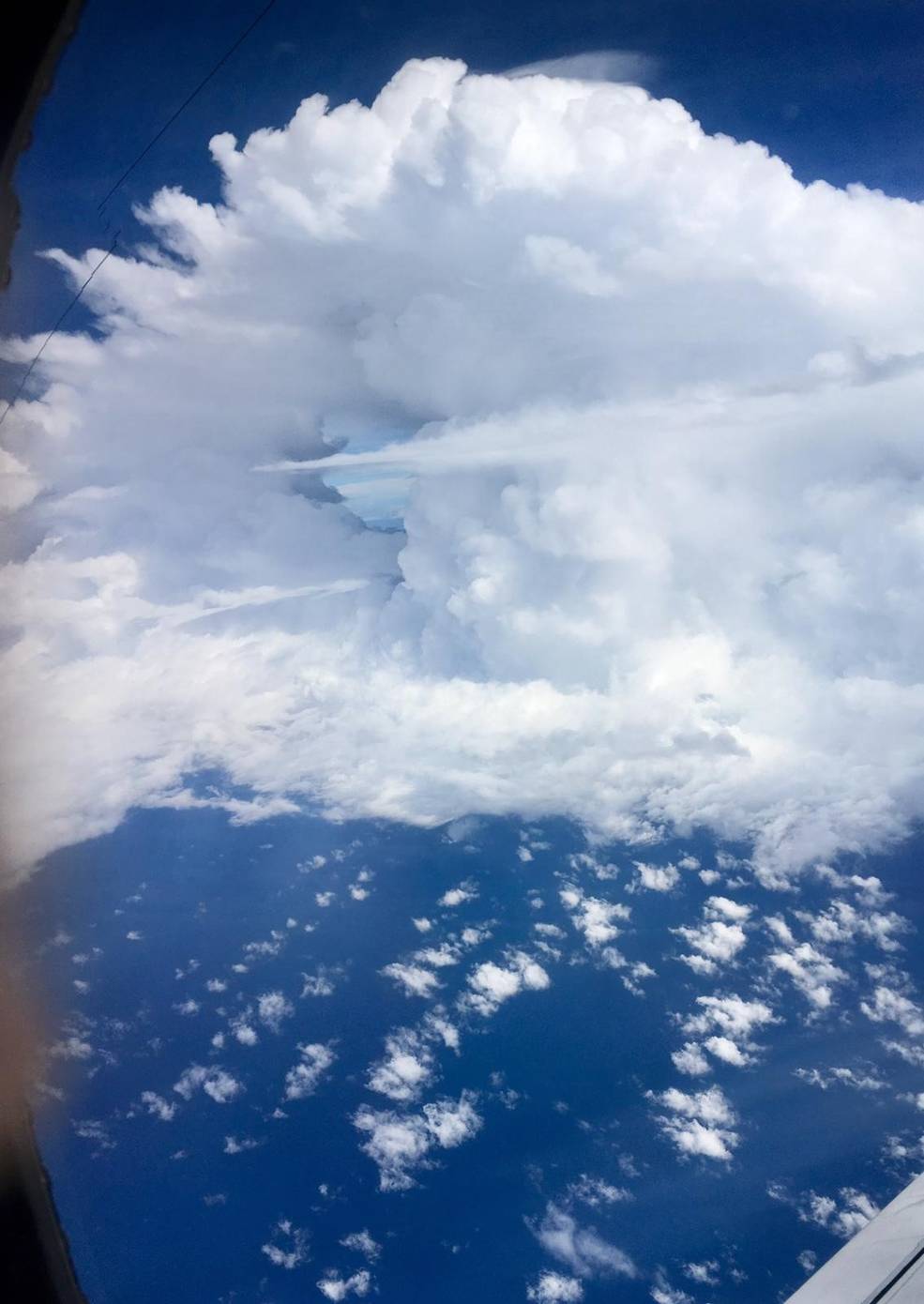
- CAMP2Ex (Cloud, Aerosol, Monsoonal Processes – Philippines Experiment) – CAMP2Ex will address the complex, inter-related physical processes between aerosols, cloud microphysics, and radiation in the tropical atmosphere often influenced by human-made pollution. The NASA P-3B has flown 4 science flights through 4 September. Media day will be 23 September 2019. The NASA Ames Earth Science Project Office (ESPO) is managing this mission.
New Publications:
- Robert Chatfield is lead author on a publication in Atmospheric Chemistry and Physics Discussions, “Satellite Mapping of PM2.5 Episodes in the Wintertime San Joaquin Valley: A ‘Static’ Model Using Column Water Vapor,” https://www.atmos-chem-phys-discuss.net/acp-2019-262/ . Co-authors are Meytar Sorek-Hamer, Robert F Esswein, and Alexei Lyapustin. This work described the usefulness of the Lyapustin’s multi-angle MAIAC retrievals from MODIS of column water vapor (CWV) along with aerosol optical depth and land-surface characterization.
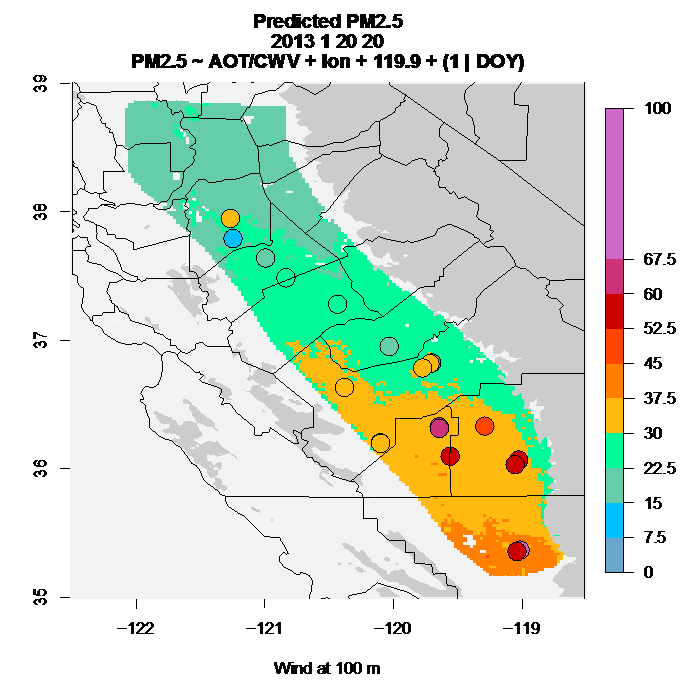
ACP D Figure 6 (panel e of a 6-panel description of the development of a high-pollution exceedance event). Estimated surface PM2.5 at 1 km indicated overpass times for the first wintertime episode in the San Joaquin Valley. Winds at 360 m agl are also shown. Estimated RMS error is 7 µg m–3 with a similar limit of detection. Filled circles show station PM2.5. The short-hand equation displayed above the map says that a useful regression dependence is found by normalizing aerosol optical thickness by column water vapor (AOT/CWV) but with a day-by-day additive calibration term that is the same for all calibration stations. Calibration stations have PM2.5 measurements, and the map spreads their information out horizontally using MODIS satellite data as a guide.
Summary
There is a great need to define health-affecting pollution by small particles that can reach the lungs, “respirable aerosol.” The San Joaquin Valley region of California, an immense internal valley in the Western United States has extremely high respirable aerosol that comes in episodes of increasing severity for periods of about a week…. This paper describes some generalizations about the sources and movement of respirable aerosol in the Valley, describes a general “clear-out” time, and makes suggestions on how to extend this statistical technique to the first days of cloudiness that come before a cleansing rain event. The authors recommend a regional approach is needed for different regions. Particulate estimation for Mediterranean (the Po Valley) and Coastal Plain regions of the Earth should profit from this San Joaquin experience.