





The Electric Propulsion and Power Laboratory (EPPL) supports research and development of spacecraft power and electric propulsion systems. The staff of EPPL have been supporting electric propulsion and power system testing for over 60 years.
Facility Overview
The Electric Propulsion and Power Laboratory (EPPL), formerly known as the Electric Propulsion Laboratory (EPL), supports research and development of spacecraft power and electric propulsion systems.
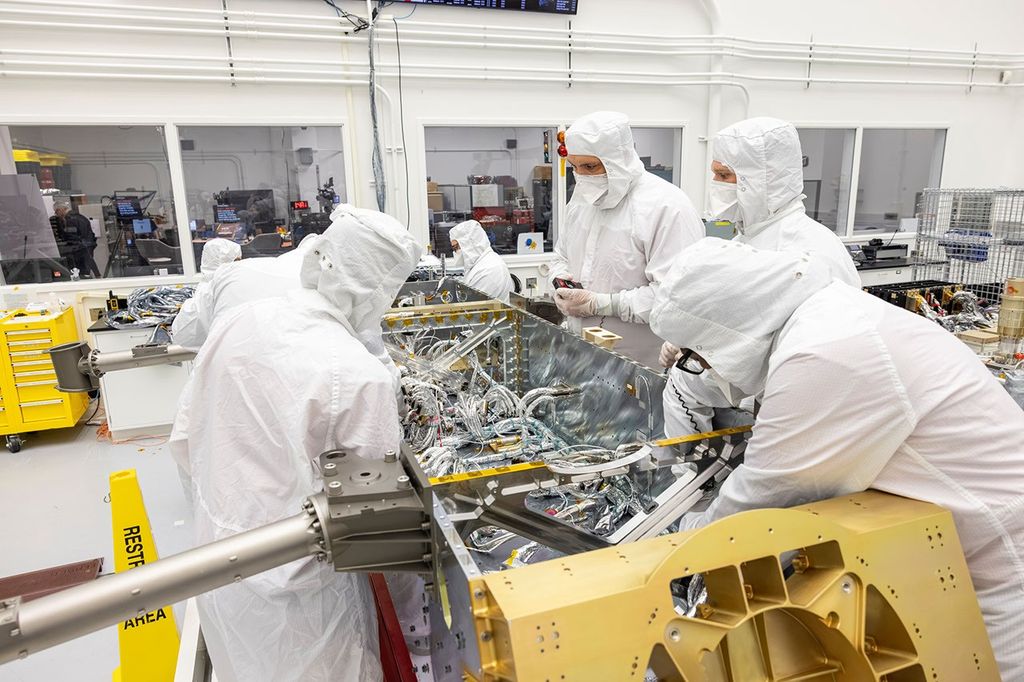
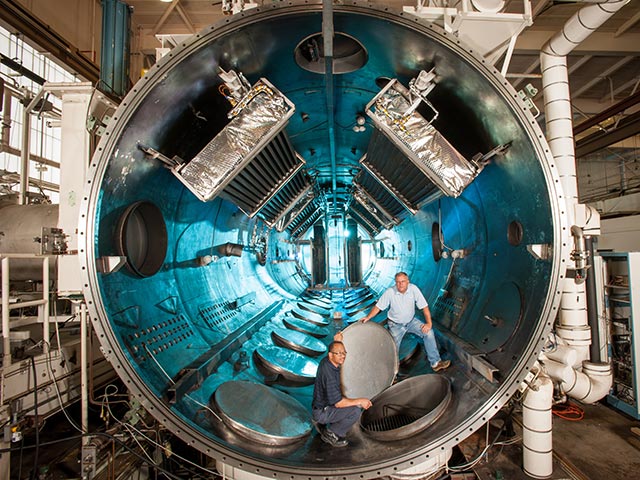
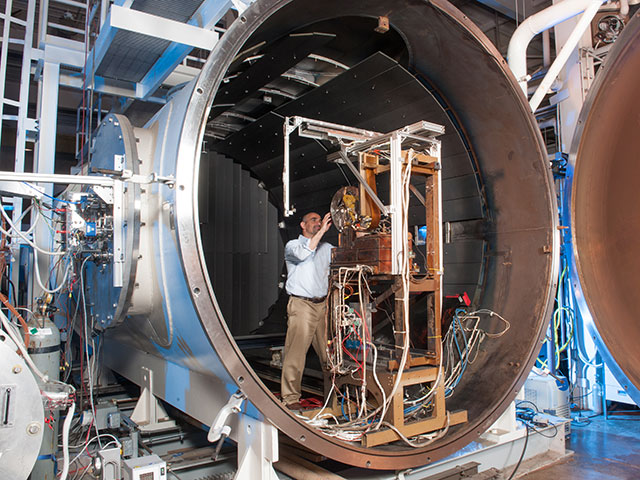
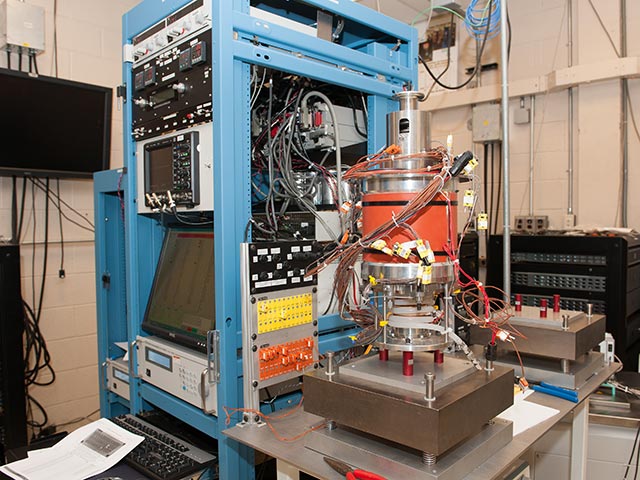
EPPL features two very large space environment simulation chambers; intermediate and smaller environment simulation chambers suitable for testing small engines or components; bell jars used for development and small-scale component testing; and support areas including an electronics shop, machine shop, clean room, and office space.
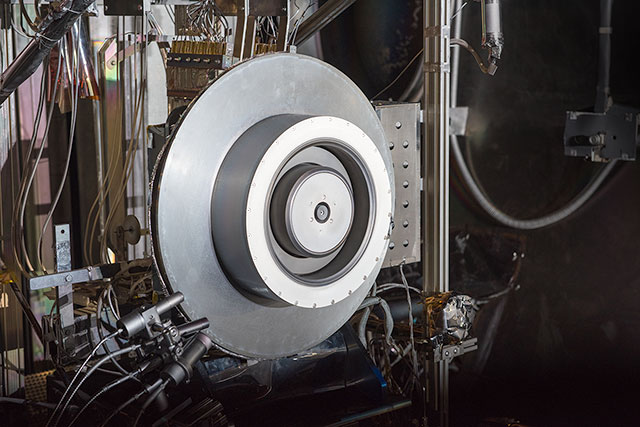
The space simulation chambers within NASA Glenn Research Center’s Electric Propulsion and Power Laboratory (EPPL) have been enhanced to support the unique requirements of electric propulsion and power system testing. VF-5 features a large-scale vacuum test environment with approximately 33.5 square meters of 6 K helium cryopanels and approximately 1.75 million liters per second pumping speed in air to support advanced in-space propulsion testing. Several chambers incorporate multiple access ports and configurable infrastructure to support efficient integration and testing of ion, Hall, and advanced electric propulsion systems. Conditioned DC power is available within VF-5, VF-6, and VF-12 to support a broad range of propulsion and power system test configurations.
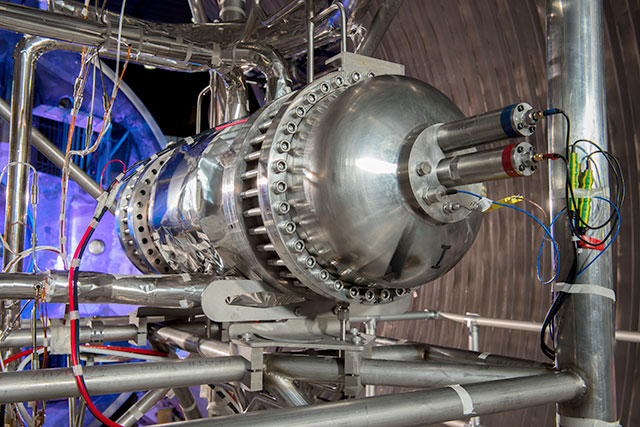
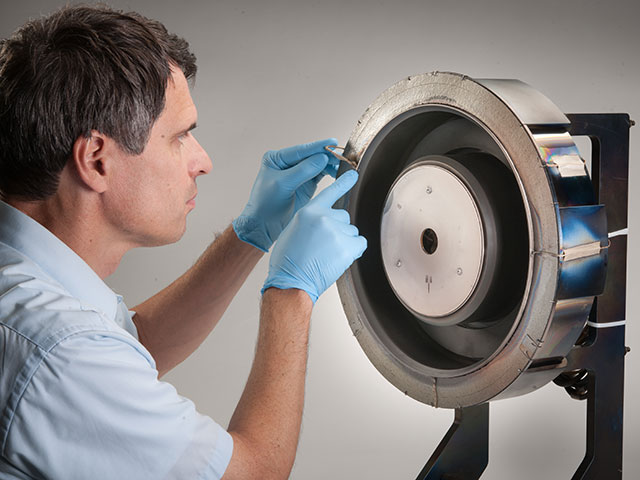
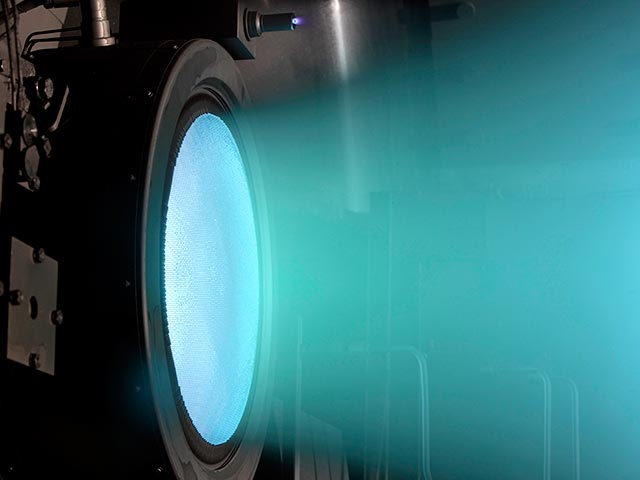
The staff of EPPL have been supporting electric propulsion and power system testing for over 60 years and have developed technology-leading techniques with precision thrust balances, thruster erosion diagnostics, plume characterization, and EMI/EMC.
Quick Facts
| Electric Propulsion and Power Laboratory | |
|---|---|
| Vacuum Facilities | VF-5 and VF-6: Very high pumping speed for electric propulsion testing Six intermediate chambers (VF-8, VF-12, VF-13, VF-17, VF-56, & VF-67) |
| Laboratory and Build-Up Area | 50,000 square feet |
- Take a virtual tour of our Electric Propulsion and Power Laboratory.
- The EPPL features space simulation chambers that have been enhanced to support the unique requirements of electric propulsion and power system testing.
- The EPPL can support all phases of propulsion or power system testing of flight-ready hardware from TRL 2–7.
- The VF–5 cryopumps 3.5 million liters of air per second with its 33.5 sq meter of 6 K helium cryopanels.
- The EPPL has supported such programs as Prometheus, Energetic, the International Space Station, and the Jupiter Icy Moon Orbiter (JIMO).
- Several of the chambers have multiple air-locked access ports that allow several tests to be run simultaneously in each chamber without cycling the chamber back to atmospheric pressure during introduction or removal of test hardware.
Capabilities
General EPPL Capabilities
- Vacuum Chambers
- Two world-class facilities (VF-5, VF-6)
- Six intermediate facilities (VF-8, VF-12, VF-13, VF-17, VF-56, VF-67)
- Multiple vacuum bell jars.
- Building Features
- 50,000 square feet of laboratory and build-up area
- 340 square feet of class 1000 Clean Room
- 15 experimental labs
- Central control room
- Machine shop
- Shared Facility Systems
- LN2supplied by a 55,000-gallon dewar
- Cooling tower water
- Closed-loop -45°C refrigeration 16 tons
- Distributed DC Power for EP Testing
- 200 KW (2000V, 100 A)
- 40KW (2000V, 20 A)
- 500KW (200V, 2500 A)
Vacuum Facility 5 (VF-5)
- High Power Electric Propulsion System Test Bed
- Dimensions
- Overall 4.6 m diameter by 18.3 m long
- Access 4 m diameter by 9 m long
- Vacuum System
- World-class pumping speed
- 700 kL/s Xenon @ 10-6 torr
- No Load Pressure 1 x 10⁻⁷torr
- Xe gaseous feed system
- Cryopumps
- 33.5 m2 of helium panel
- 750 Watts @ 20 K
- Pumping Speed: 700 kL/s Xenon @ 10-6 torr
- Temperature Range 6 K to 20 K
- Diffusion Pumps
- (20) 32-inch diffusion pumps
- 250,000 l/s air @1 X 10⁻⁶torr
- Refrigeration system cooled chevron traps
- Multiple Test Ports
- 1.8 m diameter by 2.4 m long
- (2) 0.9 m diameter by 0.9 m long
- 0.3 m diameter by 0.3 m long
- Automatic, unattended operation controls
Vacuum Facility 6 (VF-6)
- Large-scale thermal vacuum facility for power system testing and high-power electric propulsion
- Xe gaseous feed system
- Dimensions
- Overall 7.6 m diameter by 21 m long
- Access 6.7 m diameter by 18.3 m long
- Vacuum System
- Pumping speed: 310 kL/s Xenon @ 10-6 torr
- Base (No Load) Pressure: 5 x 10⁻⁷torr
- (12) 54 in nude cryopumps
- (4) 2,030-ft3/min mechanical pumps
- 3 m diameter by 3 m long test port
- Thermal Simulation
- LN2cooled shroud
- 80-kW thermal rejection
- 300 m longitudinal shroud
- 6.6 m diameter by 18 m long max access
- Divided into three segments longitudinally
- Automatic, unattended operation
Vacuum Facility 8 (VF-8)
- Low Power Electric Propulsion Testbed
- Dimensions
- Overall 1.5 m diameter by 4.5 m long
- Access 1.3 m diameter by 4.3 m long
- Vacuum System
- Pumping speed: 120,000 l/s air @10-5torr
- 4 x 10⁻⁷torr base (no load) pressure
- (4) 36-inch cryopumps
- (1) 2,400 L/s Turbomolecular pump
- Thermal Simulation
- LN2 cooled shroud
- Test Ports
- End port: 0.9 m diameter by 0.8 m long
- Side port: 0.6 m diameter by 0.6 m long
- Gaseous Feed Systems
- Nitrogen, XE
- Automatic, unattended operation
Vacuum Facility 12 (VF-12)
- Medium to High Power Electrostatic Thruster Testbed
- Xe gaseous feed system
- Dimensions
- Overall 3.0 m diameter by 9.0 m long
- Access 3.0 m diameter by 5.0 m long
- Vacuum System
- Pumping speed: 120 kL/s Xenon @ 10-6 torr
- 8.00 × 10⁻⁸ Torr base (no load) pressure
- (2) 48-inch cryotubs
- Cryopanels 350 W @20K
- Automatic, unattended operation
Vacuum Facility 13 (VF-13)
- Liquid Nitrogen Cold Shroud
- Lunar Simulant Test Bed
- Configurable Martian atmosphere simulation using multi-gas blending
- Dimensions
- Overall 1.5 m diameter by 3.5 m long
- Upper 2.75 m is removable
- Vacuum System
- Pumping speed: 10,500 l/s air at 10-6torr
- 4 x 10⁻⁷torr base (no load) pressure
- 20-inch cryopump and turbo pump
- Quick turnaround by isolating high vacuum pump system
- Thermal Simulation
- Liquid Nitrogen Cold Shroud
- Automatic, unattended operation
Vacuum Facility 17 (VF-17)
- Base Pressure (no load):
- 5 x 10⁻⁷ torr
- Dimensions
- 2.2 m long, 0.9 m diameter
- Vacuum System
- 12-inch cryopump
- Pumping speed: 1400 liters per second
- Liquid Nitrogen Cold Shroud
Vacuum Facility 56 (VF-56)
- Base Pressure (no load):
- 5 x 10⁻⁶ torr
- Dimensions
- Overall 0.9 m diameter by 0.9 m long
- Vacuum System
- Cryopump
- Pumping speed: 400 liters per second
Vacuum Facility 67 (VF-67)
- Liquid Nitrogen Cold Shroud
- Dimensions
- Overall 0.9 m diameter by 2.75 m long
- Vacuum System
- Pumping speed: 10,000 l/s air @10-6torr
- 9×10⁻⁷torr base (no load) pressure
- 20-inch cryopump
- Automatic, unattended operation
Contact
Electric Propulsion and Power Laboratory
Facility Manager: Ernest Williams
216-433-3554
Ernest.T.Williamsii@nasa.gov
Test Facility Management Branch
Acting Chief: Taylor Varouh
216-433-6347
Taylor.Varouh@nasa.gov
Using Our Facilities
NASA’s Glenn Research Center in Cleveland provides ground test facilities to industry, government, and academia. If you are considering testing in one of our facilities or would like further information about a specific facility or capability, please let us know.
Gallery

/Hubble%20Space%20Telescope%20(A).png)