





Suggested Searches

Watch the Skies

  • Saturn Shines This Week – 3 Ways to View the Planet’s Opposition

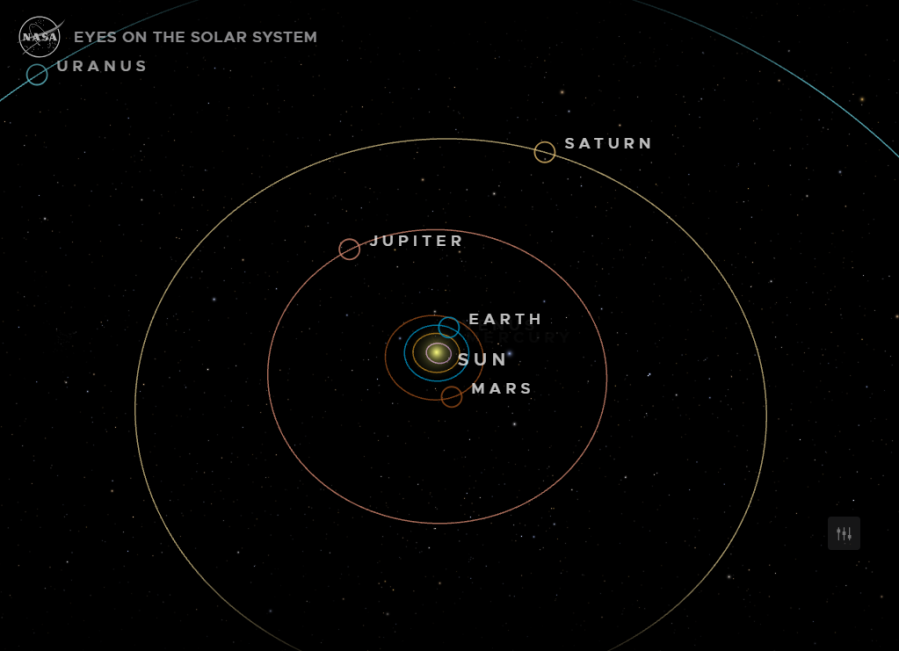
    A graph that shows how far away Saturn is from the sun via concentric circles.

    Saturn will be located directly opposite of the Sun – at opposition – on August 26-27, 2023, as the Earth orbits between the two. From our vantage point, the Sun’s illumination will allow Saturn to appear bigger and brighter in the sky in the weeks leading up to and after the opposition. In fact, Saturn …

  • Best Meteor Shower of the Year Peaks This Weekend

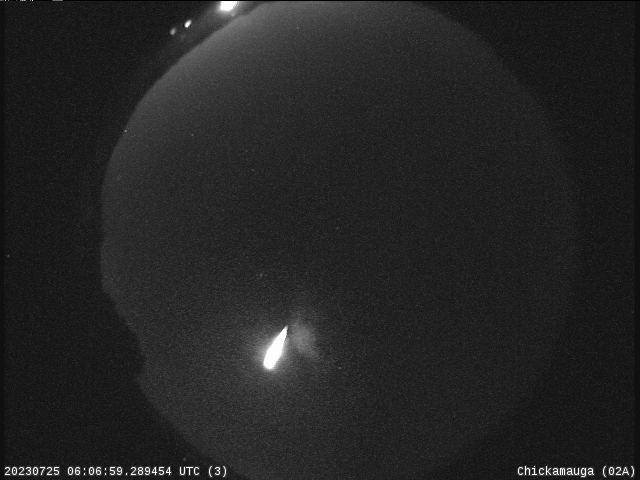
    A bright white streak is in the bottom left corner on a dark grey almost black background.

    The NASA All Sky Fireball Network is already detecting the first meteors of this year’s Perseid meteor shower! The meteor shower peaks on the night of August 12 as the Earth passes through the dustiest debris of comet Swift-Tuttle’s trails. The Perseid meteor shower is often considered to be the best meteor shower of the …

  • Venus’s Brilliance Begins July’s Celestial Celebration

    The nearly full moon rises over the city of New Orleans in a time lapse video where the headlights of cars are streaks on the road.

    Fireworks won’t be the only bright objects lighting the sky this month. The next full moon will appear on the morning of Monday, July 3, although it will seem full for up to three days. The July full moon is also called the “Full Buck Moon,” according to the Farmers’ Almanac, as this is the …

  • Welcome June with a Full Strawberry Moon and Summer Solstice

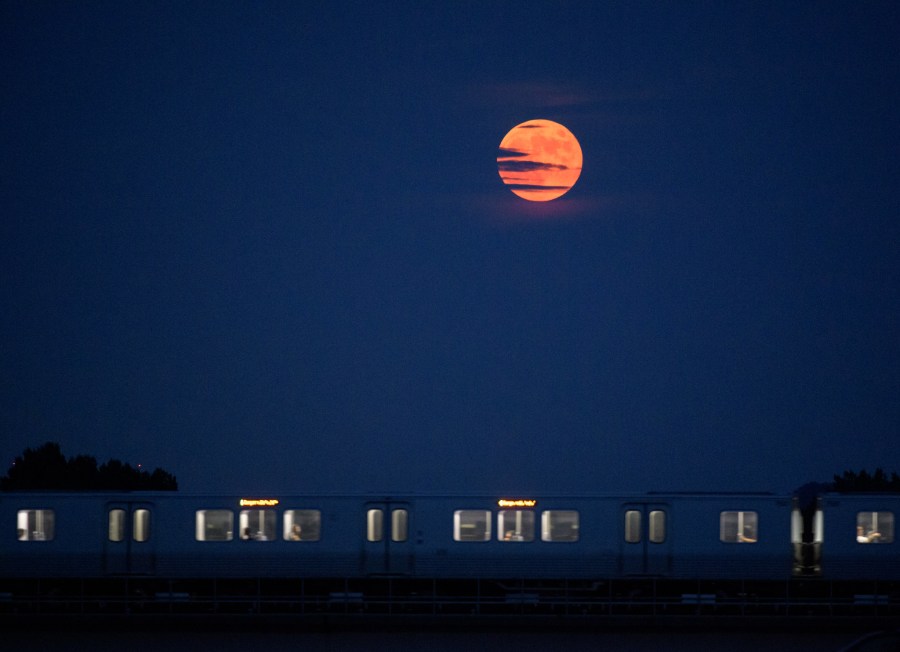
    The Moon rises as a Metrorail car crosses the Potomac river in Washington

    Sky enthusiasts, start off summer by witnessing two extraordinary celestial events in June – the Full Strawberry Moon and the summer solstice. These events hold both historical and cultural significance. The Full Strawberry Moon, depending on one’s time zone, will illuminate the night sky on June 3. Although the exact moment of full moon occurs …

  • May’s Sky Show: Top Planetary Events to Observe in May

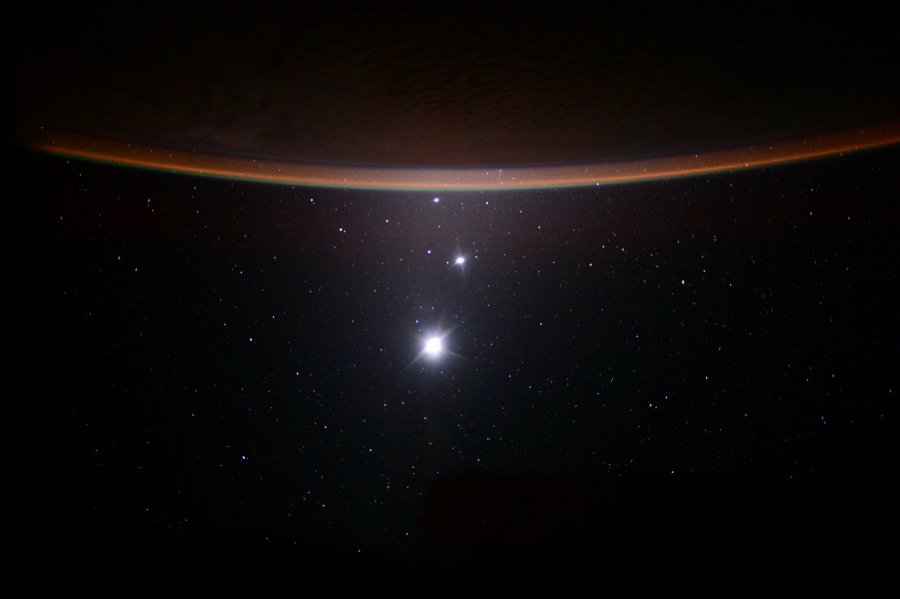
    The image reveals Earth's Moon, Venus, Jupiter, and Earth's crescent, arranged from bottom to top.

    May is a great month for stargazing with a host of celestial events happening in the morning and evening skies. On May 17, a slim crescent moon will rise about an hour before the Sun. From much of the United States and Canada, you’ll be able to see Jupiter appearing very close to the Moon. …

  • The eta Aquariid Meteor Shower Outburst to Peak the Night of May 4-5

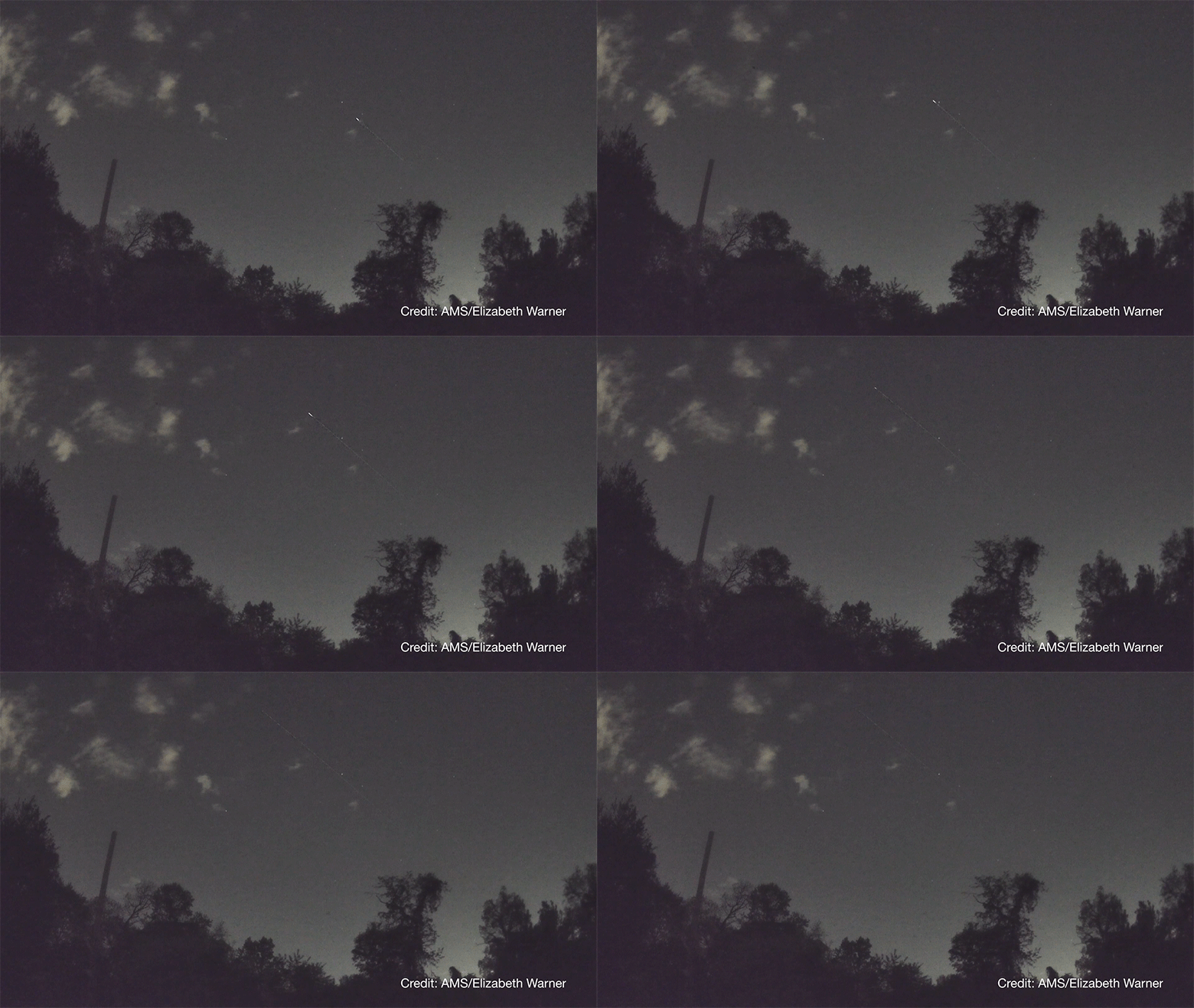
    A meteor streaks across the sky in a gif with trees in the foreground.

    The eta Aquariid meteor shower is active throughout April and May, peaking in the pre-dawn hours of May 5. This year could be particularly impressive as an outburst year with 120-160 meteors per hour expected. “A meteor shower is like a normal rain shower, with 50-60 meteors per hour,” said Bill Cooke, lead of NASA’s …

  • Heads Up! Lyrid Meteor Shower Peaks April 22-23

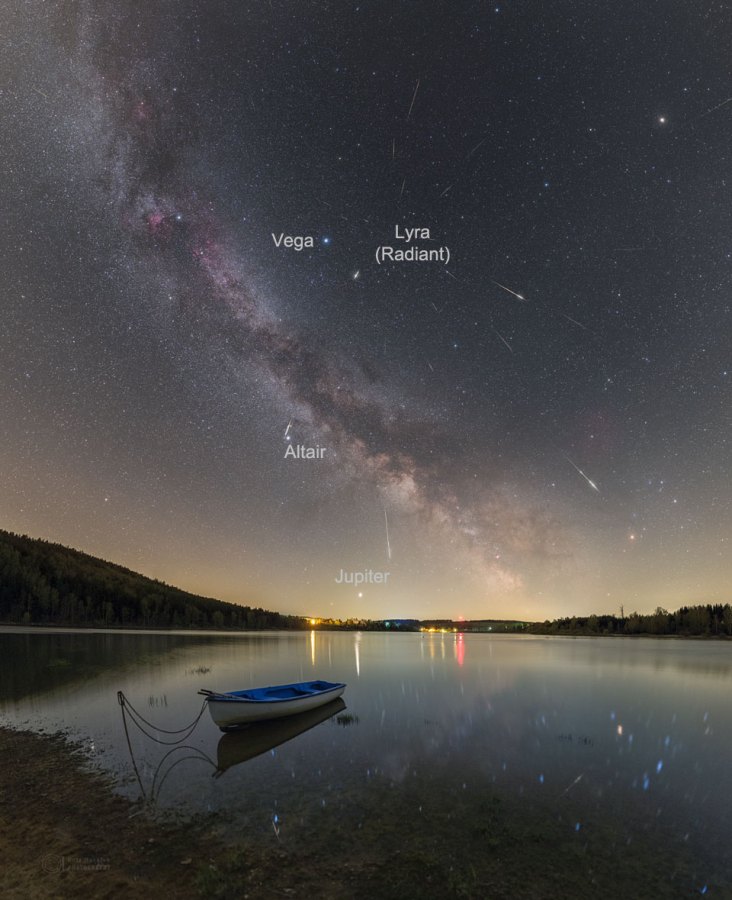
    This year’s Lyrid meteor shower will peak in the predawn hours of April 23. On average, the shower can produce up to 15 meteors per hour under ideal viewing conditions. The Lyrids occur every year in mid-April, when Earth crosses the trail of debris left by the Comet C/1861 G1 Thatcher. These bits of comet …

  • The 2022 Geminids Meteor Shower Is Approaching

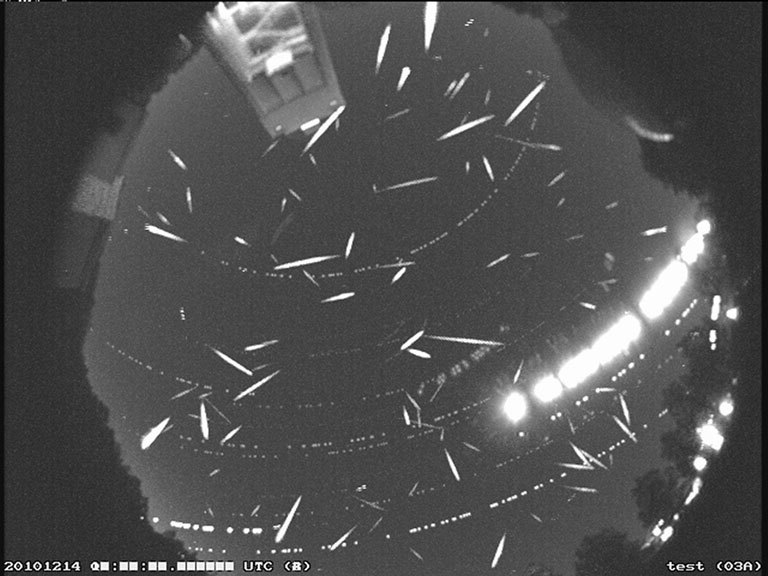
    A black circle has a series of white streaks which represent the geminid meteor shower.

    The cosmos’ annual gift to sky watchers, the Geminids Meteor shower, will peak on Dec. 13-14 this year. During peak activity and perfect weather conditions, which are rare, the Geminids produce approximately 100-150 meteors per hour for viewing. However, this year a waning gibbous moon will make it harder to view most of the shower, …

  • Last Chance to See Total Lunar Eclipse Until 2025!

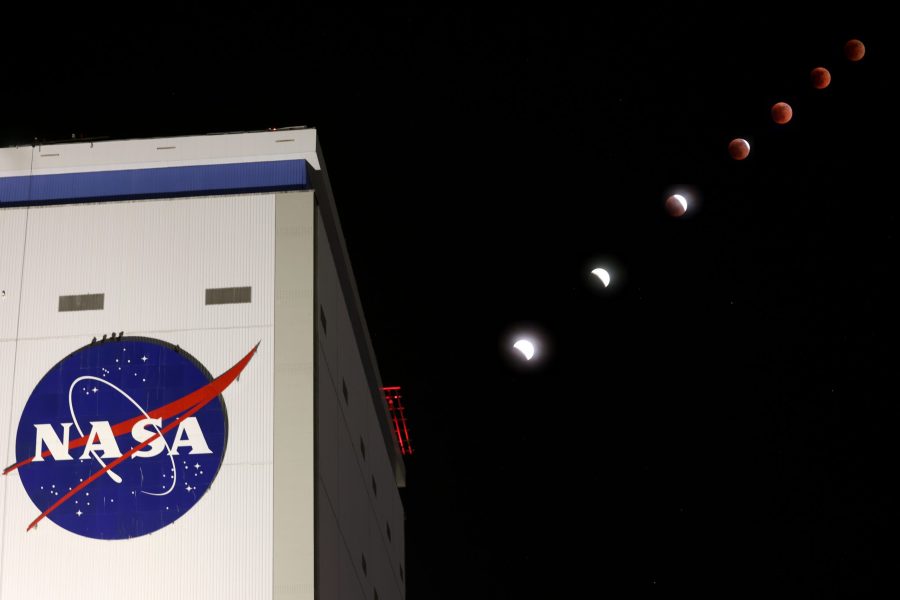
    A shot of 7 phases of a lunar eclipse with a building with the NASA logo on it in the foreground.

    For the second time in 2022, stargazers will have the opportunity to view a total lunar eclipse on Nov. 8. At least a portion of the phenomenon will be visible throughout eastern Asia, Australia, the Pacific, and North America. The previous total lunar eclipse happened in May. According to Alphonse Sterling, astrophysicist from NASA’s Marshall …

  • September Equinox Marks the Start of Fall 2022

    An illustration of the March (spring) and September (fall or autumn) equinoxes.

    Complemented by cooler temperatures and falling leaves, the September equinox marks the beginning of the fall season for the Northern Hemisphere. This year’s autumnal equinox (for the Northern Hemisphere) or spring equinox (for the Southern Hemisphere) occurs on Sept. 22 at 8:04 p.m. CDT. During an equinox the Sun shines directly over the equator resulting …