












NASA’s Exoplanet Observing Satellite Separated From Rocket
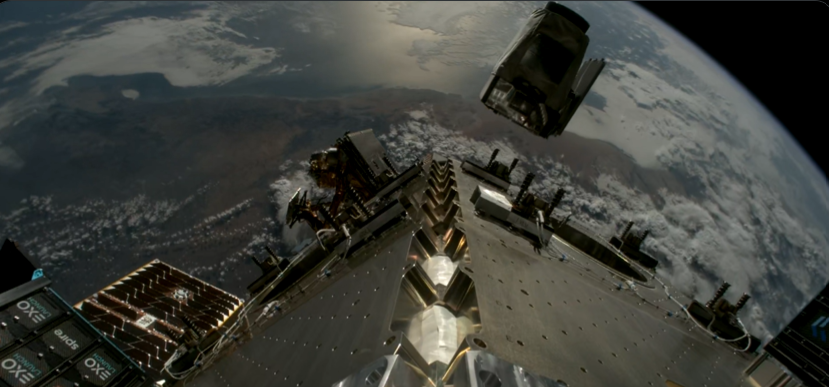
NASA’s Pandora space telescope satellite is in sun-synchronous orbit, preparing to study planets and their respective host stars beyond our solar system.
Pandora will spend the next year conducting detailed observations of 20 exoplanets to determine whether any of their atmospheres contain water vapor, hazes, and clouds. It will simultaneously study their stars to discover whether they are producing or affecting the signals of those substances.
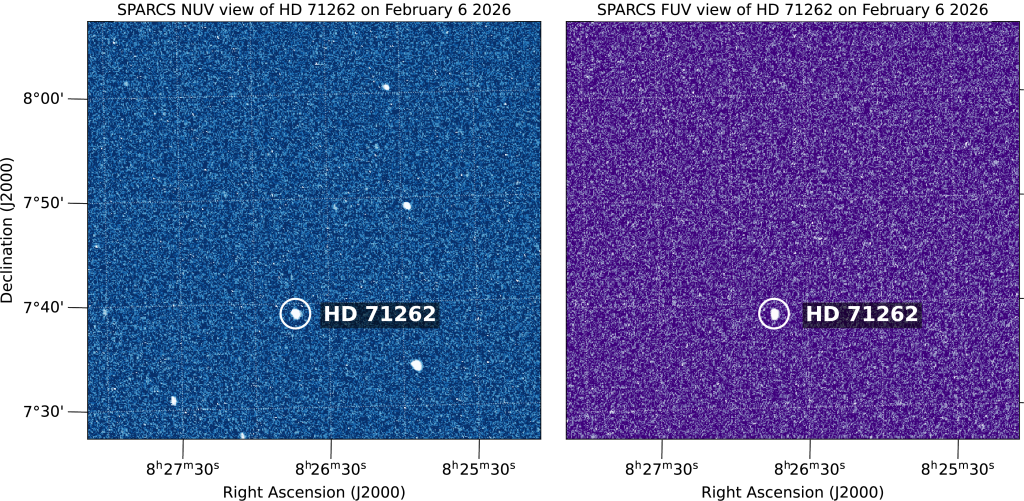
Two other NASA-sponsored CubeSats, SPARCS (Star-Planet Activity Research CubeSat) and BlackCAT (Black Hole Coded Aperture Telescope), also separated from the SpaceX Falcon 9 rocket’s second stage.
The agency’s CubeSat Launch Initiative (CSLI) selected SPARCS in 2022 for a ride to orbit. The initiative is a low-cost pathway for conducting scientific investigations and technology demonstrations in space, enabling students, teachers, and faculty to gain hands-on experience with flight hardware design, development, and building. The CubeSat is manifested as part of the Educational Launch of Nanosatellites (ELaNa) 60 launch grouping.
Confirmation of signal acquisition from Pandora is the next expected milestone.
