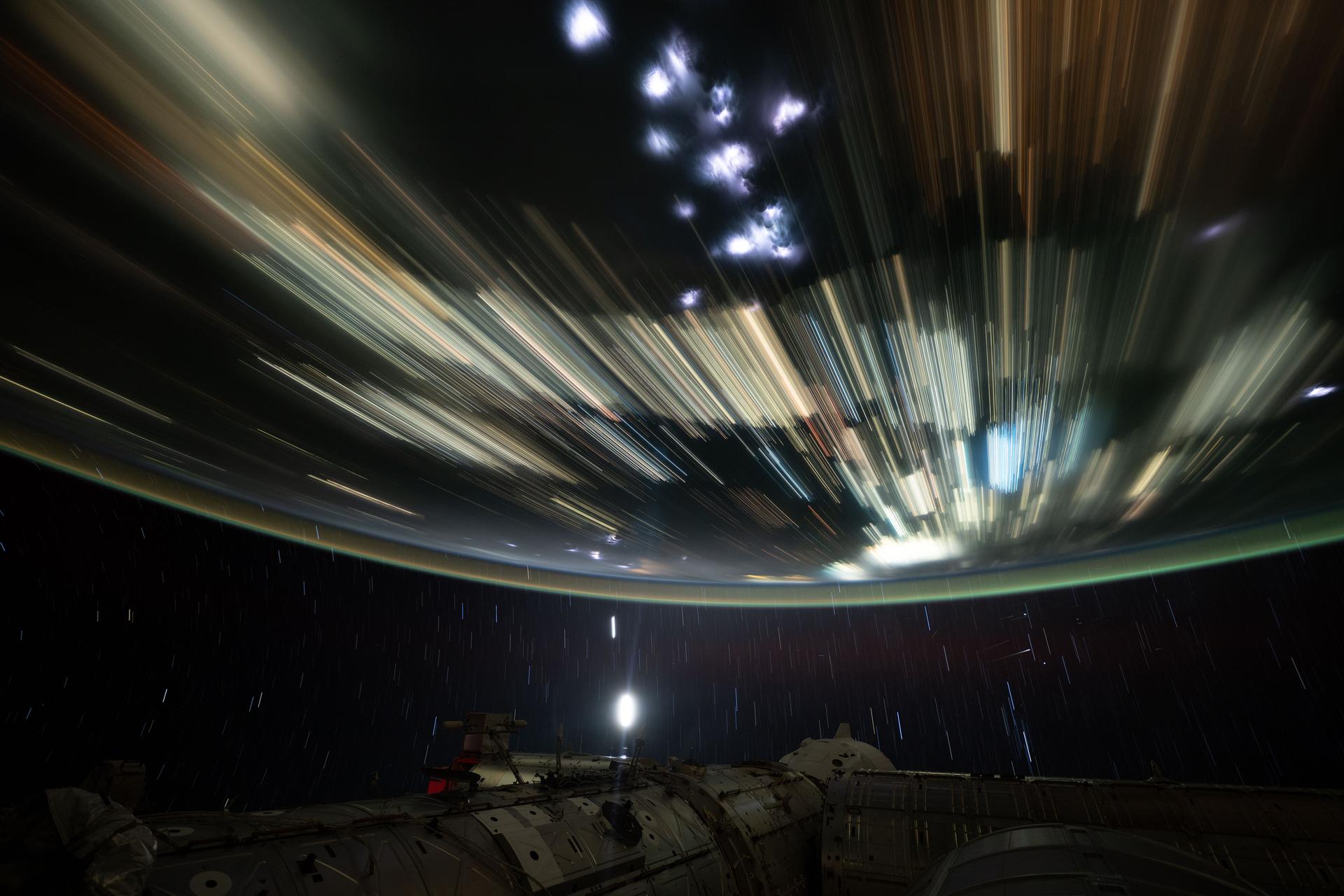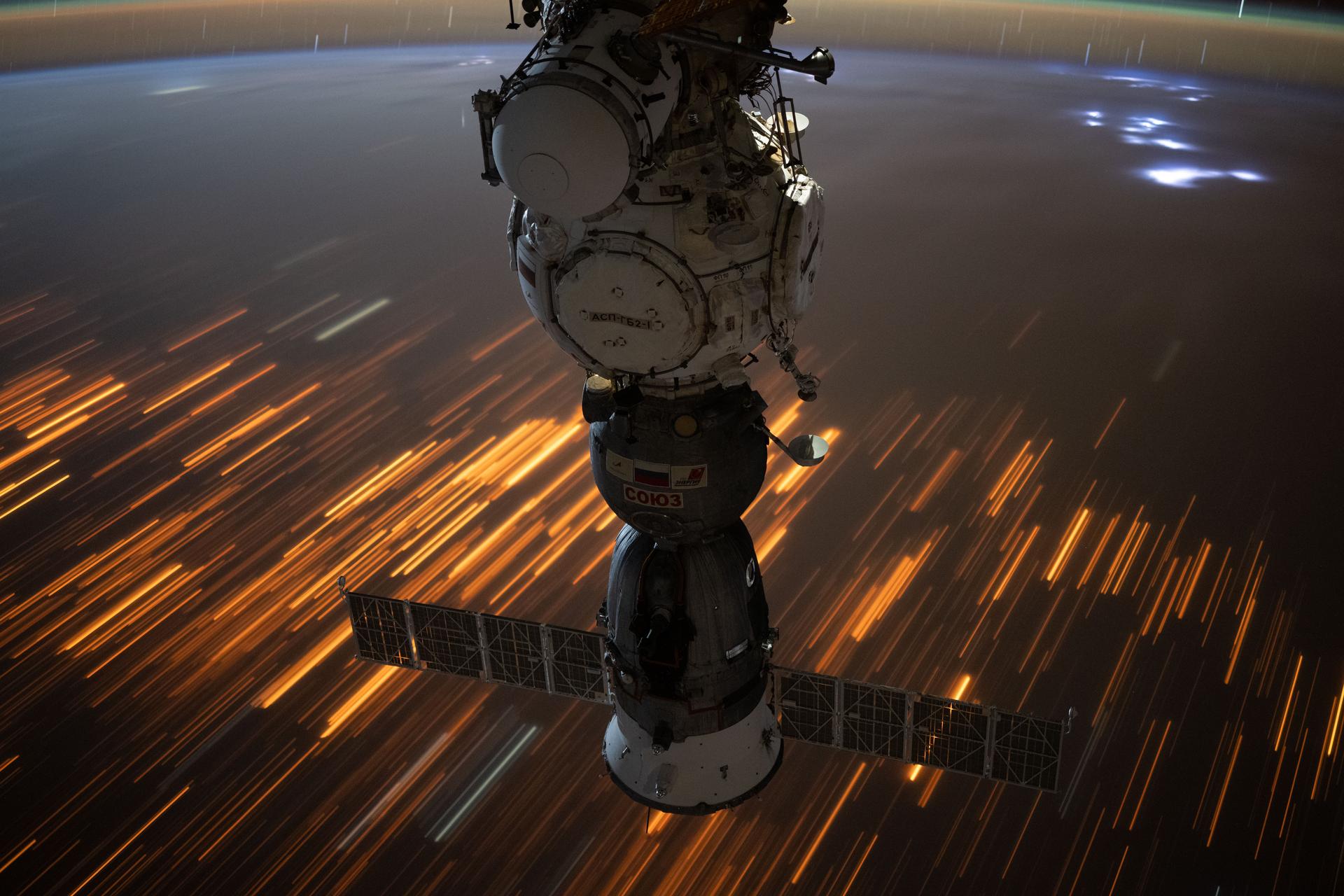
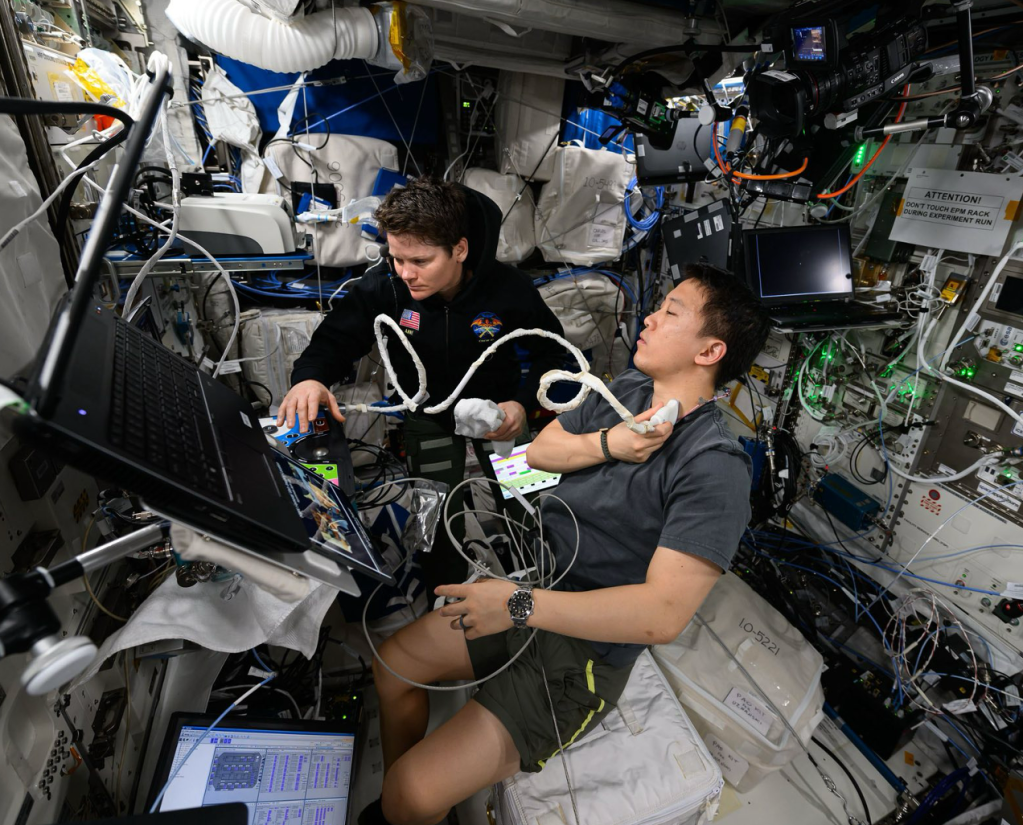
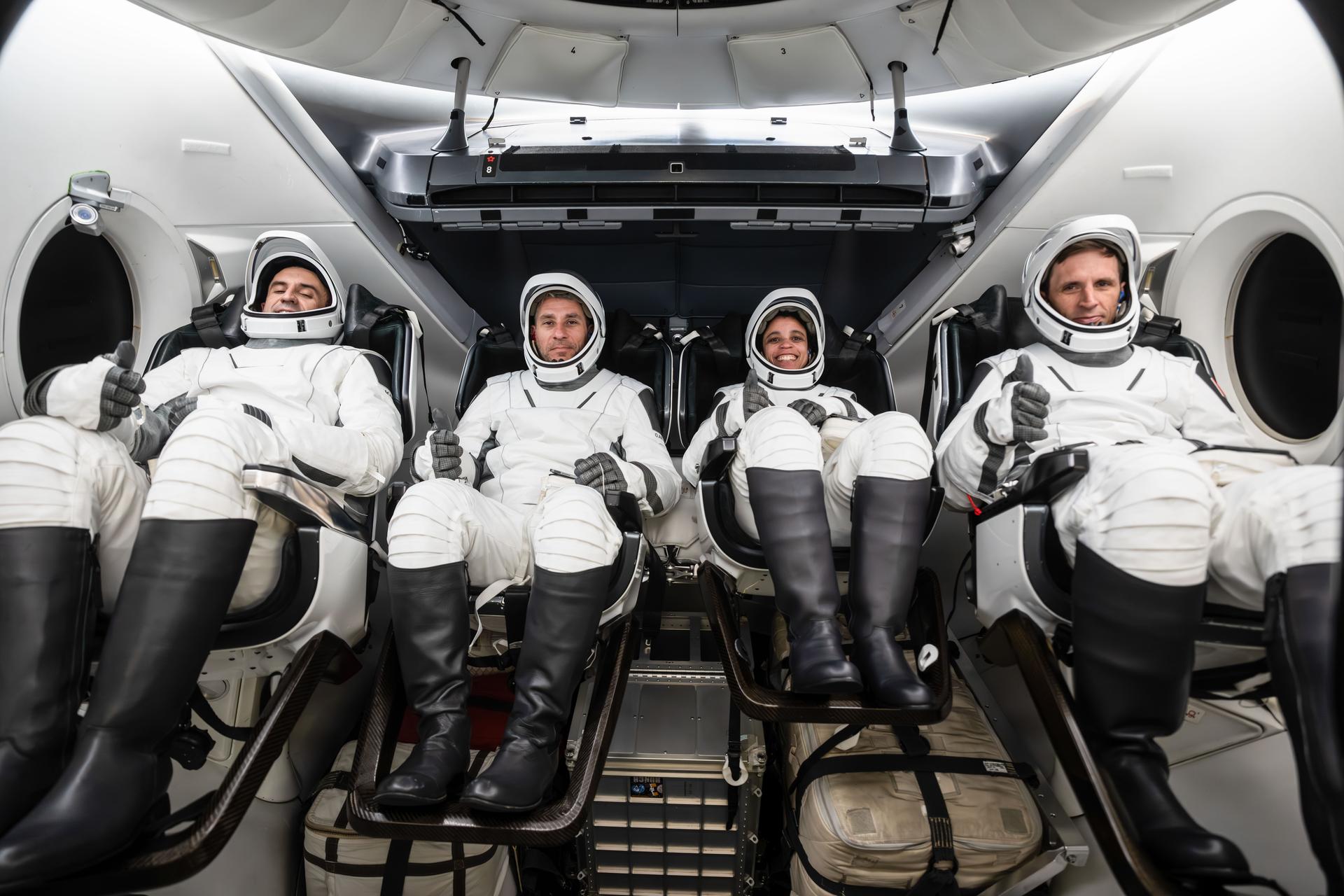



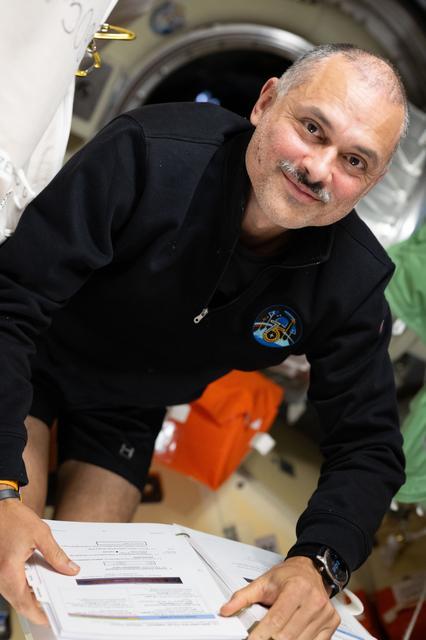




Friday’s schedule aboard the International Space Station included maintenance and tech demonstration set up for the Expedition 73 crew.
Crew Works Tech Demos and Maintenance on Friday


Friday’s schedule aboard the International Space Station included maintenance and tech demonstration set up for the Expedition 73 crew.

Precision sounding rockets are scheduled to launch from NASA’s Wallops Flight Facility in Virginia during a window extending from May 11-18, 2025. No real-time launch status updates will be available. The launch will not be livestreamed, and updates will not be provided during the countdown. The rocket launch may be visible from the Chesapeake Bay region.
Four days into flight, NASA’s second super pressure balloon launched during the agency’s New Zealand campaign remains near the country floating in a wind pattern circulating around and over the country’s North Island.
The test flight is predicted to remain over land for about five more hours before catching zonal winds that will carry it eastward along its typical trajectory around the Southern Hemisphere’s mid-latitudes.
Before any land overflight occurs, a thorough assessment is made of the balloon’s health and the forecast trajectory is analyzed from a safety perspective before beginning the overflight.
“We are very proud of all the hard work the team has invested to get us this far,” said Andrew Hamilton, deputy chief of NASA’s Balloon Program Office at the agency’s Wallops Flight Facility in Virginia. “The balloon has been performing well, and we are continuing to gather more data and information on the performance of the balloon system. New Zealand is an ideal location for this kind of mission, allowing us to have extended time in the stratosphere as we circle the globe.”
If weather permits, the balloon may be visible from the ground, particularly at sunrise and sunset. NASA invites the public to track the balloon’s path in real-time here.

Biotechnology work and health research was the main focus on Thursday aboard the International Space Station. Five Expedition 73 crew members also scheduled some time for training and additional experiment cleanup duties.

A full day of experiment preparations and health research topped Wednesday’s Expedition 73 schedule aboard the International Space Station. The crew expanded on agricultural and pharmaceutical work that began earlier in the week and continued to study how spaceflight affects the human body.

NASA’s IMAP (Interstellar Mapping and Acceleration Probe) has successfully completed thermal vacuum testing at the agency’s Marshall Space Flight Center in Huntsville, Alabama, as part of its journey toward launch as soon as this fall. As a modern-day celestial cartographer, IMAP will help researchers better understand the boundary of the heliosphere, a sort of magnetic […]
Following an evaluation of partnership proposals to land a water-seeking robot on the lunar surface, NASA is instead opting to explore alternative approaches to deliver its VIPER (Volatiles Investigating Polar Explorer Rover) rover to the Moon. NASA announced Wednesday it is canceling its Lunar Volatiles Science Partnership Announcement for Partnership Proposals solicitation, which sought opportunities […]

A full suite of human health research kept the Expedition 73 crew busy Tuesday aboard the International Space Station.

The Orion spacecraft for NASA’s Artemis II crewed mission around the Moon has been on the move. Technicians relocated the spacecraft May 5 from the Neil A. Armstrong Operations and Checkout Facility at the agency’s Kennedy Space Center in Florida, where it was assembled, to its fueling facility at the spaceport. “With the Artemis II mission […]

The Expedition 73 crew members are kicking off a busy week aboard the International Space Station. Technology development, space botany, and clean up following last Thursday’s spacewalk topped Monday’s schedule.