
Your challenge is to use the comments section to tell us what we are looking at and why this place is interesting.
July Puzzler
Read Full Post



















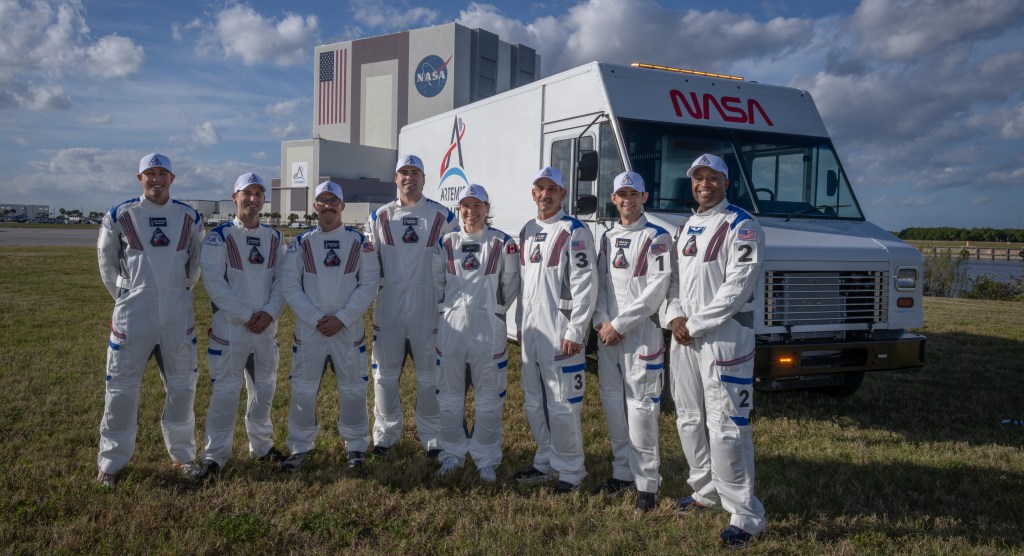


Your challenge is to use the comments section to tell us what we are looking at and why this place is interesting.
Direct Current Switching Unit (DCSU) 3A Power on Reset (POR): Early Saturday, morning DCSU 3A experienced a POR which, due to power balancing during the current high beta period, resulted in a loss of power to some downstream loads. The crew and ground teams worked together to recover from the failure and teams continue to …
This week while the GLiHT crew continued collecting data over the Susitna and Tanana valleys, we focused on collecting on-the-ground data on spruce beetle infestation. Our first day out proved rainy and cold, but we pressed on, only sheltering in the car during a particularly hard spell. Aside from the occasionally torrential rain, we also […]
Micro-11: Today the crew performed two sessions for the Micro-11 investigation. They checked out, configured and calibrated the Micro-11 microscope, thawed samples removed from a General Laboratory Active Cryogenic ISS Experiment Refrigerator (GLACIER), fixed those samples and loaded them into the microscope for imaging. Afterwards, they inserted the samples into a Minus Eighty Degree Celsius …

The Expedition 56 crew members continued their work Friday on more fertility research and microbe studies aboard the International Space Station. They also worked on science gear for a study seeking advanced therapies for diseases such as Alzheimer’s and diabetes. Commander Drew Feustel and Flight Engineer Serena Auñón-Chancellor examined biological samples for the Micro-11 fertility …
A posthumous plea for more satellite observations of carbon arrived this week from astronaut and scientist Piers Sellers.
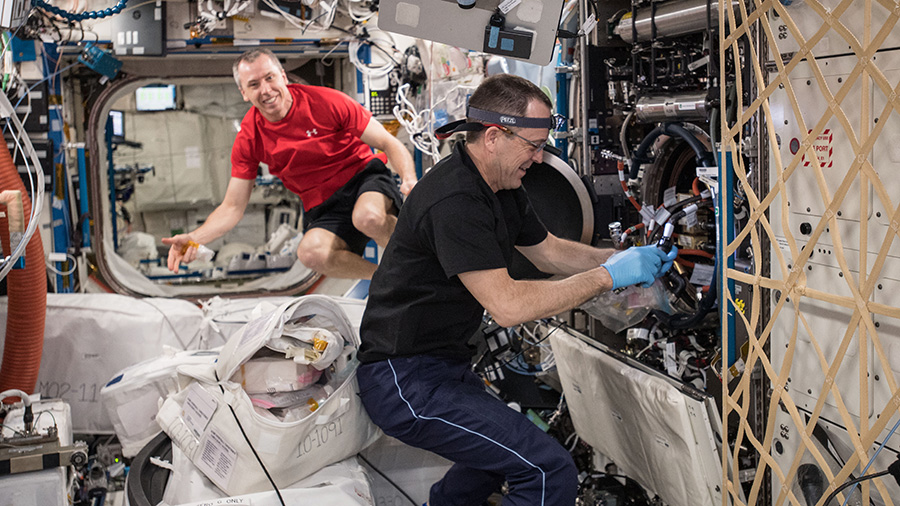
The six orbital residents living aboard the International Space Station worked on a broad array of advanced space experiments and research gear today. Today’s life science research included exploring fertility, extracting DNA from microbes and studying how the heart adapts to living in space. The crew also researched space physics observing magnetic fields, exploring the …
Aerosol Samplers: Today the crew retrieved and stowed the sample cartridges from each deployed Active Aerosol Sampler (AAS) and connected the AASs to the battery charger. After the battery charge, the crew installed a sample cartridge and re-deployed one of the AASs in the US Laboratory. The second AAS had not taken a full charge …
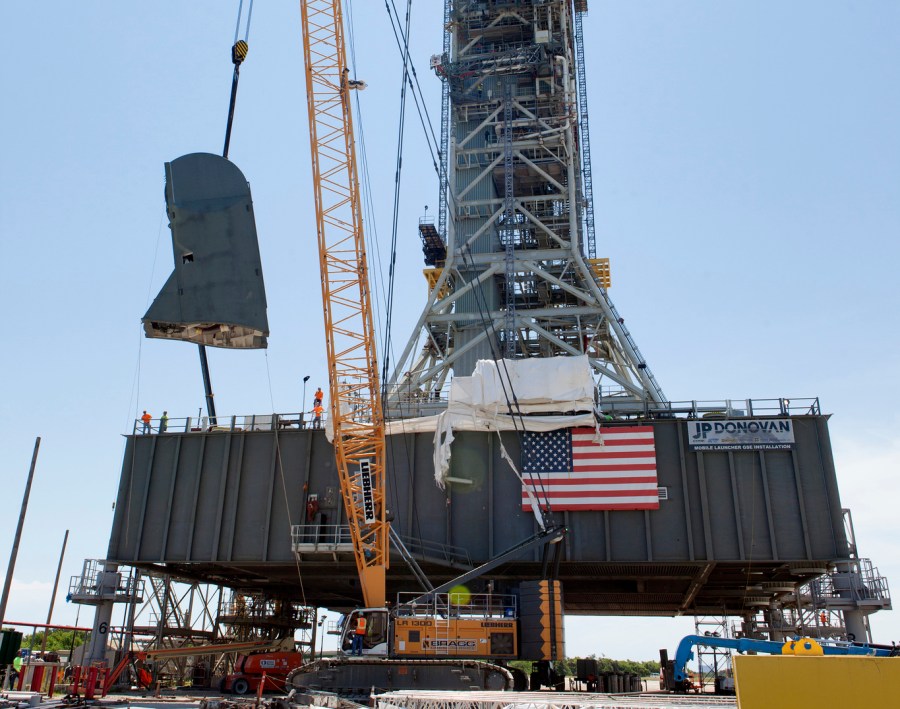
The first of two 35-foot-tall Tail Service Mast Umbilicals (TSMU) was lifted up and installed on the 0-level deck of the mobile launcher at NASA’s Kennedy Space Center in Florida. The installation brings the Exploration Ground Systems Program one step closer to supporting prelaunch operations for the agency’s Space Launch System (SLS) rocket and Orion …
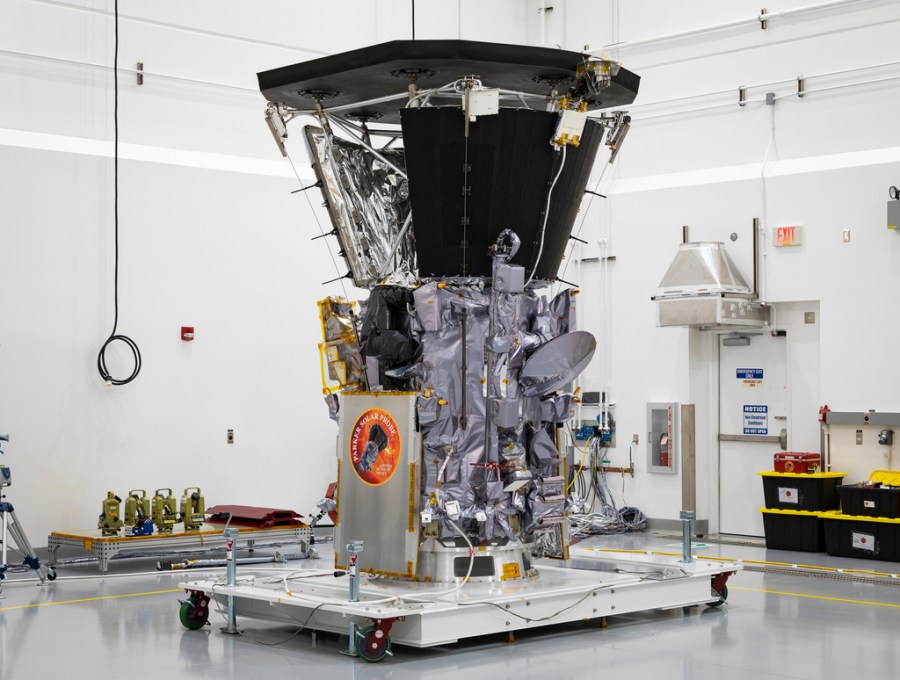
NASA now is targeting launch of the Parker Solar Probe no earlier than Aug. 6, 2018. Additional time was needed to evaluate the configuration of a cable clamp on the payload fairing. Teams have modified the configuration and encapsulation operations have continued. Teams also have successfully repaired a leak in the purge ground support tubing on the third stage rocket motor, which was discovered during final spacecraft processing late last week. The satellite will launch on a United Launch Alliance Delta IV Heavy rocket from Space Launch Complex 37 on Cape Canaveral Air Force Station in Florida.