


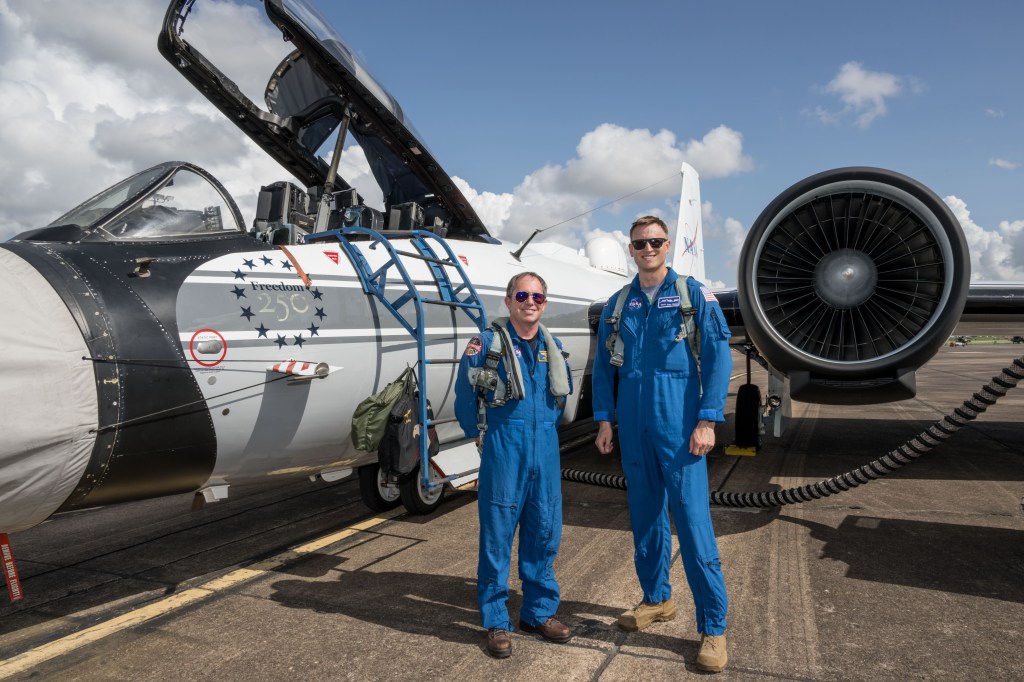




From Paul Newman, co-project scientist: All of the GloPac instrument teams have now arrived at Dryden Flight Research Center, and our integration of instruments onto the Global Hawk UAS continues. We’re putting 10 instruments on the plane, and each team has 2 to 3 scientists working on their instrument. This means we have a lot […]
Up
From Paul Newman, GloPac co-project scientist: A flight day with the Global Hawk flight day starts very early and runs very late. For a 7 AM takeoff, the plane must be pulled out to a concrete pad adjacent to the runway at about 4 AM. This means the crew must arrive by 3 AM to get […]
Not blowin in the wind
Like the booby bird, the Global Hawk is graceful in the air but awkward on the ground.
Where’s the coffee?
I cruised into the hangar and found a beehive of activity around the Global Hawk…Now I’m on the two most important tasks at the start of a field mission. 1) Find the coffee pot. 2) Find the bathroom.
A remote control plane, but no child’s play
The Global Hawk is a unique robotic plane that can fly for more than 30 hours at a time, soaring as high as 65,000 feet and as far as 11,000 nautical miles (12,659 miles).
Heading down the mountain
Last night, we took load #1 of equipment down the mountain. Today was dedicated to packing up & hauling the rest of the equipment down with the snowcat. A bit of a snowstorm is in the forecast, and we need to get our equipment down before it hits. Sound familiar? Friday, a truck will take […]
Last day of measurements
Today is our last day of measurements. We took a radiometer measurement in the morning, and then dug the final snowpit in the exact spot that the radiometer was viewing during the whole experiment. That way, we will know exactly what the radiometer was seeing. The pit measurements took hours and it was cold today […]
In the pit
Here is how we “commute’” to the lab each morning. Dr. Noah Molotch (U. Colorado), Dr. Dan Berisford (JPL) Jen Petrzelka (U. Colorado), and Ty Atkins spent all day today (and the previous 2 days) making snowpit measurements using both traditional and new high-tech methods. In this photo, you can see how deep the snowpit […]
Radiometer is perfectly perched
A big milestone today: after the DC snowstorm, the cross-country shipping, the snowcat trip up the mountain, and the days of wiring, we finally got radiometer data today. Dr. Mike Durand and Ty Atkins (U. Colorado) worked really hard to set up a stand built by Goddard engineers to hold the radiometer at just the […]
Morning at Storm Peak Laboratory
Sunrise on top of the mountain was beautiful—even the LN2 tank was glowing.