





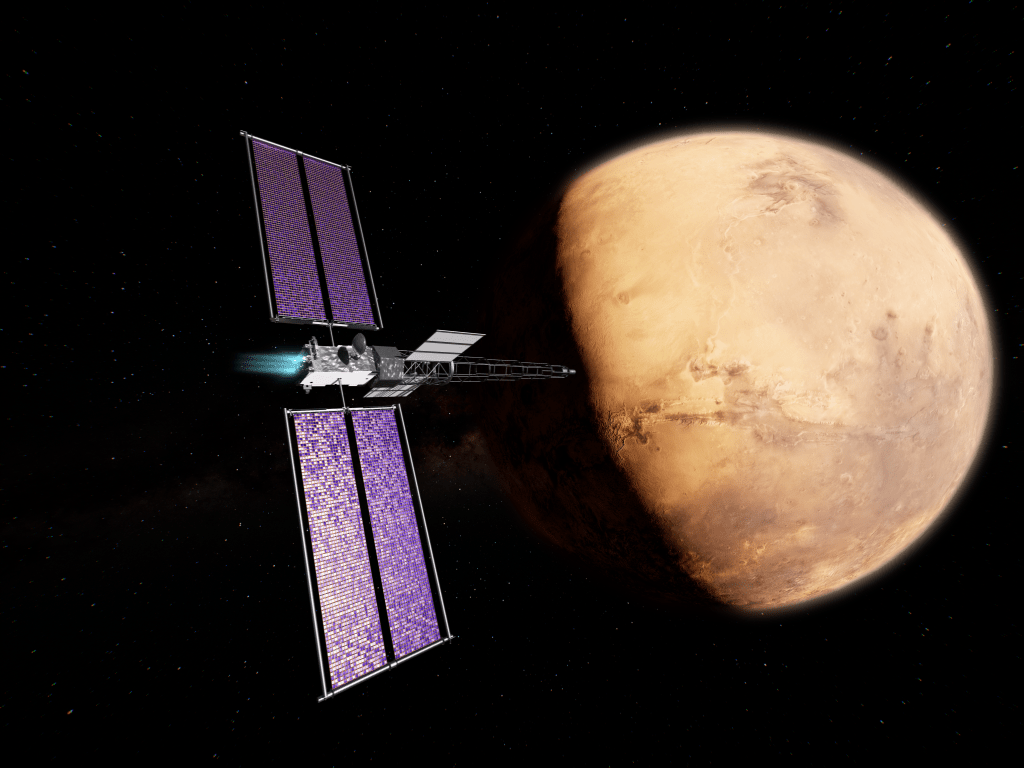





DSCOVR’s twin solar wings have opened to provide power to the spacecraft’s systems and instruments as it observes the sun and our home planet to show the changing conditions on Earth. The mission is a partnership of NOAA, NASA and the U.S. Air Force.
DSCOVR Flies On Its Own
The Falcon 9 sprung the DSCOVR spacecraft free on schedule to coast toward the L1 point on its own. Data shows that the spacecraft is healthy and getting ready to deploy its solar panels.
Engine Cutoff on Schedule
Confirmation of a second burn as planned. DSCOVR will separate from the second stage shortly.
Launch Replay Video
Second Stage Ignites as Planned
The Falcon 9 and DSCOVR spacecraft telemetry is telling ground controllers that everything is OK as the second stage engine re-ignites and DSCOVR is pushed out toward deep space and the L1 point about a million miles form Earth. This burn will last 58 seconds.
Second Stage Re-ignition Coming Up
The second stage of the Falcon 9 is still in its parking orbit with DSCOVR attached, but in a couple minutes the single engine of the second stage will re-ignite to propel the NOAA observatory on a course to deep space. Re-igntion scheduled for 6:33:41 p.m.
Image: DSCOVR/Falcon 9 Clears Towers

DSCOVR/Falcon 9 In Flight

Credit: NASA TV
DSCOVR Launch Statement from Al Gore

“It was inspiring to witness the launch of the Deep Space Climate Observatory (DSCOVR). DSCOVR has embarked on its mission to further our understanding of Earth and enable citizens and scientists alike to better understand the reality of the climate crisis and envision its solutions. DSCOVR will also give us a wonderful opportunity to see …
Liftoff Photos

Credit: NASA TV