
















SpaceX (SpX)-6 Ingress/Cargo Transfer: Early this morning the crew opened the hatch and ingressed the Dragon vehicle. They completed vehicle hardware reconfig, unpacked Double Cold Bags (DCBs) and placed them in Minus Eighty Degree Celsius Laboratory Freezer for ISS (MELFI)-1, Biolab, and MELFI-3 per the Cold Stowage plans. Kubik preparation and activation: Cristoforetti configured and …
ISS Daily Summary Report – 04/17/15
SpaceX (SpX)-6 Capture and Berthing: The Dragon vehicle was captured at 5:55 AM CDT today followed by nominal berthing, vestibule outfitting and Common Berthing Mechanism (CBM) Control Panel Assembly (CPA) removal. Tomorrow, the crew will ingress the vehicle and begin unpacking cargo. Fine Motor Skills: Kelly and Kornienko performed their Flight Day (FD) 20 Fine …
Dragon Arrives Friday, Unpacking Begins Saturday
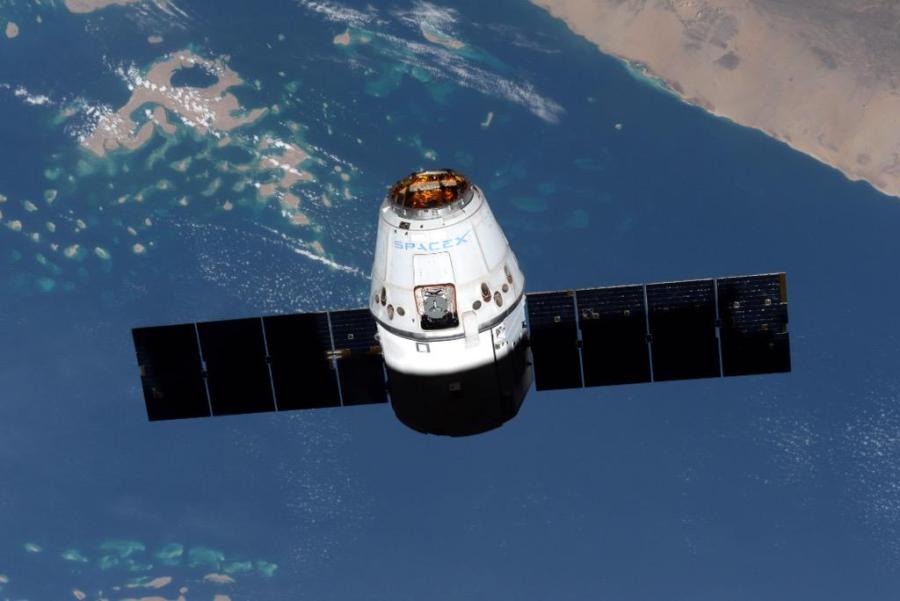
The Expedition 43 crew’s delivery arrived Friday aboard the SpaceX Dragon space freighter. Dragon was captured at 6:55 a.m. EDT after a two-day trip and a slow methodical approach. Astronaut Samantha Cristoforetti guided the Canadarm2 and grappled the Dragon as it floated just 10 meters away from the International Space Station. The crew will open …
Dragon Attached to Station’s Harmony Module

The SpaceX Dragon cargo spacecraft was berthed to the Harmony module of the International Space Station at 9:29 a.m. EDT while the two spacecraft were traveling above the coast of Sierra Leone. The hatch between the newly arrived spacecraft and the Harmony module of the space station is scheduled to be opened Saturday. The spacecraft is loaded with …
NASA TV Covering Dragon Installation
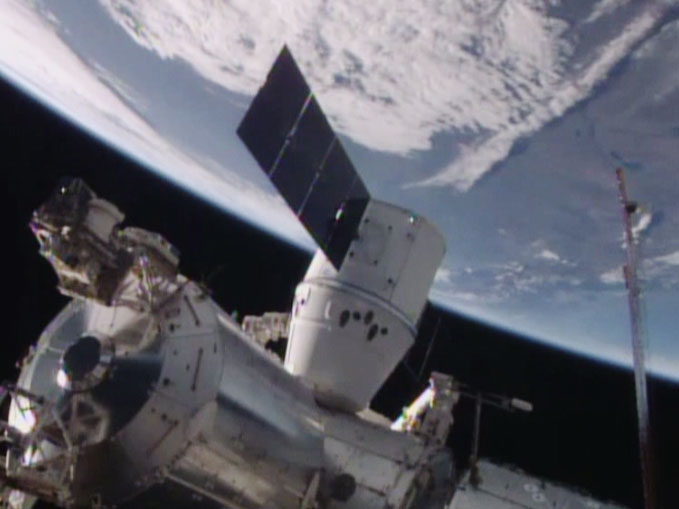
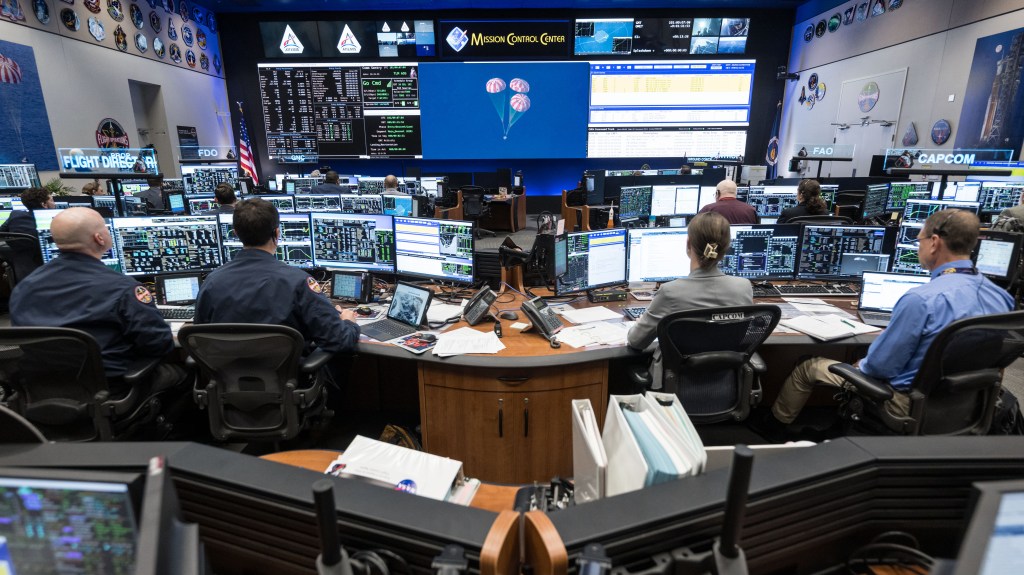
Following its capture, the SpaceX Dragon cargo ship is being maneuvered by ground controllers operating the International Space Station’s robotic arm for installation onto the Earth-facing port of the Harmony module. Operations are progressing ahead of schedule, so NASA Television coverage will resume at 8:45 a.m. EDT at https://www.nasa.gov/nasatv. Expedition 43 Flight Engineer Samantha Cristoforetti of the European …
Robotic Arm Captures Dragon
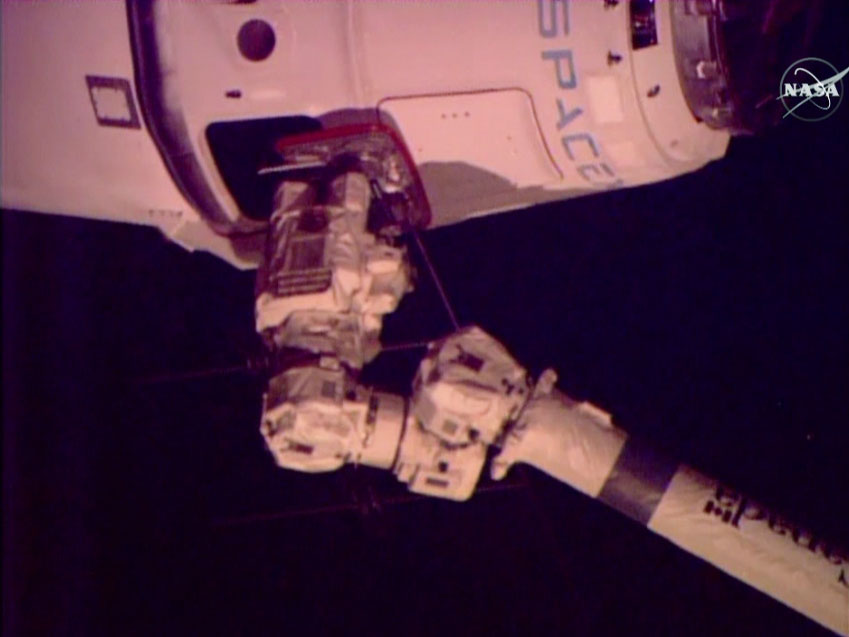
While the International Space Station was traveling 257 statute miles over the Pacific Ocean just east of Japan, Expedition 43 Flight Engineer Samantha Cristoforetti of the European Space Agency, with the assistance of Expedition 43 Commander Terry Virts of NASA, successfully captured the SpaceX Dragon spacecraft with the station’s robotic arm at 6:55 a.m. EDT. Operations …
Watch NASA TV for SpaceX Dragon Arrival
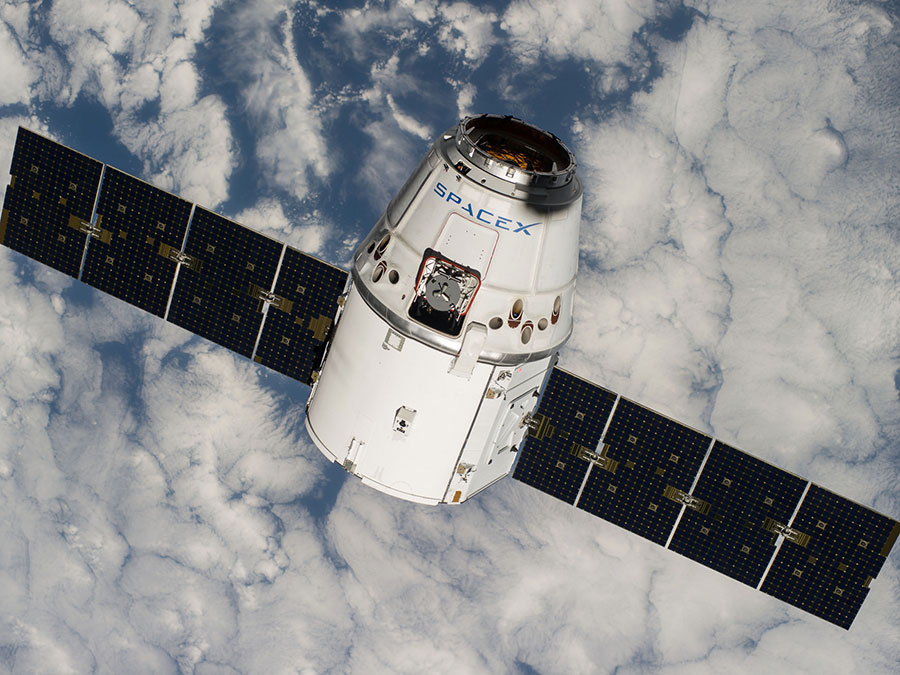
NASA television coverage for today’s scheduled arrival of the Dragon spacecraft to the International Space Station has begun and can be seen at https://www.nasa.gov/nasatv. SpaceX reported all spacecraft systems are ready for the final stages of rendezvous, and space station flight controllers reported the orbiting outpost is ready for the commercial spacecraft’s arrival. The International …
ISS Daily Summary Report – 04/16/15
SpaceX-6(SpX-6) Status: Dragon has successfully completed several burns today on its way to station. Cristoforetti and Virts are scheduled to capture Dragon tomorrow morning at approximately 06:00 CDT. Space Aging and Nematode Muscle Familiarization: Kelly reviewed overview messages on 2 JAXA experiments currently onboard SpX-6. Both experiments will study the impacts of the zero-gravity environment …
Crew Gets Ready for New Dragon and New Science
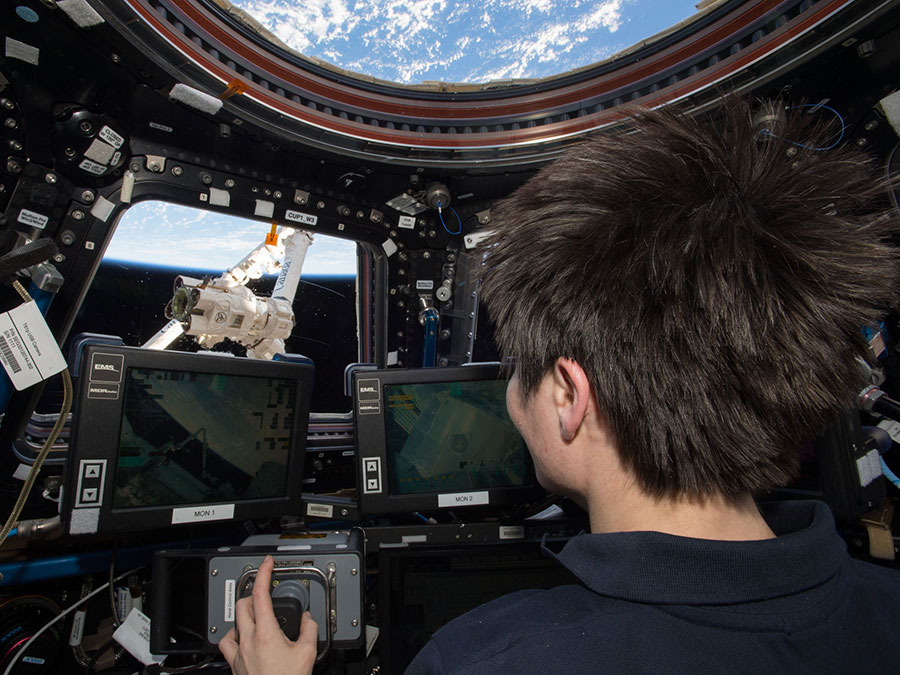
The SpaceX Dragon commercial cargo craft is less than a day away from arriving at the International Space Station. The Expedition 43 crew is getting ready for its arrival and five-week stay at the Earth-facing port of the Harmony module. Read more about the SpaceX CRS-6 mission. Commander Terry Virts set up hardware inside Harmony …
ISS Daily Summary Report – 04/15/15
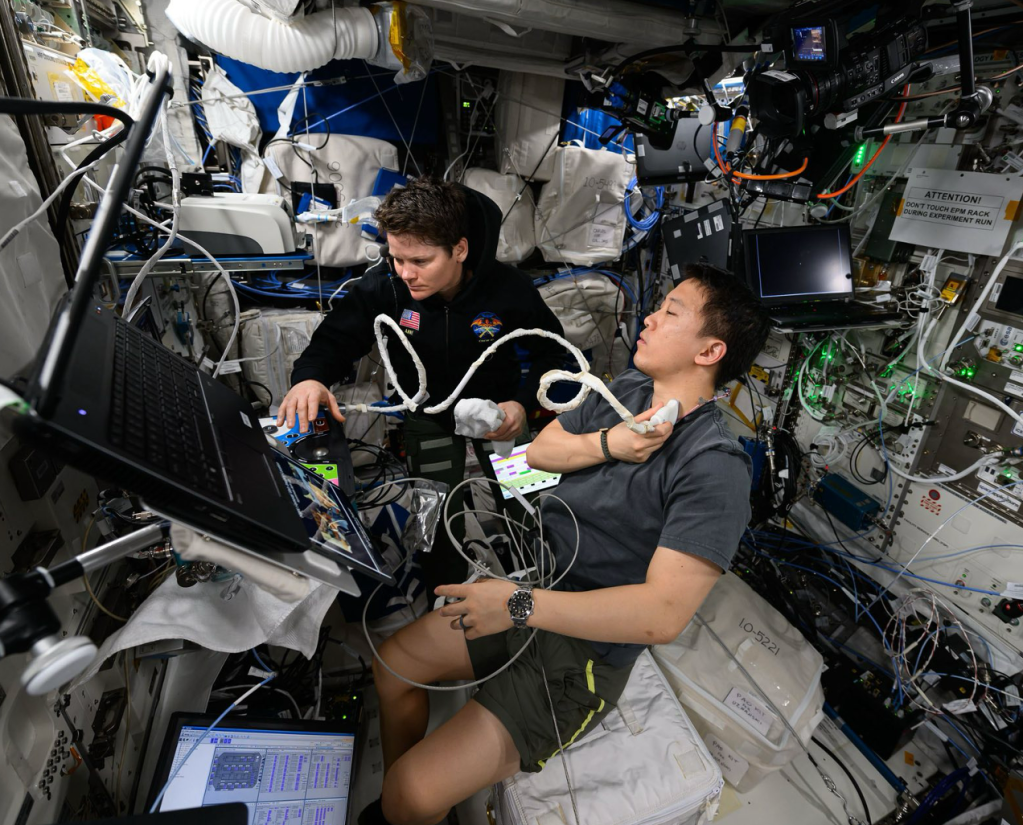
The Effect of Long-Term Microgravity Exposure on Cardiac Autonomic Function (Biological Rhythms): Kelly set up and donned a Holter Electrocardiogram (ECG). He will record his ECG data for 48 hours, synching and downlinking the data between 21 and 24 hours after starting. Biological Rhythms studies the effects of long-term microgravity exposure on heart function by …