












Introduction
For decades, the National Aeronautics and Space Administration (NASA) has advanced safer, more efficient, and more reliable flight by exploring new technologies, running flight tests, and analyzing real-world data. This work strengthens the National Airspace System (NAS), improving everything from pilot training and aircraft safety to the flow of air traffic.
NASA’s close partnership with the Federal Aviation Administration (FAA) turns research into real-world improvements, guiding safety rules, updating procedures, and preparing the NAS for future aircraft like drones and air taxis.
Working with the FAA, industry, and academia, NASA helps the NAS evolve to support a safer, more flexible, and more sustainable aviation system for the nation. The following highlights the key technologies and research that built today’s airspace—and the innovations shaping the future of flight.
1950s
THE DAWN OF CIVIL AEROSPACE
1958 – NASA Begins Its Mission
Congress created the FAA and established NASA. Congress assigned NASA responsibility for the nation’s civilian aerospace efforts.
1960s
FOUNDATIONS OF SAFETY AND HUMAN FACTORS
1968 – Cooper-Harper Handling Qualities Scale
NASA introduced the Cooper-Harper scale to standardize how pilots evaluate aircraft handling. Pilots use the scale to rate how easily and precisely they can perform required tasks in a specific aircraft, and engineers use that data to design safer planes. The scale is the global benchmark for pilot-vehicle interface design and continues to make air travel more secure for passengers worldwide.
NASA's work helped people feel that flying was becoming safer and more predictable, powered by human centered research.

1970s
ADVANCING PROACTIVE SAFETY AND PILOT PERFORMANCE
1976 – Aviation Safety Reporting System (ASRS)
The ASRS is a national reporting system that allows pilots, air traffic controllers, and other aviation professionals to confidentially report safety incidents—other than accidents—that could affect aircraft safety. NASA collects these reports, analyzes the data, and uses the findings to guide safety improvements. Developed in partnership with the FAA, NASA’s ASRS works alongside other reporting systems. It serves as an early warning tool, helping to identify serious safety risks and expose weak points in the NAS. Today, the FAA continues to fund ASRS, and it remains the primary source of independent, unbiased information about early signs of aviation safety precursors.
1976 – Low-Level Windshear Alert System (LLWAS)
NASA’s research on windshear—a sudden, vertical change in wind speed that can push an aircraft up or down—contributed to the creation of LLWAS. The system detects wind shear near airports and gives pilots real-time alerts during takeoff and landing, when windshear is especially dangerous. Although newer systems exist, LLWAS still operates today as a backup safety tool for monitoring airport weather conditions.
1979 – Crew Resource Management (CRM)
NASA developed CRM after research revealed that poor inflight decisions and communication breakdowns in the cockpit was a primary cause of aircraft accidents. The system trains aircrews in essential communication skills that maximize coordination, improve teamwork, and minimize the chance of errors. The training system became the global standard, influencing not only procedures but also aircraft design, and establishing a comprehensive approach to addressing human error in aviation.
The public saw growing confidence in air travel as NASA helped the industry prevent accidents before they happened.
1980s
HUMAN PERFORMANCE SCIENCE AND EARLY SAFETY AUTOMATION
1980 – Fatigue / Jet Lag Program
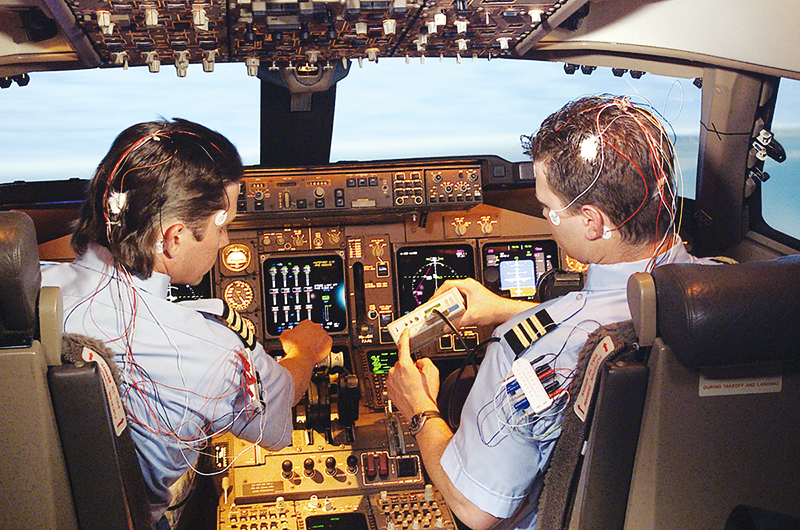
NASA created the Fatigue/Jet Lag Program in response to a congressional request to understand how circadian rhythm disruptions affect pilot performance. This early research built the foundation for fatigue science in flight operations. It identified how sleep loss, body clock misalignment, and operational schedules affect safety. The program defined the core physiological mechanisms and safety risks linked to fatigue, forming the basis for later assessment tools and regulatory changes that addressed duty and rest requirements across aviation. The program later evolved into the Fatigue Countermeasures Lab, which expanded the mission from basic fatigue research to developing strategies and technologies that reduce fatigue in aviation, spaceflight, and ground-based operations such as self-driving cars and drone operations.
1980 – 4D Trajectory Guidance
NASA’s 4D Trajectory Guidance revolutionized air traffic management by shifting away from traditional “fixed miles-in-trail” aircraft separation. By factoring time into standard flight paths, aircraft could meet a precise Required Time of Arrival (RTA). This breakthrough enhanced Trajectory-Based Operations (TBO), enabling optimized, eco-friendly flight paths—paving the way for the advanced 4D Flight Management Systems (FMS) integrated into the NAS in the 2000s.
1986 – Task Load Index (TLX)
NASA developed TLX during a three‑year research effort that involved more than 40 laboratories, simulators, and inflight experiments. NASA’s TLX is a multidimensional rating tool that generates an overall workload score using a weighted average across six factors: mental demand, physical demand, temporal demand, performance, effort, and frustration. By providing a standardized, subjective method for assessing a pilot’s perceived workload, TLX supported better flight deck design, improved training approaches, and strengthened overall aviation safety. Its data‑driven insights into workload demands have transformed the aviation industry.
Passengers experienced safer, more on-time flights as NASA research addressed pilot fatigue, lowered cockpit workloads, and developed advanced algorithms for precise flight scheduling—research that later informed FAA standards.
1990s
FOUNDATIONAL AIR TRAFFIC AUTOMATION AND RUNWAY SAFETY INNOVATIONS
1990 – Center-TRACON Automation System (CTAS)
To manage rapidly growing air traffic demands, NASA developed CTAS—a groundbreaking suite of decision-support tools that enabled air traffic controllers to optimize arrivals, efficiently manage traffic around busy airports, and significantly reduce delays. While the original CTAS software is no longer in operation, it served as the foundational incubator for modern airspace management. NASA successfully transitioned many of its core technologies to the FAA, including the Traffic Management Advisor (TMA), which the FAA later evolved into its national Time-Based Flow Management system. The legacy of CTAS continues to drive follow-on research and advanced automation tools used in the National Airspace System (NAS) today.
1994 – Final Approach Spacing Tool (FAST)
NASA developed FAST-one of the core technologies in the FAA’s Center Terminal Radar Approach Control (TRACON) Automation System (CTAS)—to help controllers optimize aircraft spacing on final approach. By providing speed and routing suggestions, FAST increased runway capacity and reduced go-arounds. The tool later became one of the building blocks for modern systems, including the FAA’s Time-Based Flow Management (TBFM) and Terminal Flight Data Manager (TFDM) systems.
1994 – Runway Status Lights (RWSL) System Study
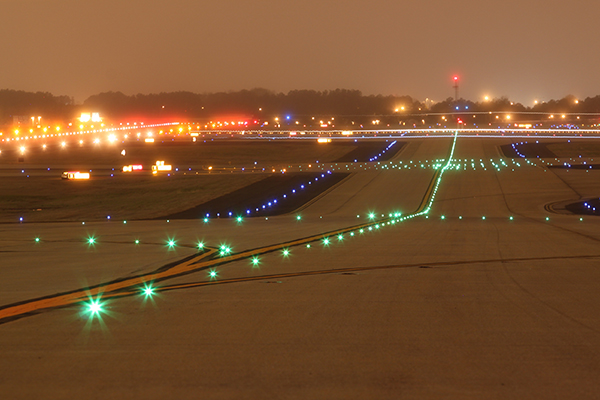
At the FAA’s request, NASA conducted groundbreaking flight simulations and research to evaluate RWSL. This advanced runway lighting system warns pilots of potential runway conflicts to help prevent collisions during taxiing, takeoff, and landing. NASA’s work was critical in proving the system’s value and reliability, allowing the FAA to deploy it at 20 U.S. airports. Today, RWSL continues to improve runway safety at those airports.
Air travel felt more reliable and less chaotic as NASA helped reduce runway incidents and delays.
2000s
INTEGRATED SYSTEMS AND PREDICTIVE AIRSPACE TECHNOLOGIES
2002 – Terrain Awareness and Warning Systems (TAWS)
Before TAWS was introduced in the 1970s, the leading cause of aviation accidents was when working aircraft, under pilot control, unintentionally flew into terrain. Earlier warning systems had unreliable terrain data and could only provide basic alerts. NASA addressed these limitations by creating a real-time terrain monitoring concept that used altitude sensors and forward-looking radar. NASA also introduced a new method for processing terrain data by combining feature extraction with statistical analysis. These innovations helped set the standards that made TAWS a required safety system in commercial aviation, improving flight safety.
2002 – Distributed Air/Ground Traffic Management (DAG-TM)
NASA developed the DAG-TM concept to distribute decision-making responsibilities among flight deck crews, air traffic service providers, and operational control facilities. The initiative emphasized a human-centered operational approach and aimed to increase National Airspace System (NAS) capacity by enhancing user flexibility and efficiency while maintaining air traffic management requirements. The principles of the DAG-TM concept—designed for gate-to-gate operations beyond 2015—have informed and are being implemented as part of the FAA’s Next Generation Air Transportation System (NextGen).
2004 – Runway Incursion Prevention System (RIPS)
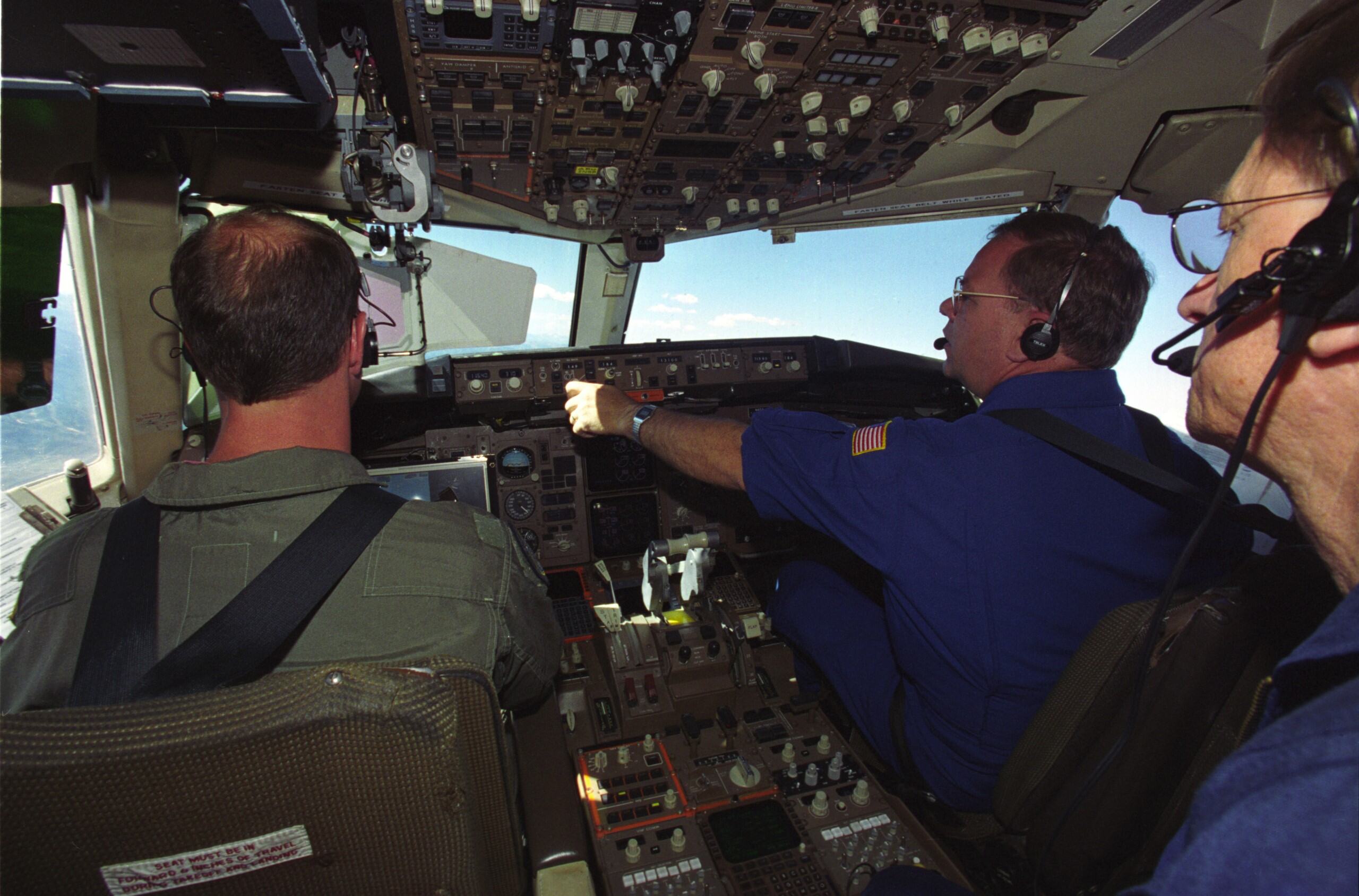
NASA developed the RIPS concept-an onboard warning and alerting system designed to prevent runway collisions-in response to a recommendation from the National Transportation Safety Board (NTSB). NASA tested this technology on commercial aircraft at Reno-Tahoe International and Dallas-Fort Worth airports and NASA’s Wallops Flight Facility. These demonstrations showed that RIPS offered an important safety option for airports that did not have runway status lighting systems. Findings from RIPS informed standards and influenced the commercial systems used on aircraft today.
2004 – Autonomous Operations Planner (AOP)
NASA created AOP to improve operator-centric, automated conflict management and dynamic path planning. Researchers used AOP to design and test advanced algorithms that let aircraft manage themselves: detect a conflict, calculate an avoidance maneuver, and follow that new path in constrained, high-density airspace. NASA successfully transferred these algorithms to commercial flight-optimization tools. NASA expanded AOP’s use to support research on operational autonomy, including flight tests for Advanced Air Mobility (AAM) to enable automated flight and contingency management.
2005 – Synthetic Vision System (SVS)
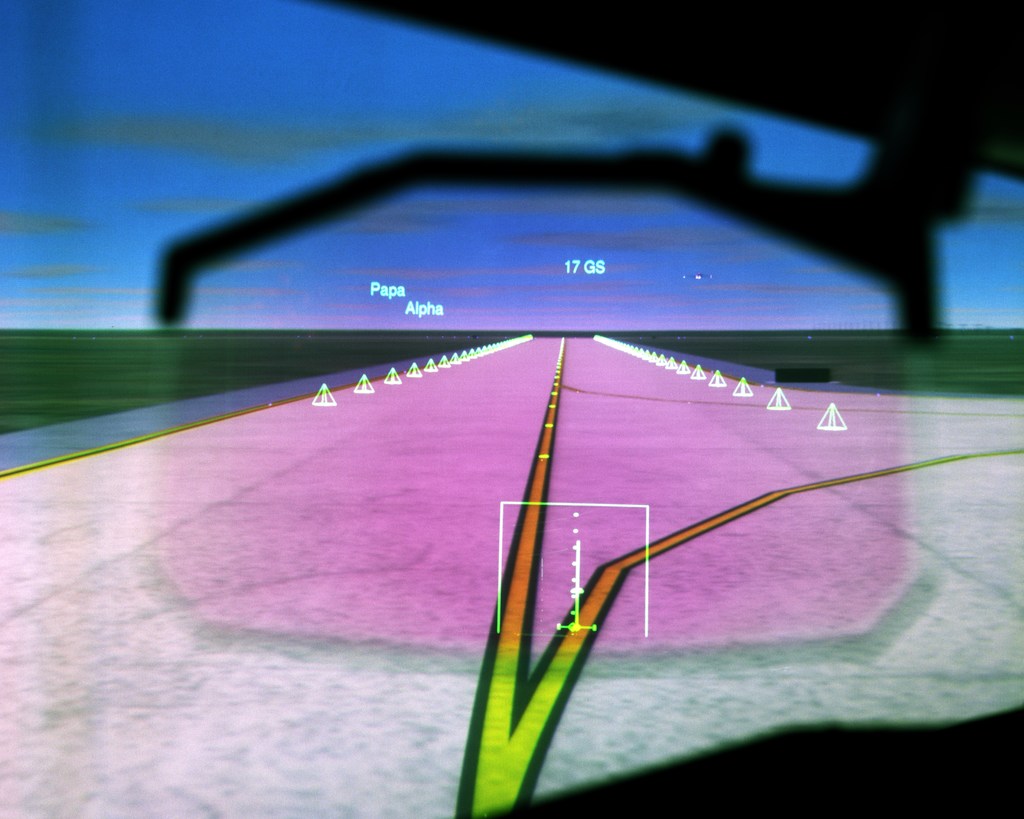
NASA’s Terrain Awareness and Warning Systems (TAWS) made flying safer by helping prevent controlled flight into terrain accidents. NASA’s Synthetic Vision System (SVS) took this even further by generating three-dimensional (3D) views of terrain, obstacles, and runways in any weather or visibility. This improved pilots’ situational awareness and helped them make proactive decisions. Studies showed that SVS reduced the risk of terrain collisions and missed approaches, while also improving navigation and all weather operations. NASA’s SVS research played a major role in shaping the commercial SVS solutions used today, strengthening flight safety and influencing industry standards worldwide.
2005 – Turbulence Prediction and Warning Systems (TPAWS)
NASA developed TPAWS, an in-flight radar system that detects turbulence and automatically reports it in real time to pilots and air traffic controllers. This helps aircraft avoid turbulence or warn passengers to buckle up. Through commercial flight campaigns with the FAA, NASA provided TPAWS data and evaluation tools to the FAA and industry to support the development and certification of new turbulence-prediction systems. Many commercial aircraft now use these systems, which have significantly reduced turbulence-related accidents and injuries.
2005 – Future ATM Concepts Evaluation Tool (FACET)
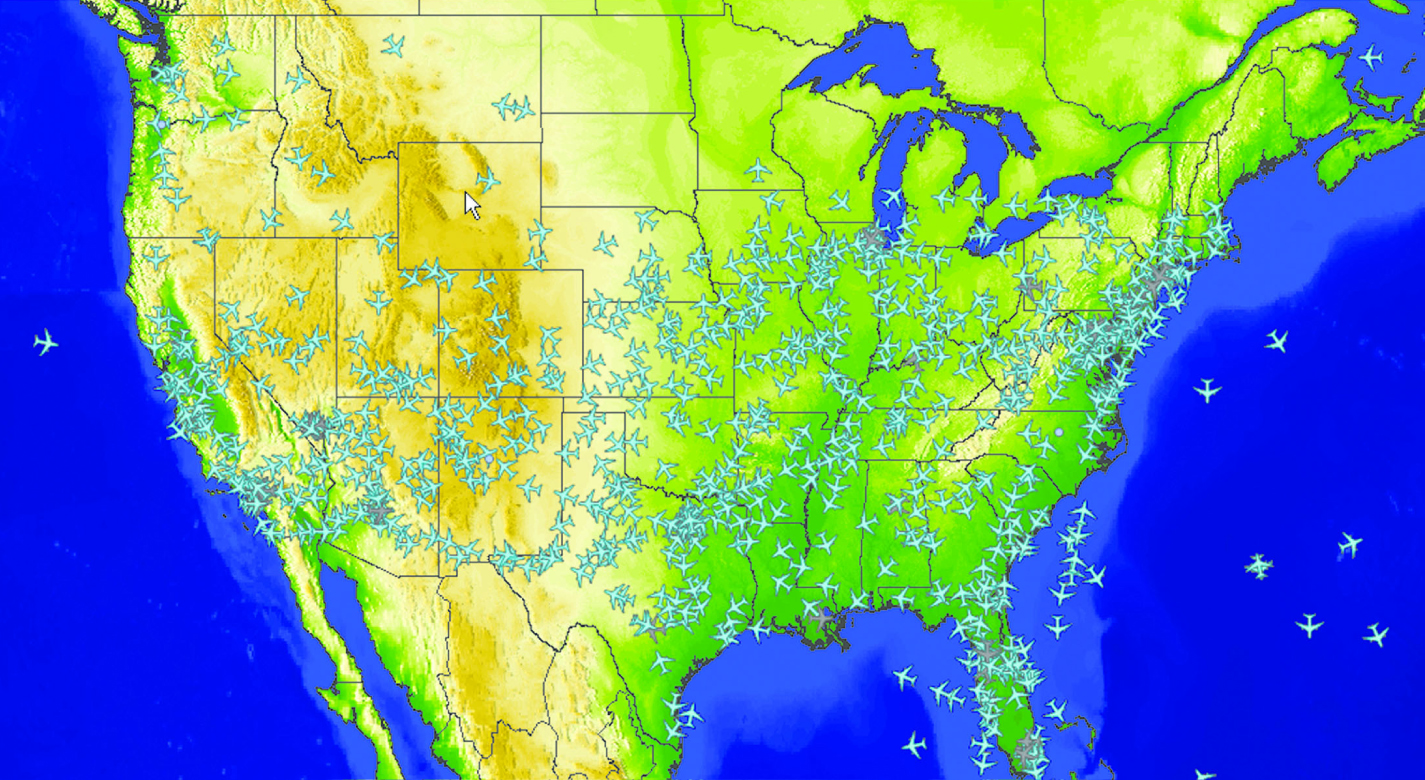
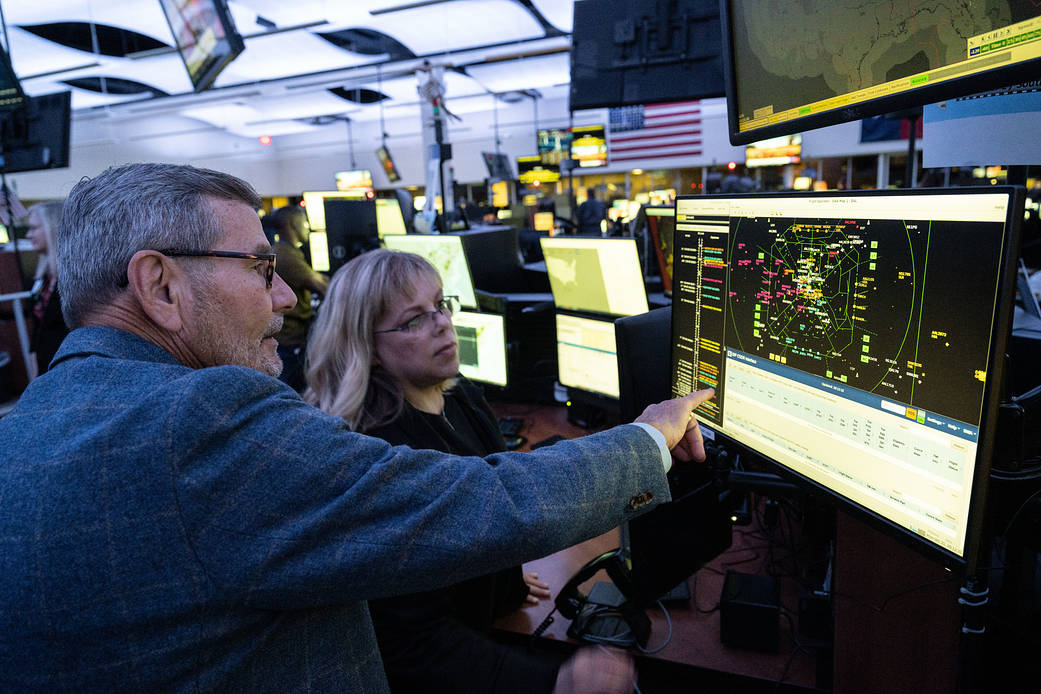
NASA’s FACET is an advanced software tool that helps manage air traffic by providing experts with a real-time view of the U.S. airspace, which is one of the busiest in the world. The tool pulls live flight data from FAA radar and combines it with National Weather Service updates to create a clear, up-to-the minute picture of airspace conditions. FAA traffic flow managers and airline dispatchers use FACET to plan smarter routes and reroute flights around storms and congestion. By improving how flights are managed, FACET helps reduce delays—directly benefitting passengers with smoother, more reliable travel.
2005 – Airspace Concept Evaluation System (ACES)
NASA developed ACES to simulate real-world air traffic conditions by modeling every part of the NAS-from individual flights and airports to air traffic control centers and airline operations. This allowed researchers to test future scenarios, spot bottlenecks, and evaluate how the system will handle growing flight demand. The FAA worked closely with NASA and used insights from ACES to shape future air traffic tools and strategies. By testing new ideas before they were deployed, ACES supported safer, more efficient air travel with fewer delays for passengers.
2005 – Surface Management System (SMS)
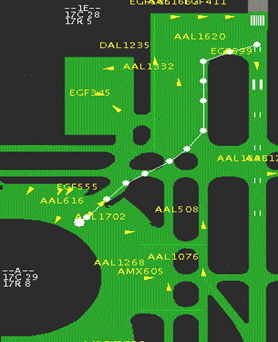
NASA developed SMS in coordination with the FAA as a decision-support tool to help manage aircraft on airport surfaces, such as taxiways, runways, and ramps. FedEx and Northwest Airlines, which later merged with Delta Airlines, used SMS to improve their surface operations. The system integrates data from multiple sources to predict departure demand, arrival times, and the impact on surface traffic flow. NASA transferred the tool to the FAA, enabling air traffic controllers, traffic managers, and airlines to work more efficiently, make better decisions, and improve safety. As a result, it also reduced surface delays and directly benefited both passengers and industry.
2007 – Automatic Dependent Surveillance – Broadcast (ADS-B)
NASA conducted flight tests to validate ADS-B, a GPS-based system the FAA developed to give pilots and air traffic controllers real-time traffic information. Since becoming the foundation of the FAA’s NextGen Air Traffic Management System in 2020, ADS-B has transformed how aircraft are tracked in the sky. Today, NASA continues to evaluate how ADS-B performs in dense urban areas, where buildings can block signals—much like losing cell phone service—to help ensure safe, more efficient air travel as new aircraft like drones and air taxis enter the skies.
2008 – 4D Flight Management System (FMS)
The 4D FMS helps aircraft fly more precisely by planning routes in four dimensions: latitude, longitude, altitude, and time. Unlike traditional systems, NASA’s 4D FMS can manage multiple arrival-time targets, leading to more accurate schedules, fewer delays, and improved fuel efficiency. NASA transferred key technologies from this research to the FAA, and the FAA is integrating it into current and future air traffic systems that will support the safe operation of future autonomous and semi-autonomous aircraft.
2008 – Traffic Management Advisor (TMA)
NASA and the FAA developed TMA—one of the core technologies in the FAA’s Center Terminal Radar Approach Control (TRACON) Automation System (CTAS)—to give controllers real-time data for managing aircraft spacing. TMA provided precise scheduling of arrivals and departures, increasing airport capacity while reducing delays, fuel use, and emissions. Between 1996 and 2008, the FAA deployed TMA across all 20 U.S. En Route Air Traffic Control Centers (ARTCCs). TMA later evolved into today’s Time-Based Flow Management (TBFM) as part of the FAA’s Next Generation Air Transportation System (NextGen).
People experienced fewer delays, safer approaches, and smarter navigation as NASA's digital tools shaped new safety standards and FAA tech.
2010s
DIGITALIZATION, COLLABORATION, AND ADVANCED FLIGHT EFFICIENCY
2011 – Automatic Dependent Surveillance Broadcast (ADS-B) In-Trail Procedures (ITP)
NASA played a key role in developing, testing, and certifying the ITP application of ADS-B technology. ITP-equipped aircraft can safely climb or descend through non-surveillance oceanic airspace where other planes are present by using precise, distance-based separation. This was a major improvement in areas that were previously controlled with only a predetermined, fixed-separation distance. NASA’s research, flight trials, and collaboration with industry and regulatory partners helped turn ITP from an idea into a real operational procedure. ITP improves flight efficiency, saves fuel, and increases passenger comfort by helping aircraft reach optimal altitudes more quickly.
2012 – Efficient Descent Advisor (EDA)
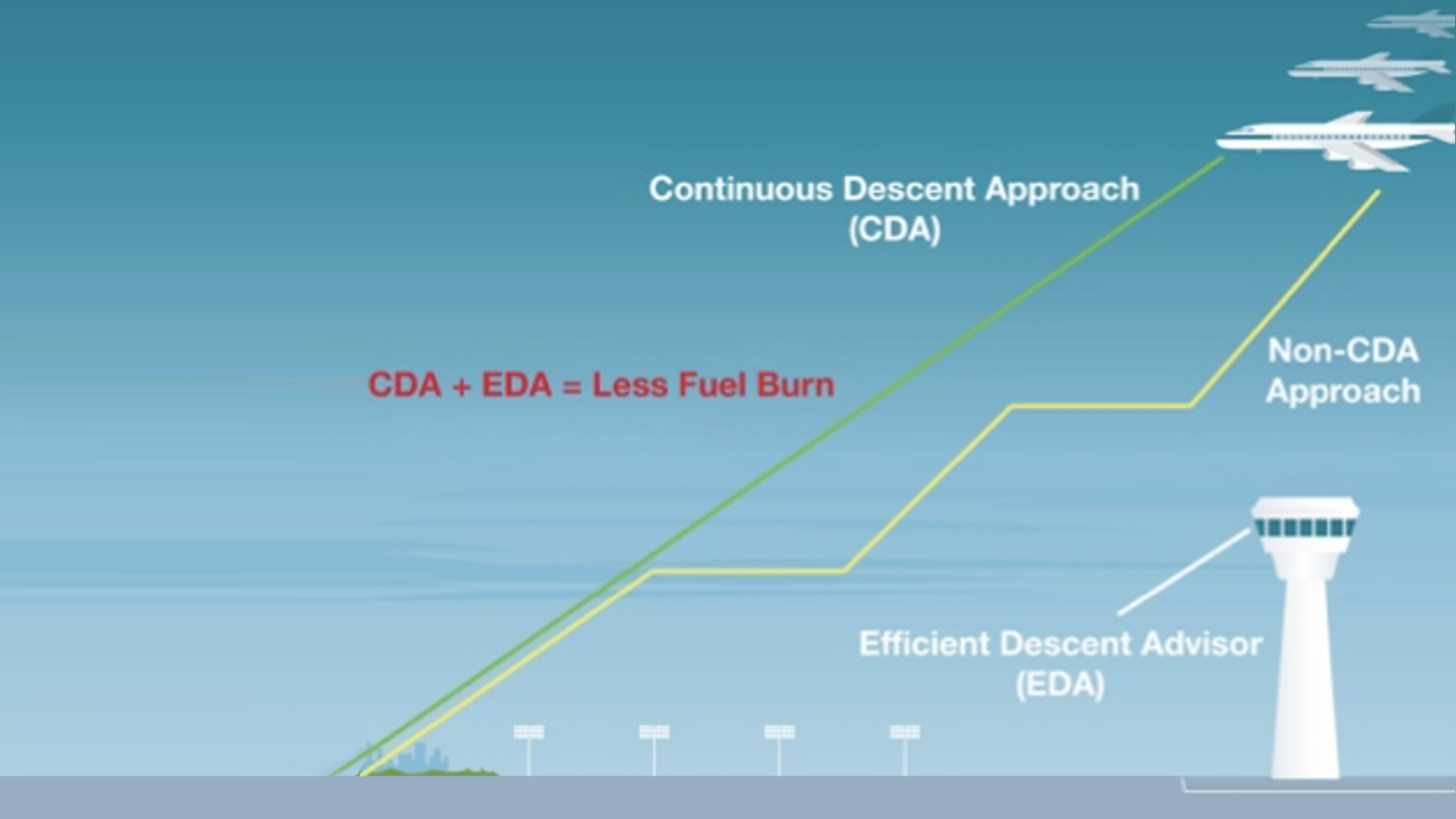
To improve inefficient descent procedures that often forced planes to level off many times, NASA developed the EDA tool. The tool helps pilots follow a smooth, continuous glide with engines at idle which reduces fuel use, noise over communities, and air traffic controller workload. NASA tested EDA with commercial airlines and the FAA, and it later became one of the core technologies in the FAA’s Center Terminal Radar Approach Control (TRACON) Automation System (CTAS). EDA proved that idle-thrust descents make the air travel system more dependable and sustainable. It also supported the FAA’s larger effort to modernize arrival management across the NAS.
2014 – Fatigue Risk Management Systems (FRMS)
NASA used its decades of fatigue research to validate the safety of FRMS in 2012. These science-based, data-driven systems continuously assess fatigue risks and help prevent fatigue-related errors. FRMS became operational in 2014, which allowed airlines to add these methods into their Safety Management Systems (SMS). This shift helped airlines move beyond fixed duty-hour limits and use tailored strategies, training, and technologies that maintain pilot alertness. These practices reshaped aviation safety by reducing fatigue-related hazards and improving operational reliability. Today, FRMS principles also support air traffic controllers, maintenance technicians, and dispatch personnel.
2014 – Wake Vortex Research
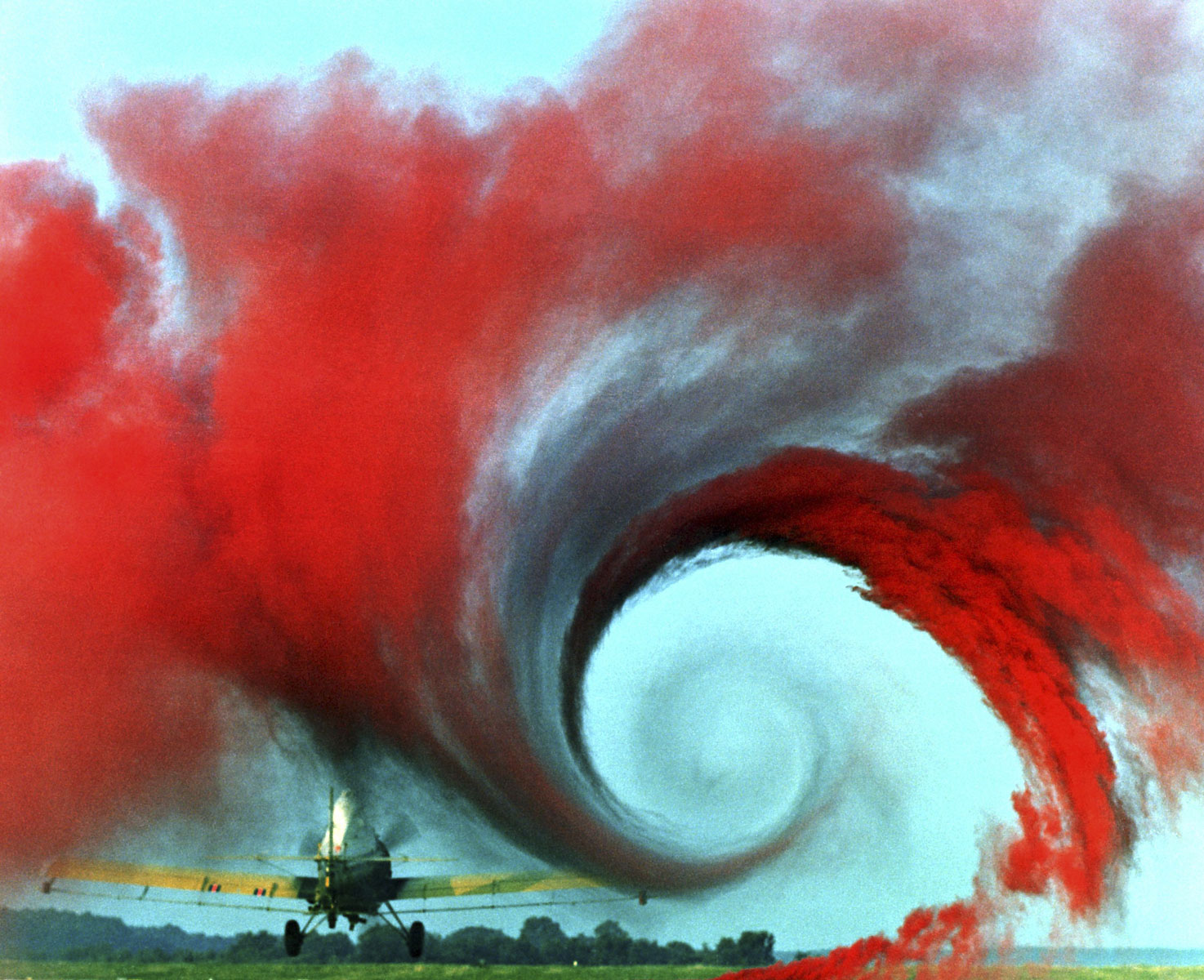
NASA conducted wake vortex research to understand how aircraft wakes—the swirling air behind an aircraft, like the wake behind a boat—move and fade over time. Using sensors NASA set up at Memphis International Airport, the research showed that wake decay follows a three-phased process with long-lived vortex rings and is affected by weather conditions. NASA transferred these findings to the FAA through software tools, datasets, and technical expertise. This work enabled the FAA to recategorize aircraft separation standards, develop new wake-avoidance procedures, and implement dynamic spacing systems that increased capacity in the NAS.
2014 – Terminal Sequencing and Spacing (TSS)
NASA’s TSS is a ground-based automation tool that helps air traffic controllers manage the order and spacing of arriving aircraft, especially during busy times. In 2014, NASA transferred TSS technology to the FAA, who then built it into their Time-Based Flow Management (TBFM) and Terminal Sequencing and Spacing (TSAS) systems. Today, these systems continue to use TSS capabilities to enable time-based traffic management, reduce holding patterns, and improve arrival efficiency.
2016 – Enhanced Flight Vision Systems (EFVS)
NASA pioneered EFVS to help pilots land safely in low-visibility conditions like fog, rain, or darkness. The system gives pilots a real-time, sensor-created view that is better than what they can see with the human eye. Extensive testing proved that pilots could rely on EFVS images to safely “see” the runway, land, and stay on course during roll out—when the aircraft slows down on the runway after touchdown. These results led to FAA rule changes in 2016 allowing pilots to use EFVS alone to land and updated training requirements. EFVS remains widely used today to improve situational awareness and enable safer, more flexible aviation operations. It also plays an important role in the FAA’s Next Generation Air Transportation System (NextGen) effort to modernize the NAS.
2016 – Dynamic Weather Routes (DWR)
NASA developed DWR to help flights in a single air traffic control center avoid storms and save time and fuel. This ground-based automation tool continuously analyzes aircraft to identify and recommend simple route changes that lower operator workload, improve efficiency, and reduce delays. The FAA used insights from NASA’s real-world tests to guide future air traffic systems, and the tool was later licensed for commercial use. Today, DWR is part of NASA’s National Airspace System Constraint Evaluation and Notification Tool (NASCENT). NASCENT uses the Future ATM Concepts Evaluation Tool (FACET) to continuously monitor airspace, prevent congestion, and enhance the safety and efficiency of air travel.
2017 – Airplane State Awareness (ASA) Studies and Technologies
The Commercial Aviation Safety Team (CAST) identified the loss of airplane state awareness (ASA) as a major factor in fatal aviation accidents. To address this risk, NASA worked with the FAA, industry, and standards organizations to study the problem and how to prevent it. NASA ran simulations with more than 200 airline pilots to better understand why ASA loss happens and to evaluate new cockpit displays, alerting systems, and training methods. ASA technologies help pilots stay oriented and in control, especially when visual cues are limited or when the aircraft faces an unexpected stall and the wings can no longer produce enough lift. NASA’s research led to safety improvements now used in commercial aircraft and contributed to updated FAA standards.
2017 – Detect and AvoID Alerting Logic for Unmanned Systems (DAIDALUS)
NASA developed DAIDALUS to give Unmanned Aircraft Systems (UAS), such as drones, the detect-and-avoid capabilities they need to fly safely in the national airspace. The system uses proven self-separation and alerting algorithms to help remote pilots stay aware of nearby aircraft and make safe decisions in real time. Avionics manufacturers, research institutions, and the FAA widely adopted DAIDALUS, released as open source in 2017, to build and test detect-and-avoid systems for unmanned aircraft. Today, DAIDALUS is the reference model for industry detection-and-avoid standards and is used in human-in-the-loop simulations, flight tests, and regulatory development.
2018 – Flight Deck Interval Management (FIM)
NASA designed, built, and tested FIM, a technology that helps pilots manage spacing between aircraft more precisely during landings. Using real-time Automatic Dependent Surveillance—Broadcast (ADS-B) data and onboard automation, FIM calculates optimal airspeeds so pilots can safely meet air traffic control spacing goals and maximize airport arrival capacity. This improves arrival accuracy from within a minute to just a few seconds and reduces fuel use, delays, and controller workload. NASA transferred FIM to the FAA in 2018, and it is now helping modernize air traffic operations across the NAS, making air travel more efficient and reliable.
2018 – Traffic Aware Strategic Aircrew Requests (TASAR)
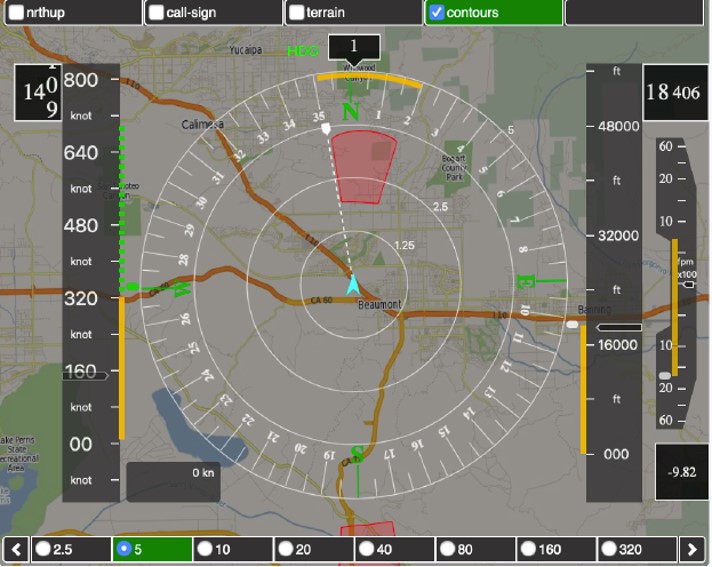
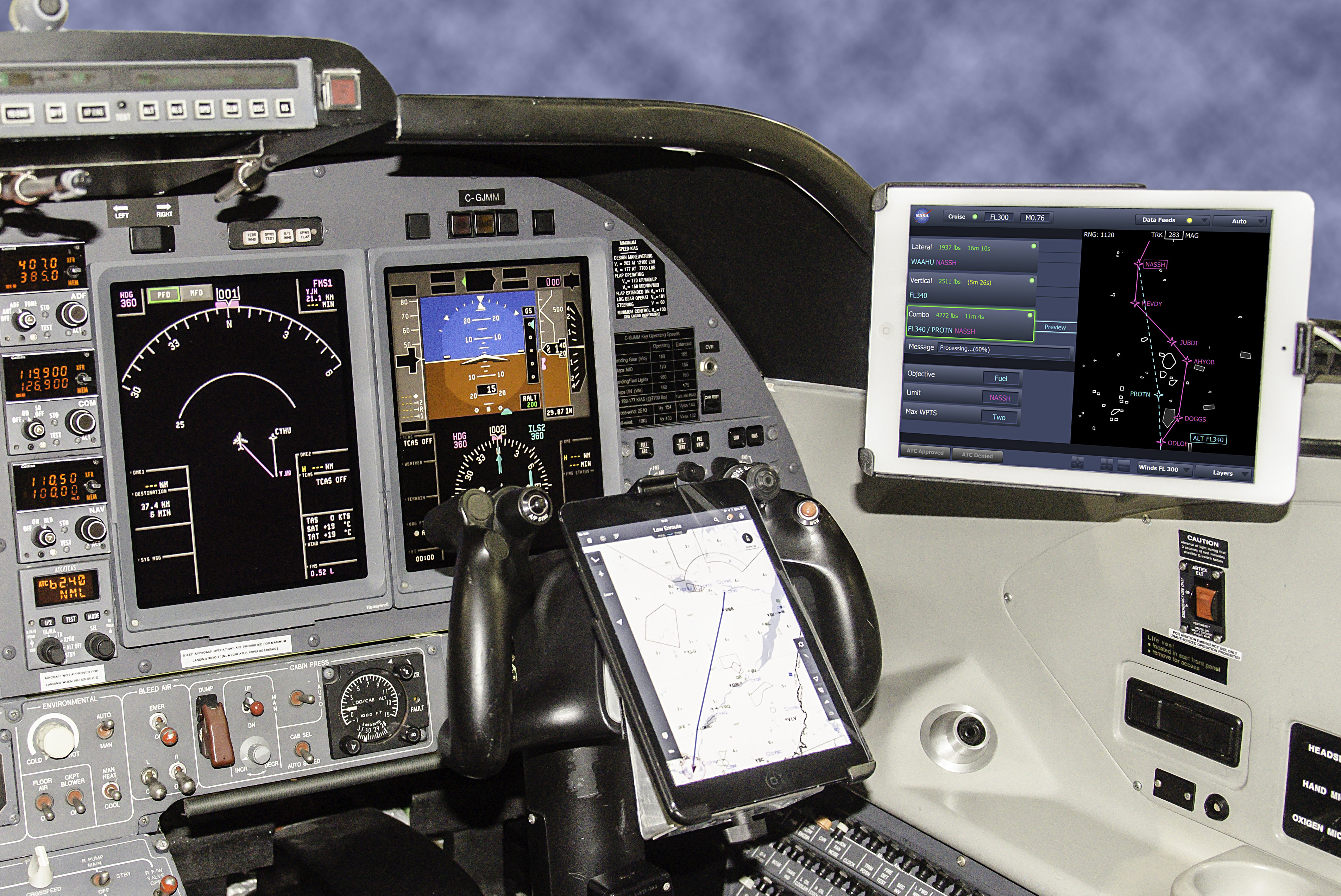
NASA developed TASAR to help pilots optimize flight routes in real time, improving flight efficiency and reducing emissions. Using onboard automation, TASAR analyzes traffic, weather, and airspace constraints to suggest reroutes that air traffic control is likely to approve. By enabling pilots to make informed, traffic-aware requests, TASAR reduces fuel use, shortens flight times, and lowers operating costs. After successful in-flight testing, TASAR transitioned to industry for operational use. This advanced the FAA and NASA’s shared vision for more connected and increasingly autonomous aircraft and for a modernized NAS.
Flights became more efficient and predictable as NASA’s collaborative, digital first systems helped airlines slash fuel use, cut emissions, and land safely in zero-visibility weather.
2020s
EMERGING AIRSPACE INTEGRATION AND AUTONOMOUS OPERATIONS
2020 – Unmanned Aircraft System Traffic Management (UTM) System
NASA introduced the UTM concept in 2013 as a research framework to safely manage low-altitude drone traffic and integrate new airspace users. Through research, testing, and live demonstrations, NASA developed core capabilities, such as data sharing and conflict management. NASA also partnered with the FAA to shape future regulations and accelerate industry adoption. By 2020, NASA’s research had transitioned to real-world use, making UTM an operational necessity for the growing drone industry. Today, NASA continues working with the FAA and industry to mature UTM for broad deployment. These efforts ensure safe, efficient drone integration into the NAS and influence global standards.
2020 – Psychomotor Vigilance Test (PVT+) Application
Building on decades of fatigue research, NASA developed the NASA PVT+ iOS application to support human fatigue and alertness assessments in operational settings. The app allows aviation professionals to collect data on human performance to assess parts of flight operations that may contribute to fatigue or reduced human performance. This information is then used to introduce risk mitigations, such as adjusting flight schedules to give pilots more time for sleep and recovery.
2021 – Integrated Arrival, Departure, and Surface Operations (IADS)
IADS is a suite of NASA-developed airport tools, including Terminal Sequencing and Spacing Tool (TSS) and Flight Deck Interval Management (FIM), that improved how aircraft move on the ground and in the airspace around airports. NASA’s technologies and capabilities enabled precision gate pushback, non-stop taxiing, and continuous climb. These improvements reduced fuel burn and increased information sharing between the FAA and industry. After NASA transferred IADS to the FAA, the FAA integrated the tools into its Time-Based Flow Management (TBFM) and Terminal Flight Data Manager (TFDM) programs, where they continue to shape operations today.
2022 – Collaborative Digital Departure Rerouting (CDDR)
NASA’s CDDR replaced manual controller coordination with a digital, data-driven system that helps airlines avoid delays and reduce emissions. In 2022, CDDR was used to improve air traffic operations at Dallas/Fort Worth International Airport and Dallas Love Field Airport. The system integrated FAA air traffic data and airline surface traffic data and used machine learning to predict runway availability and optimize departure routes. Today, major airlines and airports use CDDR advancing more sustainable and efficient air traffic operations.
2022 – Software Assurance Technologies
NASA strengthened traditional software assurance, focusing on the validity and reliability of the code that drives next-generation, AI-enabled aircraft. As aviation began relying more on complex computer programs, NASA created strict testing methods to ensure these systems work as intended. Researchers used automated tools to find hidden defects and test how artificial intelligence (AI) components behaved at the code level to make decisions. This work ensured that critical flight software in the NAS functions predictably and safely, without unexpected surprises.
2023 – Provider of Services for UAM (PSU)
NASA began exploring Urban Air Mobility (UAM) in 2017 to enable highly automated passenger and cargo flights in dense metropolitan areas. To safely manage this new traffic, NASA developed and tested a PSU prototype. Acting as a digital traffic network, the PSU allowed different operators to safely share the same airspace by automatically sharing data, coordinating flight plans, and resolving scheduling conflicts. NASA successfully tested the system in simulated city environments in 2023, giving the FAA and industry a critical reference architecture for safe, scalable urban flight. This work is still underway as the system continues to mature.
2023 – ML-Enabled Safety Analytics
NASA developed new machine learning (ML) tools to help shift aviation safety from a reactive to a proactive system. Instead of relying on slow manual reviews, NASA’s predictive tools instantly flagged hidden anomalies—like unusual descent rates—across millions of flight logs and safety reports. In 2023, these insights were then shared with global safety organizations like CAST, the Aviation Safety Information Analysis and Sharing (ASIAS) program, and the International Civil Aviation Organization (ICAO). This work is still ongoing and continues to help the aviation industry spot early warning signs and implement data-driven safety improvements worldwide.
2024 – Space Operations Portal (SpORT)
To safely manage the rapid growth of commercial spaceflights, NASA collaborated with the FAA to modernize its Space Operations Portal (SpORT)—a web-based tool for coordinating launch and recovery. Drawing on its award-winning experience developing Unmanned Aircraft Systems Traffic Management (UTM) interfaces, NASA worked with launch operators, commercial spaceports, and government agencies to automate and refine the portal’s complex data exchanges. Across six major software releases between 2023 and 2024, NASA successfully delivered enhanced workflow automation, detailed tracking, and expanded notifications, transforming SpORT into a highly efficient platform for real-time mission planning.
2024 – Assurance of Autonomy
Because traditional safety tests were not built for fast-changing AI systems, NASA developed a suite of “Assurance of Autonomy” tools to accelerate the safe certification and integration of autonomous aircraft. Tools like AdaStress and AdvoCATE used “explainable-AI” methods to test, predict, and better understand complex autonomous behavior—not just the code behind it. Partnering with major aviation companies and regulators, NASA shared this research in 2024, which is now shaping new FAA guidelines and ensuring autonomous flight systems are fully understood before entering the airspace.
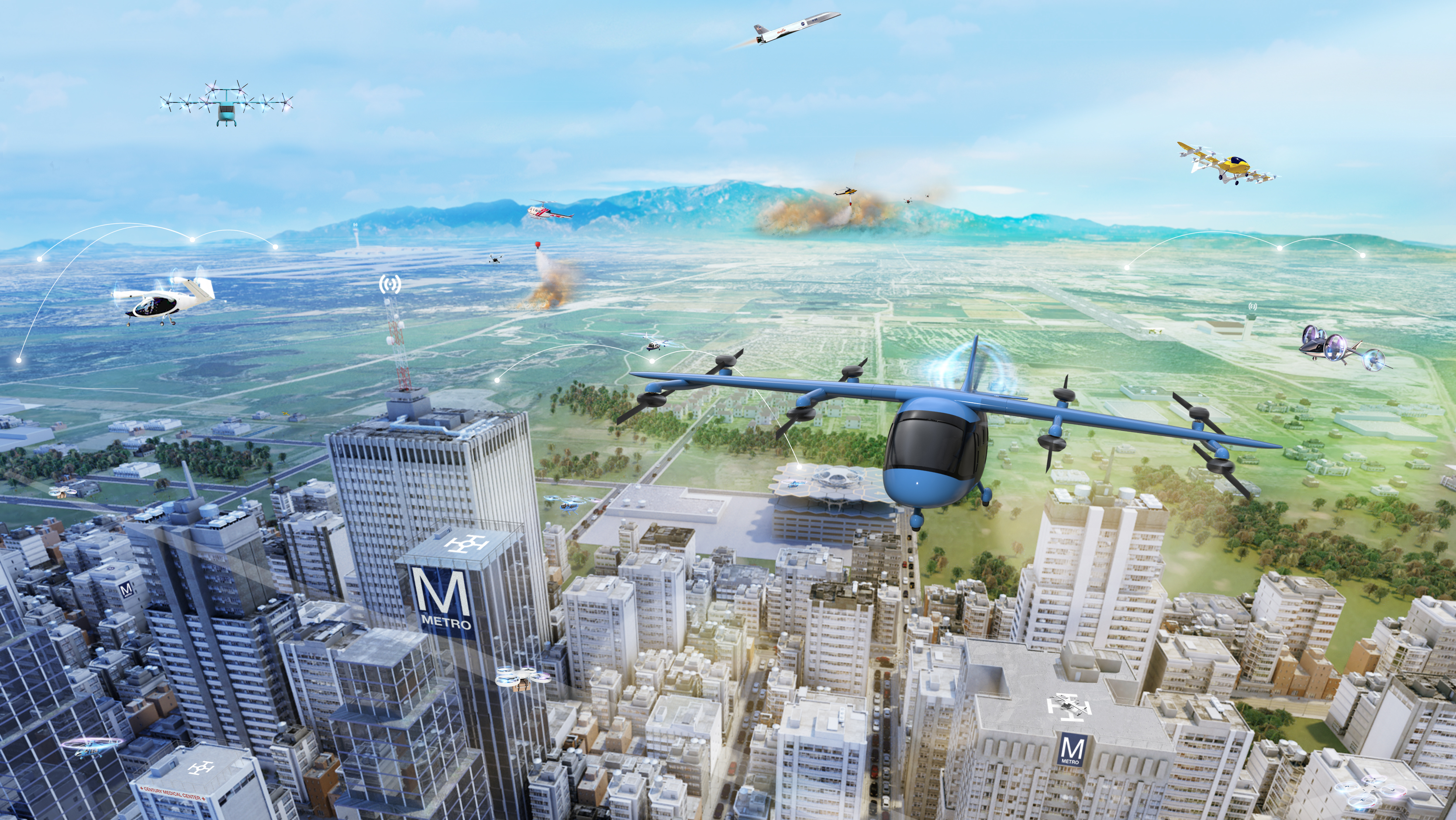
NASA is shaping the future of air travel with drone-traffic systems, safety technologies, and digital tools that enhance safety and expand new air-mobility operations for communities.

NASA is shaping the future of air travel with drone-traffic systems, safety technologies, and digital tools that enhance safety and expand new air-mobility options for communities.
Present Day
NASA’s Airspace Operations and Safety Program (AOSP) partners with the FAA and industry to automate airspace and safety management capabilities. AOSP focuses on meeting evolving regulatory requirements and enabling new kinds of aircraft to safely perform additional types of flights, including emergency response in expanded areas of U.S. airspace.
In-Time Aviation Safety Management System (IASMS)
NASA began developing the IASMS concept in 2019 to make flying safer as more autonomous aircraft, like drones and future air taxis, entered the system. The new technology is designed to continuously monitor, assess, and mitigate airborne risks in real time. Using AI and data from aircraft, weather, and traffic systems, IASMS can even detect new, unexpected risks and quickly analyze the complex information to support the human decision makers. This research helps create a safer, more adaptable airspace as aviation operations became more automated and more complex.
Advanced Air Mobility (AAM)
Since 2020, NASA has partnered with the FAA and industry to help safely integrate Advanced Air Mobility (AAM) into U.S. airspace. AAM includes highly automated, often electric aircraft-like air taxis and delivery drones—that can take off and land vertically and offer new ways to move people and goods. Building on earlier drone-integration work, NASA is developing system design and performance requirements to guide future safety standards and regulations. This helps ensure these vehicles operate safely and efficiently as they transform urban and regional transportation.
Automated Flight Rules (AFR) Concept and Research
NASA is researching Automated Flight Rules (AFR), a new set of ideas meant to work alongside today’s Visual and Instrument Flight Rules procedures. AFR is designed to support future aircraft that use higher levels of automation—not just drones and air taxis, but potentially traditional aircraft as well. Instead of replacing human decision‑making, AFR focuses on helping automated systems and operators work together more effectively. This ongoing research also provides the FAA with data and technical insights that can inform future rulemaking as the airspace becomes more automated.
Verification and Validation (V&V)
NASA is working with the FAA to strengthen aviation safety as advanced technologies like artificial intelligence and Advanced Air Mobility (AAM) become more common. A key part of this effort is developing new V&V methods to make sure these systems are safe, reliable, and ready for real-world use. NASA will also update its V&V 2045 Roadmap, the long-term safety plan, using expert input from the FAA on human-systems integration and machine learning. These efforts will help ensure that future air transportation systems are safe, reliable, and ready for the challenges ahead.
Digital Information Platform (DIP)
Launched in 2019, DIP accelerates the transformation of the NAS by providing advanced, data-driven digital services that support efficient aviation operations. This cloud-based ecosystem brings together data from multiple sources and turns it into accessible, user-friendly digital information that supports the development of next-generation airspace management services. Through DIP, NASA used cloud-based technologies and machine learning to quickly deploy the Collaborative Digital Departure Rerouting (CDDR) system. Demonstrations at Houston– and Dallas/Fort Worth–area airports showed measurable benefits, including fewer departure delays and improved operational efficiency. NASA is now transferring the technology to the FAA to support system-wide deployment.
UAS Traffic Management (UTM) Beyond Visual Line of Sight (BVLOS)
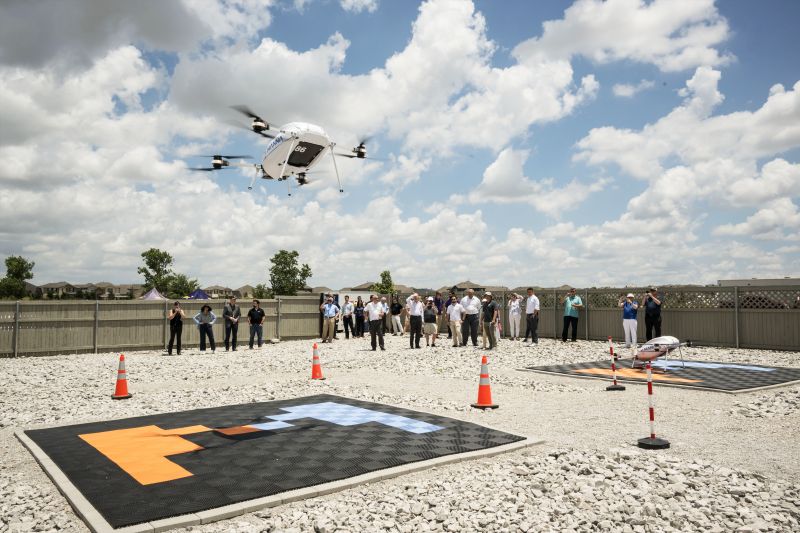
NASA partners with the FAA and industry to develop safe ways for drones to fly BVLOS, where operators cannot see the aircraft directly. These flights enable new services like package delivery, infrastructure inspection, and emergency response. NASA’s research helps inform the FAA’s proposed BVLOS operating rules and continues to advance safe, scalable BVLOS flights in low altitude airspace. Testing for BVLOS began in 2024 at the NASA/FAA North Texas Research Station, and this work continues today to support everyday drone use and guide FAA policies and industry standards.
Wildfire Response and Emergency Airspace Management
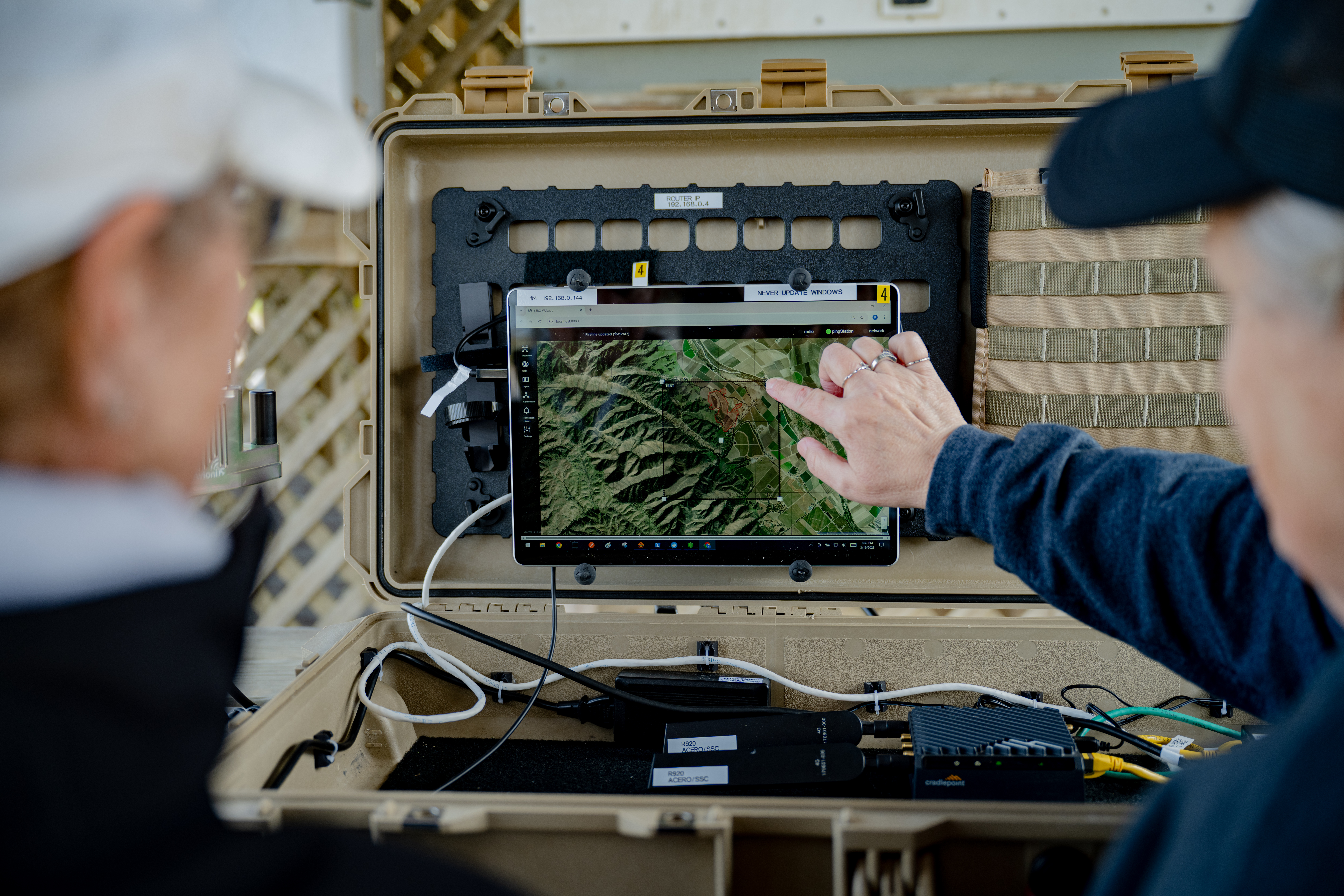
Since 2023, NASA has developed new airspace technologies to support 24-hour emergency operations, including aerial wildfire suppression in low-visibility conditions. With U.S. wildfire losses estimated at $394–$893 billion each year, NASA’s innovations enhance situational awareness and coordination for emergency responders. In March 2025, NASA researchers validated the Portable Airspace Management System, which allows crews to deploy aircraft for wildland fire suppression and monitoring around the clock, even when visibility is low. By enabling safe aerial operations in challenging conditions, the system removes one of the biggest barriers to aerial wildland firefighting. NASA plans to transfer this technology for rapid deployment and will continue expanding capabilities to meet changing emergency response needs.
Fatigue Countermeasures Laboratory (FCL)
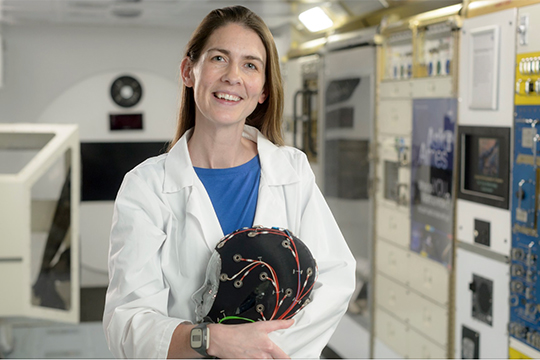
NASA’s FCL—originally created with the FAA in 1991 as the Fatigue Countermeasures Program—conducts research on aviation operations to characterize fatigue and design effective countermeasures. The laboratory creates tools and technologies to improve fatigue detection and mitigation. This applied research provides aviation stakeholders with evidence-based guidance on the causes and consequences of fatigue. NASA’s research on long-haul flight operations directly informed FAA regulations on flight, duty, and rest requirements for commercial pilots. To expand its impact, the program shared its findings through educational and training materials for pilots, flight attendants, managers, schedulers, and safety personnel.
NASA’s Aeronautics work is vital to keeping the nation’s airspace safe, resilient, and ready for rapid change. By digitizing and automating core airspace functions, NASA is enabling real-time safety awareness, smarter autonomous operations, and seamless integration of emerging vehicles like drones and air taxis. These advancements aren’t optional upgrades—they’re the essential backbone of a modern air transportation system that must handle growing complexity without compromising safety or performance.
The U.S. AAM market is projected to grow from $17 billion in 2025 to $115 billion by 2035, creating over 280,000 high-paying jobs and transforming urban and regional mobility
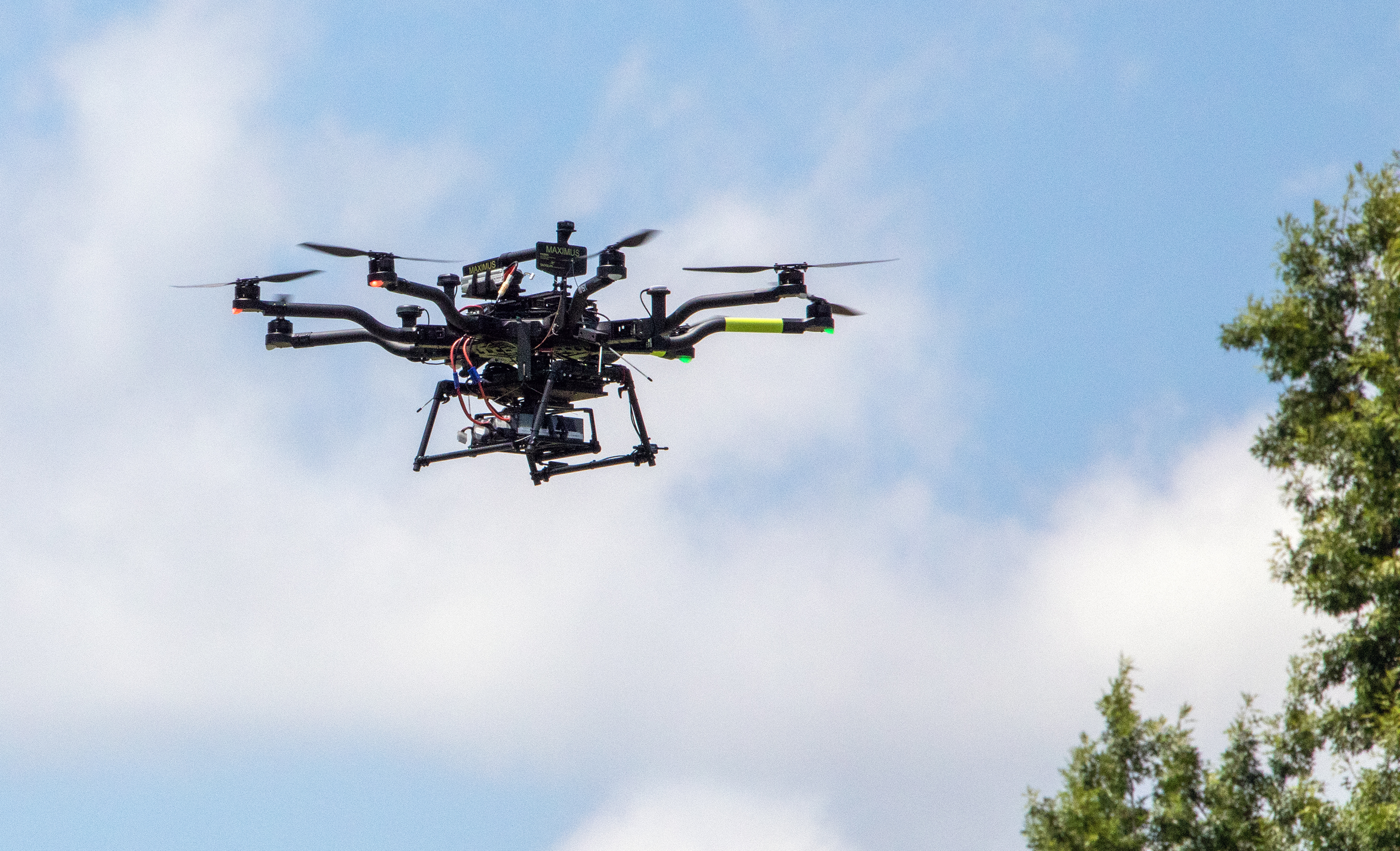
The U.S. commercial drone market produced $5,309.3 billion in revenue in 2023, with projections showing growth to $9,787.7 billion by 2030.

(displayed on bottom right monitor).