








-1.jpg?w=1024)




More Spacewalk Preps, Advanced Research as Cargo Craft Readies for Departure
The Expedition 74 crew continued its spacewalk preparations on Tuesday while keeping up vascular health research and artificial intelligence studies. Mission managers have also given the go for the departure of a U.S. cargo spacecraft from the International Space Station this week.
NASA flight engineer Jessica Meir tried on her spacesuit today with assistance from fellow NASA flight engineer Jack Hathaway inside the Quest airlock. The duo confirmed that the spacesuit is airtight and properly configured and assessed its comfort and mobility. Afterward, flight engineers Chris Williams of NASA and Sophie Adenot of ESA (European Space Agency) joined the pair and called down to mission controllers for a spacewalk procedures review. Earlier, Williams prepared a helmet for installation on a spacesuit while Adenot trained to use the Canadarm2 robotic arm to support the spacewalkers.
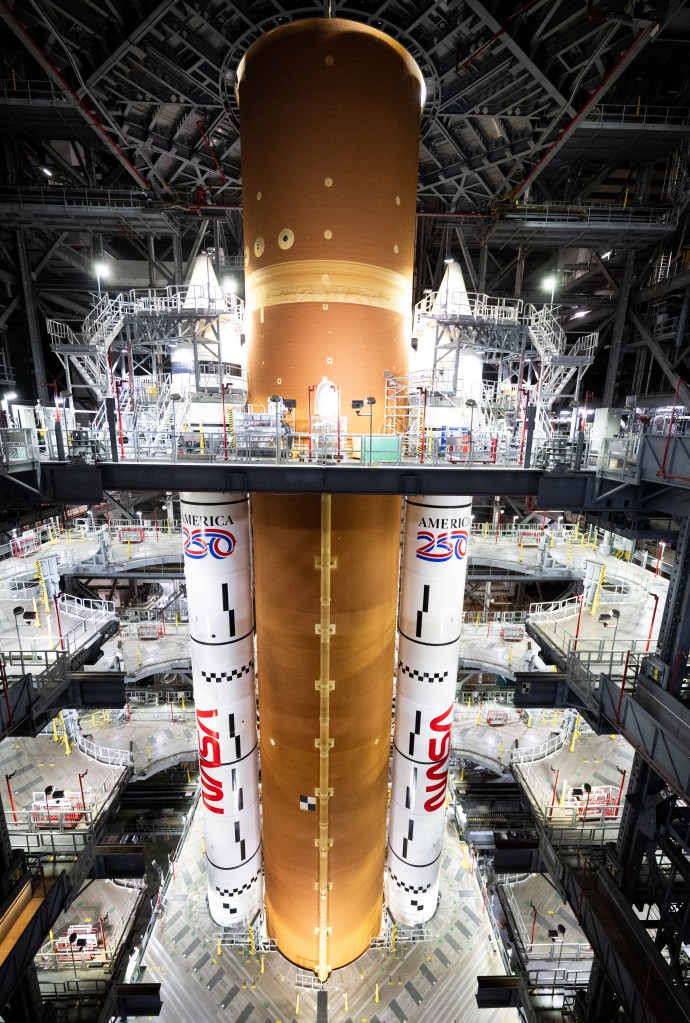
Meir and Williams are preparing for an upcoming spacewalk to ready the orbital outpost for a new roll-out solar array. The duo will spend about six-and-a-half-hours in the vacuum of space installing a modification kit and routing cables on the port side of the orbital outpost for the future roll-out solar array. The station’s seventh roll-out solar array will be installed on a later spacewalk to augment the main solar arrays’ power generation capabilities.
Cosmonauts Sergey Kud-Sverchkov and Sergei Mikaev joined each other again on Tuesday and applied sensors to their forehead, fingers, and toes that sent their blood flow data by Bluetooth adaptor to a laptop computer where it was recorded for analysis. Doctors will use the biomedical data to understand how living in space affects vascular health.
Kud-Sverchkov also cleaned and inspected the Zvezda service module’s ventilation system. Mikaev took turns with Roscosmos flight engineer Andrey Fedyaev continuing to test artificial intelligence tools as a way to improve crew operations and communications with mission controllers. Fedyaev earlier spent time inside the Nauka science module replacing orbital plumbing components, inspecting its ventilation system, and measuring the airflow.
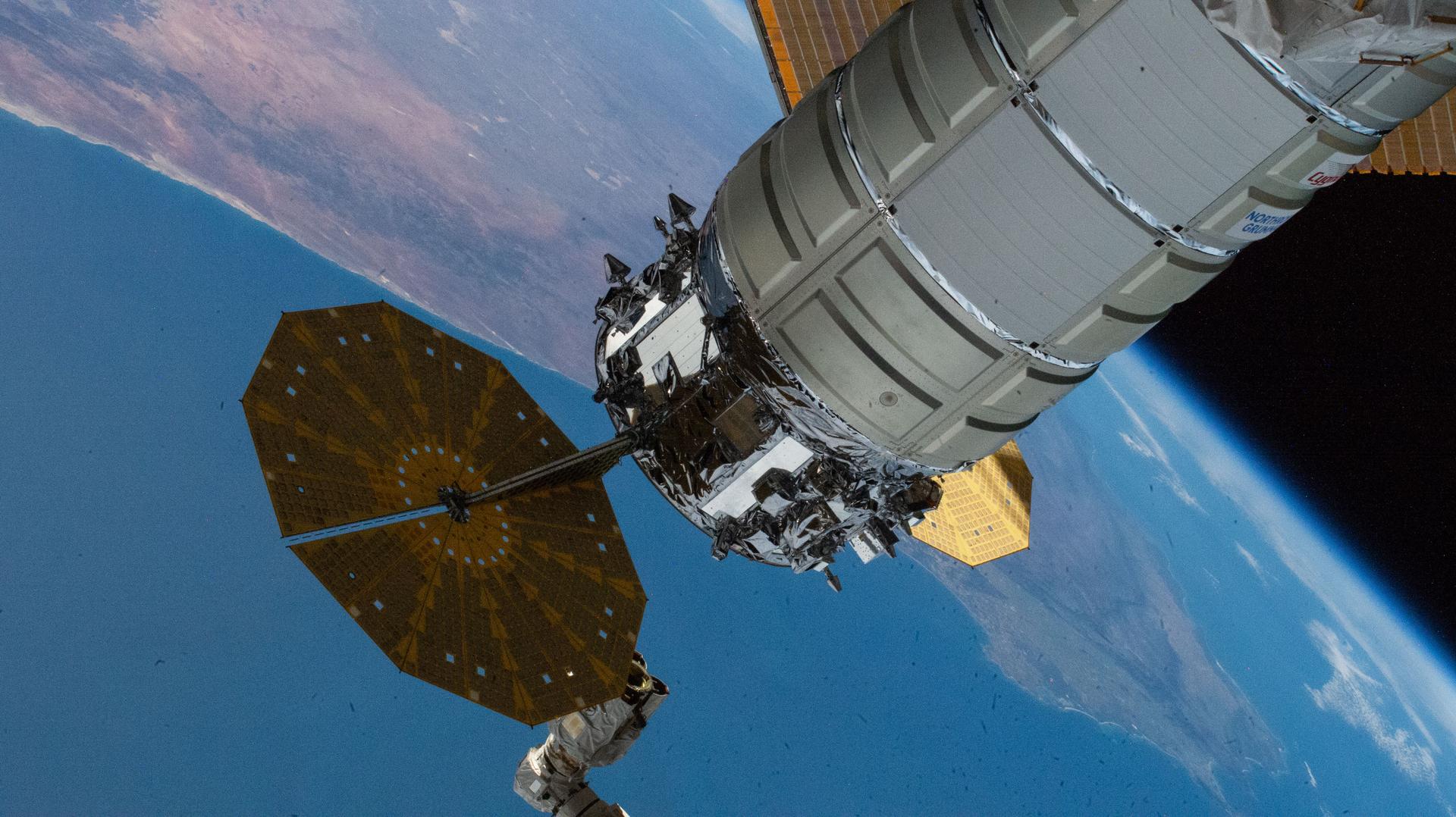
Mission managers have approved the departure of Northrop Grumman’s Cygnus XL spacecraft for 7:05 a.m. EDT on Thursday after nearly six months attached to the Unity module. Robotics controllers will remotely command the Canadarm2 to uninstall Cygnus from Unity then release it into Earth orbit for a fiery, but safe reentry above the South Pacific Ocean two days later.
NASA’s live coverage of undocking and departure begins at 6:45 a.m. on NASA+, Amazon Prime, and the agency’s YouTube channel. Learn how to watch NASA content through a variety of online platforms, including social media.
Learn more about station activities by following the space station blog, @space_station on X, as well as the ISS Facebook and ISS Instagram accounts.
Get the latest from NASA delivered every week. Subscribe here.
