



![Request for Information – Potential [Placeholder for Prize]](https://assets.science.nasa.gov/dynamicimage/assets/science/psd/solar/2023/09/s/solarsystem_0.jpg?w=1024)




This post was written prior to a reorganization of ESC’s projects and networks in support of the agency’s commercialization effort. Though accurate at the time of publication, it is no longer being updated and may contain outdated information. For more information about the current projects, click here.
LunaNet Navigation Services
Navigating to the Moon is no small feat.
The Moon is a moving target over 200,000 miles away. To get there, a spacecraft must ascend to low-Earth orbit and accelerate away from Earth at just the right moment. Once on course to the Moon, subtle corrections must be made to ensure the spacecraft is successfully placed in lunar orbit. Landing at a specific site on the Moon requires unbelievable precision.
Fifty years ago, NASA navigated humans to the Moon for the first time. The Apollo missions were a technological marvel that leveraged the latest in guidance, navigation and control techniques. As NASA journeys to the Moon again with the Artemis missions, the agency will confront the challenges of lunar navigation with powerful new technologies and capabilities safer and more robust than those that guided Apollo.
To meet this objective, NASA is developing LunaNet, a unique approach to lunar communications and navigation. The LunaNet architecture would enable the precision navigation required for crewed missions to the Moon and place our astronauts closer to scientifically significant lunar sites, enhancing the our missions’ scientific output.
The LunaNet concept began as a study in response to a solicitation for small satellite communications constellations at the Moon. Engineers within ESC worked with experts across Goddard Space Flight Center in Greenbelt, Maryland, to develop a three-pronged approach to network services. The backbone of the network is Disruption Tolerant Networking (DTN), a bundle protocol technique that overcomes the limitations of standard internet protocols used on Earth for space applications.
For lunar navigation, the LunaNet approach offers unprecedented operational independence and increased precision. The architecture would provide missions with access to key measurement data necessary for onboard orbit determination and guidance system operations. Missions using LunaNet navigation services would have everything they need for autonomous navigation in lunar space.
Numerous navigation techniques can be used to satisfy mission requirements. To meet the needs of missions like Gateway, NASA’s planned lunar-orbiting outpost, and landers descending to Moon’s surface, LunaNet would provide data including:
- A common, stable time synchronized across the network.
- Key measurements from each communications link.
- Observability of Global Navigation Satellite Systems constellation signals like GPS, (using Goddard-developed technology).
- Angular measurements of stars and celestial bodies to determine relative position.
- Images of surface features on nearby celestial bodies for terrain-relative navigation.
- A broadcast signal that transfer navigation data to the entire lunar environment, similar to GPS signals on Earth.
LunaNet navigation services would also use this data to model the future position of spacecraft. Accurate predictions would help establish future communications links and improve mission planning.
LunaNet navigation capabilities will also include a lunar search and rescue network, or LunaSAR to enhance mission safety. LunaSAR would leverage the expertise of ESC’s Search and Rescue (SAR) office, which has long developed technologies for terrestrial search and rescue. For the Artemis missions, their Advanced Next-Generation Emergency Locator (ANGEL) beacons will allow NASA to rapidly locate astronauts after splashdown and egress from the capsule. LunaSAR would extend ANGEL beacon usability from Earth to the lunar surface, enabling rapid response to potential distress situations on the Moon.
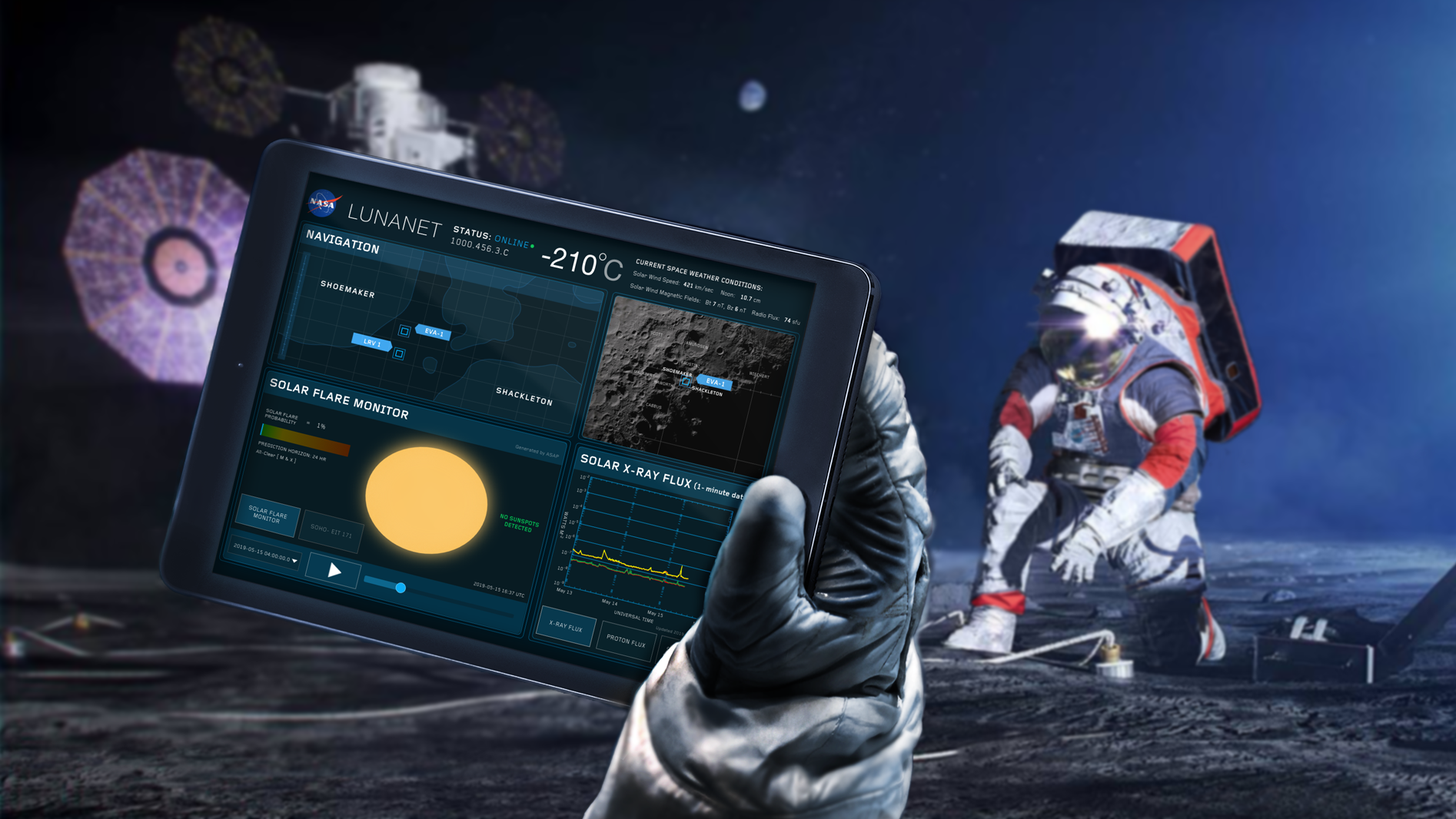
In addition to navigation, the LunaNet architecture provides two other types of services. Networking services allow for data transmission over LunaNet, using DTN protocols to route data to its destination. Science utilization services ‘enhanced by the broadcast service’ connect missions directly to NASA science data. This allows rapid responses to events like solar storms, which can adversely affect astronaut health and damage satellite electronics.
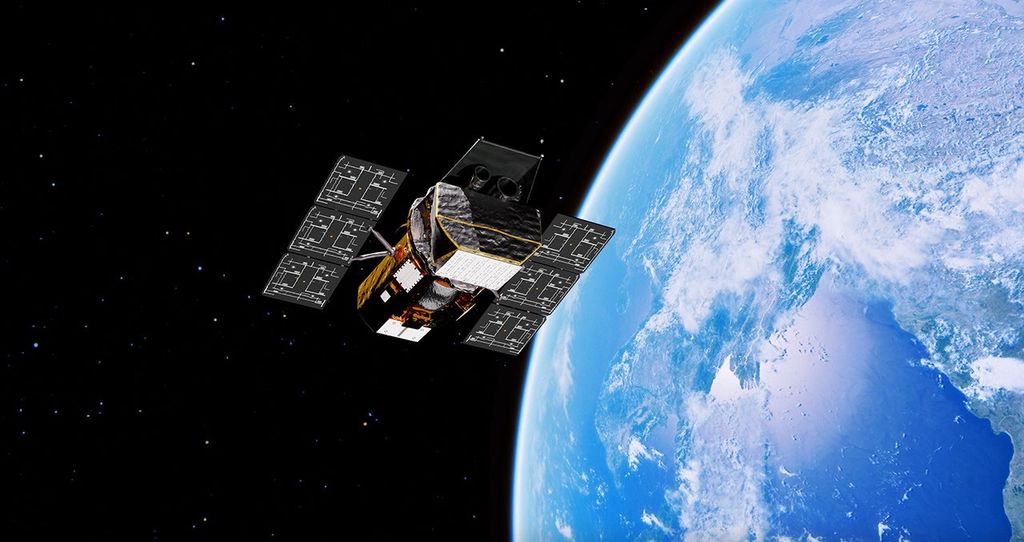
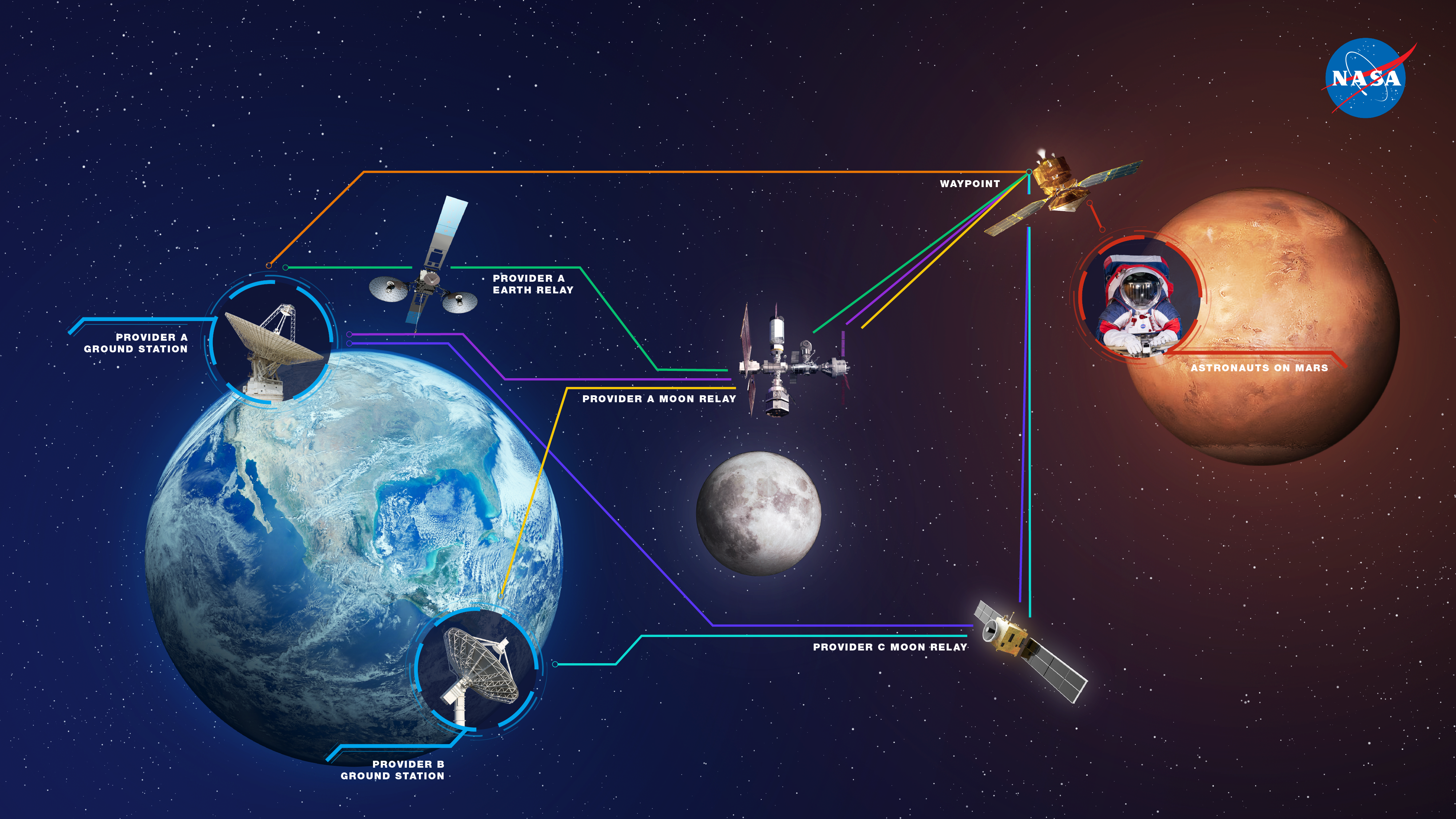
The LunaNet architecture will begin with ground stations on Earth. To meet future needs, NASA is exploring several spacecraft design options, including lunar relay satellites and constellations of small satellites to expand the LunaNet infrastructure. Additionally, the flexible and extensible nature of LunaNet will allow government, academia and private industry to launch interoperable LunaNet components that supplement NASA-developed LunaNet assets.
As the agency looks to the Moon as a testbed for Mars, the LunaNet architecture has the robust capabilities needed to ensure mission success and is scalable to our journey further into the solar system. In navigation, LunaNet can provide the accuracy necessary to keep NASA on the path toward our lofty ambitions.