





Audience
Educators
Grade Levels
Grades K-4, Grades 5-8, Grades 9-12
Subject
Physical Science, Space Science, Technology, Matter and Its Properties, Solar System and Planets, Missions to Planets and Moons, Jupiter, Planetary Moons, Remote Sensing
Type
Hands-on Activities, Lesson Plans / Activities
NASA’s Europa Clipper mission will travel 1.8 billion miles to explore Jupiter’s icy moon, Europa. Bring the excitement of the mission into the classroom with these hands-on activities.
In the Mapping Alien Worlds activity for grades 4-12, students analyze simulated radar data to map surface elevations on a grid. Next, they determine what kind of surface feature is displayed by the data. Students then build a physical model representing their data.
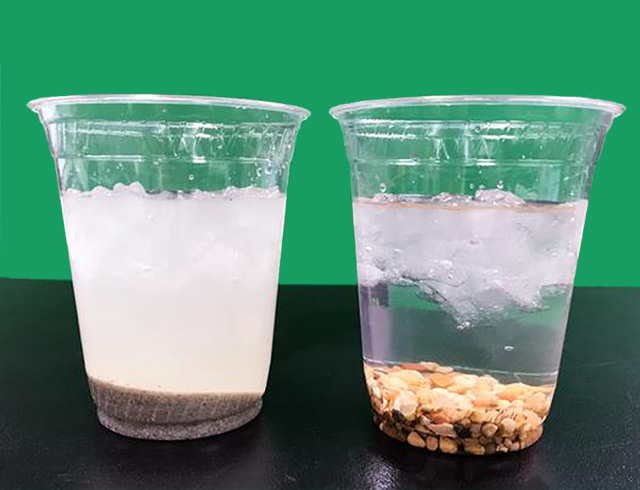
In the Discovering Alien Oceans: Density activity for grades 6-8, students use the fundamentals of density to propose a model for the interior structure of Europa. While we can’t see Europa’s ocean directly, we can use the mass and density of known substances to predict what exists underneath the surface.
In the Discovering Alien Oceans: Magnetism activity for grades 8-12, students explore the relationship between magnetism and electricity to model how scientists determined that Europa has a magnetic field and a conductive liquid, subsurface ocean.