


















Editor’s Note: NASA is updating its website to align with the latest Artemis program updates announced in February and national space policy initiatives announced in March. Learn more about the upcoming missions and NASA plans advancing Moon to Mars goals including America’s return to the lunar surface.
Overview
A NASA-led international coalition, Gateway will be a space station in lunar orbit enabling long-term human exploration at the Moon and new opportunities for scientific discovery as a foundational system to support NASA’s Artemis campaign.
Gateway is essential to the Artemis architecture, along with the Space Launch System, Orion spacecraft, Human Landing System, and spacesuits that will enable extensive exploration of the Moon’s South Pole.
International Partners
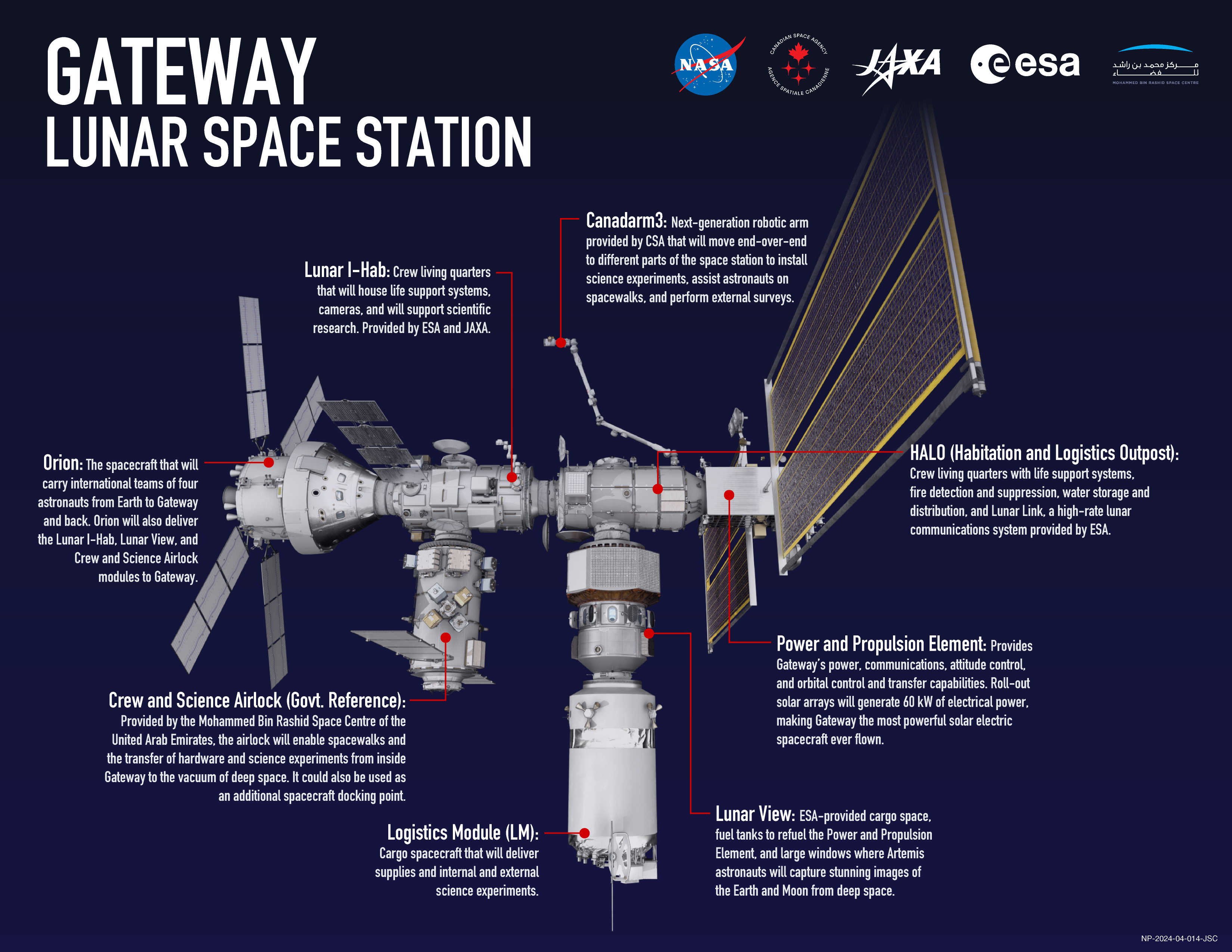
Gateway is a centerpiece of the United States’ efforts through Artemis to engage international partners to advance exploration of deep space and onward to Mars. While NASA is leading the Artemis missions, international partnerships will play a key role in achieving a sustainable and robust presence on and around the Moon.
Space agencies making significant contributions to Gateway:
- The Canadian Space Agency (CSA) is providing the next-generation external Canadarm3 robotic arm and advanced robotic interfaces to host payloads and provide base points on Gateway.
- ESA (European Space Agency) is providing:
- the Lunar I-Hab, one of two habitation elements where Artemis crew will live, conduct research, and prepare for lunar surface activities.
- the Lunar View module that will provide refueling for PPE, cargo logistics and windows for Moon, Earth and deep space viewing.
- Lunar Link to enable high-data-rate communications between the lunar surface and Gateway.
- The Japan Aerospace Exploration Agency (JAXA) is providing:
- critical components of the Lunar I-Hab module that will provide the heart of the space station’s life support capabilities. Japan will provide Lunar I-Hab’s Environmental Control and Life Support System (ECLSS), thermal control system functions, and cameras.
- batteries to power HALO, Lunar I-Hab, and Lunar View.
- HTV-XG spacecraft for launch and delivery of a logistics resupply mission for Gateway.
- The Mohammed Bin Rashid Space Centre of the United Arab Emirates will provide Gateway’s Crew and Science Airlock that will permit crew and science transfers to and from the vacuum of space.
Astronauts from Canada, Europe, Japan, and the United Arab Emirates will fly on Artemis missions to Gateway.
Gateway Elements
With its modular design offering flexibility and extensibility over its minimum 15-year lifespan in lunar orbit, Gateway offers a building block approach to deep space exploration and development.
Power and Propulsion Element (PPE)
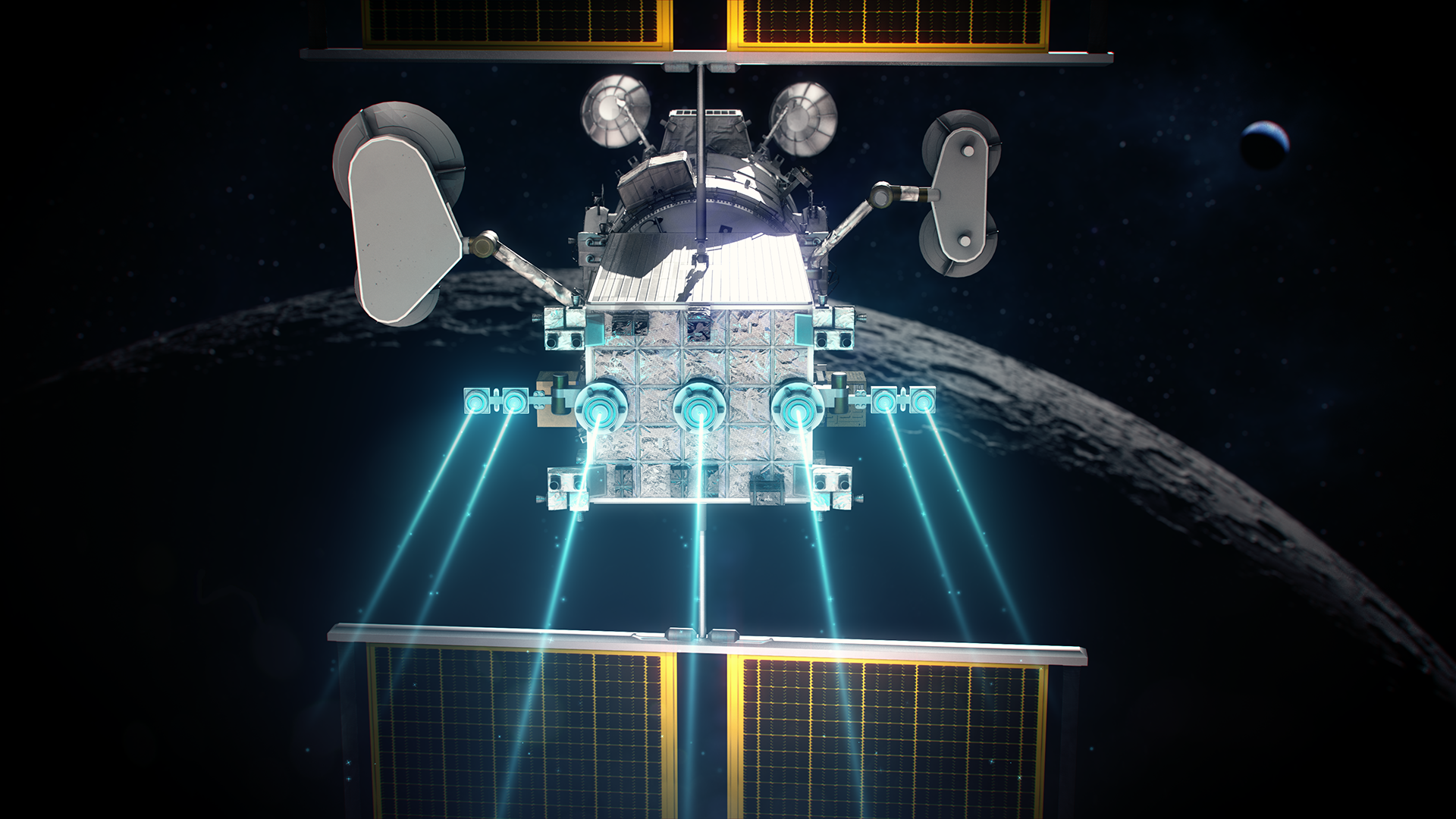
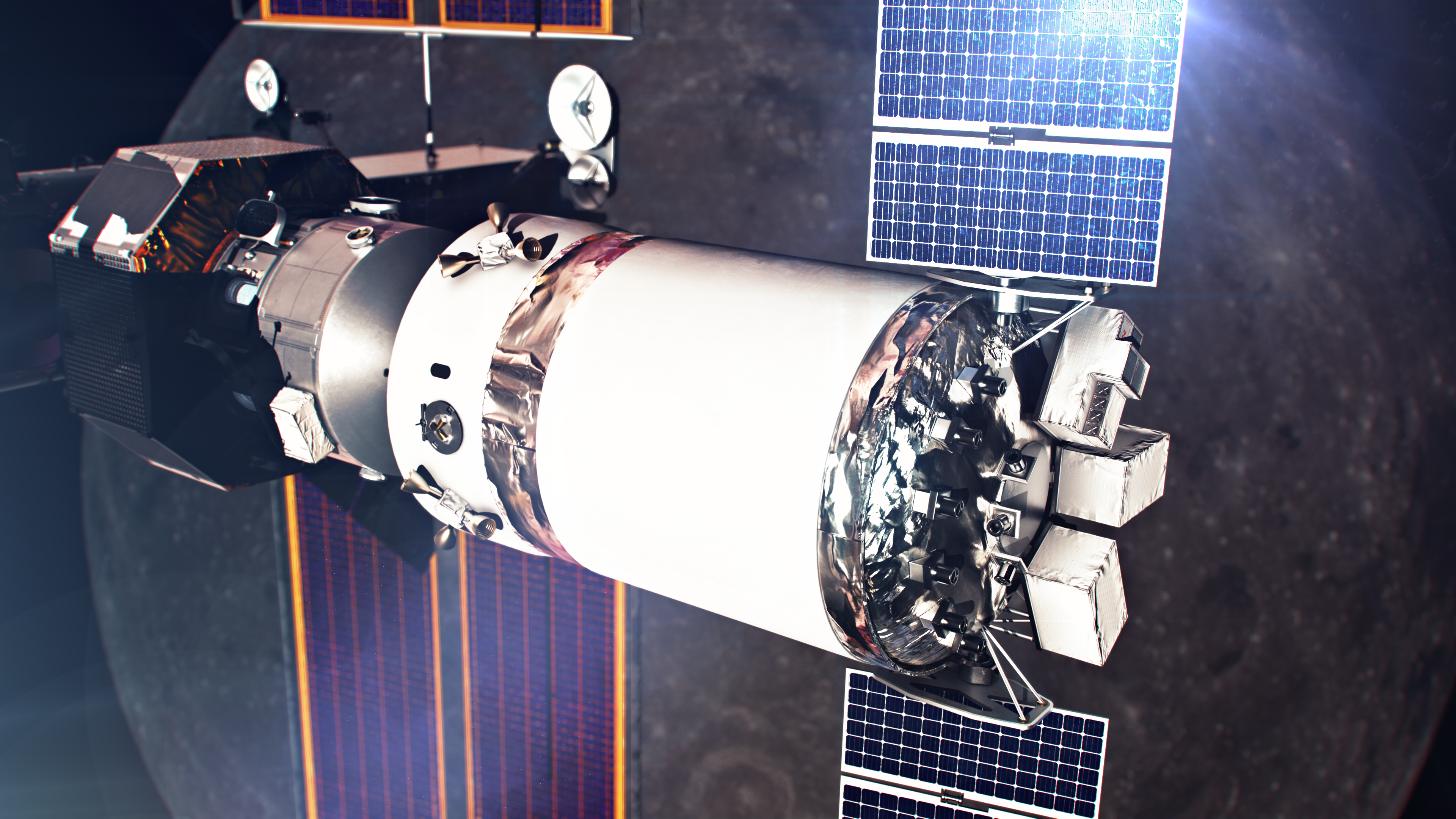
The Power and Propulsion Element, PPE, is a 60-kilowatt solar electric propulsion spacecraft that will supply Gateway with power, high-rate communications, attitude control, orbit maintenance, and orbit transfer capabilities. Its design is based on Lanteris Space Systems’ commercial 1300 bus, enhanced with the most powerful Advanced Electric Propulsion System (AEPS) thrusters and the largest roll-out solar arrays (ROSAs) ever developed.
In May 2019, NASA selected Lanteris Space Systems of Westminster, Colorado, to develop and build PPE.
The PPE project is managed out of NASA’s Glenn Research Center in Cleveland, Ohio.
HALO (Habitation and Logistics Outpost)
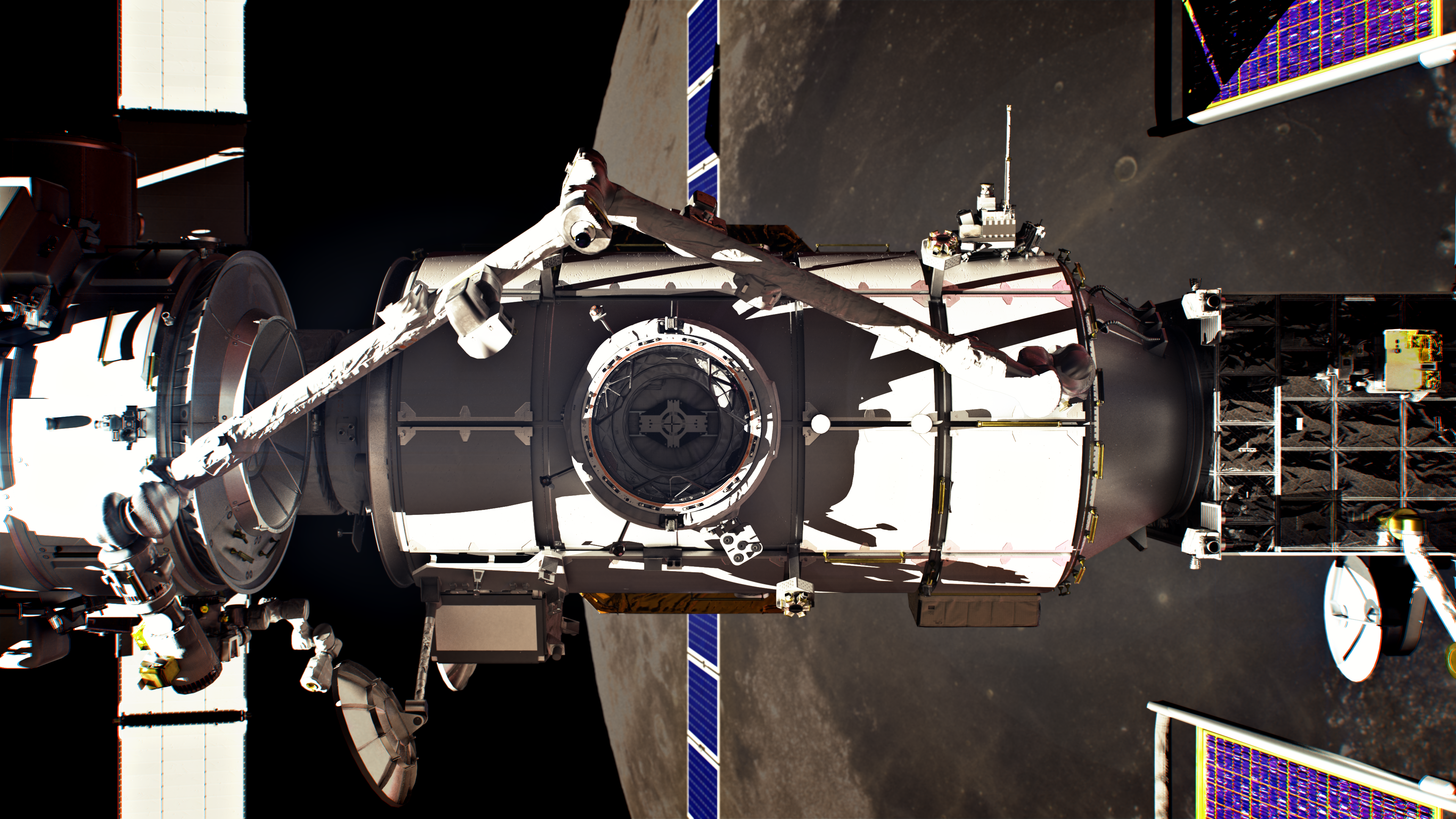
The Habitation and Logistics Outpost (HALO) is Gateway’s first habitation module — a pressurized command hub built to support astronauts living and working hundreds of thousands of miles from Earth. As the lunar space station’s first habitable element, HALO is designed to provide Artemis astronauts with the space to live, conduct research, manage operations, and prepare for missions to the Moon’s surface. Beyond habitation, HALO will serve as Gateway’s command and control center, housing data handling, energy storage, power distribution, and thermal regulation systems — the essential infrastructure that enables sustained operations in the harsh environment of cislunar space. Designed, manufactured, and integrated by Northrop Grumman, HALO forms the operational heart of humanity’s first lunar space station.
HALO is managed out of NASA’s Johnson Space Center in Houston. Northrop Grumman of Dulles, Virginia was awarded a contract for the preliminary design of HALO in 2020, and the remaining content for HALO was finalized between NASA and Northrop Grumman through signing a contract in July 2021.
Lunar I-Hab
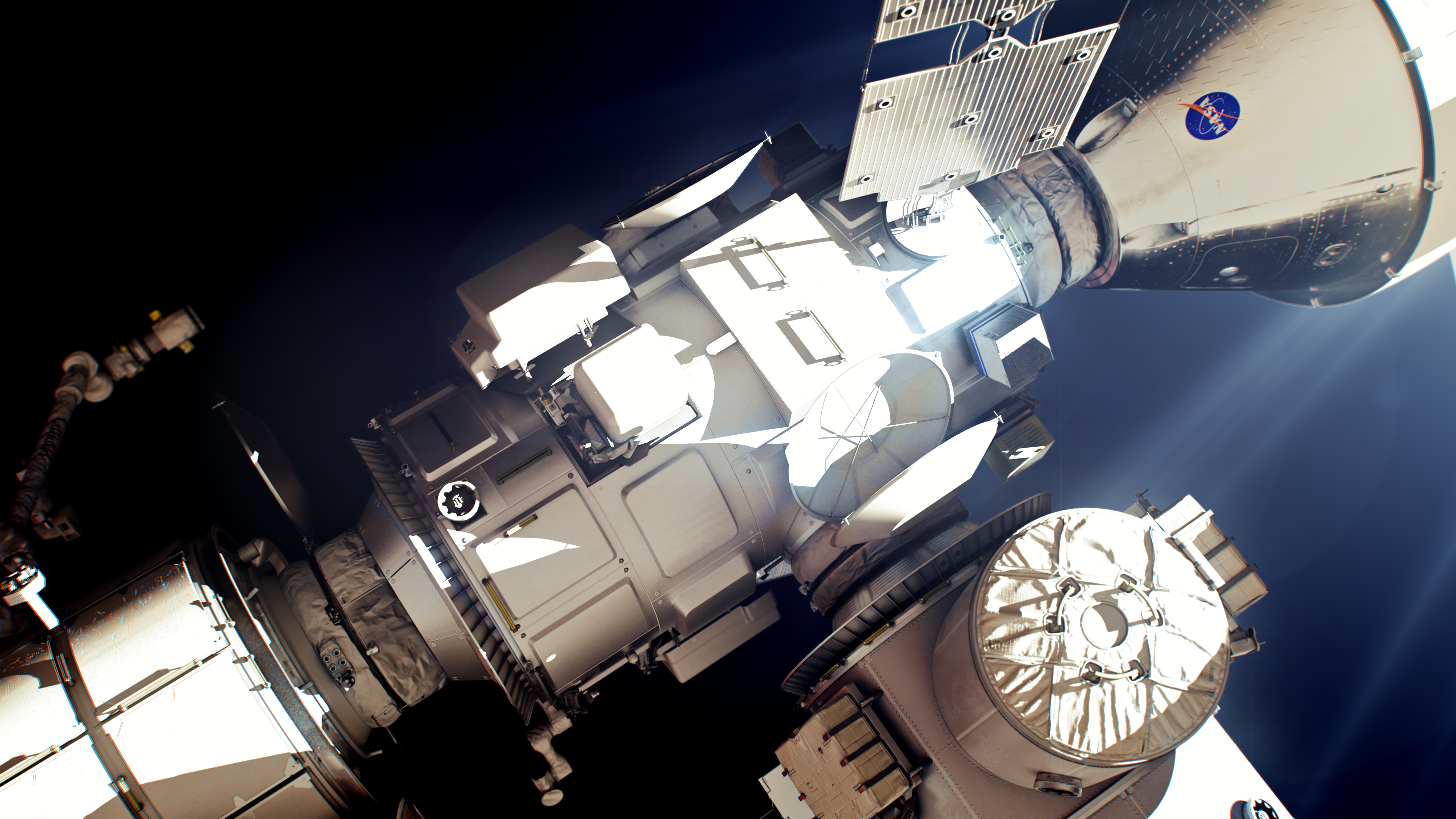
Lunar I-Hab is Gateway’s second habitation module — expanding the lunar space station’s capacity to support astronauts living and working in lunar orbit. The pressurized element will provide about 10 cubic meters of habitable volume, roughly comparable to the interior space of a medium campervan. Lunar I-Hab will feature living quarters, sleeping space, and a communal dining area. In addition to supporting daily life on the space station, Lunar I-Hab will enable scientific research inside the module and through external payload interfaces. The module is provided by the European Space Agency (ESA), with major contributions from the Japanese Aerospace Exploration Agency (JAXA). JAXA is supplying the environmental control and life support system along with the batteries that will power the module. Together, these systems create an environment designed to support crews living and working hundreds of thousands of miles from Earth.
Lunar Link
Lunar Link is a telecommunications system provided by the European Space Agency and mounted on HALO. Its dual antennas will operate simultaneously and independently, enabling continuous communications with multiple assets on and around the Moon, including rovers, landers, and orbiting satellites. Designed for high data throughput, the system is capable of supporting live video transmission between the lunar surface and Gateway — even when the station reaches the furthest point in its orbit, approximately 70,000 kilometers (43,500 miles) from the lunar surface.
Lunar View
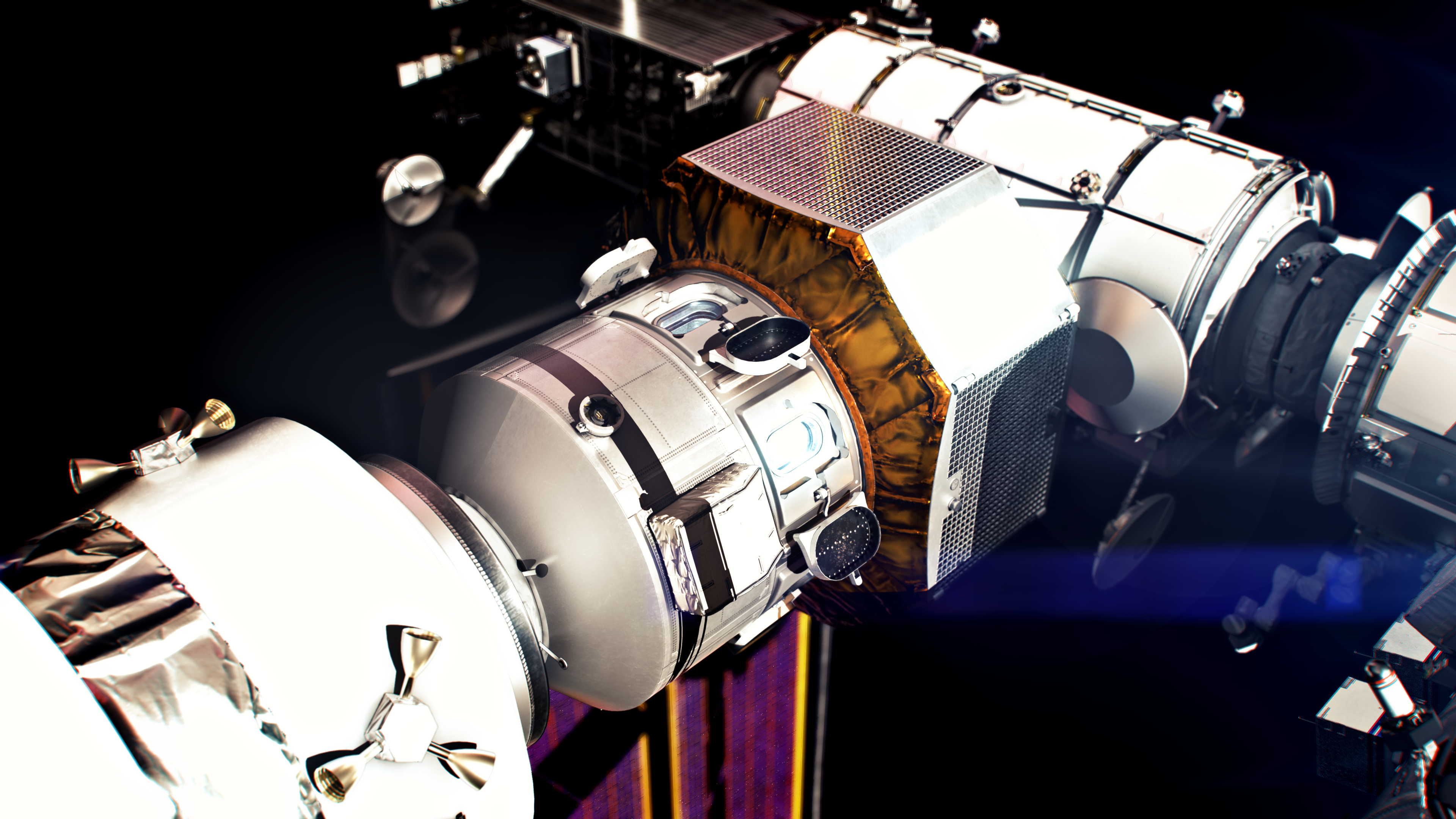
The Lunar View module is a pressurized element provided by the European Space Agency (ESA). It will deliver fuel to resupply Gateway’s Power and Propulsion Element, supporting the station’s continued operations in lunar orbit. Lunar View will also include a dedicated logistics area for storing crew cargo and supplies, helping ensure astronauts have the equipment and resources needed during their missions. The module will feature six large windows, offering direct views of the Moon and the surrounding environment. Together, these capabilities will make Lunar View both a functional and human-centered addition to Gateway’s growing architecture around the Moon.
The prime contractor for Lunar View is Thales Alenia Space.
Crew and Science Airlock
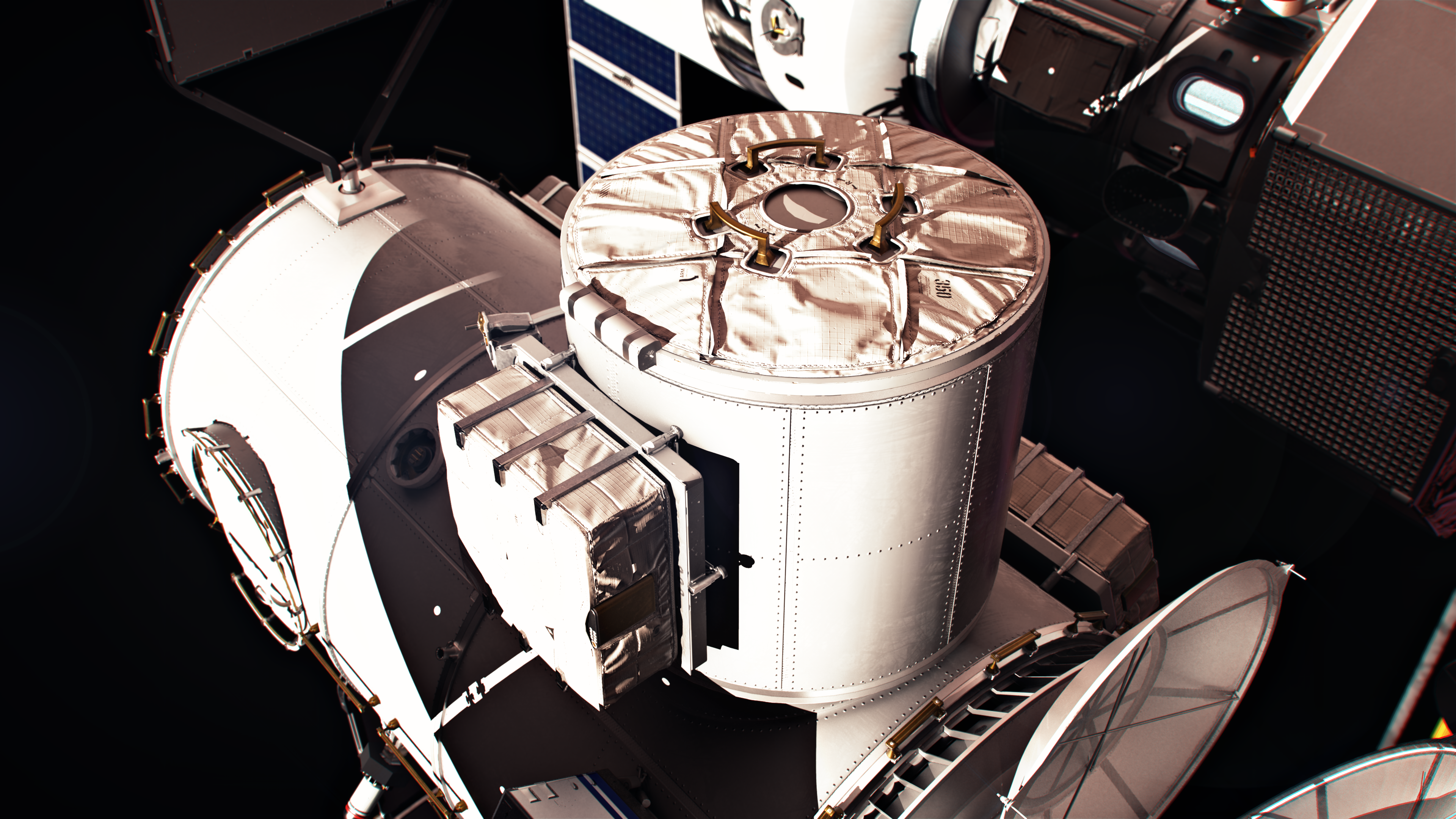
The United Arab Emirates will provide Gateway’s Crew and Science Airlock. This multi-purpose element will enable astronauts to conduct spacewalks — also known as Extravehicular Activities (EVAs) — while supporting scientific research through a dedicated science airlock. In addition to enabling EVAs and research, the Crew and Science Airlock, in conjunction with Canadarm3, will support uncrewed robotic maintenance of Gateway — expanding the station’s operational flexibility in lunar orbit. The module will also provide supplementary storage space and an additional docking port for visiting vehicles.
As astronauts conduct missions at Gateway and prepare for lunar surface expeditions, they will need deliveries of critical pressurized and unpressurized cargo, science experiments, and supplies like sample collection materials. In March 2020, NASA announced SpaceX as the first U.S. commercial provider under the Gateway Logistics Services contract to deliver cargo and other supplies to Gateway.
The Gateway Deep Space Logistics Office is based at NASA’s Kennedy Space Center in Florida.
Canadarm3
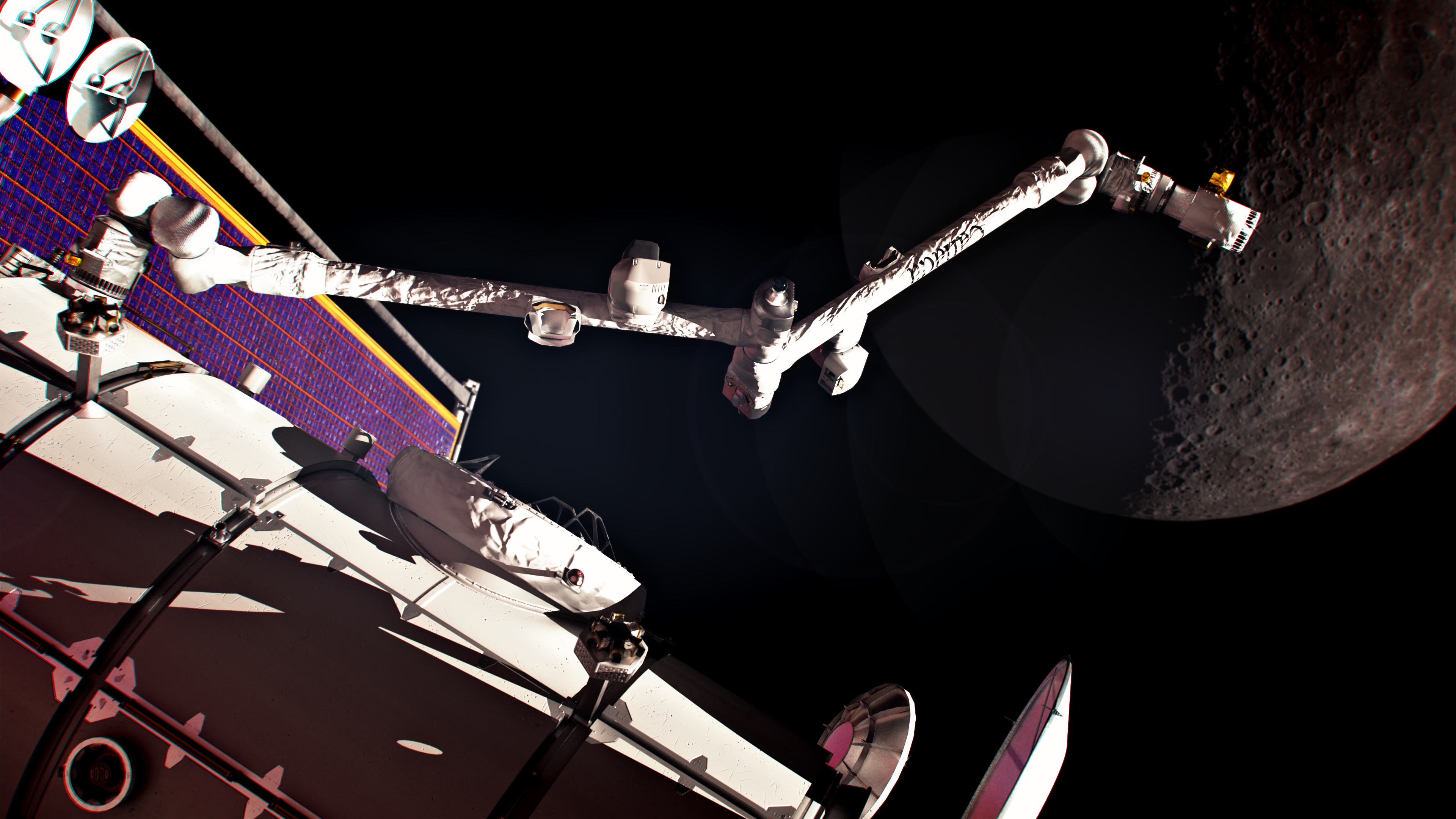
Provided by the Canadian Space Agency (CSA), Canadarm3 is Gateway’s next-generation robotic arm. The advanced system will move end-over-end along the space station’s exterior, allowing it to reach multiple areas across Gateway’s structure. Canadarm3 will conduct maintenance, berth and inspect visiting vehicles, and install science payloads — playing a central role in keeping the lunar space station operating smoothly. The system is designed to perform certain tasks autonomously. When required, it can also be operated by robotics flight controllers in Canada, by astronauts aboard Gateway, or through the station’s autonomous control systems — providing flexibility and resilience for operations in cislunar space.
Vehicle System Manager (VSM) software will allow Gateway to operate autonomously, representing a leap forward in spacecraft capability. VSM will provide activity planning, resource management, vehicle control, and fault management for Gateway.
Additional Artemis elements not managed under the Gateway Program:
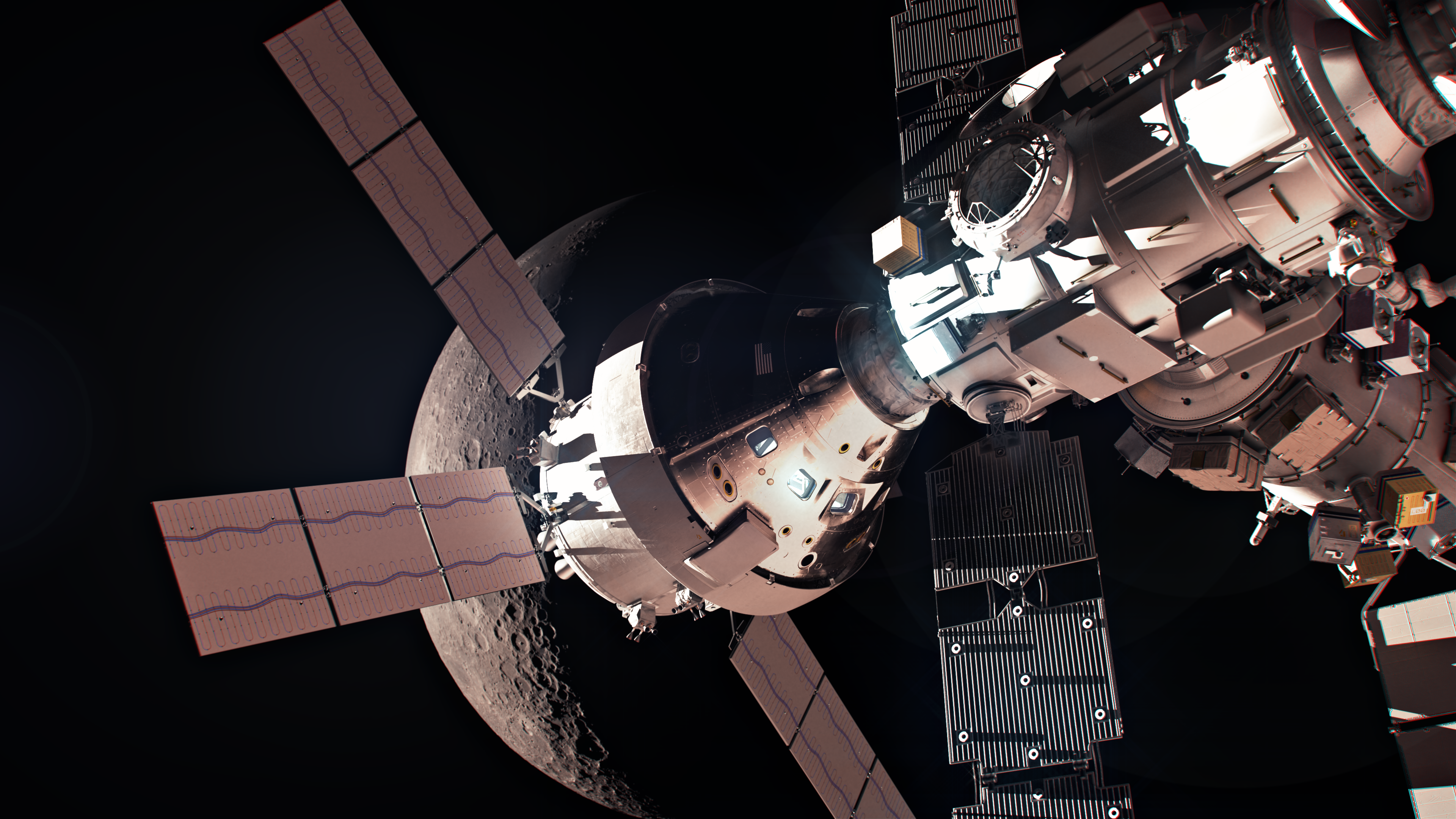
- The Orion spacecraft will deliver crew and supplies to the Gateway space station.
- Human Landing System spacecraft will dock to Gateway to enable Artemis crew transit to and from the lunar surface.
Science Destination
The Gateway space station is one of humanity’s next science utilization platforms, offering unique opportunities to leverage the deep space lunar environment for scientific research and discovery.
The three science instrument payloads already selected to fly on Gateway will focus on radiation from the Sun and deep space. They are:
- the Heliophysics Environmental and Radiation Measurement Experiment Suite (HERMES) that will fly on the outside of HALO.
- the European Radiation Sensors Array (ERSA) that will fly on the outside of PPE.
- the Internal Dosimeter Array (IDA) that will fly inside of HALO.
Gateway Assembly
Gateway launch and staging
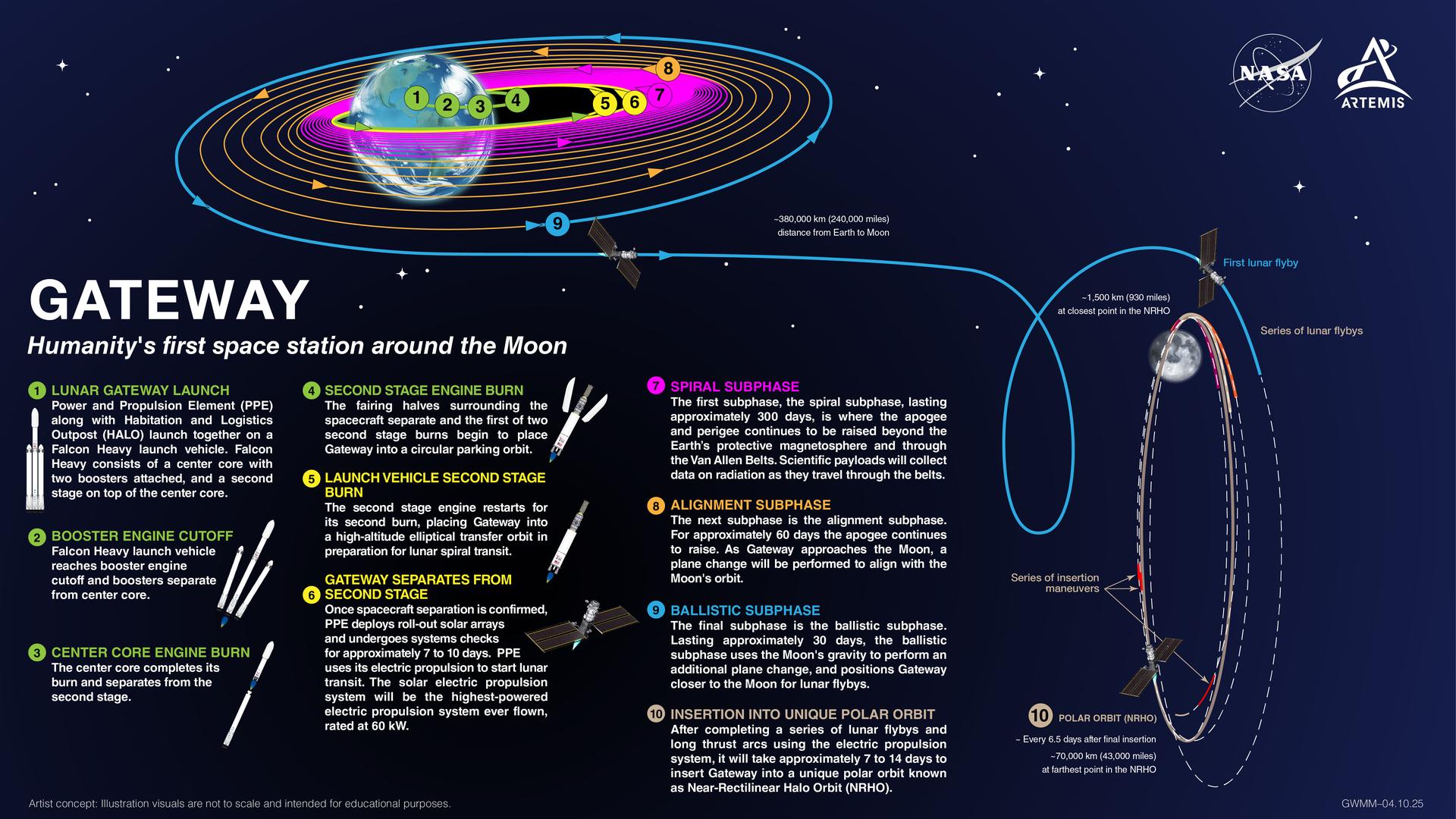
The first Gateway elements, PPE and HALO, will launch together to lunar orbit on a SpaceX Falcon Heavy rocket prior to Artemis IV.
Gateway will spend one year transiting to its unique polar orbit, known as near-rectilinear halo orbit (NRHO), around the Moon.
Artemis IV, V, and VI assembly missions
On-orbit assembly of the fully realized Gateway space station will commence with the Artemis IV mission that will launch no earlier than September 2028.
Artemis IV
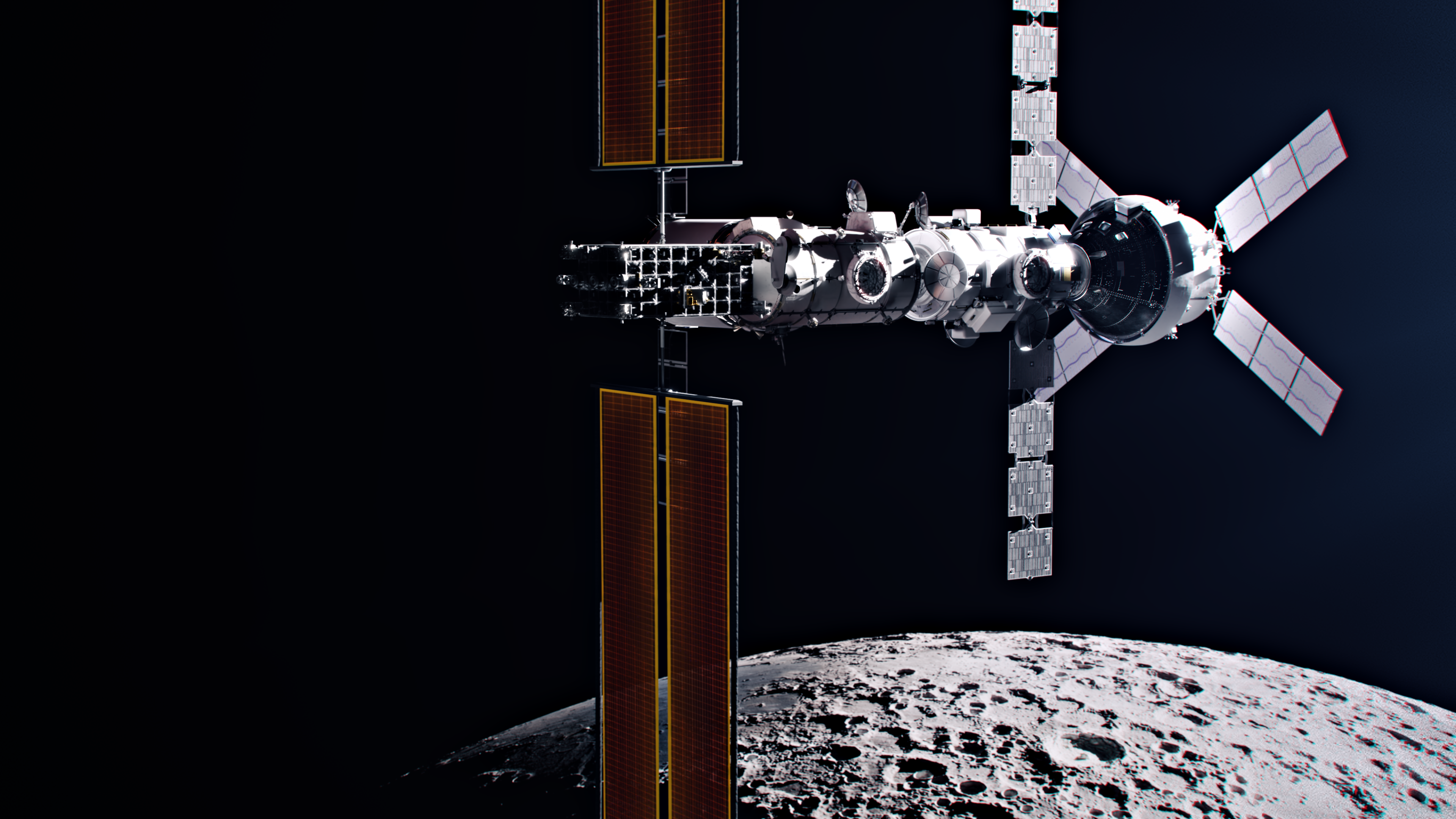
Artemis astronauts will enter Gateway for the first time on the Artemis IV mission.
Primary objectives of the mission are to integrate Lunar I-Hab with Gateway and complete the second crewed lunar surface expedition of the Artemis missions.
Mission highlights:
- The crewed Orion spacecraft and Lunar I-Hab Gateway element will launch as a co-manifested payload on an SLS Block 1B rocket to lunar orbit.
- Orion will deliver Lunar I-Hab to Gateway, where it will dock to HALO.
- A Human Landing System spacecraft will dock to Gateway.
- Artemis IV crew members will use the Human Landing System to descend to and later ascend from the lunar surface.
- Artemis IV crew will return to Earth on Orion.
Artemis V
Primary objectives of the mission are to integrate Lunar View with Gateway and complete the third crewed lunar surface expedition of the Artemis missions.
Mission highlights:
- The crewed Orion spacecraft and the Lunar View element will launch as a co-manifested payload on an SLS Block 1B rocket to lunar orbit.
- Orion will deliver Lunar View to Gateway, where it will dock to HALO.
- A Human Landing System spacecraft will dock to Gateway.
- Artemis V crew members will use the Human Landing System to descend to and later ascend from the lunar surface.
- Artemis V crew will return to Earth on Orion.
Artemis VI
Primary objectives of the mission are to integrate the Crew and Science Airlock with Gateway and complete the fourth crewed lunar surface expedition of the Artemis missions.
Mission highlights:
- The crewed Orion spacecraft and Gateway’s Crew and Science Airlock will launch as a co-manifested payload on an SLS Block 1B rocket to lunar orbit.
- Orion will deliver the Crew and Science Airlock to Gateway, where it will dock to Lunar I-Hab.
- A Human Landing System spacecraft will dock to Gateway.
- Artemis VI crew members will use the Human Landing System to descend to and later ascend from the lunar surface.
- Artemis VI crew will return to Earth on Orion.


Program History
2025
- April 1, 2025, Gateway’s HALO (Habitation and Logistics Outpost) arrived at Northrop Grumman’s facility in Gilbert, Arizona, after a transatlantic journey from Thales Alenia Space in Turin, Italy. While in Arizona, engineers and technicians will outfit the module and prepare it for integration with Gateway’s Power and Propulsion Element (PPE).
- April 2025, the Gateway Program held CDR Sync Closeout, demonstrating Critical Design Review-level maturity for Gateway’s initial capabilities, referred to as Config-1 or Co-manifested Vehicle (CMV). The Gateway Program, technical authorities, stakeholders, and the Standing Review Board agreed that the review was successfully closed, with demonstrated maturity and a clear path forward.
- In April 2025, ESA (European Space Agency) powered on Lunar Link—the communications system that will relay data between Earth, lunar orbit, and the surface of the Moon. Upon completion of testing, the telecommunications system will ship to Arizona for installation on HALO.
Ongoing in 2025:
- At Lanteris Space Systems in Palo Alto, Gateway’s Power and Propulsion Element continues to take shape. The central cylinder is complete, propellant tanks are installed, and the propulsion module is nearing completion with the avionics shelf in production.
- At NASA’s Glenn Research Center in Ohio, the Advanced Electric Propulsion System (AEPS) thrusters—set to make Gateway the most powerful solar-electric spacecraft ever flown—are undergoing acceptance testing. The thrusters will be delivered to Lanteris later in 2025 for integration with the Power and Propulsion Element.
- At Redwire Space’s facility in Goleta, California, the largest Roll-Out Solar Arrays (ROSA) ever built are undergoing test readiness reviews to validate hardware and ensure the solar wings meet design requirements before integration with the Power and Propulsion Element.
- Canada, Japan, and the United Arab Emirates continue to make steady progress on their respective Gateway contributions, including robotics, life support systems, and science payloads.
2024
- July 2024, CSA begins detailed design construction, design and testing phase of Canadarm3, to include system assembly, integration, and testing of the full robotics system, including the large arm, smaller dexterous arm, specialized tools, and a ground segment for command and control.
- January 2024, NASA and the Mohammed Bin Rashid Space Centre (MBRSC) of the United Arab Emirates announced that under a new implementing arrangement, the UAE will provide Gateway’s Crew and Science Airlock module, and a UAE astronaut to fly to the lunar space station on a future Artemis mission.
2023
- October 2023, Northrop Grumman and subcontractor Thales Alenia Space complete welding of HALO module primary structure. HALO proceeds to structural testing.
- March 2023, NASA establishes the Moon to Mars Program Office at NASA headquarters to carry out the agency’s human exploration activities at the Moon and Mars for the benefit of humanity.
- March 2023, Dr. Jon B. Olansen named Gateway Program Manager.
- March 2023, Dan Hartman retires from NASA with 29 years of service to human spaceflight, including the International Space Station Program and serving as the first Gateway Program Manager.
- January 2023, Gateway participated in the Artemis Architecture Concept Review , a robust analysis process designed to align NASA’s Moon to Mars exploration strategy and codify the supporting architecture.
2022
- December 2022, Northrop Grumman delivers high-fidelity HALO module mockup to the Space Vehicle Mockup Facility at Johnson Space Center for human factors testing and crew training.
- December 2022, second Gateway Multilateral Coordination Board meeting held.
- November 2022, NASA and JAXA announce that under the Gateway Implementing Arrangement, NASA will provide an opportunity for a Japan Aerospace Exploration Agency (JAXA) astronaut to serve as a Gateway crew member on a future Artemis mission.
- August 2022, HALO critical design review held.
- May 2022, Holly Ridings, NASA’s first female Chief Flight Director, named Deputy Program Manager.
2021
- December 2021, PPE Lanteris Preliminary Design Review part two.
- November 2021, Lunar I-Hab Preliminary Design Review part two close-out.
- July 2021, Northrop Grumman extension awarded.
- May 2021, HALO preliminary design review close out.
- May 2021, first Gateway Multilateral Coordination Board meeting held, modeled after International Space Station Multilateral Coordination Board.
- April 2021, 6KW SEP subsystem test by PPE team, Lanteris, and Busek.
- March 2021, Delivery of first Flight SolAero Standard Solar Power Modules (SPM).
- February 2021, HALO primary structure assembly initiated in Italy.
2020
- December 2020, Japan signed an agreement (MOU) to partner with NASA on Gateway.
- December 2020, the Canadian Space Agency awarded a contract to MDA to build the Canadarm3 for deep space missions.
- November 2020, Canada signed a Gateway agreement (MOU) to contribute external robotics.
- October 2020, ESA signed an agreement (MOU) with NASA to contribute habitation and refueling modules and enhanced lunar communications to Gateway. ESA also provides two additional European Service Modules for NASA’s Orion spacecraft.
- Northrop Grumman Space received award to design the Habitation and Logistics Outpost (HALO) for Gateway
- NASA selected SpaceX as the first U.S. commercial provider under the Gateway Logistics Services contract to deliver cargo, experiments and other supplies to Gateway.
2019
- November 2019, the European Space Agency (ESA) received authorization and funding to support its contributions to Gateway including habitation and refueling.
- October 2019, Japan announced plans to join the United States on Gateway with contributions of habitation components and logistics resupply.
- May 2019, NASA selected Maxar Technologies to develop, build, and support an in-space demonstration of the element.
- February 2019, Canada announced intention to participate in Gateway and contribute advanced external robotics.
- Gateway Program Established