FLIGHT OPPORTUNITIES COMMUNITY OF PRACTICE WEBINAR
Flying Externally Mounted Payloads on Suborbital Rockets to Advance Science and Technology
Wednesday, February 4, 2026
10:00 a.m. – 11:00 a.m. PT
Speakers
- Alina Alexeenko, Ph.D., Reilly Professor of Aeronautics and Astronautics & Chemical Engineering, Purdue University
- H. Todd Smith, Ph.D., Space Physicist, Johns Hopkins University Applied Physics Laboratory
- Laki Vlachos, Senior Payload Mission Manager, Blue Origin
Abstract
Join us for a session that delves into flying externally mounted payloads on suborbital rockets. Moderated by Flight Opportunities representatives, the webinar will explore the testing opportunities provided by exterior mounting, how to prepare payloads for these conditions, and the experiences of two researchers who have flight tested externally mounted payloads:
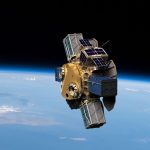
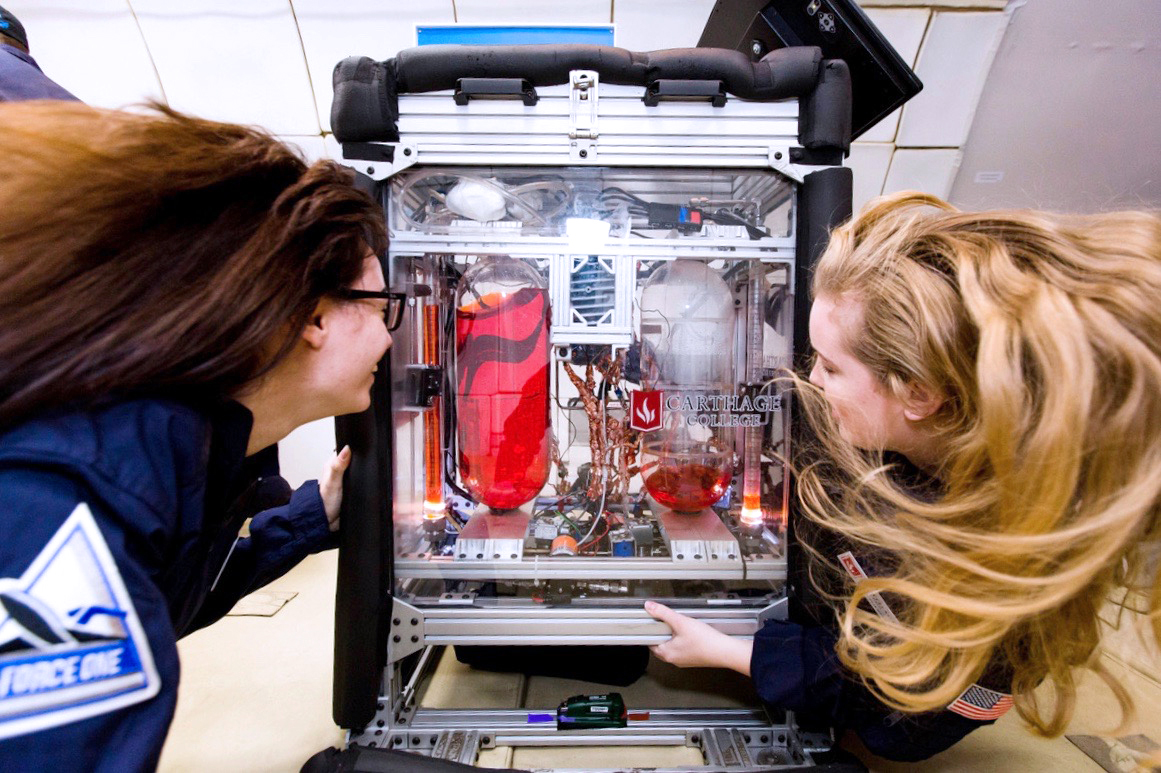
- FEMTA (Film Evaporation MEMS Tunable Array) from Purdue University is a non-toxic micropropulsion alternative for precision attitude control for small spacecraft missions. This technology uses water surface tension to provide highly tunable low-power attitude and thermal control and enable in-situ resource utilization for propellant and reduce overall small spacecraft mission costs.
- Known as JANUS, the Johns Hopkins University Applied Physics Laboratory’s Integrated Universal Suborbital platform allows payloads to access the harsh external space environment in the region where Earth’s atmosphere transitions to space — enabling rare in-situ testing and sampling to directly measure conditions in this notoriously difficult-to-access area.
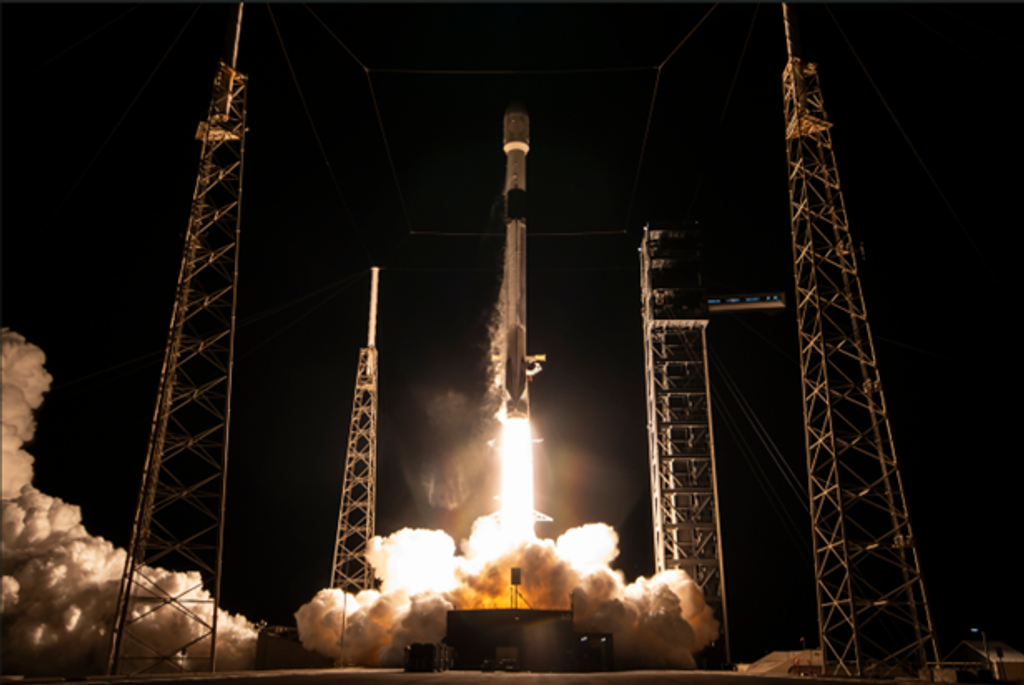
In flight tests supported by Flight Opportunities, researchers mounted their payloads inside the top panel of the Blue Origin New Shepard propulsion module to demonstrate their technologies. Mounting a payload externally provides several benefits, including access to a microgravity environment; exposure to vacuum; unobstructed mounting of cameras, spectrometers, and other instruments; and a downward-looking view of a re-entry flight profile.
During this session, researchers and a Blue Origin representative will speak about their experiences, helping attendees gain valuable insights to guide their future efforts to prepare externally mounted payloads.
Microsoft Teams meeting
Join on your computer, mobile app or room device
Join the meeting
Or call in (audio only)
+1 256-715-9946 | Phone Conference ID: 691 072 533#
Speaker Bios
Alina Alexeenko, Ph.D., studies computational and experimental examinations of rarefied gas flow phenomena occurring in both high-altitude flight — such as small satellite propulsion, spacecraft contamination, plume interactions, and high-altitude aerothermodynamics — and in emerging technologies such as vacuum manufacturing processes and microelectromechanical systems (MEMS) for space communications and micropropulsion. Broadening applications of rarefied gas dynamics is one of her long-term research goals. Alexeenko’s group at Purdue has developed fast computational algorithms and solvers for the deterministic (as opposed to the stochastic Direct Simulation Monte Carlo [DSMC]) solution of rarefied flow problems. Such new techniques are especially useful in studying low-speed and/or unsteady flows and have allowed several challenging problems to be addressed, such as the aerodynamic damping in MEMS and shockwave propagation at microscale. Additionally, the research led to novel microdevice concepts that exploit the unique microscale, rarefied flow physics for gas sensing and small satellite propulsion.
Todd Smith, Ph.D., is a space physicist whose research focuses on Jupiter, Saturn, Uranus, Neptune, and Mercury magnetospheric science and instrumentation. He employs modeling and data analysis to study charged and neutral particle interactions. Dr. Smith was a member of the CAPS (Cassini Plasma Spectrometer) and MIMI (Magnetospheric Imaging Instrument) teams for NASA, co-investigator on the Strofio team for the European Space Agency’s BepiColombo mission and the NASA Europa mission’s PIMS (Plasma Instrument for Magnetic Sounding) instrument team, guest investigator on the Hisaki satellite mission for the Japan Aerospace Exploration Agency, and participating scientist on NASA’s Juno mission. For more than twelve years, Dr. Smith has led the Applied Physics Laboratory’s efforts to exploit commercial spacecraft, with nine payloads selected for flight under NASA’s Flight Opportunities program. Ten missions have successfully completed, and two additional flights are under preparation.

Apostolos “Laki” Vlachos is a senior payload mission manager at Blue Origin. He is responsible for planning, scheduling, and executing customer payload integration into the New Shepard system, serving as the primary customer contact for safety and integration reviews. Additionally, he contributes to process improvement initiatives, writes and maintains payload documentation, and oversees safety and mission assurance processes.