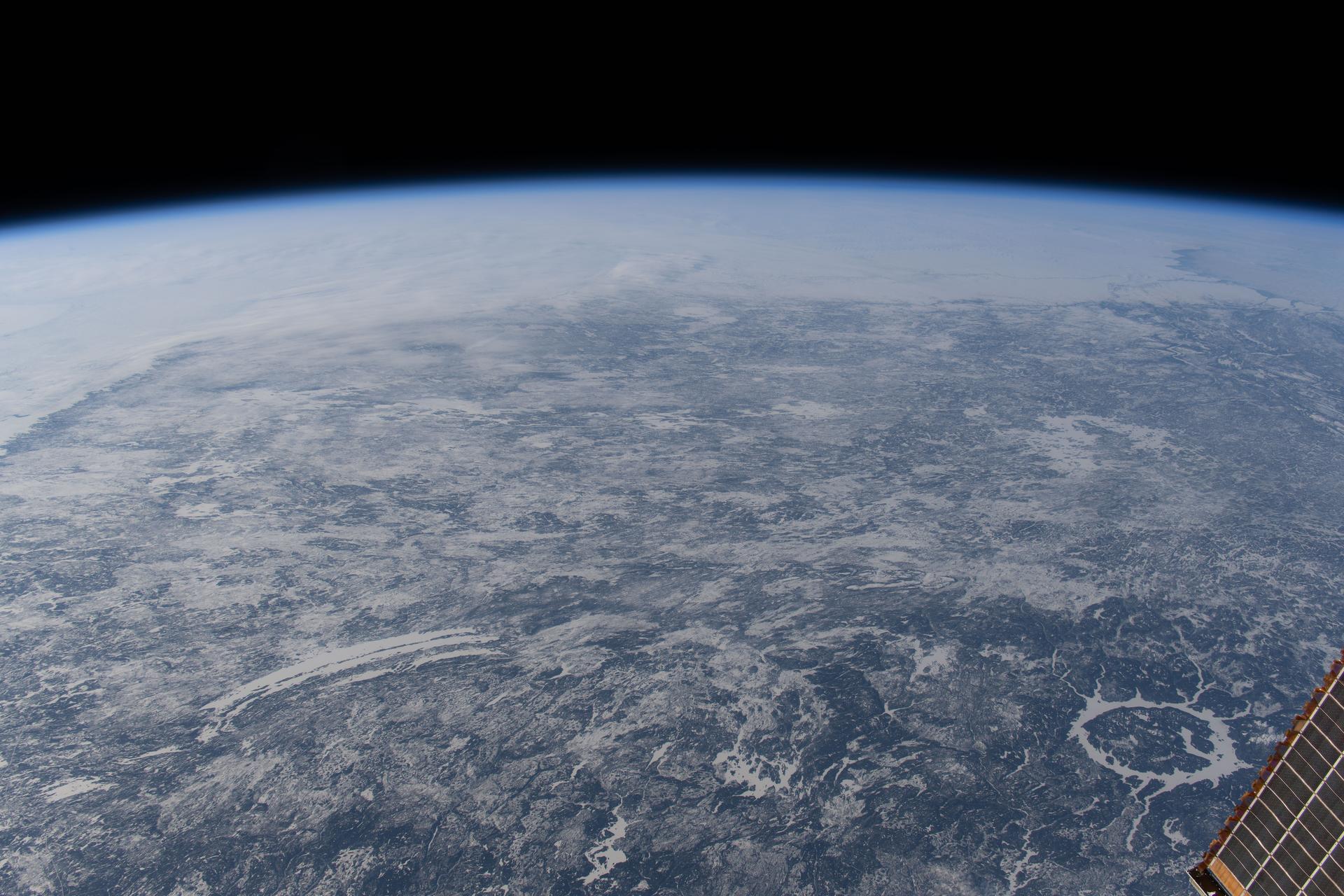















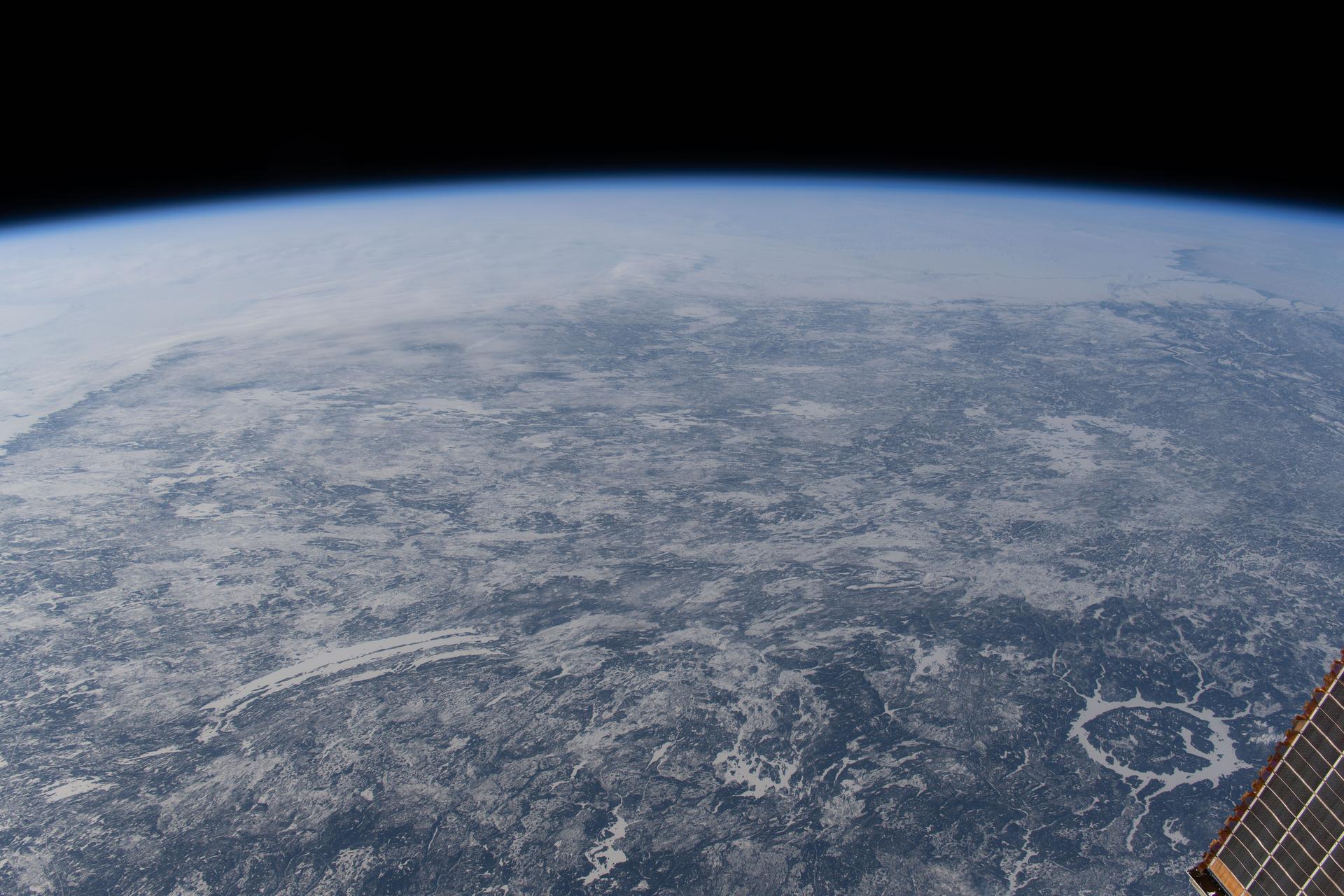
Manicouagan Crater in Quebec stands out in Canada’s icy landscape
iss074e0432034 (April 1, 2026) --- Canada’s icy landscape is pictured from the International Space Station as it orbited 266 miles above North America. At bottom right, is the Manicouagan Crater in Quebec, formed about 214 million years ago by a massive meteorite impact and one of the largest craters on Earth. It is surrounded by a ring‑shaped lake called the Manicouagan Reservoir and is part of a major hydroelectric system that contributes significantly to Quebec’s energy supply.
Image Credit: NASA/Chris Williams
- X
https://www.nasa.gov/image-detail/amf-iss074e0432034/
TakenApril 1, 2026
ProducerJSC
Image CreditNASA/Chris Williams
Size1920x1280px
PIA Numberiss074e0432034