














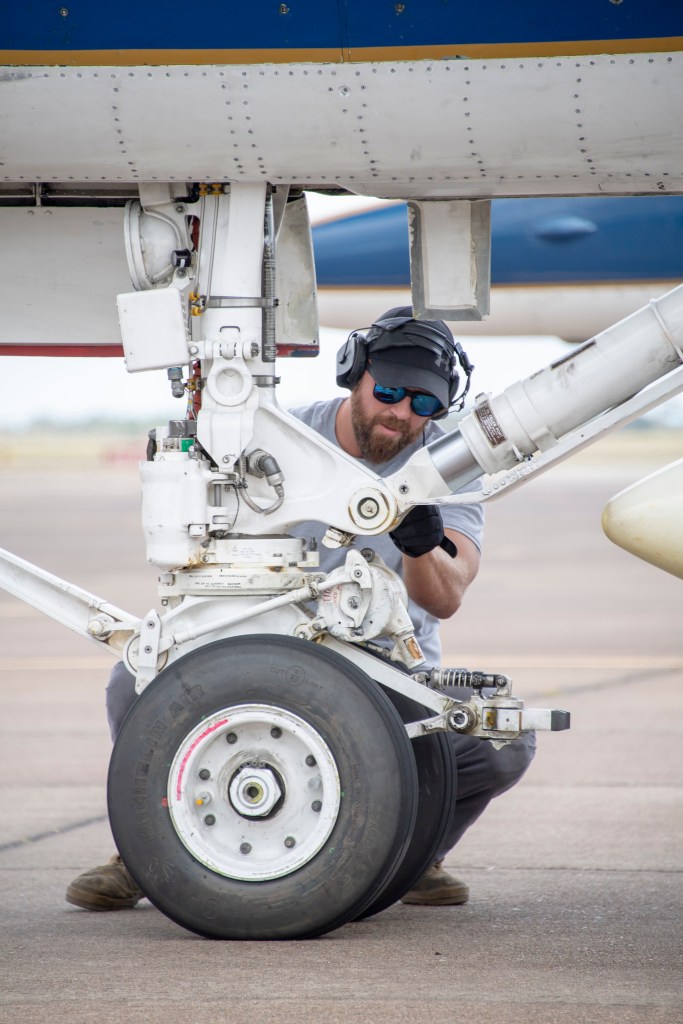








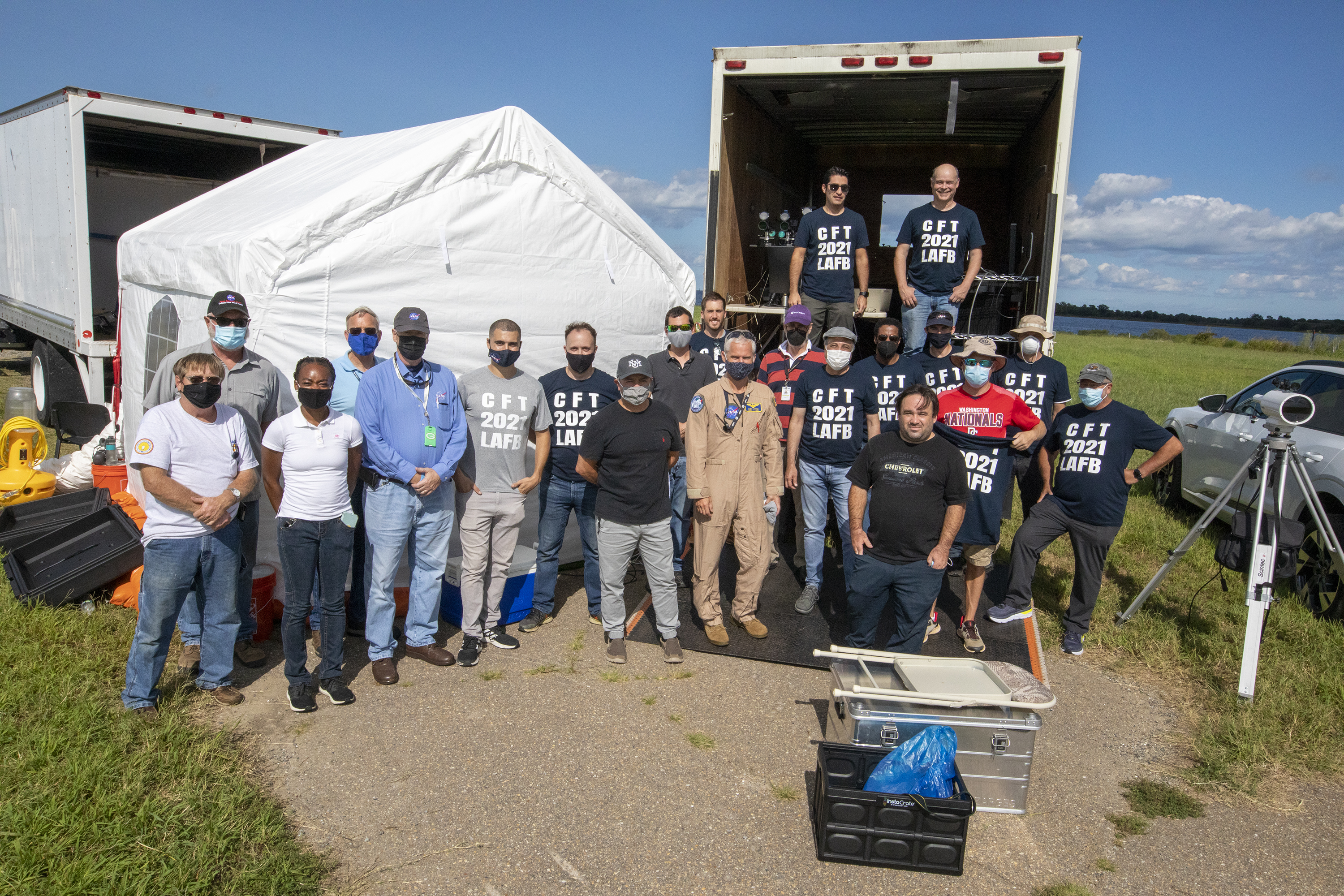
Researchers at NASA’s Langley Research Center in Hampton, Virginia, recently tested an entry, descent, and landing technology on the runway at Joint Base Langley-Eustis (JBLE), which directly borders NASA Langley.
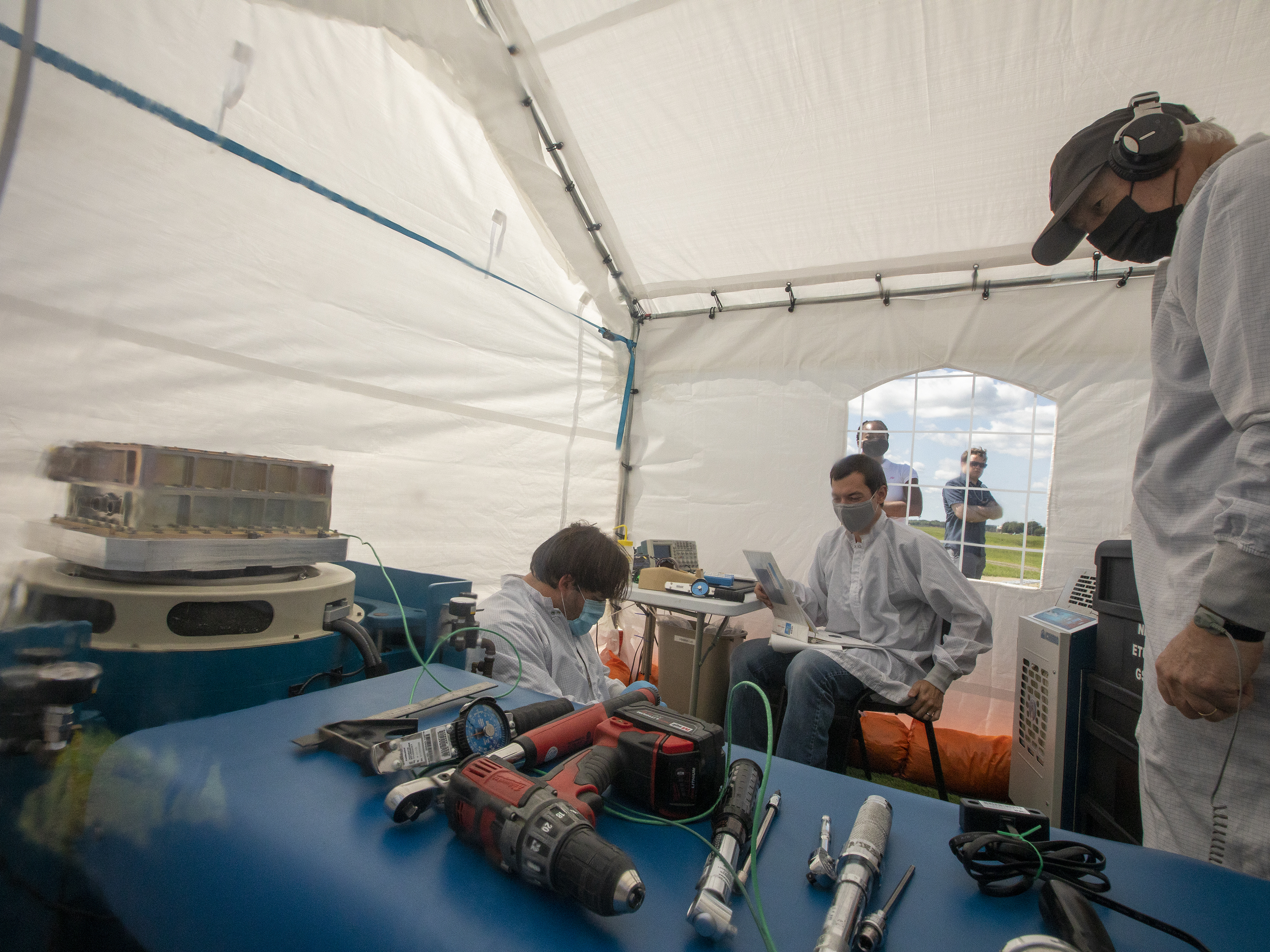
NASA’s Navigation Doppler Lidar (NDL) was previously tested at JBLE with the lidar at one end of the runway and a target in the back of a moving truck. This time, a vibration test facility was added, set up at the end of the runway with the lidar attached to simulate lunar landing spacecraft vibrations. The objective was for NDL to accurately predict how far away the target was while experiencing those vibrations.
“We know the instrument performance is affected by vehicle vibrations, and this was a close simulation to what the technology could experience when we’re going to the Moon,” said Farzin Amzajerdian, NDL principal investigator. “This test is one of those things that you do only once so we wanted to get the best data we could. Even for future systems we can extrapolate using this data.”
Data from the tests will be helpful not only in the design of spaceflight units and the next generation of NDL, but also for performance analysis and simulations for terrestrial applications, like self-driving cars.
This test used the NDL unit that was recently shipped to Astrobotic Technology in Pittsburgh for installation on their first Peregrine lunar lander.
“This data is directly relevant to commercial missions, and it will also help us learn how we can make the hardware less sensitive to vibrations for Moon landing and Earth applications like helicopters, airplanes, and cars,” Amzajerdian said.
Data obtained from the test indicates that NDL will be able to make accurate measurements from a distance of at least 5 kilometers (3.11 miles) distance while experiencing vibrations similar to those experienced on a lunar landing.