











Stem Cells, Robotics, and Spacesuits Top Station Crew Day
Stem cell research, a student robotics challenge, and spacesuit maintenance dominated the schedule aboard the International Space Station on Tuesday. The Expedition 74 crew also rounded out its shift with Earth observations and cargo transfers throughout the day.
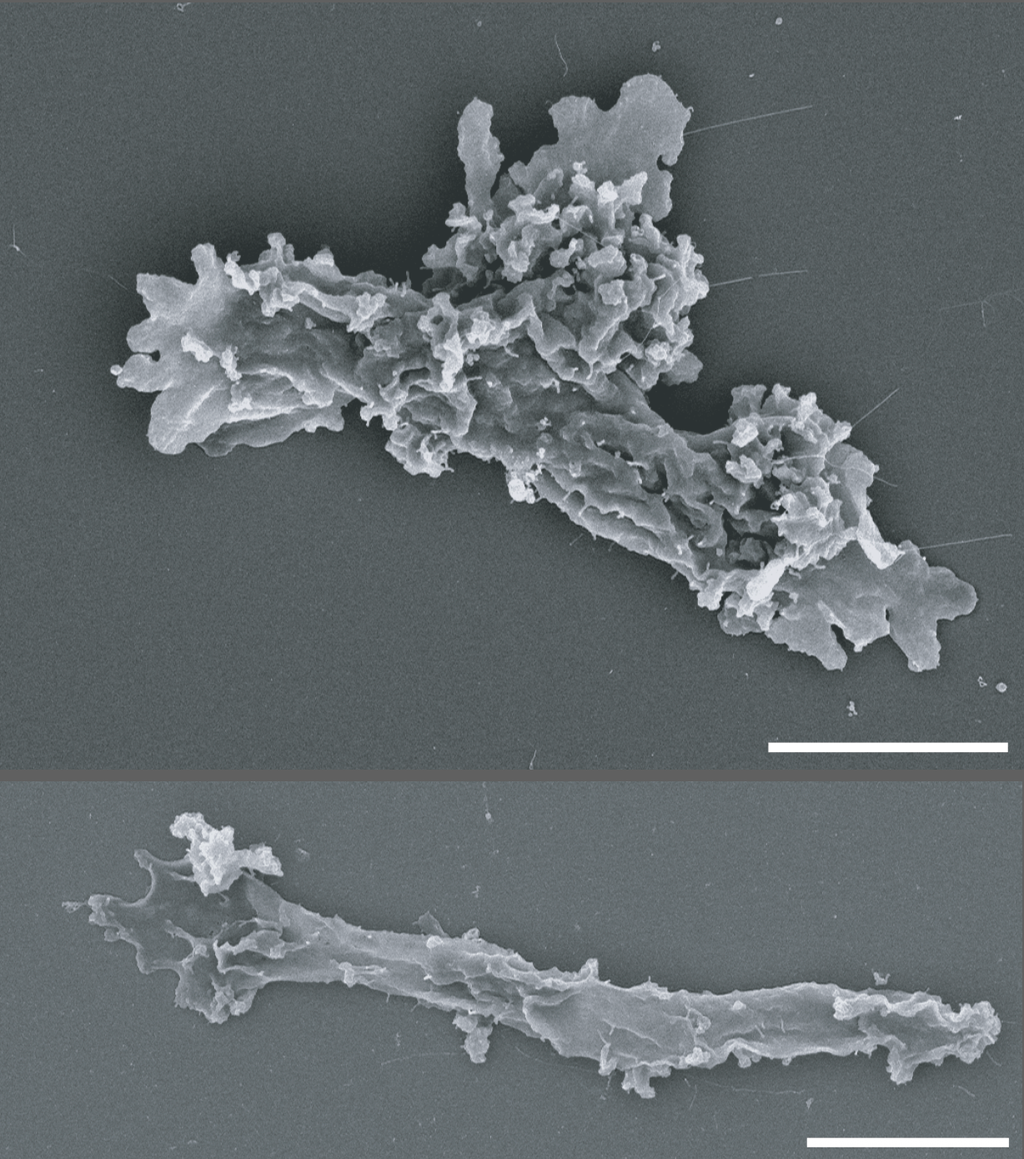
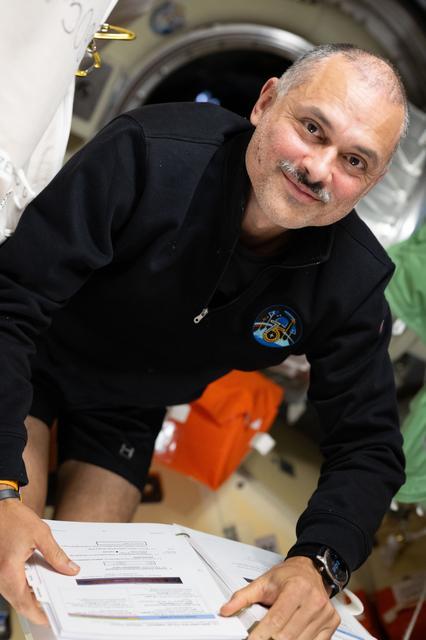
Repairing damaged organs or tissues is a key objective for a technology demonstration taking place onboard the orbital outpost that seeks to transform stem cells into any human cell type that are superior to those manufactured on Earth. The stem cells are reprogrammed from adult skin or blood cells and may lead to advances in regenerative medicine and cancer therapies. Station Commander Mike Fincke treated samples for the stem cell tech demo inside the Kibo laboratory module’s Life Science Glovebox then prepared them for preservation in cold stowage. The experiment hardware and research samples were launched to the station in October aboard JAXA’s (Japan Aerospace Exploration Agency) HTV-X1 cargo craft.
JAXA Flight Engineer Kimiya Yui spent his shift testing a pair of small robotic helpers ahead of an upcoming student challenge to program and maneuver the free-flying devices on the station. The main objective was a technical rehearsal of the toaster-sized Astrobee’s ability to identify and find hidden objects throughout the Kibo lab. The second objective was to monitor the Int-Ball 2, a small sphere-shaped robotic camera designed by JAXA, as it autonomously worked alongside Astrobee and recorded its search activities. Code written by student teams will operate the two robots together and will be judged for its accuracy, speed, and efficiency.
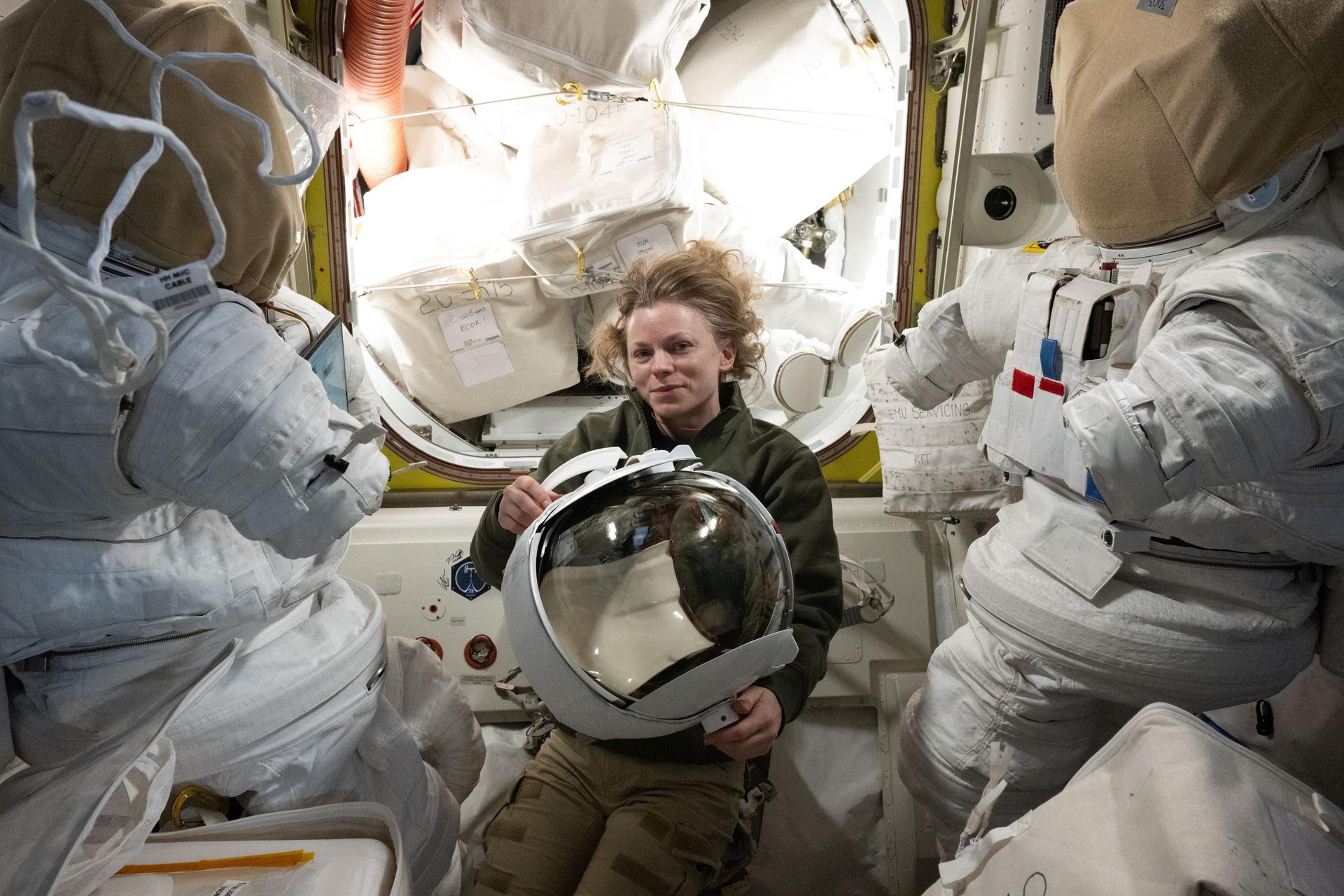
NASA Flight Engineers Zena Cardman and Chris Williams partnered together during the first half of their shift on Tuesday and resized a pair of spacesuits inside the Quest airlock. The duo adjusted the suits’ arms, legs, and waist ahead of a pair of maintenance spacewalks planned for early 2026. Afterward, Cardman moved on and cleaned and inspected hatch seals throughout the space station’s U.S. segment. Williams assisted Fincke and Yui during the second half of their shift as they loaded the HTV-X1 cargo craft with obsolete science hardware before the resupply ship’s departure in late January.
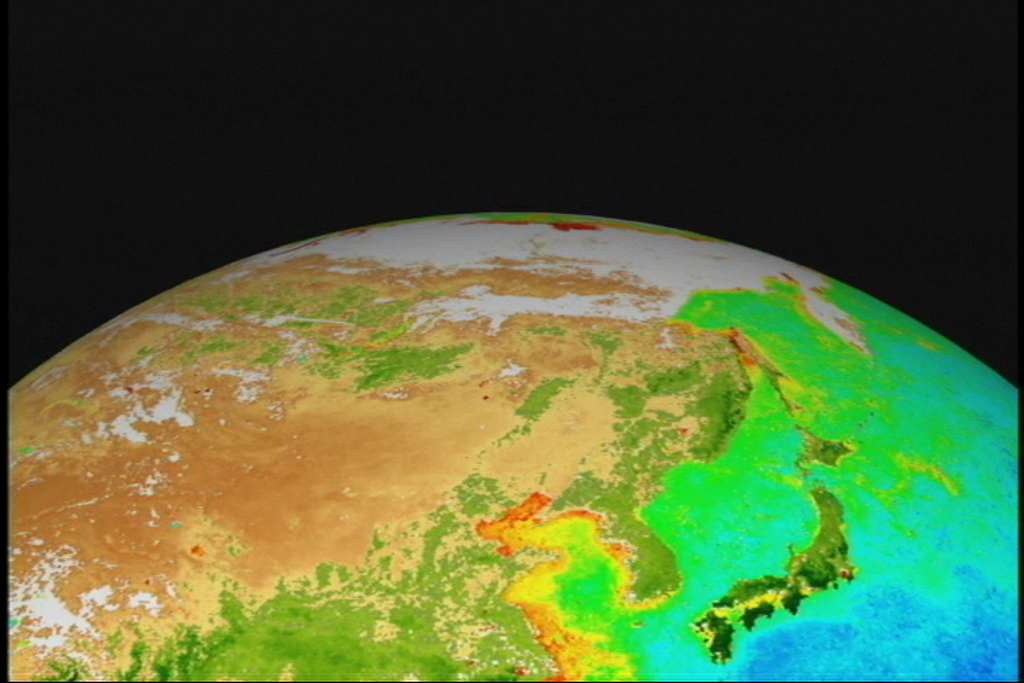
Roscosmos cosmonauts Oleg Platonov and Sergei Mikaev took part in a pair of Earth observation activities documenting the effects of natural and man-made conditions on the ground. Platonov turned off and uninstalled imagery hardware that automatically photographed landmarks from Asia to Africa during the crew’s sleep shift. Mikaev set up a digital multi-spectral camera linked to hardware that automatically operates and aligns the camera to target specific locations on Earth.
Roscosmos Flight Engineer Sergey Kud-Sverchkov, on his second spaceflight, spent Tuesday inside the Nauka science module cleaning smoke detectors ensuring the safety gear operates in tip-top shape. Kud-Sverchkov also spent a few moments with his cosmonaut crewmates Platonov and Mikaev reviewing procedures for unlikely emergency events such as a depressurization, a chemical leak, or a fire onboard the orbital outpost.
Learn more about station activities by following the space station blog, @space_station on X, as well as the ISS Facebook and ISS Instagram accounts.
Get the latest from NASA delivered every week. Subscribe here.
