














Suggested Searches

Blogs

  • Stem Cells, Robotics, and Spacesuits Top Station Crew Day

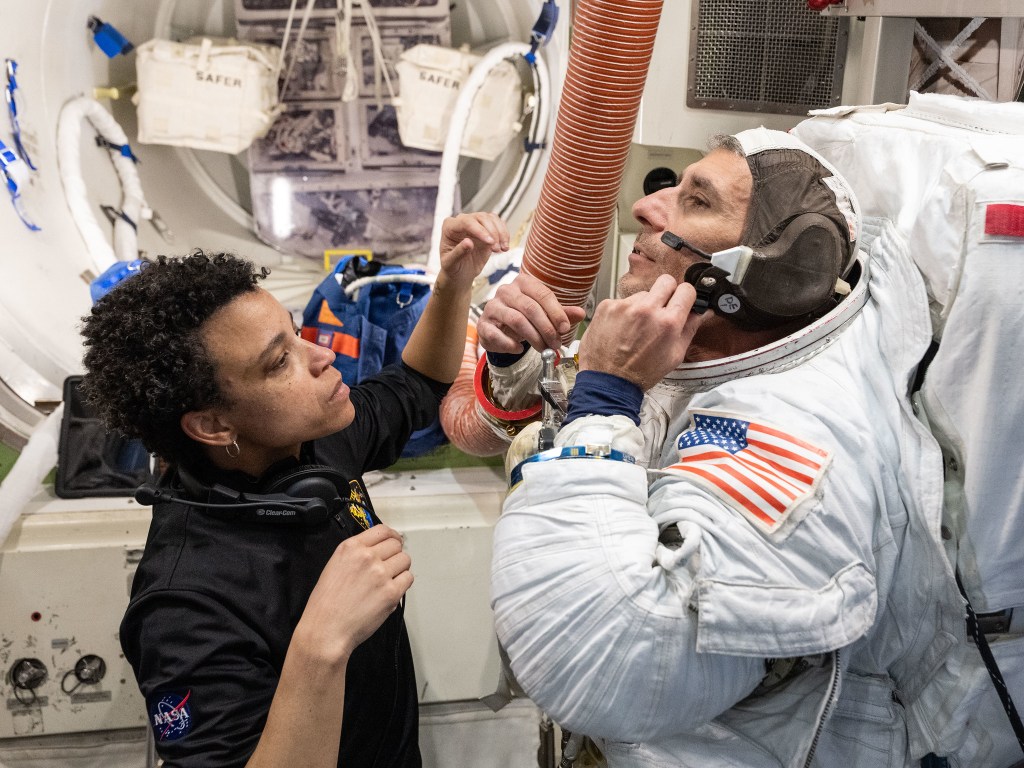
    NASA astronaut and Expedition 73 Flight Engineer Zena Cardman inspects a spacesuit helmet during maintenance activities inside the International Space Station's Quest airlock.

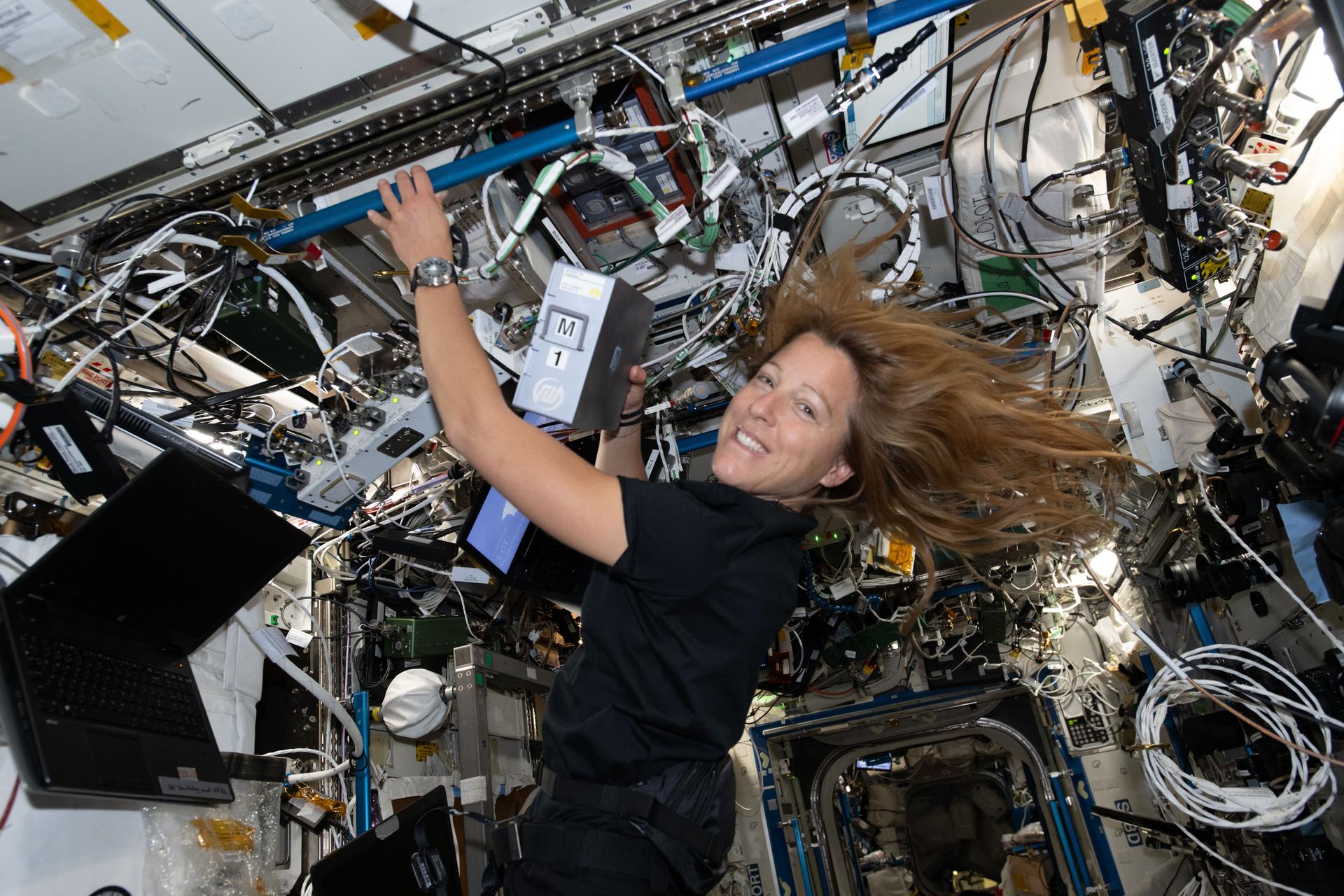
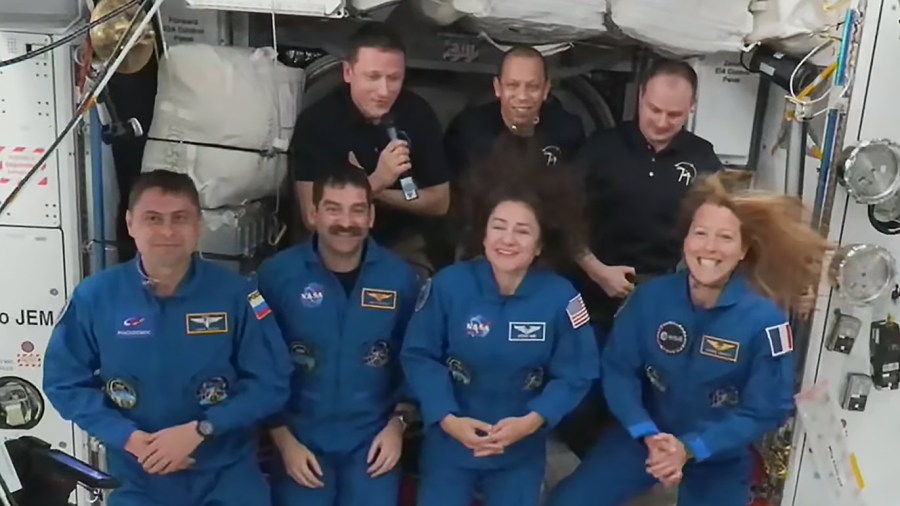
    Stem cell research, a student robotics challenge, and spacesuit maintenance dominated the schedule aboard the International Space Station on Tuesday. The Expedition 74 crew also rounded out its shift with Earth observations and cargo transfers throughout the day.

  • First NASA Scientific Balloon Launches from Antarctica

    A man in a yellow safety vest looks at a scientific balloon in the distance. In the foreground is the GAPS payload hanging from a crane preparing for launch.

    The first scientific balloon flight of this year’s NASA Antarctica Balloon Campaign reached its float altitude after lifting off from the agency’s facility located near the U.S. National Science Foundation’s McMurdo Station on the Ross Ice Shelf at 5:30 a.m. NZST, Tuesday, Dec 16 (11:30 a.m., Monday, Dec. 15 in U.S. Eastern Time). The balloon […]

  • NASA’s IMAP Mission Captures ‘First Light,’ Looks Back at Earth

    All 10 instruments aboard NASA’s newly launched IMAP (Interstellar Mapping and Acceleration Probe) mission have successfully recorded their first measurements in space. With these “first light” observations, the spacecraft is now collecting preliminary science data as it journeys to its observational post at Lagrange point 1 (L1), about 1 million miles from Earth toward the […]

  • NASA’s Carruthers Geocorona Observatory Reveals ‘First Light’ Images

    NASA’s Carruthers Geocorona Observatory has captured its first images from space, revealing rare views of Earth and the Moon in ultraviolet light. Taken on Nov. 17 — still months before the mission’s science phase begins — these “first light” images confirm the spacecraft is healthy while hinting at the incredible views to come. The initial […]

  • NASA and Partners Expand Crucial Water Tracking Program

    All 48 contiguous United States will now benefit from timely, high-resolution water data. The OpenET program, a public-private collaboration led by consortium partners NASA, the U.S. Geological Survey, California State University Monterey Bay, Environmental Defense Fund, Desert Research Institute, Google Earth Engine, and HabitatSeven, provides information on evapotranspiration. Evapotranspiration is the movement of water from […]

  • NASA’s ESCAPADE Trajectory Correction Maneuver Delayed

    During trajectory correction maneuvers for NASA’s twin ESCAPADE spacecraft on Dec. 8 and Dec. 12, the mission operations team noticed low thrust during the burn for one of the spacecraft. The team is working to identify the cause and will attempt a trajectory correction maneuver in the coming weeks.   The other spacecraft has successfully completed […]

  • NASA Continues MAVEN Spacecraft Recontact Efforts

    NASA’s MAVEN (Mars Atmosphere and Volatile EvolutioN) mission team, in partnership with the agency’s Deep Space Network, continues recovery activities after losing contact with the spacecraft on Dec. 6. To date, attempts to reestablish contact with the spacecraft have not been successful. Although no spacecraft telemetry has been received since Dec. 4, the team recovered a brief fragment of […]

  • NASA’s Center for Geospace Storms Releases New Space Weather Model

    NASA’s Center for Geospace Storms, or CGS, publicly released the cutting-edge MAGE (Multiscale Atmosphere-Geospace Environment) model, a supercomputing powerhouse that uses NASA mission data to reveal how different parts of geospace react to solar disturbances. The MAGE model will help space weather experts better predict how solar events impact Earth by pulling together several smaller predictive […]

  • NASA’s TRACERS Spacecraft Begin Preliminary Science Data Collection

    NASA’s TRACERS (Tandem Reconnection and Cusp Electrodynamics Reconnaissance Satellites) mission has started collecting preliminary science data, including tandem measurements that are key to the mission’s science goals. One of the two satellites, Space Vehicle 2, completed commissioning and is fully operational. The other satellite, Space Vehicle 1, is also operating with some limitations following an issue earlier this […]