




Arriving at McClellan
We — the scientists taking part in the Carbonaceous and Aerosol Radiative Effects Study (CARES), a field campaign to California that’s all about aerosols – do, that’s who. Walk outside, lift your eyes and look: what do you see? If you’re lucky, not much more than a beautiful blue sky. More likely, though, you’ll be […]
From GloPac co-mission scientist Paul Newman: It was a tense moment on Friday morning, April 2. The Global Hawk was poised on the end of the runway, with the crew chief behind it in a pick-up truck (“the trapper” is the runway-based eyes and ears for the crew in the control room). Pilots, managers, and […]
Our project took a major step forward in 2010, although the work we accomplished was completed far from the Pine Island area.
As you can tell, the coffee on Thursday was over-caffeinated.
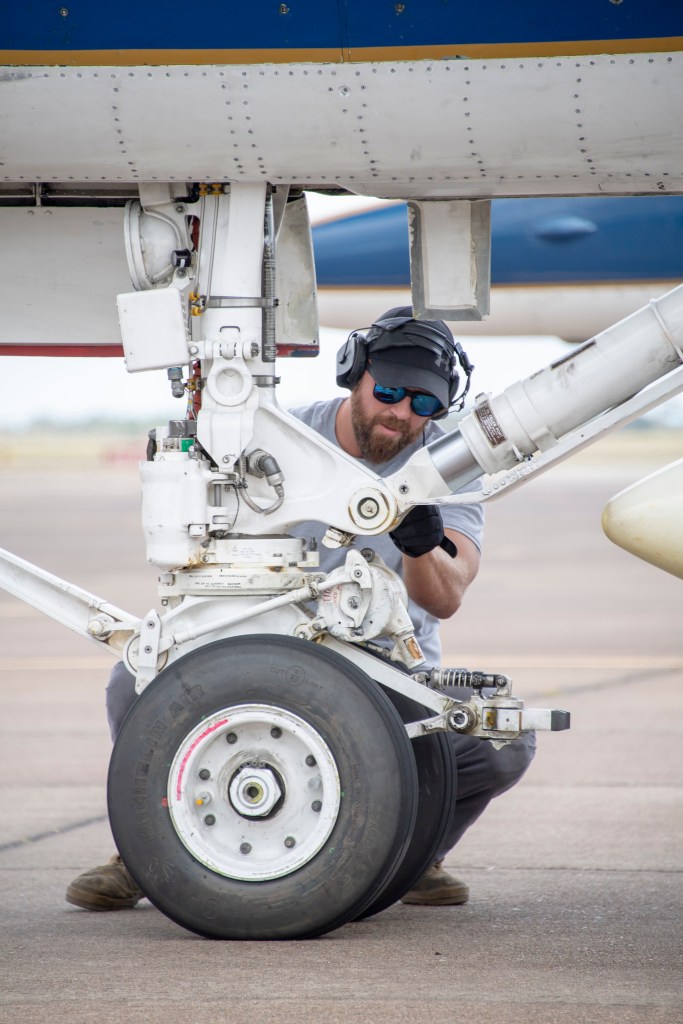
I don’t want to hear anything about holes in the plane. It pains me!
NASA’s Operation IceBridge mission, the largest airborne survey ever flown of Earth’s polar ice, kicks off its second year of study when NASA aircraft arrive in Greenland March 22.
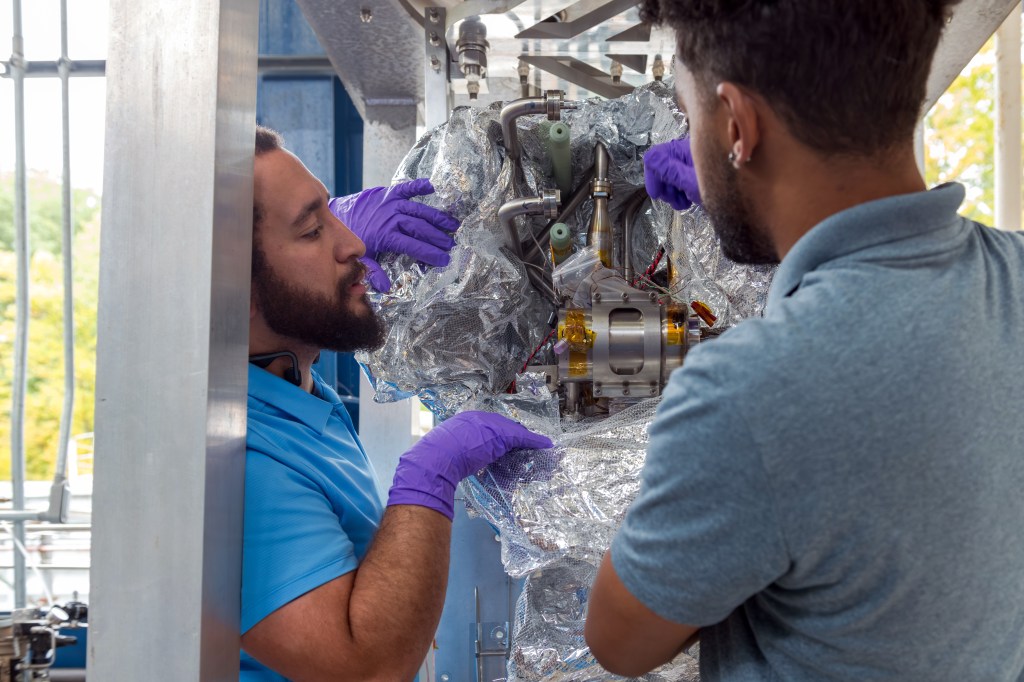
From Paul Newman, mission co-project scientist: We have had some success in bolting our instruments onto the Global Hawk. We just completed installing the NOAA ozone instrument, led by Laurel Watts, one of several National Oceanic and Atmospheric Administration scientists participating in the campaign. (The principle investigator for the instrument is Ru-Shan Gao, but Laurel […]
From Paul Newman, mission co-project scientist: There is an old Latin quote: “Maxima omnium virtutum est patientia.” Or “patience is the greatest virtue.” When it comes to mounting science instruments on an aircraft, you need to continually return to that quote. We have 10 science instruments that we will be flying on the Global Hawk […]
From Paul Newman, co-project scientist: All of the GloPac instrument teams have now arrived at Dryden Flight Research Center, and our integration of instruments onto the Global Hawk UAS continues. We’re putting 10 instruments on the plane, and each team has 2 to 3 scientists working on their instrument. This means we have a lot […]