















Suggested Searches

Blogs

  • Planning for Pluto with GeoViz

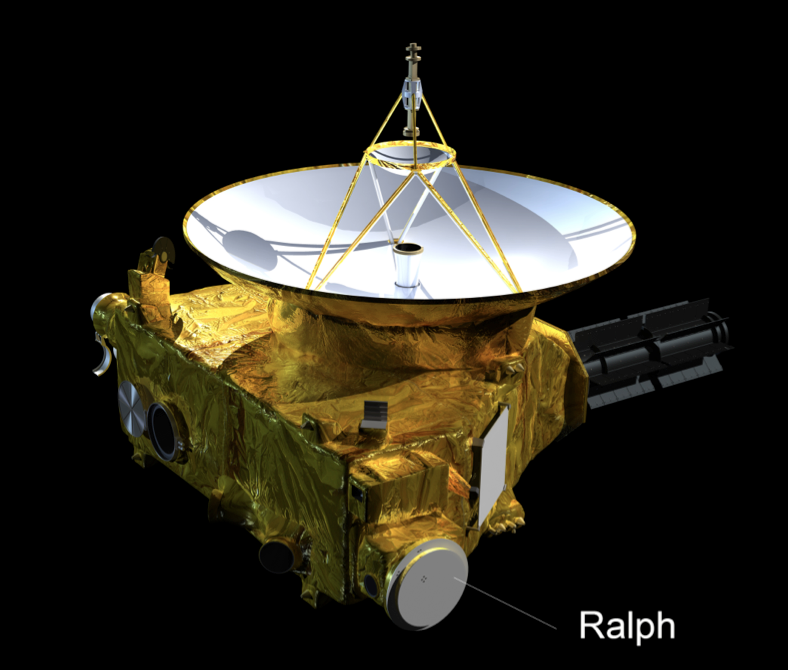
    Today’s blog is from Dr. Henry Throop, a planetary scientist with the Planetary Science Institute in Mumbai, India. He received his PhD in 2000 from the University of Colorado, Boulder. His areas of research include the outer solar system, the rings of Jupiter and Saturn, and planet formation in the Orion Nebula. He has been …

  • Crew Looks at Plants and Mice for Health Insights

    Astronaut Tim Peake

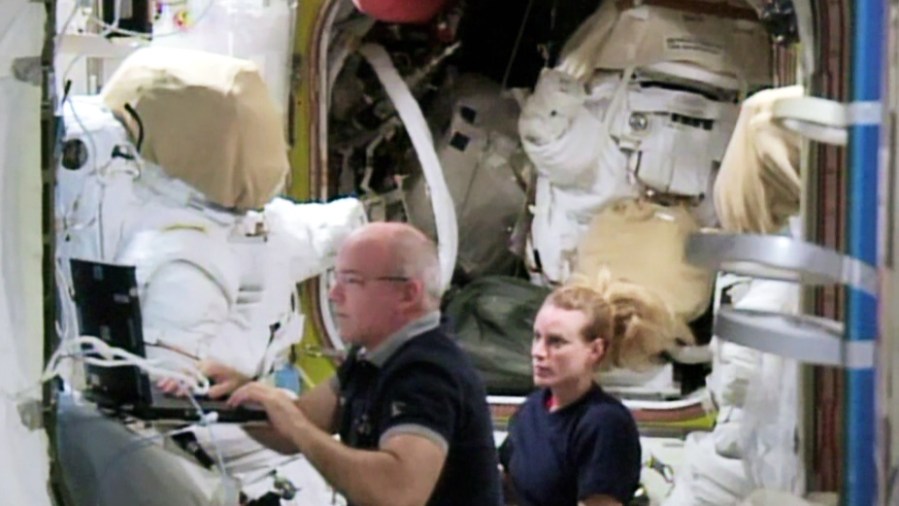
    Today, the crew is observing how the lack of gravity affects plants and rodents. NASA is using the observations to improve the health of astronauts in space and humans on Earth. The crew is stowing plant samples harvested for the Plant Gravity Sensing botany study to understand how roots sense gravity. The samples are being …

  • April Puzzler Answer: Ice Scours the North Caspian Sea

        Readers were quick to name the Caspian Sea as the location featured in our April 2016 puzzler. It took just a bit longer to puzzle out what caused the curious lines that crisscross the image. Are they gouges on the seafloor produced by trawling? Or are they are related to the movement of marine animals? Those […]

  • A “Clean” Start for First KORUS-AQ Flights

    by Emily Schaller / Osan Air Base, Seoul, South Korea / After years of preparation, on Monday, May 2, the three KORUS-AQ aircraft (NASA B-200, NASA DC-8, and the Hanseo King-Air) took off for their first coordinated science flights over South Korea. More than 50 scientists, pilots and crew from NASA and the Republic of Korea …

  • May Starts With Botany, Genetic Study and Dragon Packing

    Commander Tim Kopra

    The Expedition 47 crew began May exploring botany, genetic analysis and life science. SpaceX is also getting ready for the May 11 release and splashdown of its Dragon spacecraft. NASA astronaut Jeff Williams harvested and fixated plants grown for the Plant Gravity Sensing study. Scientists seek to understand the chemical process that guides the direction …

  • Planning the Hunt for Science Flights

    by Kate Squires / OSAN AIR BASE, SOUTH KOREA / Jay Al-Saadi of NASA’s Langley Research Center discusses preliminary plans for the NASA DC-8 and B-200 during a forecasting meeting. Credit: NASA/Jane Peterson The science equipment is unloaded and jetlag has subsided for the KORUS-AQ team here getting settled in at Osan Air Base. Now …

  • Media, Dignitaries Meet KORUS-AQ on the Tarmac

    by Emily Schaller and Jane Peterson / OSAN AIR BASE, SOUTH KOREA / Reporters board the NASA DC-8 aircraft to talk with researchers about the many instruments in the flying laboratory. (Credit: NASA/Jane Peterson) On Friday April 29, over 100 guests and media attended the official kickoff of the Korean US Air Quality (KORUS-AQ) field experiment …

  • ISS Daily Summary Report – 04/29/16

    Energy Operations: The crew completed the 8th day of a 10 day European Space Agency (ESA) Energy experiment run by collecting ISS tap water samples taken from the Potable Water Dispenser (PWD) and body samples. This investigation will help determine the crewmembers’ energy requirements for long-term space flight.  Energy also measures adaptations in the components …

  • Flying into a Natural Air Quality Laboratory

    by Emily Schaller / SEOUL, SOUTH KOREA / Looking out the window while descending toward Incheon International Airport near Seoul, earlier this week, I couldn’t help but notice the hazy, yellowish brown layer covering the city. For several days before the flight, I had been using various apps, websites and Twitter feeds to track air quality …