







NASA Completes Latest Scientific Balloon Campaign From Antarctica
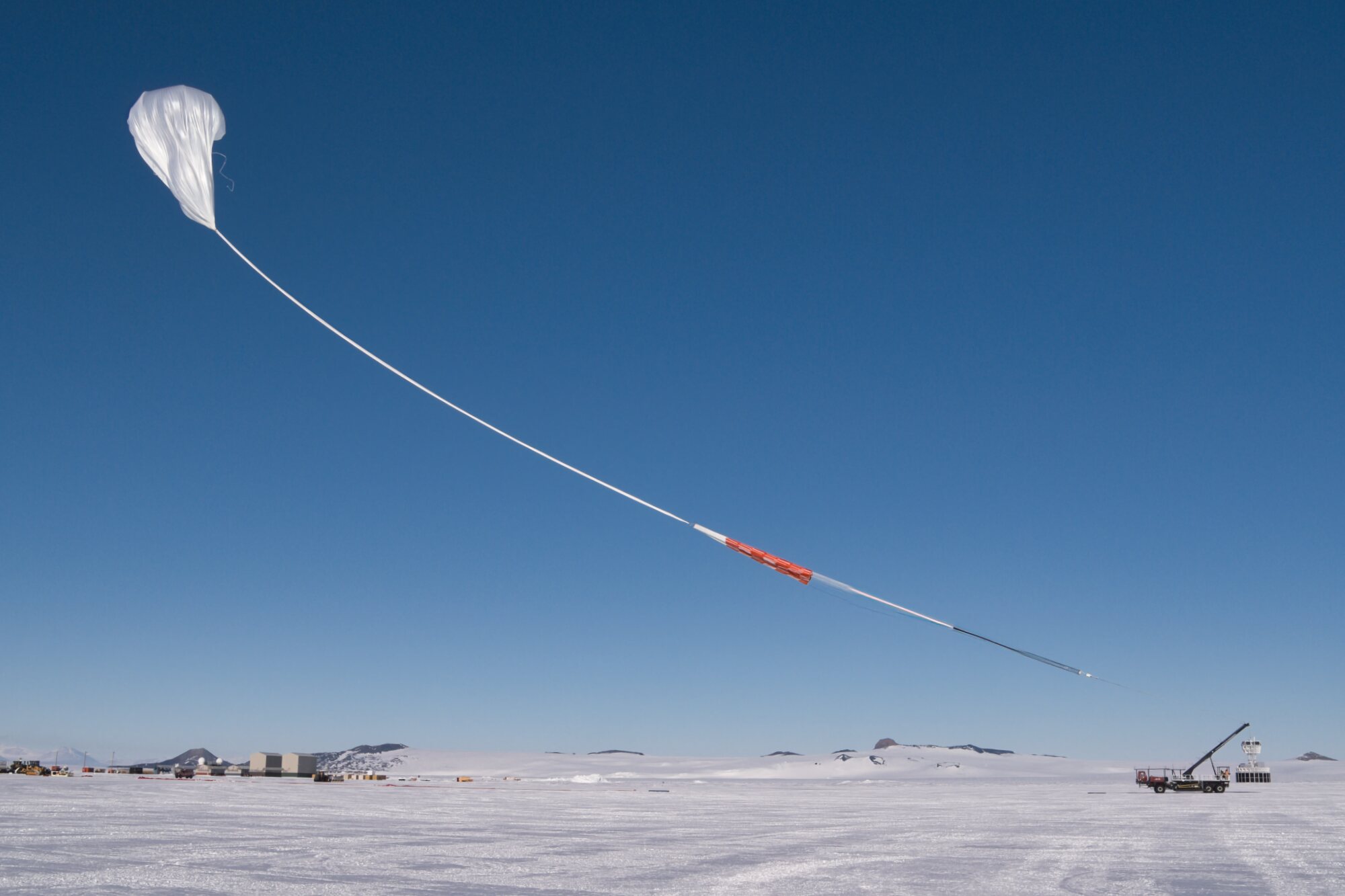
NASA’s Scientific Balloon Program has completed four successful Antarctica flights during a long-duration campaign that began in early December. The balloons launched from the agency’s facility located near the U.S. National Science Foundation’s McMurdo Station on the Ross Ice Shelf.
The General AntiParticle Spectrometer (GAPS) balloon lifted off Dec. 15. The GAPS payload is an experiment designed to detect anti-matter particles entering Earth’s atmosphere to help reveal the origin of dark matter — an invisible form of matter that’s estimated to make up more than 80% of the total matter in the universe. The GAPS mission flew for a total of 25 days, 2 hours, and 53 minutes before returning to the ice Jan. 9.
The Payload for Ultrahigh Energy Observations (PUEO) launched Dec. 19 and flew a total of 23 days, 8 hours, and 52 minutes, returning to the ice Jan. 12. The PUEO payload is designed to detect signals from neutrinos, high-energy particles that travel across the universe undisturbed, carrying information about events billions of light-years away. This was the first mission to launch through NASA’s Astrophysics Pioneers program, which supports compelling astrophysics science at lower cost.
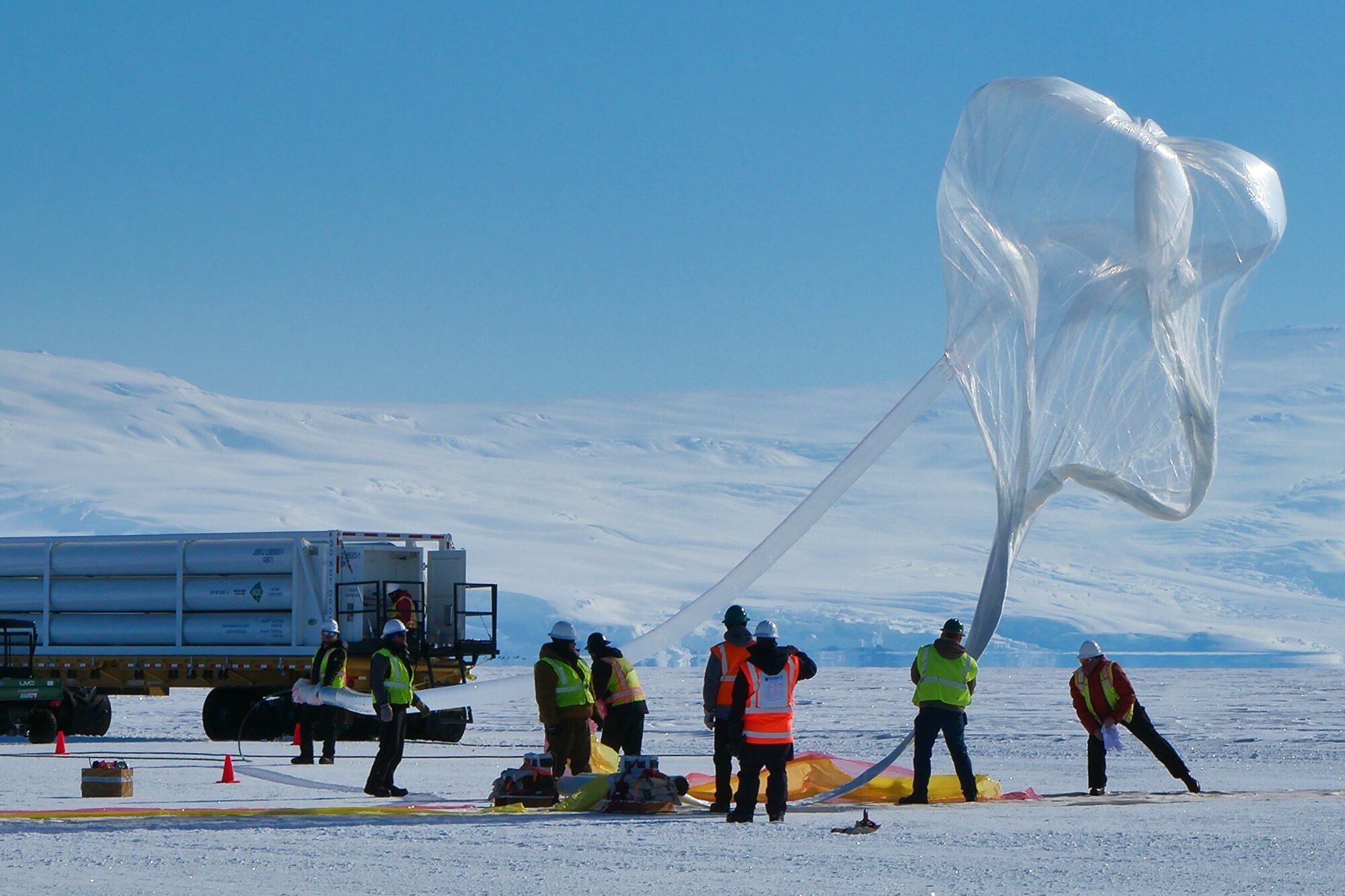
Two secondary balloons were hand-launched Dec. 21 and later ended Dec. 25. During that four-day period, NASA had four balloons simultaneously in flight over Antarctica. The two secondary balloon launches carried radio beacons, called HiCal, in support of the PUEO mission. The signals from HiCal have a signature similar to a neutrino event, allowing the PUEO team to verify their detection sensitivity from HiCal’s occasional, well-defined radio pulses.
Zero-pressure balloons, used in this campaign, are in equilibrium with their surroundings as they fly. They maintain a zero-pressure differential with ducts that allow gas to escape to prevent an increase in pressure from inside the balloons as they rise above Earth’s surface. This zero-pressure design, polar orbit, and constant sunlight make the balloons robust and well-suited for extended-duration flights, such as those in this campaign.
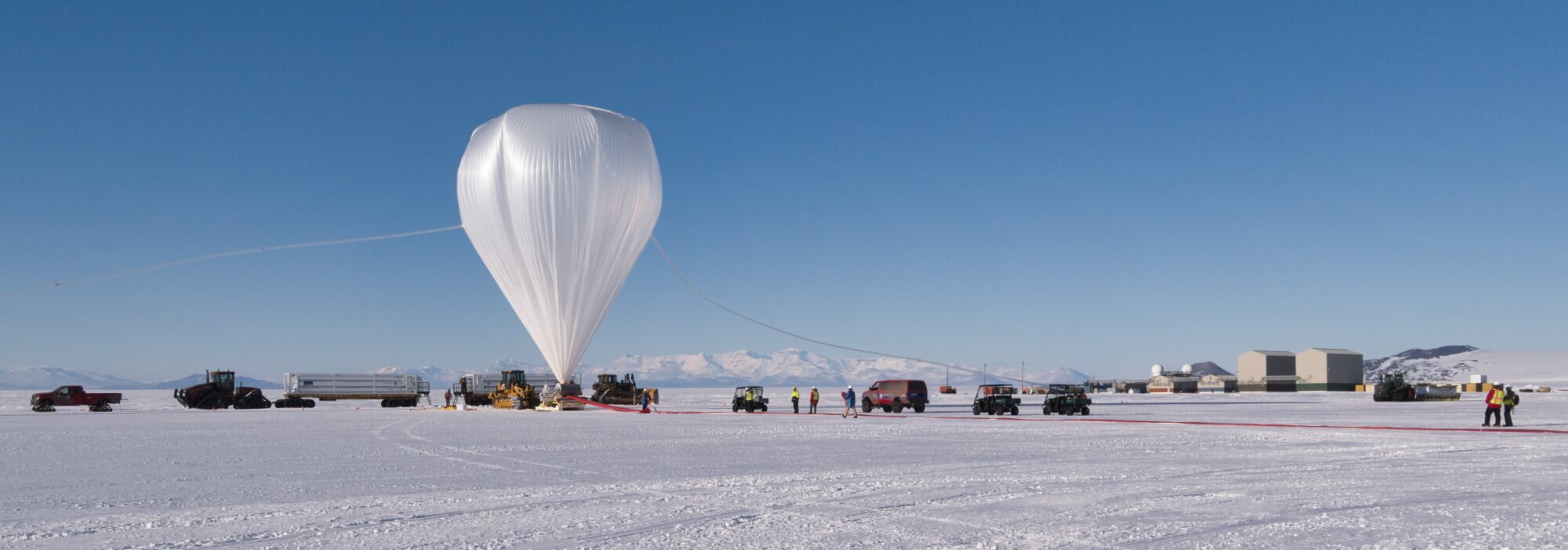
NASA’s Wallops Flight Facility in Virginia manages the agency’s scientific balloon flight program. Peraton, which operates NASA’s Columbia Scientific Balloon Facility in Palestine, Texas, provides mission planning, engineering services, and field operations for NASA’s Scientific Balloon Program. NASA’s balloons are fabricated by Aerostar International. The NASA Scientific Balloon Program is funded by the Science Mission Directorate’s Astrophysics Division at NASA Headquarters in Washington.
