











Expanding Test Options that Expose Technologies to Suborbital Space
FLIGHT SUMMARY
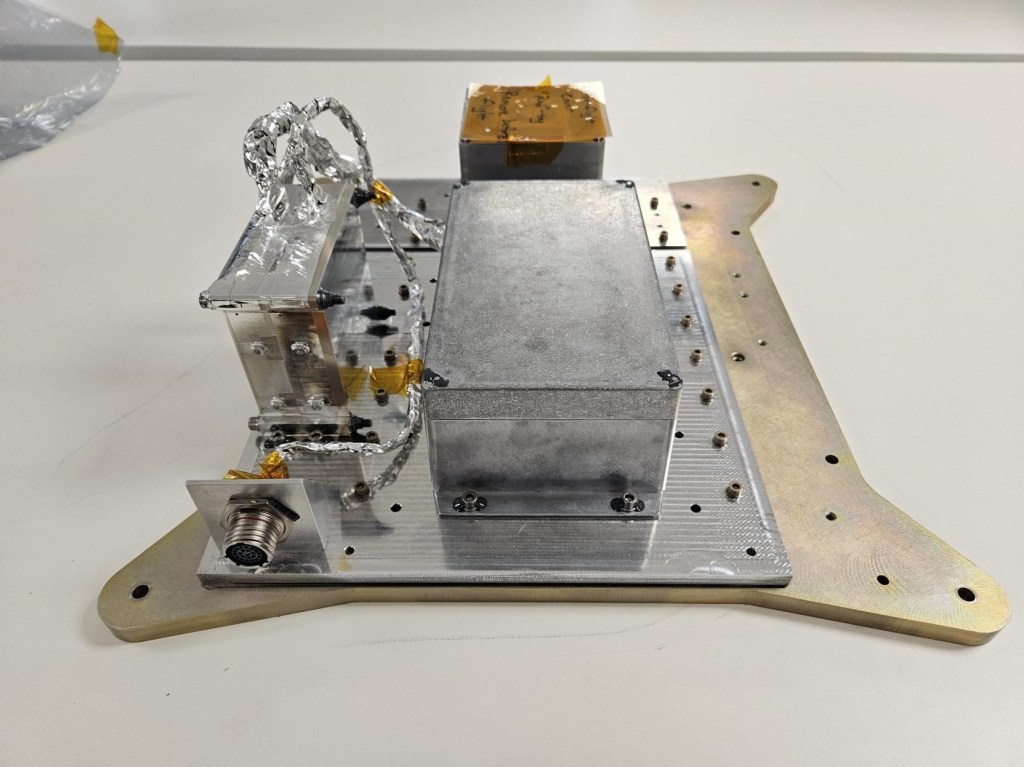
The Johns Hopkins University Applied Physics Laboratory’s Integrated Universal Suborbital (JANUS) platform allows payloads aboard suborbital reusable launch vehicles to access the harsh external space environment while at altitudes of 50-60 miles above sea level — the region where Earth’s atmosphere transitions to space. Designed to carry small payloads, JANUS 3.0 enables rare in-situ testing and sampling to directly measure conditions in this notoriously difficult-to-access area.
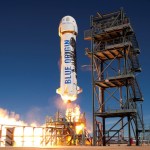
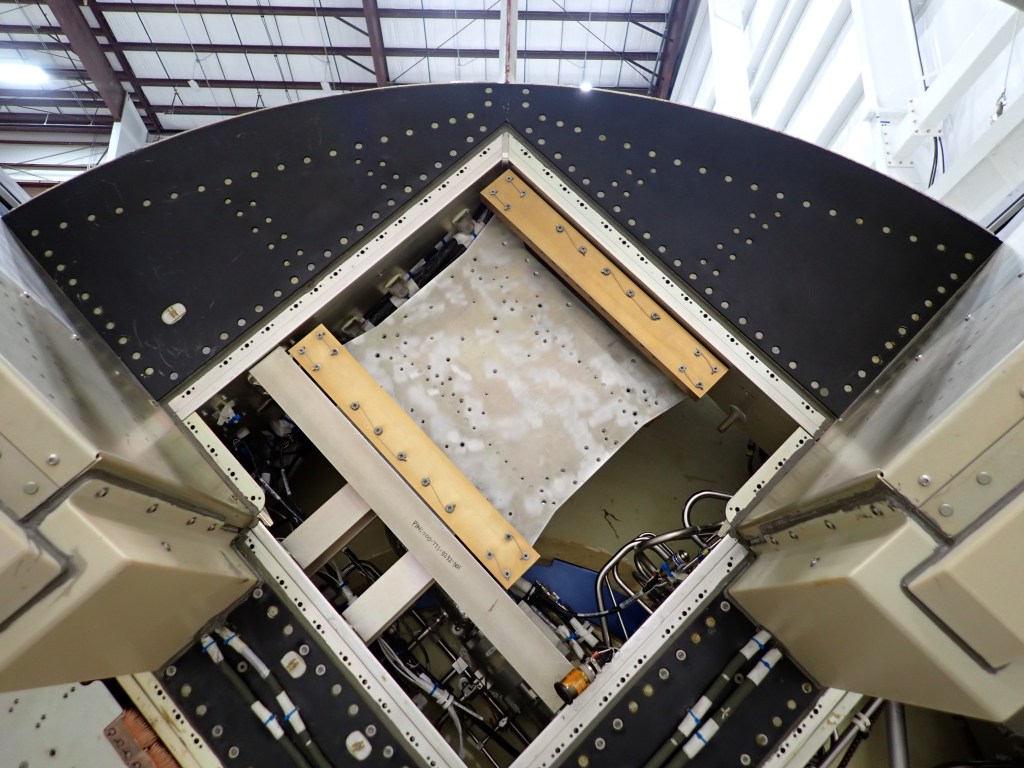
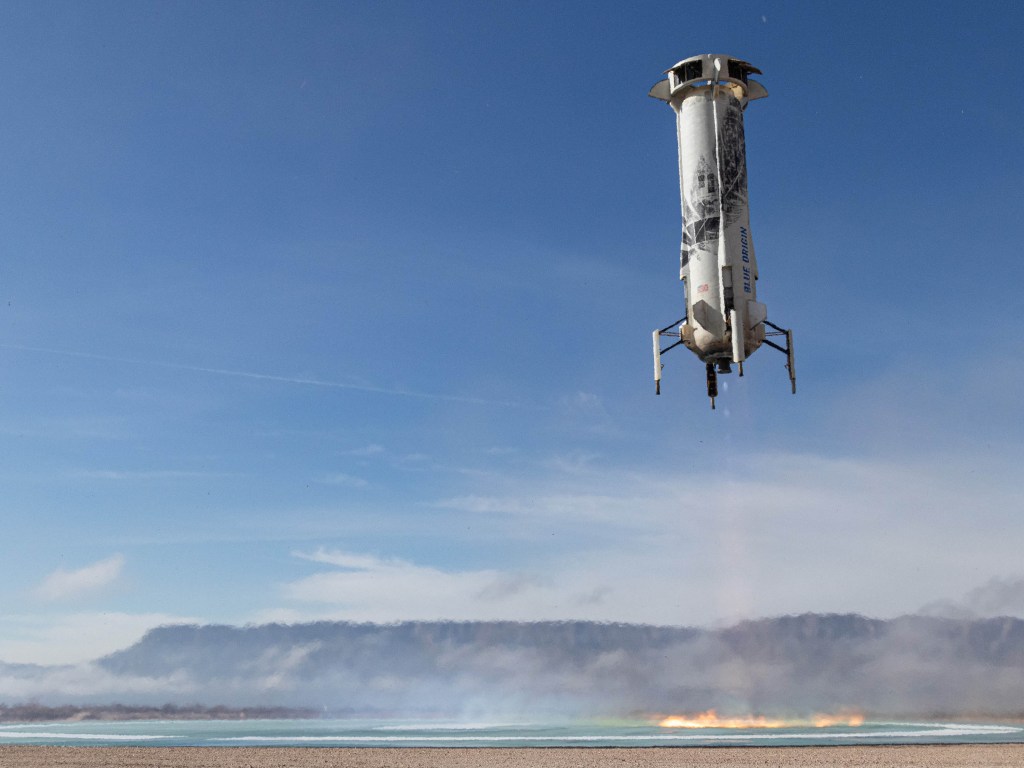
On April 14, 2025, the JANUS 3.0 platform took flight mounted on the top of Blue Origin’s New Shepard propulsion module. With support from NASA’s Flight Opportunities program, this flight test marked JANUS’s first successful demonstration as an externally mounted payload. This new capability enables low-cost external observations and technology demonstrations for future commercial suborbital spacecraft.
flight provider
Blue Origin
Flight Test Platform
Reusable suborbital rocket system
flight date
April 14, 2025
location
Van Horn, Texas
The Ionosphere: A Critical Region for Orbiting Vehicles
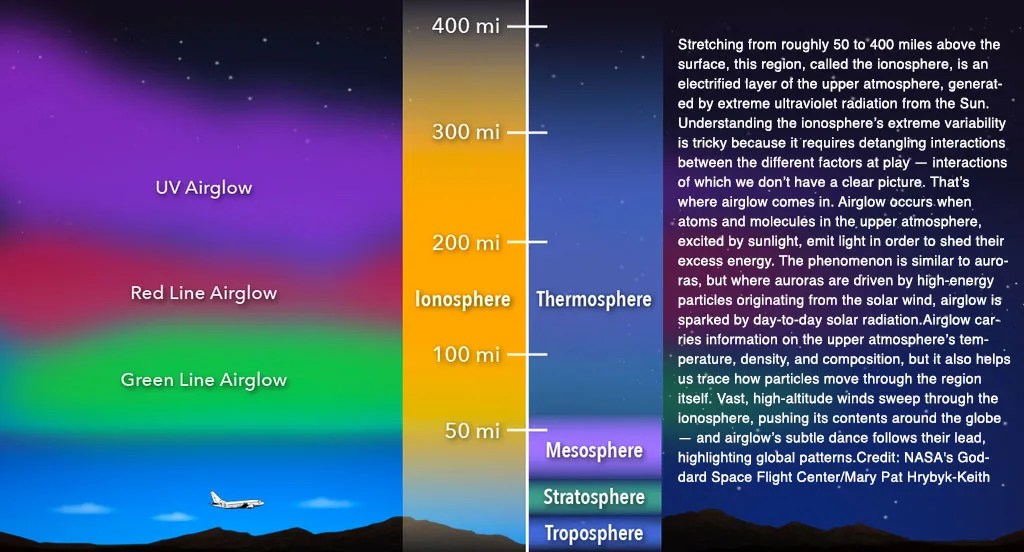
Ranging from approximately 50 to 400 miles above sea level, the ionosphere is where many Earth-orbiting satellites and the International Space Station operate. This area is essential for long-distance radio communication and satellite navigation and serves as a sensitive indicator of space weather events that impact Earth. Although the constantly changing conditions in the ionosphere can affect satellites, the station, and other space vehicles, little data is available from observations and sampling, particularly in the lower ionosphere.
The Value of External Testing
The testing capability provided by JANUS could offer valuable insights, benefitting many Earth-based and geoscience missions that require external scientific measurements in the lower ionosphere — the first true space environment that vehicles encounter and need to survive. By enabling more technology testing and demonstrations in that region, JANUS could help rapidly advance large Earth-based and planetary missions as well as commercial ventures.
JANUS’s History and Other Flight Tests
Researchers originally designed JANUS as a low-cost system to use inside a spacecraft, characterizing the interior electromagnetic field and inertial environment to help mitigate negative impacts on instrumentation and payload experiments. Further development has extended monitoring to the outside of the spacecraft via an external payload mounting.
Before the test in April 2025, Flight Opportunities supported six other flight tests of the evolving JANUS technology, helping advance and enhance its research and flight-testing capabilities. The JANUS platform now has the potential to accommodate the technologies, instruments, and experiments of researchers seeking to access the suborbital space environment.
The next effort for JANUS is to serve as the base system — providing control, data, and power — for a payload known as JANUS-TEC, which aims to accurately perform Dual Frequency Total Electron Content (TEC) observations of the ionosphere. The JANUS-TEC successfully flew aboard another 2025 Blue Origin flight.
Read about the JANUS projects
Related content

Planning Successful Tests on Suborbital Rocket-Powered Vehicles

Suborbital Space Again, NASA-supported Tech on Virgin Galactic’s SpaceShipTwo

NASA-Supported Payloads to Get Lift from Blue Origin
Latest Blue Origin Launch Tests Technologies of Interest to Space Exploration
Monitoring System Could Allow Multiple Experiments to be Flown Together

APL JANUS System Progress on Commercial Suborbital Launch Vehicles: Moving the Laboratory Environment to Near Space
10 Things to Know About the Ionosphere
The photos along the top of this page are courtesy of Blue Origin.