

















Suggested Searches

NASA Artificial Intelligence Ethics

Photo of scales with digital colorful texture over it.

Using AI in a trustworthy and ethical manner is important to us.

While use of AI continues to develop, NASA understands that usage must come with governance and protections for the benefit of all. 

NASA Framework for the Ethical Use of Artificial Intelligence

The NASA Framework for the Ethical Use of Artificial Intelligence (AI) provides six key principles to guide NASA’s use of AI. The framework describes each ethical AI principle and applies it to work done at NASA. It also includes a list of questions that practitioners should use to guide their AI work. The framework focuses on concrete, practical considerations for the next five to ten years, while also beginning to lay the foundation for longer-term disruptive change as human-level (or beyond) AI is developed.
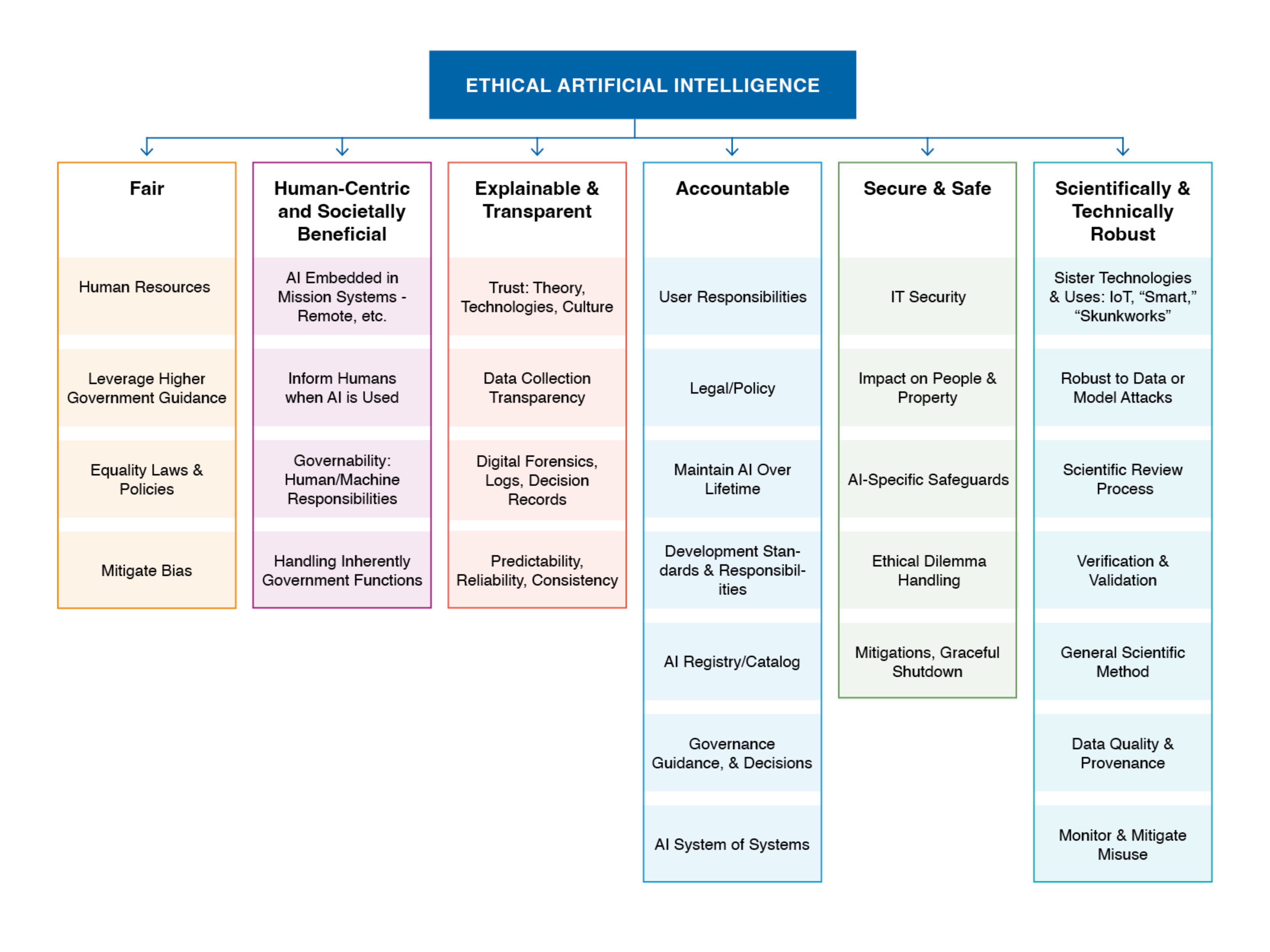
A diagram titled “Ethical Artificial Intelligence,” showing six columns that list the components of the six key principles in NASA’s Framework for the Ethical Use of Artificial Intelligence (AI). The first column is titled Fair, and lists Human Resources, Leverage Higher Government Guidance, Equality Laws and Policies, and Mitigate Bias. The second column is titled Human-Centric and Societally Beneficial, and lists Al Embedded in Mission Systems - Remote, etc., Inform Humans when Al is Used, Governability: Human/Machine Responsibilities, and Handling Inherently Government Functions. The third column is titled Explainable and Transparent, and lists Trust: Theory, Technologies, Culture, Data Collection Transparency, Digital Forensics, Logs, Decision Records, and Predictability, Reliability, Consistency. The fourth column is titled Accountable, and lists User Responsibilities, Legal/Policy, Maintain AI Over Lifetime, Development Standards and Responsibilities, Al Registry/Catalog, Governance Guidance and Decisions, and AI System of Systems. The fifth column is Secure and Safe, and lists IT Security, Impact on People and Property, AI-Specific Safeguards, Ethical Dilemma Handling, and Mitigations, Graceful Shutdown. The sixth column is titled Scientifically and Technically Robust, and lists Sister Technologies and Uses: loT, "Smart," "Skunkworks,” Robust to Data or Model Attacks, Scientific Review Process, Verification and Validation, General Scientific Method, Data Quality and Provenance, and Monitor and Mitigate Misuse.